Showing posts with label Julia Masi. Show all posts

Tuesday, October 5, 2021

Miki Zone of THE FAST Sings Gene Pitney [1985]

Text by Julia Masi / FFanzeen, 1985 / 2021
Images from the Internet unless indicated

Miki Zone Sings Gene Pitney

This article was originally published in FFanzeen, issue #13, dated 1985. It was written by Julia Masi.

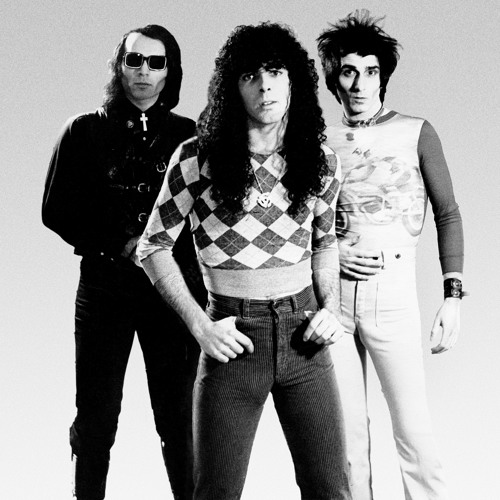
The Fast essentially went through four phases, starting in the early 1970s and ending well into the 1980s. At the core of The Fast were three Brooklyn brothers: Armand “Mandy” Zone (keyboards, vocals), Miki Zone (guitar and vocals), and Paul Zone (vocals). The first phase was before Paul joined the band; I saw them play the bandshell in Prospect Park around 1973 or ’74. Next was the Fast’s golden era (in my opinion), when they were on the Live at Max’s Kansas City album, doing songs like “Kids Just Wanna Dance,” “Boys Will Be Boys,” and “It’s Like Love.” The third was after Mandy left to form his own band, Ozone, when the Fast became more metal and leather based. They did the same songs, but a lot stronger without Mandy’s pop synth. The last was when Miki and Paul became a Eurobeat twosome with a strong gay focus called Man 2 Man (though originally called Man’s Favorite Sport for a brief moment).

Through all this, Miki’s guitar was a fireball, as he mastered the craft and he became one of the most underrated guitarists on the New York scene. Not surprisingly, he became bored playing the same notes and the same songs, so he would improvise, such as using the eraser ends of pencils to play rather than a pick.

Miki also had some side gigs going on, with a solo project of singing the songs of the great Gene Pitney (d. 2006). Miki died in 1986, and Mandy in 1993. – RBF, 2021


Miki Zone in The Fast (photo by Robert Barry Francos)

In any medium, the most difficult part of performing is interpreting someone else’s material, so that it remains fresh and intact, while still allowing individuality and talent to surface. In an era when cover songs are the junk food of our musical menu and “incredible simulations” infest the stage and screen, it’s rare and refreshing to find a performer like Miki Zone, who honors his idols without imitating them.

Last Spring, Miki Zone’s Gene Pitney Review slipped into the New York club circuit without enough fanfare. It’s a short (approximately one hour) cabaret act that’s campy, classy and reveals another side of Miki: his voice!

It shouldn’t surprise anyone that Miki can sing. Nothing he does should surprise his fans after all the musical styles he adapted and discarded over the years, with his brother Paul, in The Fast. But throughout his career, he’s always been known as an instrumentalist and songwriter with a distinctive style. A style that, unfortunately, has yet to be rewarded in the mainstream markets.

Gene Pitney in his heyday, was very heavily absorbed into the mainstream. He is most often remembered for “Town Without Pity,” but he also wrote several dozen Top-40 tunes for himself and people like Roy Orbison, Rick Nelson, the Crystals, and Steve Lawrence. He had a country hit with George Jones, as well as numerous hits in foreign countries that he sang and recorded in almost every language.

Mandy Zone, Paul Zone, Miki Zone

According to the fact sheet that Miki graciously compiles for interviews, Pitney “played all his own instruments on his first single, “I Wanna Love My Life Away,” and would over-dub seven of his voices on the record.” The most interesting item on the list, however, claims that he was “an amateur taxidermist,” a hobby that probably fostered many weepy love songs. He dropped out of the public eye about a decade ago and, since then, there have been only vague rumors concerning his whereabouts or career. [Ed. Note: Pitney died after a performance in Wales, and is buried where he lived in Connecticut. – 2021]

“I don’t want to be a messenger to the masses,” explains Miki, “but it feels good to have people react to the things that they like.” Part of the reason why this act is entertaining is that you don’t have to be a die-hard Pitney fan to appreciate it. In fact, you don’t even have to know who he is to enjoy it. The set is filled with familiar, catchy pop ditties that have been nestled in the cobwebs of our brain for ages. And Miki is not a Gene Pitney clone. He may be able to croon in the same key as the eclipsed star, and dress in the elegant smoking jackets of that era, but only the blind could confuse their faces. Miki’s eyes are riveting. They’re like tiny, brown computer screens beaming with information until he hears a dumb question, then they abruptly shut down to an icy darkness. Luckily, a sincere inquiry – like why would a talented songwriter want to sing someone else’s lyrics – flicks their light switch back on.

“I’ve got a big romantic part of me which I’ve never brought out in the music, which I’m starting to do now. I’ve written a lot of things like that which I’ve never performed. I’ve never used them in any of my past groups.

“I always had an affection for… would you call it torch singing? Or crooning? Not crooning like Alfalfa, but like, crooning like the way Gene Pitney did it. He could sing a rock song like “I’m Gonna Love My Life Away,” or “Hello, Mary Lou,” and he would also sing a ballad like “Town Without Pity” or “Half Heaven, Half Heartache” and still make you wanna cry. Those emotions used to amaze me in any singer, even female singers like Dusty Springfield. People like that amaze me with the way they can milk all your emotions. I always felt that I could do that. Wanted to do that. And that’s what I’m doing. I used to try to emulate his voice. I used to be able to sing like that for years, but I never had a chance to sing in any of my rock bands. I never would sing. It was always up to my brothers (Paul and Armand) to sing.

“The reason I am doing Gene Pitney is it’s a tackling thing to do. He’s got an amazing voice. I’m not saying I can sing like him, but I hang in there with the notes, and I’m proud of that!

“There’s a lot of things in me that I don’t want to have to be Miki Zone to keep on changing them. I’ve changed many, many times over the years. I’ve put The Fast through heavy metal, through glitter rock, through pop, through punk, through many different things. What I did wrong, I’d say, is that it should have been a different group each time. That would have saved a lot of problem and a lot of egos, and a lot of people’s confusion. I should have called it something different every time I went in a different direction. I have a lot of those ambitions to do different kinds of music and I don’t want to be stuck under one name doing it. I’m not in the position of David Bowie, where I can do what I want and still be the chameleon. I have too many other things in my head that I want to do and be. I think I can do them under different titles, ‘cause none of them will step on each other.

Gene Pitney

“The Gene Pitney thing is just the beginning of the acts I’m gonna do. I think I’m gonna be doing a couple of other acts of different people’s materials; other singers, because I like to sing as much as I like to play an instrument. And I just want to get it out of me. It’s just satisfaction for me. Maybe it’s ego, too, to see people enjoying me doing things. I’ve got the best reactions, I think, ever in my career, since I’ve been doing the Gene Pitney thing, just through the response of people.

“I’d rather have different outlets for different things. And if one of them works out better than the others, I’ll follow that one up. But me and my brother will always work together.” Paul and Miki now have a band called Man’s Favorite Sport. Paul is very supportive of his brother’s solo endeavors, and usually helps out with the lights.

Although he’s trying to keep the identities of his other solo personas a secret, Miki has mentioned that one of them will be Bruno Beats, an original character who sings all of Miki’s “romantic, lush pop things. It’s going to be very pop, maybe ‘60s. All the things I wouldn’t use in the group.”


Sunday, September 5, 2021

A Mixture of Music and Theater Conjures Up an Original ELIXIR [1983]

Text by Julia Masi / FFanzeen, 1983 / 2021
Images from the Internet

A Mixture of Music and Theater Conjures Up an Original ELIXIR

This article was originally published in FFanzeen, issue #10, dated 1983. It was written by Julia Masi.

I never saw Elixir play. That being said, FFanzeen received an enormous amount of outpouring of mail from Elixir’s fans upon this interview’s publication, arguably more than anyone else who appeared in the ‘zine. They had a single out, which can be found at the end of this article. Note that they are not to be confused with the British metal band, or New Zealand Christian music group. – RBF, 2021


“We are a modern band. We’re not last week’s act,” professes George Conrad, chief songwriter and focal point of Elixir, the most original entry into rock’n’roll theater since F.S. Sorrow in 1968 [Ed. Note: F.S. Sorrow by the Pretty Things, is credited with being the first rock opera – 1983]. Incorporating elements of mime, Kabuki, opera and synthesizer-based rock’n’roll, Elixir, Donny Hathaway, Skipp, Jim Copering, Eddie Rossario and Conrad, literally change faces as fast as other bands change chords. Employing a succession of elaborate masks, costumes, and props, Conrad brings to life the everyday heroes and fantasy figures of his songs.

For “Northern Industrials,” he becomes a hard hat, for “Shanghai Sideshow,” he is disguised as a Chinese peasant. A graduate of the New York High School of Performing Arts, Conrad came up with the concept for Elixir when he was in junior high school. “There really is no before Elixir,” he states as he muses about his past. “I’ve been doing this a long time. I started a very long time ago when I used to be shipped down to Florida on breaks (from school).

“I was 12 or 13 and the band was 18 or 20. There was a novelty element and depending on what I was into, as I grew older, I brought that into it.

“The thing that really got me into it mostly was a group called Behemoth that I’d thrown together. We were high school kids but we were gigging our asses off. Much more than we are now.

“The Elixir band is about five years old with maybe seven or eight different line-ups. This band is new,” he says, pointing to four musicians rehearsing on the opposite side of the plexiglass window in a Queens studio. They’ve been rehearsing about three weeks.

“There’s a show that people like to come to see that we do. It’s like TV. We do learn our lines and it’s how good an actor you are to carry it off.” His acting ability is quite good, from having spent part of his performing career working in various mime troupes. “Kids really love mime because it’s the control of the body. I like it now to watch, not so much to do anymore, because of what I’m doing now. But I do rip it off. We react to illusion. People like illusion.”

Conrad likes creating illusions through music. Despite the fact that he is Elixir’s lead singer, he enjoys writing instrumentals for the band. “It’s magic,” he says of his song writing prowess. “You know, one of those things you just can’t explain? Instead of saying, ‘You know, one of those things you call magic.’ For some reason, the instrumentals are basically coming from me, until the band starts saying, ‘We’re doing too many instrumentals. Start singing.’

“It’s as if it’s a puppet show where the puppets control the puppeteer. It’s pure entertainment. What annoys us most is when people say, ‘Well, what does that mean? What did you do that for?’ We’re not saying anything religious, or anything political. We’re saying if you paid $8 or $10, I hope you get your money’s worth because we really drain you out and make you feel sad or make you smile or make you say, ‘How stupid.’ We’re here to make you say all those things and do achieve it.


“I like to think of it more as entertainment. It’s like a rock circus. Even without us doing it. We don’t’ use fire and we don’t use smoke because it’s cliché. It’s been used. It works, too. I still see people go” – mimes jumping back in fear – “We use little subtle things to make it work. The appearance is a very drastic thing.”

But it’s what he describes as “subtle little trips that are played on the audience, the dry humor and the lyrics that are very descriptive,” that gives Elixir it’s ambiance. “It’s not just the music, it’s the presentation, the way we start a gig. A lot of bands come out,” he shouts, “’one-two-three-four,’ and they start the show. We do it differently. It does take a bit of acting and loosening up because that’s all acting is: loosening up.”

The concept changes from day to day. It’s such impressionable music. This he stops to call attention to the band, “is Melted Colors. The band’s primary example of chromesthesia, is if you close your eyes you really can see and feel the sound blending together like a rainbow. The music is very impressionable and traditional. It’s a modern sound. We write about tropics before we come up with licks. People will have licks and say give me something, how about rain. And somebody starts to play rain. It’s very easy to tell a drummer, ‘play me rain.’ He hits the cymbals and give you tinkles, but when you tell a guitar player to play rain, he has to come up with something.


“When you say, ‘give me a violent storm, give me rain,’ tell the drums, ‘give me a flood,’ and he starts making a pattering sound, and it feels like the streets are starting to build with rain. We work that way. Not like, ‘Why, what is this about?’ there is no question of what it is about because the main concern is what we’re starting out with.

“’Northern Industrial’ is inspired by New York, Philadelphia, and Boston, where the production lines, the pulse of the whole country, are found in the North. ‘Northern Industrial’ just describes what a day in the life is in a Northern industrial town.

“’Hold that Line’ is about overpopulation and how everything relates to a line. I got poised off standing in line waiting for a token or when I pulled up to a toll booth. I just couldn’t get away from the line. If I drove up or walked up, I still had to stand in line. I cashed my checks, I’d go to spend the money, even to buy goods I had to stand in line. And I said, ‘Hey, I gotta do something,’ so I wrote ‘Hold that Line.’

“We use a lot of pre-recorded tapes in the show, which is fun. It’s difficult, because you have to make sure you’re in sync with the tapes. You’ve gotta do it with the machine. The machine doesn’t have to do it with you.”

Their repertoire is limited to about 15 pieces, only six of which are played during any given 45-minute set. “The shorter the list, the more of a blitz you can lay out,” believes Conrad. “When you give people something they haven’t heard before, you’re gonna give it to them in small doses, or they OD.”


Thursday, August 5, 2021

WALTER STEDING: Essence of an Artist [1983]

Text by Julia Masi / FFanzeen, 1983 / 2021
mages from the Internet

WALTER STEDING: Essence of an Artist [1983 Interview]

This article was originally published in FFanzeen, issue #11, dated 1983. It was written by Julia Masi.

Currently, Walter Steding is a painter and actor who writes film scores and is in the group Crazy Mary, based in New York City where he resides. This is a companion piece to one Julia wrote in Issue #10, reprinted HERE. – RBF, 2021 


His special loft on the Bowery is littered with the canvases of his labor. Portraits of pop-culture aristocracy, like Andy Warhol and Deborah Harry, sit on the chairs and sleep on the floor. A painting of a bright blue chair rests against the wall. The furnishings are sparse: a table, his synthesizer, and a clock. In the corner, he’s sectioned off a rustic little bedroom, so neat and compact that it looks like it was built for a movie set, furnished mostly with things he’s found in other people’s garbage.

Simplicity is the essence of Walter Steding’s style. His music and his art, like his loft, are uncluttered. There is a child-like wonder in his work. Some of his paintings show cheekbones or eyes much wider than God would mercifully bestow on anyone. And his songs and performance style are as unpretentious as entertainment can get. Yet, there is great sophistication in how every line, note and color is calculated to transmute his feelings.

“To be a musician and live on the Lower East Side, there is a kind of feel about society, about the way things are. Graffiti artists or whatever, there is always a movement that suggests how people are. That’s always the way it is with art,” comments Walter. “The paintings come from the same kind of thought that I live and experience what is happening. I try to express the way things are through the music and the painting so they’re similar in the sense that I see colors. Like green – a typical industrial restroom color. It really doesn’t say much, but in not saying much, it says a lot. And the same thing with my tunes. I try to keep them really simple. I work with a really simple formula. Even though the format is simple and I only use a few colors it’s the combination of those colors that create the music. Maybe I just use the standard 4/4 beat, but it’s what I apply to that.


“I’m painting portraits but I’m not painting portraits in the same way as (John Singleton) Copley (d. 1815) or any other great portrait painter painted because they wanted to create a likeness. I’m painting portraits in an era when photography has existed for almost 100 years. And it’s easier to take a person’s image and have that image reflected on chemicals that separate various tones of light and create an image instantly. Then why do a portrait? It’s much easier to take a picture. But what I am is a portrait painter working with paints in the year 1983, and that’s what it is. It’s me, the portrait painter. It’s not the portrait itself. The painting is insignificant compared to the fact that I’m doing it. And by the looks of my paintings, that’s immediately revealed.

“I try to make it look like there’s a background. There’s no portrait there then – flash – someone is there! And they are portraits that you can see are done after the invention of photography to help me get a likeness, but I really work from a mental perspective or how a person would appear.”

Actually, Walter doesn’t even need a photograph to create a mental image of a person. He has that special kind of sensitivity that gives you the impression that he can read a person’s face as easily as he can read a letter. And when he reads letters, he absorbs every detail and nuance of a person’s personality so fully that he’s able to create a convincing character on canvas. Some of the faces in Walter’s exhibit at the Semaforte Gallery last Spring were inspired by a box of letters that he found in the garbage. Some of the letters date back to the early 1800s. Most of the correspondence in between three men – Jordean, Matheson and Dent – the families who set up the Hong Kong Shanghai Bank, the institution that, in this day, sets the standard for gold prices in the Western world. These letters document the beginnings of our economic system, the common market, opium/slave trade and economic crash.

It’s doubtful that anyone who has attended Walter’s exhibit really knows exactly what Jordean, Matheson or Dent looked like, but Walter’s images are so strong you believe that they’re accurate.


And just in glancing around his loft you can see what he’s learned from the letters and get a clue to his perception of the evolution of America’s society.

“In the olden days, even though you didn’t have any dollars, you had opportunity because you could go out West, meet some savage Indians and give them trinkets for furs and sell them and get cash for it. And if not cash, you could take those furs to a foreign country, like in China, because furs became fashionable, so they could take those furs and trade them for tea. And then they could take the tea and bring it back and sell the tea here.

“People came to this country with nothing, like John Jacob Astor and Steven Gerard and Vanderbilt. Individuals who could actually go out and make a fortune.

“In today’s world, an individual can no longer go out into the wilderness and start a trade. It’s all tied up by those original families who have kept their money and survived the crash, ‘cause they never had it to lose in the first, since they were the ones who were causing the crashes. Today, for anyone to accomplish any achievement monetarily, the only thing you can sell is a kind of software, and that’s selling an idea that’s selling yourself. You become a famous actor. You become a famous pop musician. You can start from nothing and make a lot of money. But you can’t go into the world and dig up Uranium and convert it into nuclear energy on your own. You have to have a whole team of physicists and a whole complex of other people. The only way you can do it today, the only field, is this kind of mental activity.”

In the not-so-distant future, Walter worries that history will repeat itself. When he reads the daily newspapers, he often notices how certain events are similar to situations cited in the letters. For instance, a recent report claims that the U.S. government will be printing more money to counteract inflation. When this situation was tried in the past, it had quickly led to an economic crash. He feels fortunate to have found these letters and to have learned so much from them.

“Because I have this knowledge, I see my position as being a communicator, even through my music. My music is part of my art. It says on my contract ‘recording artist.’ It doesn’t say ‘pop star’ or anything like that. It says recording artist because that’s what I am. I write all of the songs. I produced them. I carry the records on my back and take them to the stores. And what’s in these songs is what I feel. What’s in these songs is a kind of message. They’re not saying ‘Let’s revolt’ or anything like that. They’re saying, ‘Let’s have compassion for one another, ‘cause we’re all in this together.’

“That’s why I don’t want to stand up there and create an antagonistic mood. The whole punk thing was great because it made its statement, but now let’s definitely go on. You have to find compassion for your audience.”

If there is any gift Walter could give his audience, it would be “non-violence. Just getting along with each other. There’s always a way for people to become one with their environment or nature or whatever.

“I always try to be close with nature. I make sure I get in the woods.” His basic philosophy of life is “not to believe in anything except what exists. It’s not my will to believe anything. Whenever you say, ‘I believe,’ you don’t believe. Because it’s not your will to believe anything. It’s your position to accept what is correct. And then you leverage your mind open for that source to come direct and without your will interfering.

“It’s when you start to think that these ideas are your own, that’s when they stop. What I do, I don’t feel is my own (ideas). I like to get ideas out and perpetuate. Let someone else take over. Just set it down. I feel that there is a never-ending source. The more things that you can express and you put out, the more ideas you will get.

“I hope I can paint now, and if I get discouraged with the painting, I can be a writer or play music.”


Wednesday, May 5, 2021

MTV: Watching Rock’n’Roll History [1983]

By Julia Masi / FFanzeen, 1983
Introduction © Robert Barry Francos / FFanzeen, 2021
Images from the Internet


This article was originally printed in FFanzeen, issue #10, dated 1983, by FFanzeen Managing Editor, Julia Masi.

There is a maxim in Media Ecology theory that states that when a technology is introduced to a culture, it does not change any one thing, it changes everything. With the state of MTV these days, it’s hard to fathom just how revolutionary MTV was during its heyday. You know, when they actually played music rather than be a boring, same-old-same-old reality television station; “Big Brother”? More like “Why Bother”?

How did MTV chance the face of music since its inception in 1981? It introduced a lot of music to the culture that would have normally been missed. Ultravox is mentioned below as an example, but it went well beyond that. But as another Media Ecological bon mot goes, every positive thing a technology brings, there is an equally powerful negative that comes with it that is unforeseen (what Marshall McLuhan called “Reave View Mirror Thinking”). In this case, it became such a juggernaut that if a band didn’t have a professional-level video, it went unnoticed on the station. As it became bigger and more powerful, other stations would try to show music videos (such as “New York Hot Tracks” (WABC), “Friday Night Videos” (WNBC), “Night Flight”(USA Network), and U68 in New York and V66 in Boston), but MTV insisted on exclusivity or nothing.

As much as J.J. Jackson talks below about MTV being more “progressive” than radio, yeah, it started that way, but it was not long before you saw the same videos over and over, making it merely a visual Top-40. Also, Jackson posits about how people were into the looks of bands. MTV actually became a leader in this due to its visual nature. If the band was not “pretty,” odds were they were not seen.

As MTV became more popular, the videos also started to change to try and try harder to catch the eye. The editing quickened from a few seconds at a time, to rapid-fire, shortening the attention span of its audience. This quickening of edits would influence feature films, video games, and so many other aspects. In short, MTV became everything it proposed to be against in this article.

What ended MTV as it was when this article came out? In my opinion, it was their fight against R&B music. Other than the likes of Michael Jackson and a few other artists, it’s could have been called WhiteTV. I can’t remember if it was an actual lawsuit or the threat of one, that they added hip hop and rap to their roster, introducing it to a white, suburban audience. This was also ground breaking in spreading rap beyond its East and West Coast bailiwicks. But as much as it turned on a new audience to the style, it also lost a lot of its older audience, and eventually its stock just couldn’t mandate its shareholder profit demand. MTV became…something else. Sure, it began VH1, MTV2, MTV Classics, and the like, but it never really held the sway it once did.  – Robert Barry Francos, 2021.


Slightly more than a year ago, Warner Amex Communications set the cable industry on its ear when they launched MTV, Music Television, the most unique and successful concept ever to hit the airwaves. Offering 24 hours, 7 days a week, of non-stop rock’n’roll music, videos, interviews, concerts and movies, MTV has captured the hearts and viewing time of the 12 to 36 year-old market in over six million homes. And as it sheds a much deserved spotlight on up and coming music and video artists, it also gives a boost to the sagging sales for the record companies.

MTV sprang forth from the dreams and dedication of Bob Pitman and John Lack. Pitman, Senior Vice President of Warner Amex and a veteran of commercial radio, had always wanted to do something with music on television, but felt stagnated by the old format of simulated concerts or just watching kids dancing to records. As more and more bands began making videos, Pitman became inspired with the concept of MTV. He realized that music television could be a viable program at Warner Amex, and was willing to experiment with its possibilities.

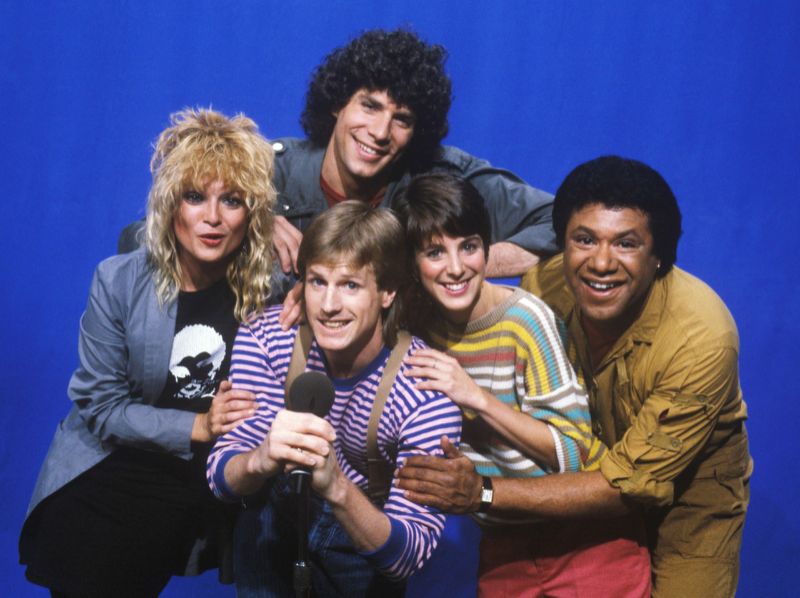
JJ Jackson, Nina Blackwood, Mark Goodman, Martha Quinn, Alan Hunt
He spent months researching his target audience before recruiting a dedicated crew of 23 technical people, three directors and five “perfect” personalities to act as VJs – Video Jockeys – to host particular segments of the programming day, as well as special interviews, concerts and MTV parties. Each of the VJs, Nina Blackwood, J.J. Jackson, Mark Goodman, Alan Hunt and Martha Quinn, have either a background in radio or theater. But the common denominator among everyone at MTV is the endless enthusiasm and unlimited energy that they’re willing to pour into the project.

Executive Producer Julian Goldberg believes that MTV is “advancing the speed at which cable was going to go anyway. One of the promises of cable,” he claims, “was that it would not be an imitation of the networks. You can have 100 channels and each one could be a specific channel. You could have a channel of comedy all day, a channel of finance, a channel of cooking all day. But people were afraid to tackle that and MTV, and other Warner Amex channels, The Movie Channel and Nickelodeon (programming for children) are the first to actually take on one specific audience all day long. We don’t want you to tune in if you want the news or sports information, or financial information. We want you to tune in when you want music. And we don’t mind if you leave us a while because we know that you’ll always come back for the music because that’s what we give you 24 hours a day, every day.”

Before he made the move to MTV, Goldberg was happily employed as a freelance Field Producer for a number of magazine programs, including “Kids Are People Too,” “Hour Magazine,” “Real People,” and “Good Morning America.” Although he’s given to working 10 hours a day, 5 days a week, he still possesses an elegant demeanor and athletically trim physique that would be just as at home in front of the camera, as in a Brooks Brothers ad. “I came over as a consultant to the television end,” he recalls, “just to get the visuals together as a producer, without the producer’s title. I liked it so much, and was so blown away by how innovative it was, and the opportunity to build something that was new and completely different, that I’ve stayed.” He is extremely proud that MTV “has the fastest growth of any cable system anywhere, ever. We’re getting 25 million letters a week from viewers, which is unprecedented by anything anybody has ever done. And, at the same time, we’re pulling it off. Nobody’s ever tackled anything for 24 hours a day where they’re really producing it all the time and getting it on the air. A telethon is the only thing I can think of. And that only once a year. We’re doing it every day and we’ll continue to do it far, far in to the future.”

Actress Nina Blackwood first heard about MTV while wrapping up her work on the film Vice Squad. “I first saw an advertisement in one of the trades for this new music channel and quickly sent in my resume,” remembers the sultry blonde. She’s been involved with some form of rock’n’roll for quite a while, having made a bit of a name for herself singing and playing rock’n’roll harp in clubs around Los Angles. “From my outlook, it’s an obvious metamorphosis of the industry. Video is a logical progression. People really seem to watch hours and hours of it. And the artists are benefiting from the sales. I love video. I went home on vacation and sat up until dawn with my friend who works on them. I just did the interworks, with ideas. I’ve never actually done the editing but I know what it takes to be done. And I know that your eyes go and everything starts looking like a video.” Nina, who is an art buff, is pleased with the way MTV offers outlets for those who “have really been pushed aside for a long while. They really starve, literally, and can get jobs with videos, by doing set designs.

“Russell Mulcahy, he’s an artist who has done the Ultravox videos, and they are just gorgeous. People I know that are that kind of artist, are getting involved in video. It’s a very valid form of art. It’s also a retrospect going back to opera, in a funny way. When opera was in its heyday it was the story with the music. It’s not the same type of singing, but it’s the same type of thing with the technical aspect.”

Alan Hung came to MTV by way of the Shakespearean theatre and television commercials. With his quick open smile and smooth Southern drawl, he doesn’t have to try to be charming. “I don’t think video will have an adverse effect on theatre or film,” he states, “or that the entertainment media has an effect on video. In other words, you’re getting all these film directors that are really starting to get involved, but maybe as a sideline, some as a full-time thing. Russell Mulcahy is a Video Director / Producer that has been talked about a lot, and he’s done some super videos that are film quality. Actually, he does them in film. So, we’ll see the film industry or theatre side of things; there are certainly a couple of clips that are theatrical in that sense. The Tubes do theatrical stage work in their shows and that transfers to video.

“It will all help video; it will make the rock’n’roll artist come out of their shell a little bit more, if they’re gonna do video work. And a lot of them like the chance. They like that thought of ‘now I get to act a little,’ and in some concept, like storyline videos, they play a little character. But I think video will come from theater, or from quality film rather than video having an effect on the others. Theater will be what they are, regardless of where this video thing goes. But video is gonna take off because of its roots.

“If they get the television screen down, like they think they will, I’ve heard all sorts of things about holography and three-dimensional television. I think that certainly is going to come. And we’ll have laser TVs or whatever. Video you can’t say anything, but it’s gonna be like the thing. It’s gonna be up there with the films and the theatre. And video music is ‘here to stay,’ as they say. A cliché.

“You’re gonna get artists with whole albums, you know, like Blondie and Olivia Newton-John. There’s probably a financial problem with that right now in the record industry. They just can’t afford to put the money into that. And they’re not quite sure of the market yet. MTV is starting to prove that there is a market for this thing called viewing music, video music. So they’re starting to see the advantages of not only marketing the records through radio stations, but making videos of the artists as well, ‘cause that doubles the pleasure, I guess. Not only to hear your favorite artist, but to see him, too, in stereo.

“I think video music is going out the top of the roof. There’s no stopping it. Everything is going to be visual. You’re gonna have everything right in your own home. And if you can see it as well as listen to it, why not? Radio may take a different form, but people will always want to listen to the radio. Sometimes you may feel you’re inundated with too much by all your senses and you might want to just rely on your ears. I still think it’s a whole lot of fun to listen to a story told on the radio and invent your own imagery. There will still be a place for radio because certainly we’ll still have a car and people won’t want to watch television while they’re driving. As far as the kind of music that will be played on radio, it’s hard to say. I don’t think it’s going to just be Top-40 AM radio. It will always have a talk format. But I still believe there is an audience for music radio. (MTV) won’t be the death of the radio.”
The very first nationwide VJ was Mark Goodman. A former Philadelphia disc jockey, Mark interrupted his 7-year stint in radio to be part of MTV. Although soft-spoken and seemingly sincere, you can’t help but notice the spirit of a frustrated comedian in his bright brown eyes. When pushed for an answer, he admits that he “sort of” plays an instrument. “I play the stereo,” he quips. “I used to play the drums; in Junior High, I was in a band called Mach Five. We played one gig and I decided, ‘This is not for me’: small problem with the beat. Just a minor thing. So I figured, I’m out of this. I love music. What am I going to do to make my living at it? So I became a DJ, and this was the next step. The rest is rock history!

“It’s gonna grow and mean the birth of a new kind of artist and a new kind of musician who will think in terms of a broader concept than other artists have. I don’t think it’s the death of radio; I think it’s going to do a wonder for radio because television, just by its nature, is just more crass. I can’t remember which  side of the brain – I think it’s the right side - that’s working harder when you need your associate functions, your imaginative functions; when you read something you have to use that side of your brain to put things together to give you a picture. Television shuts that off. Here it is – blah! That’s both a blessing and a curse at the same time. That’s why I’m checking into video art, because all of a sudden then it starts to work outside the brain.

“Radio is magic in and of itself. Because it’s only audio, it’s magic to me. We’re never going to replace that. (MTV) is the next step. It can be the future of rock’n’roll. I think it can give it this shot in the arm that it needs. I think we’re gonna shake up the networks. Cable TV, in general, is gonna shake up the networks, and us specifically, because we have people watching us in the middle of the night. They’re (network executives) thinking they’d better do something at night. We’ve got people watching. Where it goes, for me is another question.”

Petite, blue-eyed Martha Quinn began her broadcasting career as the soul DJ at the New York University Radio Station (WNYU), “the magic of radio.” Her musical tastes include “everything from folk to funk,” and the variety of MTV’s videos is one of the reasons she’s so proud to be a VJ.

“I really believe your cable dial will be similar to your radio dial in that you can find these kinds of formats. We will by no means be the only one. We can always say we were the world’s first. As far as what it will do to radio, I think it will always find a niche. You cannot take MTV with you in your car. You can’t run around the block listening to MTV on your headphones. You just can’t do it. You’d run into somebody! It’s the same thing when television came in: people thought it would destroy radio. They just found their own place.”

J.J. Jackson [d. 2004, age 62 – RBF, 2020] had been a rock’n’roll DJ for 13 years. Most of that time he spent in Los Angeles, where he made a name for himself as a pioneer in FM radio. He was attracted to MTV because it reminded him of everything that was good about Progressive Radio. “One of the problems, what’s missing today, is that kids don’t’ know enough about music as it was before. They think that guitar started and stops with Jimmy Page. And it really didn’t. And if they’d listen to what Page had listened to they’d know more about their own instruments, but that’s neither here nor there.

“American kids today are really uninformed. It’s like, my record library, which is really quite extensive, sometimes you walk into a place where you have too much choice, therefore you don’t make a very good one. That’s why I think the English have dominated the music scene for so long, because they have very little choice in radio and so little money to play with, that it means an awful lot more to them. Having been over there a number of times, when they go out to buy a record, they don’t buy it because Joe Blow is cute. Where in this country, an awful lot of your success depends on how good looking you are, not how well you play your instrument. And I’m not putting America down, it’s just that sometimes it’s just too much.

“I think that’s why the music came to a head in the late ‘60s. If nothing else, what the hippies gave to the kids, which is rarely mentioned, was how to appreciate music. Which, unfortunately, has been bastardized to the point where kids don’t know anymore, because FM radio has gotten very much like Top-40 radio was in the ‘60s.

“When I was doing FM at WBCN [Boston], it was free form radio. The only record a disc jockey knew he was going to play was the first record, and that’s because he had it in his head. From then on it was a spin-off. He didn’t care about names or labels or whose record was selling like hotcakes in Seattle. You played it ‘cause you liked it, or whatever.

“Also, you could build themes. You could play Django Reinhart and Stockhausen and Mozart, and as the night progressed, evolve into ELP. Therefore you could entertain and be quite educational.

“A good example of what I’m talking about is, you take Led Zeppelin’s second album, where Robert Plant says, ‘Squeeze my lemon,’ which, when it came out, was a very salacious line, which it is no longer. Then a kid could learn on a radio station like WBCN that it wasn’t an original line, but that it was taken from Robert Johnson, and not the Robert Johnson we know now with “Read Hot,” but the Robert Johnson from 1936, an old Black blues star, because Plant’s very much into those kinds of people: Elmore James and Robert Johnson. That (line) was taken from an old 1936 song. You could play that one line from the record and go into Led Zeppelin and the kids not only become entertained but educated. And the kid learns that there really is nothing new under the sun, and that all those riffs have been done before.

“It’s a shame that we’re living in a time when you can turn on the radio, with the possible exception of WNEW, and hear an Elvis Presley, and not hear an Elmore James, not hear a Muddy Waters, on a so-called rock station.

“One of the things I do take pride in MTV is that it is more progressive than radio stations are; it truly is. Where else are you going to find Spandau Ballet on the radio stations in New York City? Spandau Ballet is no big deal for us. We play a lot of unsigned bands, New Wave bands, and mainstream bands. Since video is fairly new and there’s not that many things you can go back to, radio stations, and in this case television stations, should reflect what happened yesterday, because that has a great deal to do with what’s happening today. And today has a great deal to do with what will happen tomorrow. And if you can reflect that in your programming, and at the same time entertain as well as inform, then you’re giving them the whole ball of wax.

“I think we’re doing a service that radio doesn’t do any more. It’s easier to get a video on MTV than it is to get your record played on most radio stations in the country. I’m really proud that MTV is that progressive, but I’m really sorry for the state of radio.

“It’s nice to get letters in from, say, the Midwest, that has been a bastion of supporting bands like REO Speedwagon and basic mainstream rock’n’roll bands, saying ‘I thought I hated New Wave,’ because they thought New Wave was a term that appealed to everything from Black Flag and X, to Fear, all the way over to Ultravox. Maybe they’ve found that they can’t handle Black Flag, but they can handle Ultravox. Or some of them can handle Black Flag. But that’s the whole thing, once they see them; Ultravox’s ‘Vienna’ is an incredible piece of work and I think that bands will do an awful lot better when they come through America again because of video.”

And from the looks of things, America seems to think that video equals MTV.

Friday, February 5, 2021

FFuture FFile reprinted from FFanzeen Magazine, Part 2 [1981-83]


Text © Robert Barry Francos / FFanzeen, 2021
Images from the Internet

One of the reasons I started my print fanzine in 1977, was to help publicize all the unknown bands that I was going to see that did not get enough notice. In the early 1980s, I started a column called “FFuture FFile,” which were short blurbs about new and up-and-comers, so they could use it for publicity. There were written by different authors. Below, I have reprinted the musicians or bands in alphabetical order (rather than chronologically and by first name if a single artist) who wrote it, and in which year/issue, the piece was published. Even though they had various levels of success, they all deserve some notice. On occasion, I will add an update. Where I can, I will attach a photo and/or video.

Lyn Todd
By Julia Masi
Issue 8; 1981
Lyn Todd’s voice smolders with the seductive raspiness that comes from smoking too many cigarettes and being a life-long veteran of local rock’n’roll bands. She’s been singing since she was 13 and formed her first all-girl band, The Mermaids, in Los Angeles, California. Two years later, she ran away from home to become entrenched in East Coast underground culture. After drifting in and out of a few bands – most notably Peroxide – and hobnobbing with the most influential of New Wave glitterati, she recorded a self-titled album (Lyn Todd on Vanguard Records) and then slipped into a year of self-imposed retirement. The Eastside Angels, her present band, are three Southern gentlemen: Chuck Talbot, guitar; Greg Roberts, drums; and David Piper, bass, who made their way out of Atlanta, Georgia, by backing up rock’n’roll artists on the road. Together, Lyn Todd and the Eastside Angels are an assault on the vacuum surrounding the New York music scene. Having only officially formed in August 1981, the band has already begun headlining in New York City clubs and has been getting ready to record. “The band is young,” says Talbot, who writes most of the songs, “because we want something with a bit of longevity.” The melodies are effervescent pop, but Lyn’s sultry style is suitable for almost any song, from Bowie’s “Rebel, Rebel” (the single from her album), to ballads, like her own composition, “Looking for You,” or the rockabilly numbers she hopes to incorporate into the act. And that’s what will give Lyn Todd and the Eastside Angels the edge on an ephemeral scene.
[Lyn passed away in 2010. – RBF, 2021]


Mental Notes
By Stacy Mantel
Issue 7; 1981
Recipe: Take one Scott Severin, intelligent lyricist and vocalist whose influences including Cannonball Adderly, Joy Division, Animals, Ramones, and Motown. Stir in Hank Wyatt with his Gibson Les Paul Jr. (circa 1957). Fold in Joe Fish’s powerful funkified bass riffs and some Steve Stagename on skins. Allow to cook for a couple of seconds at 98.6 and what have you got? Fever! And what makes them outstanding? Scott says, “I guarantee no one will get passive when they see us. Our music ranges from rock’n’roll, funk-punk to art dance. It’s very aggressive, baiting music, but there’s show business in there as well.” He explained how their music is intended to be “disturbing.” He expects that the disturbing effect will “appeal to the audiences’ psychological sadomasochistic tendencies and they’ll come back for more.” Although quite a danceable brew, one wonders how they can dance to songs about apocalyptic visions and mind-mutating syndromes. “What I’ve done is tapped onto military and sexual metaphors and used them for amusement and for a statement,” says Severin. “We’re not trying to raise consciousness. What it comes down to is entertainment.”
[Severin resides in Brooklyn, and still records with Scott Severin and the Milton Burlesque. – RBF, 2021]

Nekron 99
Julia Masi
Issue 9; 1982
Nekron 99 is the only Chinese-American rock’n’roll band in the world. This New York City-based trio consists of guitarist/singer John Seetoo; bassist James Seetoo; and drummer Joanna Cerew. The brothers John and James write the bulk of the material, ranging from the hopeful anthem, “Survive,” to the eerie, Doors-like, “Secrets,” to the raw-edged accelerated fun of “This Temptation” and “Astro Fighter.” Not surprisingly, they cite John Cale, Johnny Thunders, Jefferson Airplane, and the Pirates as important influences. They are concerned with both political issues and the raising of Asian-American consciousness. “We’re aware that we are two out of a handful of Asian-American musicians,” said John and James. “Although (Joanna’s not Asian), that’s not the point. What does matter is that every time Nekron 99 plays on stage we break down stereotypes of Asian people on both the Asian and the non-Asian sides. The songs “ABC,” Ancestry,” and “East/West/Man/Girl” deal with the Asian-American’s missing cultural identity and stereotypes perpetrated by the media.” Besides the release of their first record, Nekron 99 will also be featured on the upcoming documentary on Asian-Americans, East/West People (tentative title) by Bonita Lei. The film, which includes performances of several songs, plus an interview with the band during a recording session, will premiere this year. The above-mentioned record, The Commercial Success EP, has been named as such for several reasons: “We want this record to appeal to the greatest, most diversified audience possible. Therefore, we didn’t include anything too avant-garde or politically offensive to anyone. If people like this record and go to see us live well, then they’ll definitely get their money’s worth, as well as a better idea of our real strengths.” Incidentally, all four tracks were recorded live with no instrumental overdubs. The band’s sound is an original, unique musical entity.
[There is no indication online that the documentary was released. Nekron 99, named after a character created by Ralph Bakshi, became a foursome before breaking up. – RBF, 2021]


The Numbers
By Julia Masi
Issue 10; 1983
The Elf is a fast-talking, witty, personification of energy, with a sixth sense for spotting a perfect pop band, which he has recently formed as The Numbers. They are Kevin McCabe, vocals, and guitar; Damien Kim, bass; Shawn McCabe, guitar, and The Elf, drums. As a fledgling record producer, The Elf could name a viable pop tune in two notes. And when he heard Devin’s cleaver and catchy compositions, he knew he’s stumbled on a few potential smash hits. The only problem was that Kevin, who’d been in a few to many stagnating bands, had given up performing. Of course, such minor obstacles cannot deter The Elf. He enlisted the aid of Damien and Shawn, who were equally enthusiastic about the material, booked the band’s first gig, and “tricked” Kevin out of retirement. Kevin originally agreed to just one gig, but one gig led to another, and now the Numbers have committed themselves to entraining the crowds on a regular basis. “We all just clicked,” says Damien. “There’s definitely a chemistry there. Each gig we get better. We get more confident; there seems to be a natural progression. But we’re kind of hard on ourselves. We always think we can do better.” “I’ve always had confidence in his songwriting,” says Shawn of his older brother. It seems like every time he writes a song, we all seem to agree he’s getting better. And that’s what keeps us wanting to play.” With songs like “Smash Hit” and “Live it Up,” they bring with them a fresh breath of originality. Kevin’s voice is incredible. He sings with a sweet androgynous sound that stuns you into sitting up and taking notice. The rest of the band plays with equal competence, and with enough energy to get anyone but a paraplegic dancing.


Perone
By Julia Masi
Issue 10; 1983
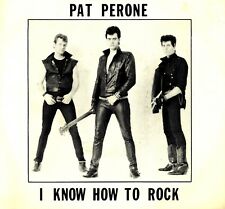
In another era he would have been the matinee idol. With his thick, dark hair, hypnotic brown eyes, and self-possessed stance, Pat Perone was born for the spotlight. But when he fronts Perone, with John Lee, drums; Peter Bliss, bass; and Pat on vocals and guitar, his visual appeal is upstaged by their music. Incorporating “the swing of the ‘50s” with the essence of rockabilly, while adding a heavier hand on the drums and guitar, Perone has captured a sound that offers an edge of originality to the vacuum of the New York scene. “Actually,” we’re trying rock’n’roll with a ‘50s feel,” says Pat, “because it’s danceable. And what good is a band if you can’t dance? We’re not exactly like some bands that do their rockabilly like it was done in 1955.” He admits that maybe their style isn’t as clean as Bill Haley and the Comets, or the Stray Cats. But that’s because they’re “more geared to a new approach that is going to give the listener something to remember.” And one of the things you’re most likely to remember about Perone is that they are very upbeat and uncomplicated, while still being serious about the music. “A twelve-year-old kid can like it as much as a 75-year-old. It’s real simple rock’n’roll. High energy. It’s not like there’s a cloud around rockabilly. This kind of music is just right there, on the table. There’s nothing to figure out.” Their songs “Stuck Up Girl,” “High School Romance” and “Going Steady” cover the basic love-struck themes, but as Peter points out, “The sincerity is real obvious. There are no pretentions. I don’t have to play like others. I just do what I do. And it comes out and it fits into what we’re doing.” What Perone is doing is very entertaining.
[The best I can figure out, Pat Perone is now an Elvis impersonator. – RBF, 2021]

The Public Servants
By Stacy Mantel
Issue 7; 1981
She proves that the human female voice is virtually limitless in its capacity to charm. Her staccato parrot voicings and vibrato should soon rank her as one of the more popular New Wave vocalists since Lene Lovich, although her style is clearly different. She, like Lovich, uses her voice as an obscure, non-traditional instrument, one brought back, perhaps, from extraterrestrial horizons. She’s Shelley Hirsch, lead singer for the Public Servants, which include: two fire-breathing and squeakingly talented sax artists, Philip Johnston (soprano and alto) and Dave Sewelson (baritone and alto); Wayne Horvitz on keyboards; David Hofstra on fretless bass; Bill Horvitz on prepared and electric guitar; and Richard Dworkin on the skins and some tropical-looking plants. Together, this futuristic ensemble blends art-rock, jazz, swing, pop and rock into a stimulating sound which Johnston things of as “Elephants marching through the jungle doing some sort of funky strut… it’s danceable-funky, but has sinister and mysterious aspects to it at the same time.” They’ve just released “Jungle Hotel” b/w “A Mistake” on their own J-Edible Records (motto: “It’s danceable, but is it Edible?”) to be distributed by Rough Trade. Surely no newcomers to music, the group has played together in different bands for many years and in different styles, which explains their versatility. The plants are cute, too.
[From Wikipedia: Hirsch won a DAAD Residency Grant in Berlin 1992, a Prix Futura award in 1993, and multiple awards from Creative Capital, the Foundation for Contemporary Arts, the New York State Council for the Arts, four from NYFA and six from Havestworks Digital Media Arts Center. She was a recipient of the Guggenheim Fellowship in Music Composition in 2017... In 2018, New York University Special Collections acquired her archive. - RBF, 2021] 


The Shakes
Julia Masi
Issue 9; 1982
With equal parts of enthusiasm, imagination and fun, the Shakes – Anna Bosch, keyboards; Eston, bass; Susan Holt, guitar; Daryl Leoce, drums; and Julie Miller, vocals – have blended together a sound that is fresh, versatile, and cerebral, without being pretentious. “Everybody in the band is nuts in a kind of clean way. It’s a natural nuts,” says Anna, who writes and arranges about 95% of the songs. I try to come up with different styles, but I have an insistence on melody. Something for people to remember that flows nicely. We do everything from pop to syncopated jungle. I think we tend to write about pertinent things instead of just, ‘I love you’/boy-meets-girl, but a lot of things that affect ordinary people. Like assuming other roles while still being yourself.” Daryl says, “Basically, we try to keep our stuff danceable. Being about to dance to the music is important ‘cause It’s a fun band. Danceable material is sort of an extra-added attraction, because if you want to start dancing you can. People like to be entertained, especially in light of what’s happening today. I think you can say things as controversial and poignant, but in a lighter way,” as he demonstrates in songs like, “Watch Your White Count,” “Incognito,” and “Blood in Vein.” But despite the strange sounding titles, the Shakes have nothing to do with ghoul rock. “When I think of blood, I think of strength,” adds Daryl. And strength maybe the most accurate adjective to describe this band who are incredibly tight in all aspect of their performances. Or as Julie explains, “We’re not stagnate. We just keep fanning out I think we have a strong sound. As musicians, we’re solid and can grow.”

Tru Fax & the Insaniacs
By Robert Barry Francos
Issue 10; 1983
Pop music…in its literal translation, is a must to avoid nowadays, since it would consist of people like Neil Diamond, Hall & Oats, and REO Speedwagon, to name just a few. But the pop sound has become sort of a section of rock’n’roll unto itself. Usually sung with a tenor (or higher) voice, it has a light, wistful sound that make you want to dance, without being slammed back down. Until recently, the Fast were, at their height, the ultimate pop band on the underground local level. They have now been non-violently usurped by a band originating out of Washington, DC, called Tru Fax and the Insaniacs. Their recent LP, Mental Decay, on DC’s Wasp Records, is a solid piece of work that seems almost impossible to top. Songs like “Washingtron” and “In the Air” (“A man who has orange hair/A man who is not all there/A man who loves the chair/That my President Reagan”) show how clever they are in songwriting, as well as topical. The main components of the group are David Wells and Diana Quinn. David, guitar, has done many solo projects, working on overdubbing tapes, as well as working with Harrison Fisher, the Rhode Island poet. Diana, lead singer and guitarist, is a person of many talents. Not only is she the focal point fronting this band, but she has sung opera in London, played in medieval groups on lute, recorder, and guitar, and sings with a group called the Dynettes. This accomplishment is added to her early training as a classical artist. Formed in 1979, Tru Fax and the Insaniacs released their first single in 1980, “Washingtron.” Despite the overwhelming raves to the record, their album is their first release since that point. This is due to a lackadaisical attitude towards their music, which has caused at least one member of the band, Tim Carter (who appears on the album), to leave because of “unacceptable artistic and financial compromises,” states Bill Asp, their manager, in a press release. Although they have played with major bands who have passed through the Washington area, they have not toured extensively, which is a shame. What the world needs now is pop, sweet pop. Let’s hope they decide to spread their sound around and show us how it is done. We could all use a breath of fresh air right now.
[Quinn is weekend desk manager, writer and producer for CBS News and a member of several local bands, like Honky Tonk Confidential, the Fabulettes, and yes, Tru Fax & The Insaniacs. – RBF, 2021]