Showing posts with label Rockabilly. Show all posts

Friday, February 5, 2021

FFuture FFile reprinted from FFanzeen Magazine, Part 2 [1981-83]


Text © Robert Barry Francos / FFanzeen, 2021
Images from the Internet

One of the reasons I started my print fanzine in 1977, was to help publicize all the unknown bands that I was going to see that did not get enough notice. In the early 1980s, I started a column called “FFuture FFile,” which were short blurbs about new and up-and-comers, so they could use it for publicity. There were written by different authors. Below, I have reprinted the musicians or bands in alphabetical order (rather than chronologically and by first name if a single artist) who wrote it, and in which year/issue, the piece was published. Even though they had various levels of success, they all deserve some notice. On occasion, I will add an update. Where I can, I will attach a photo and/or video.

Lyn Todd
By Julia Masi
Issue 8; 1981
Lyn Todd’s voice smolders with the seductive raspiness that comes from smoking too many cigarettes and being a life-long veteran of local rock’n’roll bands. She’s been singing since she was 13 and formed her first all-girl band, The Mermaids, in Los Angeles, California. Two years later, she ran away from home to become entrenched in East Coast underground culture. After drifting in and out of a few bands – most notably Peroxide – and hobnobbing with the most influential of New Wave glitterati, she recorded a self-titled album (Lyn Todd on Vanguard Records) and then slipped into a year of self-imposed retirement. The Eastside Angels, her present band, are three Southern gentlemen: Chuck Talbot, guitar; Greg Roberts, drums; and David Piper, bass, who made their way out of Atlanta, Georgia, by backing up rock’n’roll artists on the road. Together, Lyn Todd and the Eastside Angels are an assault on the vacuum surrounding the New York music scene. Having only officially formed in August 1981, the band has already begun headlining in New York City clubs and has been getting ready to record. “The band is young,” says Talbot, who writes most of the songs, “because we want something with a bit of longevity.” The melodies are effervescent pop, but Lyn’s sultry style is suitable for almost any song, from Bowie’s “Rebel, Rebel” (the single from her album), to ballads, like her own composition, “Looking for You,” or the rockabilly numbers she hopes to incorporate into the act. And that’s what will give Lyn Todd and the Eastside Angels the edge on an ephemeral scene.
[Lyn passed away in 2010. – RBF, 2021]


Mental Notes
By Stacy Mantel
Issue 7; 1981
Recipe: Take one Scott Severin, intelligent lyricist and vocalist whose influences including Cannonball Adderly, Joy Division, Animals, Ramones, and Motown. Stir in Hank Wyatt with his Gibson Les Paul Jr. (circa 1957). Fold in Joe Fish’s powerful funkified bass riffs and some Steve Stagename on skins. Allow to cook for a couple of seconds at 98.6 and what have you got? Fever! And what makes them outstanding? Scott says, “I guarantee no one will get passive when they see us. Our music ranges from rock’n’roll, funk-punk to art dance. It’s very aggressive, baiting music, but there’s show business in there as well.” He explained how their music is intended to be “disturbing.” He expects that the disturbing effect will “appeal to the audiences’ psychological sadomasochistic tendencies and they’ll come back for more.” Although quite a danceable brew, one wonders how they can dance to songs about apocalyptic visions and mind-mutating syndromes. “What I’ve done is tapped onto military and sexual metaphors and used them for amusement and for a statement,” says Severin. “We’re not trying to raise consciousness. What it comes down to is entertainment.”
[Severin resides in Brooklyn, and still records with Scott Severin and the Milton Burlesque. – RBF, 2021]

Nekron 99
Julia Masi
Issue 9; 1982
Nekron 99 is the only Chinese-American rock’n’roll band in the world. This New York City-based trio consists of guitarist/singer John Seetoo; bassist James Seetoo; and drummer Joanna Cerew. The brothers John and James write the bulk of the material, ranging from the hopeful anthem, “Survive,” to the eerie, Doors-like, “Secrets,” to the raw-edged accelerated fun of “This Temptation” and “Astro Fighter.” Not surprisingly, they cite John Cale, Johnny Thunders, Jefferson Airplane, and the Pirates as important influences. They are concerned with both political issues and the raising of Asian-American consciousness. “We’re aware that we are two out of a handful of Asian-American musicians,” said John and James. “Although (Joanna’s not Asian), that’s not the point. What does matter is that every time Nekron 99 plays on stage we break down stereotypes of Asian people on both the Asian and the non-Asian sides. The songs “ABC,” Ancestry,” and “East/West/Man/Girl” deal with the Asian-American’s missing cultural identity and stereotypes perpetrated by the media.” Besides the release of their first record, Nekron 99 will also be featured on the upcoming documentary on Asian-Americans, East/West People (tentative title) by Bonita Lei. The film, which includes performances of several songs, plus an interview with the band during a recording session, will premiere this year. The above-mentioned record, The Commercial Success EP, has been named as such for several reasons: “We want this record to appeal to the greatest, most diversified audience possible. Therefore, we didn’t include anything too avant-garde or politically offensive to anyone. If people like this record and go to see us live well, then they’ll definitely get their money’s worth, as well as a better idea of our real strengths.” Incidentally, all four tracks were recorded live with no instrumental overdubs. The band’s sound is an original, unique musical entity.
[There is no indication online that the documentary was released. Nekron 99, named after a character created by Ralph Bakshi, became a foursome before breaking up. – RBF, 2021]


The Numbers
By Julia Masi
Issue 10; 1983
The Elf is a fast-talking, witty, personification of energy, with a sixth sense for spotting a perfect pop band, which he has recently formed as The Numbers. They are Kevin McCabe, vocals, and guitar; Damien Kim, bass; Shawn McCabe, guitar, and The Elf, drums. As a fledgling record producer, The Elf could name a viable pop tune in two notes. And when he heard Devin’s cleaver and catchy compositions, he knew he’s stumbled on a few potential smash hits. The only problem was that Kevin, who’d been in a few to many stagnating bands, had given up performing. Of course, such minor obstacles cannot deter The Elf. He enlisted the aid of Damien and Shawn, who were equally enthusiastic about the material, booked the band’s first gig, and “tricked” Kevin out of retirement. Kevin originally agreed to just one gig, but one gig led to another, and now the Numbers have committed themselves to entraining the crowds on a regular basis. “We all just clicked,” says Damien. “There’s definitely a chemistry there. Each gig we get better. We get more confident; there seems to be a natural progression. But we’re kind of hard on ourselves. We always think we can do better.” “I’ve always had confidence in his songwriting,” says Shawn of his older brother. It seems like every time he writes a song, we all seem to agree he’s getting better. And that’s what keeps us wanting to play.” With songs like “Smash Hit” and “Live it Up,” they bring with them a fresh breath of originality. Kevin’s voice is incredible. He sings with a sweet androgynous sound that stuns you into sitting up and taking notice. The rest of the band plays with equal competence, and with enough energy to get anyone but a paraplegic dancing.
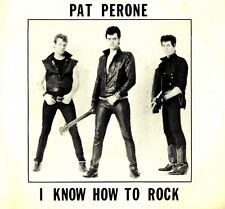

Perone
By Julia Masi
Issue 10; 1983
In another era he would have been the matinee idol. With his thick, dark hair, hypnotic brown eyes, and self-possessed stance, Pat Perone was born for the spotlight. But when he fronts Perone, with John Lee, drums; Peter Bliss, bass; and Pat on vocals and guitar, his visual appeal is upstaged by their music. Incorporating “the swing of the ‘50s” with the essence of rockabilly, while adding a heavier hand on the drums and guitar, Perone has captured a sound that offers an edge of originality to the vacuum of the New York scene. “Actually,” we’re trying rock’n’roll with a ‘50s feel,” says Pat, “because it’s danceable. And what good is a band if you can’t dance? We’re not exactly like some bands that do their rockabilly like it was done in 1955.” He admits that maybe their style isn’t as clean as Bill Haley and the Comets, or the Stray Cats. But that’s because they’re “more geared to a new approach that is going to give the listener something to remember.” And one of the things you’re most likely to remember about Perone is that they are very upbeat and uncomplicated, while still being serious about the music. “A twelve-year-old kid can like it as much as a 75-year-old. It’s real simple rock’n’roll. High energy. It’s not like there’s a cloud around rockabilly. This kind of music is just right there, on the table. There’s nothing to figure out.” Their songs “Stuck Up Girl,” “High School Romance” and “Going Steady” cover the basic love-struck themes, but as Peter points out, “The sincerity is real obvious. There are no pretentions. I don’t have to play like others. I just do what I do. And it comes out and it fits into what we’re doing.” What Perone is doing is very entertaining.
[The best I can figure out, Pat Perone is now an Elvis impersonator. – RBF, 2021]

The Public Servants
By Stacy Mantel
Issue 7; 1981
She proves that the human female voice is virtually limitless in its capacity to charm. Her staccato parrot voicings and vibrato should soon rank her as one of the more popular New Wave vocalists since Lene Lovich, although her style is clearly different. She, like Lovich, uses her voice as an obscure, non-traditional instrument, one brought back, perhaps, from extraterrestrial horizons. She’s Shelley Hirsch, lead singer for the Public Servants, which include: two fire-breathing and squeakingly talented sax artists, Philip Johnston (soprano and alto) and Dave Sewelson (baritone and alto); Wayne Horvitz on keyboards; David Hofstra on fretless bass; Bill Horvitz on prepared and electric guitar; and Richard Dworkin on the skins and some tropical-looking plants. Together, this futuristic ensemble blends art-rock, jazz, swing, pop and rock into a stimulating sound which Johnston things of as “Elephants marching through the jungle doing some sort of funky strut… it’s danceable-funky, but has sinister and mysterious aspects to it at the same time.” They’ve just released “Jungle Hotel” b/w “A Mistake” on their own J-Edible Records (motto: “It’s danceable, but is it Edible?”) to be distributed by Rough Trade. Surely no newcomers to music, the group has played together in different bands for many years and in different styles, which explains their versatility. The plants are cute, too.
[From Wikipedia: Hirsch won a DAAD Residency Grant in Berlin 1992, a Prix Futura award in 1993, and multiple awards from Creative Capital, the Foundation for Contemporary Arts, the New York State Council for the Arts, four from NYFA and six from Havestworks Digital Media Arts Center. She was a recipient of the Guggenheim Fellowship in Music Composition in 2017... In 2018, New York University Special Collections acquired her archive. - RBF, 2021] 


The Shakes
Julia Masi
Issue 9; 1982
With equal parts of enthusiasm, imagination and fun, the Shakes – Anna Bosch, keyboards; Eston, bass; Susan Holt, guitar; Daryl Leoce, drums; and Julie Miller, vocals – have blended together a sound that is fresh, versatile, and cerebral, without being pretentious. “Everybody in the band is nuts in a kind of clean way. It’s a natural nuts,” says Anna, who writes and arranges about 95% of the songs. I try to come up with different styles, but I have an insistence on melody. Something for people to remember that flows nicely. We do everything from pop to syncopated jungle. I think we tend to write about pertinent things instead of just, ‘I love you’/boy-meets-girl, but a lot of things that affect ordinary people. Like assuming other roles while still being yourself.” Daryl says, “Basically, we try to keep our stuff danceable. Being about to dance to the music is important ‘cause It’s a fun band. Danceable material is sort of an extra-added attraction, because if you want to start dancing you can. People like to be entertained, especially in light of what’s happening today. I think you can say things as controversial and poignant, but in a lighter way,” as he demonstrates in songs like, “Watch Your White Count,” “Incognito,” and “Blood in Vein.” But despite the strange sounding titles, the Shakes have nothing to do with ghoul rock. “When I think of blood, I think of strength,” adds Daryl. And strength maybe the most accurate adjective to describe this band who are incredibly tight in all aspect of their performances. Or as Julie explains, “We’re not stagnate. We just keep fanning out I think we have a strong sound. As musicians, we’re solid and can grow.”

Tru Fax & the Insaniacs
By Robert Barry Francos
Issue 10; 1983
Pop music…in its literal translation, is a must to avoid nowadays, since it would consist of people like Neil Diamond, Hall & Oats, and REO Speedwagon, to name just a few. But the pop sound has become sort of a section of rock’n’roll unto itself. Usually sung with a tenor (or higher) voice, it has a light, wistful sound that make you want to dance, without being slammed back down. Until recently, the Fast were, at their height, the ultimate pop band on the underground local level. They have now been non-violently usurped by a band originating out of Washington, DC, called Tru Fax and the Insaniacs. Their recent LP, Mental Decay, on DC’s Wasp Records, is a solid piece of work that seems almost impossible to top. Songs like “Washingtron” and “In the Air” (“A man who has orange hair/A man who is not all there/A man who loves the chair/That my President Reagan”) show how clever they are in songwriting, as well as topical. The main components of the group are David Wells and Diana Quinn. David, guitar, has done many solo projects, working on overdubbing tapes, as well as working with Harrison Fisher, the Rhode Island poet. Diana, lead singer and guitarist, is a person of many talents. Not only is she the focal point fronting this band, but she has sung opera in London, played in medieval groups on lute, recorder, and guitar, and sings with a group called the Dynettes. This accomplishment is added to her early training as a classical artist. Formed in 1979, Tru Fax and the Insaniacs released their first single in 1980, “Washingtron.” Despite the overwhelming raves to the record, their album is their first release since that point. This is due to a lackadaisical attitude towards their music, which has caused at least one member of the band, Tim Carter (who appears on the album), to leave because of “unacceptable artistic and financial compromises,” states Bill Asp, their manager, in a press release. Although they have played with major bands who have passed through the Washington area, they have not toured extensively, which is a shame. What the world needs now is pop, sweet pop. Let’s hope they decide to spread their sound around and show us how it is done. We could all use a breath of fresh air right now.
[Quinn is weekend desk manager, writer and producer for CBS News and a member of several local bands, like Honky Tonk Confidential, the Fabulettes, and yes, Tru Fax & The Insaniacs. – RBF, 2021]


Friday, April 20, 2018

Review: The Head Cat Rockin’ the Cat Club, Live From the Sunset Strip


Text © Robert Barry Francos / FFanzeen, 2018
Images from the Internet


The Head Cat Rockin’ the Cat Club: Live from the Sunset Strip
Directed by Mikki and Malory
Cleopatra Records / Ultra Films / MVD Visual
34 minutes, 2004 / 2006 / 2018

Back in the 1980s, there was a huge ‘50s revival. It was spearheaded, like it or not, by the Stray Cats. The reason I phrase it like that is because while the two guys backing up Brian Setzer, who seems to have garnered the lion’s share of the attention in his cutsie looks, were so much better than he was; musically, Setzer was by far the weakest link. It would be as if Billy Idol’s and Generation X was the face of British punk. Like Setzer, Idol’s okay, but he’s not really a good example of the actual sound, more a pretty face that’s built on ego. For more authentic rockabilly, we in the know relied on bands like the Rockats.

The reason I bring this up is because a member of both those post-rockabilly groups are at the core of the supergroup cover band called the Head Cat. Recorded in 2004 and originally released in 2006, this musical collective is made up of Lemmy (of Motörhead) on vocals and acoustic guitar, Danny B. Harvey (the Rockats) on electric guitar, Slim Jim Phantom (the Stray Cats) on drums, and Jonny Bowler (the psychobilly Guana Batz) on stand-up bass. One look at the set list below will give you some idea of the direction of the music.

If you are familiar with Lemmy’s sound, you may think, hmm, how authentic a rockabilly sound is that going to be? He’s more known for the growling, metal-punk cross-over of “Ace of Spades,” which feels like a vocal oil spill sludging across the speakers. You know, a great sound… but rockabilly?

From the first notes of “Good Rockin’ Tonight,” one of the earliest rock’n’roll songs from 1947 by Roy Brown – which, if I may digress, proves that rock’n’roll did not start with (a) “Rock Around the Clock” in ’55, nor (b) with Elvis – you know you are in for an interesting show.  The trio comes out swinging and out to take no prisoners (yeah, I’m full of cliché’s tonight). Lemmy’s growl is perfect for the effect, Slim Jim simply pounds the skins at full tilt, and Danny dances around the melody to a tight-yet-loose sound like a piledriver. This is rock and roll mixed with just the right touch of rock’n’roll.

The visuals are crisp and digital, but definitely pre-HD, and the sound is totally clean and loud. The lighting is cast in mostly hues of greens and reds, as they should be. Also, the stage is small, which is actually appropriate for the sound, rather than having musicians running around the stage.

Next up is Lloyd Price’s “Lawdy Miss Clawdy,” more commonly known by Richard Penniman, aka the Little Richard. This medium-speed grinder is a great selection, even though tethered by the sheer weight of the rhythm section. Not a complaint, by the way. Sometimes I can be a purist, but hey, it’s Lemmy. This is followed by the similarly paced “Talkin’ ‘Bout You” by Ray Charles from 1958, though more know the Animals’ cover in ’64.

One of my major complaint about this DVD is the editing by Kari Pearson and King Romero. This isn’t ‘80s rock and it’s not M-TV; there is enough energy onstage that the editing doesn’t need to denote tension or excitement, as Sergi Eisenstein famously posited. The cameras move around way too much, swinging and swaying, and edited together so quickly that by the time you get your bearing on what you’re watching, it’s gone to the next shot. It seems like they average about every two-to-three seconds, which is not only annoying (and bad direction), but literally nauseating via motion sickness. I felt like turning off the screen and reviewing it like a CD rather than DVD. You can see a sample below.

Eddie Cochran’s “Something Else” has been interpreted by many, including an enjoyable one by Sid Vicious in ‘79, but the Head Cat are a bit more loyal to the ’59 version. The pace, however, picks up when they next cover Chuck Berry – in my opinion the true King of Rock and Roll – with 1957’s “Reelin’ and Rockin’,” a rave up all the way. I remember the Rockats did an outstanding version of it as their encore the night they recorded their Live at the Ritz album; though the song never made it to the vinyl, sadly. But I digress…

The camera hovers around the three big-name members, including Phantom’s minimal yet-highly effective drum set, but you almost never see Jonny or the stand-up bass except in the background. The best I can tell there are three cameras, one for Slim Jim who is off to the far left rather than behind, one for Lemmy and Danny (though it’s usually up Lemmy’s nose), and one for a longshot from the back of the room. The bassist gets squeezed out. As a fan of bass players, this was disappointing, as well.

Putting aside some of the growl, they do the almost ballad-like “Fool’s Paradise.” Lemmy explains this is off the first album he ever bought, by Buddy Holly and the Crickets in ‘58, which explains why he singing it more straightforward. It’s a more obscure track of Holly’s, as is their next choice, Chuck Berry’s medium rocker “Bye Bye Johnny” (which was also covered by the Stones). Keeping the pace, they play Fats Domino’s 1958 “Sick and Tired,” which actually as a very similar feel to the previous song.

It’s important that they did not just pick the “top 10” kind of songs that you hear at most revivals, but rather chose some that you don’t hear very often, such as Larry Williams’ 1958 “Bad Boy.” While I’m familiar with it, it’s not one that shows up on oldies radio shows often. More people know the Beatles’ cover from their Help! album. However, the next song gets covered a lot, Carl Perkins’ “Matchbox,” which is solid I-IV-V progression. Danny’s guitar really flashes on this one.

For the final number in the main set, it’s the third Berry number with the raver “Back in the USA.” Lemmy is in full growl mode for this one. It’s a fine number to end the set proper, just as Jimmy Reed’s “Baby What You Want Me to Do” is perfect to start the two-song encore. Danny B. again gets to show off his guitar skill in a more modern vein that still stays loyal to the heritage.

The last on the DVD is “Blue Suede Shoes.” Knowing this band’s fondness for Elvis, I am assuming that’s the version they are covering, but for me, it’s solid Carl Perkins, who got jyped out of his career potential by an accident. But I will say this: no matter who’s they are doing, it’s a kick-ass song and a solid way to end the show.

The last thing Lemmy says as he ends the gig is “Thank you very much; live forever.” After Lemmy’s passing in 2015, he was replaced by death metal bassist David Vincent (aka Evil D, of Morbid Angel and Genitorture); I’m guessing Bowler is no longer with the band?

The extras are nice. The obvious ones are the set list (i.e., chapters) and a 2:40 slide show over a song not included in the DVD’s show, which is a killer cover of Buddy Holly’s great “Not Fade Away.”

The other more significant extras are two sets of interviews. The first is 20:33 of Lemmy and Slim Jim. They discuss a wide range of subjects including how they met and became friends, bonding over rockabilly, music from that period’s effect on the youth then and “still going on all the time” (Slim Jim), and the mythology of Elvis of course. For the 19:18 second interview segment the focus is Johnny D., on his history in music, his bands, and his musical philosophy.

Despite the terrible direction/editing and shaky camerawork in the feature, the important thing is the music, which is fantastic. I will gladly play this DVD more, but I will have it go through my speakers, and turn the visuals off. It’s still a great record.

Set List:
Good Rockin’ Tonight
Lawdy Miss Clawdy
Talkin’ ’Bout You
Something Else
Reelin’ and Rockin’
Fool’s Paradise
Bye, Bye Johnny
Sick and Tired
Bad Boy
Matchbox
Back in the USA
Encore:
Baby What You Want Me to Do
Blue Suede Shoes


Monday, April 10, 2017

PANTHER BURNS Stalk New York [1983]

Text by Julia Masi / FFanzeen, 1983
Introduction and photos by Robert Barry Francos / FFanzeen, 2017
Videos from the Internet

The music of the Panther Burns was interesting in that it deviated from a formula. In fact, it was the same rockabilly-blues paradigm that the Cramps built on, but the Burns went in another – albeit equally minimalist – way. They used dissonance, changed the rhythm, and included a bunch of “tricks” that would warp the sounds without veering that much away in order to keep it “electric” without it being “electronic.” To give you some idea, past members of the group included Alex Chilton (d. 2010) and Jim Dickinson (d. 2009)  

I saw the Burns play once (though for the life of me I can’t remember where) around the time of this interview (The Ritz perhaps?), and saw Tav Falco once more in 1996 in a solo gig at Mercury Lounge after an interview there for the Videowave cable access show (see at bottom) The rest of the band here also went on to other bands that achieved cult status.

Meanwhile, Falco moved to Europe towards the end of the last century, and continues to front a version of the Burns.

This article / interview was originally published in FFanzeen, issue #10, dated 1983. It was written by the Managing Editor of the magazine, Julia Masi. – RBF, 2017

The Panther Burns saunter out of a small rehearsal studio on East 8th Street and Avenue A, ready to make their way across town. Just as they begin to pile themselves and their instruments into a friend’s car, lead guitarist Jim Duckworth [who would join the Gun Club - RBF, 2017], the most loquacious and animated Southern gentleman imaginable, announces that he’d rather walk and “get some of that good Greenwich Village, Manhattan air.” A flimsy excuse to pursue his favorite New York pastime, looking for copies of the Panther Burns’ latest, their first big budget 12” EP, Blow Your Top (Animal Records), on the city’s street corners. “I love the adoration,” he calls from afar as he and drummer Jim “Voon” Sclavunos slip off in the direction of St. Mark’s Place.

About a half hour later, Jim and Voon arrive at bassist Ron Miller’s apartment for the interview. Of course, Jim is anxious to relay his experiences: “It was pretty exciting, seeing the record in the street. But the thing to do now is to go to street corners and ask for the Panther Burns’ record.” His voice becomes deeper and he slightly squints one blue eye. “You have the Panther Burns’ EP?” You see, it’s not cool to go into the records store. That is the first thing you do. You wanna see it in the stores. But when you get really hip, you wanna see it on street corners.

“We didn’t really acknowledge that it was us. We just asked him how much he wanted for it. He wanted two dollars for it. But the interesting part of the story is that when we walked back over there, every street corner was sold out of our record! So that’s a really good sign. We’re impressed with that. It’s on the streets. It’s in the stores. It’s even in Memphis. But it’s not on street corners in Memphis. Nobody sells stuff on the street in Memphis. Well, actually, they do, I take that back. They sell those ceramic Elvis busts. And those velveteen tapestries with the ship, always with the ship. And jeans. Jeans all the time. And inflatable frogs. It’s not like it is here (where) they have shoes and things you can use, like Panther Burns’ records.”

 Aside from an infatuation with street hawkers, Jim is slightly less than enchanted with New York City’s Northern hospitality. “I’ve been thrown out of everywhere I’ve ever stayed (in NY). I slept in a Volkswagen seat least night, and I’m not in a very good mood from it. I get to sleep in the Volkswagen again tonight, but then I’m thrown out of there, too,” he laments.

Fortunately, he’s not taking such petty annoyances to heart. Especially not in light of the fates that befell his musical heroes when they relocated to the Big Apple. “All those guys – Jimmy Rogers, Buddy Rogers – died almost on the train goin’ out to Coney Island. They brought him up here to make some last records. They carried him up on a cot. And then he says,” Jim lowers his eyelids, stretches out his arms in a crucifixion pose, his voice a crackling whisper, “’Oh, no-o-o-o-o-o.’ And that was it! He was a goner, Jack!

“Buddy Holly comes up here, and on February 3rd [1959] he dies in an airplane crash.” So why do Southern boys like Duckworth care to flirt with fate and not only play, but record their EP on jinxed turf? One of the lures of the big city was that the band was able to work at Plaza Sound Studio in Radio City Music Hall, which left them only feet away from the space where the legendary Rockettes rehearsed. “I’ve only heard about them all my life,” recalls Jim. In fact, he was so anxious to meet a real live Rockette that he hung up signs around the building saying, “Singers Wanted,” hoping that a hoofer or two would be willing to sing back-up on the EP. His scheme didn’t work out as planned, but he frequently got to see some of the dancers in and around the building.

“I just love tap dancers. They’re just – “he smiles and stares into space. “There are just hardly any left.” A big fan of Bill “Bojangles” Robinson (he’s even seen some of Robinson’s videos in slow motion) and Fred Astaire, he and Ron wax nostalgic about the dancers they’ve worked with while touring in jazz bands. “I played a gig with a tap dancer jus last winter, as a matter of fact,” remembers Ron. “There was a tap dance concerto with Honey Coles (one of Jim’s idols), and this girl named Brenda Bufalino. It was an orchestra gig. Morton Gold wrote this thing with a rhythmic tap dance part that’s mainly improvised. And an orchestra.”

“There’s two black guys in Pittsburgh who can’t get nowhere,” sympathizes Jim. “I remember I played with them when I was in the Jazz Workshop All-Stars. I was playing one night in Tunisia, and the next thing I know – these guys were so neat! They just came out on stage, dancin’ like this – “; he gets up and does a pretty impressive shuffle step across the room. “They were just having the greatest time tappin’ and doin’ solos, cuttin’ each other, and doin’ fours! And I remember when they got off, they just tapped off! And I was watchin’ them in the wings, tappin’ and slappin’ each other on the back, and doublin’ over with laughter. I just thought it was wonderful. They’d just been doin’ this for about 40 years. Saxie Williams. And I forget the name of his partner.

“There was a period when all these guys in Pittsburgh would try to tap in the kitchen, late at night, doin’ the timestep.” He confesses that he can’t tap, as he demonstrates his own competent version of the dance. But the dancer of the group is said to be lead singer/guitarist Tav Falco. He’s known in some Southern Arthur Murray Dance Studio circles for his very classy tango.

“This is a studio record,” Jim continues on the original subject. “This thing was done in Plaza Sound. This thing meets the requirements of everybody. The last one was the garage record [the 45 produced by Alex Chilton on Frenzy Records – Ed., 1983]. And the one before that, that was done in the closet.

“We tried to keep a raw sound by recording the rhythm section first, (then) guitar, bass and drums, so, we could have that “feel.” We didn’t want to do it, like, drums, and then puttin’ stuff over it. We wanted it to sound like the group playing.

“I think rock’n’roll is continual,” he explains. “There was rockabilly, then there was another kind of music, and then there was the ‘60s, and it just keeps changing. Anything you do is going to include the whole tradition.”

And tradition, or just a desire to reinforce the roots of rock’n’roll, is one reason why the Panther Burns have chosen to resurrect some of the classics of rockabilly. They bring a fresh, timely originality to the material that they revere. “There are just so many great cover tunes,” answers Jim, when asked why the band doesn’t incorporate more original material in their repertoire. “What’s the difference if it’s a cover tune anyway? We just play the music the way we feel it anyway. Ron makes his own bass parts and we generally change the music around to fit us.”

“Why must performers do original tunes?” asks Tav. “You know, Frank Sinatra didn’t write a lot of the material he did. Yet people didn’t ask him to write songs. ‘Why aren’t you writing songs, Frank?’ It was his voice. He had the voice. And Elvis didn’t write much of his songs. I think that’s a thing from the ‘60s. Buddy Holly was a good songwriter, and there were a lot of singer-songwriters like that. I personally have never concentrated on songwriting. I look at this as a body of work that can be shared. I think rock’n’roll is a genre, and you participate in that body of work. Now, if we contribute something, write a song and something comes out, fine. But personally, I’m not trying to get down and be a songwriter.

“I like working out of a tradition like some of the blues work we’ve done so far. Especially the blues. We’re bringing into the modern world music traditions that we were exposed to, that we grew up with.”

But Jim does think it’s necessary for artists to do original work, “Because that’s what moved the American musical tradition on, the need to write new tunes. Be-bop; they could have reused the harmonic basis of the standard tunes, but they would have lost money, so they wrote these incredible melodies on top of them. So, original music is where all of this stuff comes from. It’s necessary to go in and write original tunes if you have something you want to say. If not, go and do cover tunes. The reason we do so many cover tunes is that there are so many great ones to do. And it’s not a constriction. It’s not black and white: ‘cover tunes are constrictions; originals are freedom.’ Sometimes it’s the opposite.

“Take the first song,” he points to the cover of his EP on the table, “I’m a Rocket. “ “The original was acoustic guitar and voice. This one has all sorts of things happening to it. We gave it an ensemble. The whole group is playing. We have drum parts, bass, guitar parts. It has the same words at the original. It has the same rhythmic feel, but Voon has opened it up a lot. It has feedback and all sorts of stuff.”

“I just think that the music we’re doing is a product of the atomic consciousness of the ‘60s,” offers Tav. “You know, like after 1945 and the atomic bombs that were dropped. Like this song,” he pauses to listen to part of Arthur Pruitt’s “Gonna Dig Myself a Hole,” coming from the stereo in the next room. “When he comes out (of the hole), there won’t be any more wars around. So, in a way, music has a sort of political strata. People think that this music is very primitive. Blues and early rock’n’roll are very primitive. However, there is a subversive quality about it that comes out of the absence of any really strong labor movement in this country. It’s kind of a product of that, because it’s not about joining in. It’s not about filling the American Dream. It’s not about that at all. So, people think this kind of music is very Rightist and a celebration of all the American values, but it’s not. It’s carried on in spite of that.”


Monday, May 25, 2015

DVD Review: Dexter Romweber: Two-Headed Cow

Text © Robert Barry Francos / FFanzeen, 2015
Images from the Internet

Dexter Romweber: Two-Headed Cow
Directed by Tony Gayton
MVD Visual
Cape Fear Filmworks
78 minutes, 2006 / 2011
www.mvdvisual.com

Before the film Boyhood (2014) made a name by following its subjects for a dozen years, and during the period of British director Michael Apted’s Up series following some school chums every seven years, indie director Tony Gayton pointed his camera at The Flat Duo Jets’ lead singer and guitarist, Dexter Romweber, over a period of two decades.

Usually I don’t quote the jacket cover, but here is a shortened version of the description, which I thought did a fine job of an overview: “…[this] started as a black and white film that followed Dexter Romweber and drummer Crow [Chris Smith] on a rock and roll tour along the same route as General Sherman. The film was not finished… but thanks to the digital age the filmmakers were able to resume the film seventeen years later.” Of course, what goes on in the film is actually way beyond the scope of that statement.

I only had the opportunity to see The Flat Duo Jets (TFDJ) once, videotaping their performance at CBGBs on a co-bill with Buffalo cult band The Mystic Eyes in the early 1990s. They were a lot of fun, and I wish I had the opportunity to see them again, but it just never came to be after that. In one more egocentric statement, there is a clip of the band on The David Letterman Show, and ironically, I am watching it on the night of Letterman’s last program. Cue The Twilight Zone music, please!

There are many ways to categorize the music of Romweber and all of them would be accurate, and yet none of them would be, as well. There is a baseline of blues, as his solo off-the-cuff rendition of the Slim Harpo classic “King Bee,” on acoustic guitar in a motel room. There is also an Elvis-esque rockabilly flair when he is in a manic stage. And yet, the evidence of a garage revival from his early ‘80s influences is present. Put that all into an envelope of Other music – a cover term for the unexplainable-yet-charismatic likes of the Shaggs, the Legendary Stardust Cowboy and especially the first-generation of the Cramps – and you still haven’t nailed down what it is about Dexter that is a general descriptor as he cannot be pigeonholed. He just refers to it as “‘50s music.” That’s also why he has so many fans, including many who are musicians who refer to him as a major influence.

Thankfully, Gayton doesn’t do the film chronologically, but rather gives us resonating vignettes of the music and the man, as he theorizes life (usually with ciggy-butt firing away) in a cryptic and possibility just a bit of psychotic way. Yet, he still remains a charmer, which I say without the slightest hint of sarcasm, but rather admiration.

At the early stages of the documentary, there is a flash flood of name performers who boost up what Romweber has meant to them, including Jack White (who shares a similar passion for both ‘50s ‘billy and off-kilter performance; he has also had much more success, though Romweber is by far more interesting), the now Tea Party advocate Excene Cervenka of X fame, and Neko Case, with whom Romweber has toured in the past. They all give their testimonials on influence, and happily, unlike most music documentaries, after stating their case in bytes, they mostly don’t come back until briefly near the very end. This is in a brave and thankful deference to most films that drown in back-slapping. No, this film is about Romweber, and he keeps our attention throughout.

His mom, who we meet both in the late 1980s and then again in the mid 2000s, called Dexter an “old soul,” and that may be true, as is his history of alcohol and some drug abuse (we don’t get the impression any of it was of the opiate nature), which led to breakdowns, career hiccups, lost friendships (e.g., Crow, who struggled with his own demons), and an affection for Jean Baudrillard, one of Dexter’s also-troubled philosophical idols. Through mental health issues (in my opinion) and previous use of mind-altering substances such as booze and pot, Romweber goes into some detail about how he has survived over the years between the first filming and the second, but acknowledges that there have been constants, such as his Silvertone guitar, of which he gives us a tour.

The third act is filled with both destruction and redemption, intermingled. After the breakup of the TFDJ, there was a two-year tailspin of no music, regret of the failed TFDJ and the promise of a higher-level career that was not meant to be by the end of the film, but it’s shown that all of it is what makes Romweber remain true to his music. I wonder how much he would have been corrupted by the industry back in the 1980s and ‘90s if success had befallen on him. Yes, he’s still struggling on one level, but as we learn from Neko and others, his influence is felt every day in their own musical output.

There is a lot of music played by Romweber throughout the film, but very little of it is official, i.e., recordings. We do see bits and pieces of the tours, both 1988 and 2005, but most of it is off the cuff stuff, in motel rooms, at home with his mom, hanging out (with Crow, for example), some clips on stage, and even what looks like an old age home where he plays piano for a less-than-gaggle-number of old men. No song is shown complete, but this off-the-cuff competently shows both how much music is a part of his life, and unconventional means of affectionate communication (e.g., in my own family, we communicated by asking routes traveled and volume of traffic; here, casual music is the medium of conveyance of connection).

An especially touching moment is a back-and-forth of Romweber at a piano singing “Burning Bridges,” both in the early BandW and then-present, with Gayton eventually joining the shots together.

While one of the meanings of the title of the film is presented during the final credits, in my opinion there are more possibilities, such as the twin comparison of ’88 vs. ’05, and even an opening clip from the early days, where Romweber is talking and Crow is standing behind him, harmlessly and joyfully mocking him, almost looking like his head is growing from Dexter’s shoulder.

The three extras are solo performances by Romweber: a spectacular instrumental guitar showcase on BET’s Jazz Discovery (5 minutes), an on-stage medley at the Silverlake Lounge (3 minutes), and a somewhat amusing interview Mr. Mouse and music on the Chapel Hill cable access show Z-TV (30 minutes).

This film is both unknown by most, and yet legendary among fans, filling up festivals whenever it shows up on occasion. Now that it’s on DVD and I assume VoD, this is definitely a chance to see one of the unique characters on the indie music scene.


Tuesday, March 31, 2015

LEVI DEXTER: Hepcat Heartthrob [1982]

Text by NanSuzy Q. Foster / FFanzeen, 1981
Introduction © Robert Barry Francos / FFanzeen, 2015
Images from the Internet

This interview was originally published in FFanzeen, issue #8, dated 1981. It was written by “NanSuzy Q. Foster,” aka Nancy Foster, Nancy Neon, Nancy New Age, and Suzy Q.

Note that I have linked some music to artists mentioned by Dexter throughout this piece. Click on them to hear it.

Fanzine publisher / music fanatic / ”The hottest thing from the North to come outta the South” / my-sister-from-another-mother Nancy Foster and I had tickets to see the Clash play at Bonds, in Times Square. It was the thing to do, I suppose, more than anything else. When we got to the venue and we saw the over-sold crowd on line being obnoxious and bullying, Nancy suggested that we ditch the gig and head downtown. The Rockats were performing that night, recording their Live at the Ritz album. We sold our tickets to someone for just enough of a profit to pay for our way into the Ritz, and hopped on the subway. If you are thinking, “Are you crazy?” then I recommend you check out the video clip below. The Rockats were an exciting band, in a way that the Stray Cats could never achieve, even though they were better at marketing themselves because they were all Yanks. The encore, which does not appear on the record, was a cover of Chuck Berry’s “’Round and ‘Round,” which Levi bend down on stage and shared his mic with Nancy, who has a booming voice of her own. It was a great show. – RBF, 2015

FFanzeen: Was the Rockats your first group?
Levi Dexter: Yes, they were the first group that I ever professionally played with. A couple of years before that, there were other rockabilly bands in London, like Crazy Cavan, the Flying Saucers, and Shakin’ Stevens.

FFanzeen: What year was that?
Levi: Late ’75 to late ’77. I’d get up and do one song with them for a laugh. I never had a band. One day I was doing a song with Shakin’ Stevens in a movie theater, of all places, and Leee [Leee BlackChilders, famous photographer and scene maker who worked for MainMan, managed the Heartbreakers, and is currently Levi’s manager – NF, 1981; Leee passed away in 2014 – RBF, 2015] saw it and said, “Wow!” and helped me to get a band together.

FFanzeen: So, were Smutty Smiff and Dibbs Preston in the original Rockats?
Levi: The original Rockats formed in 1977. It was an all English group. There was Don Deveroux (on drums), Dibbs on guitar, Smut on bass, and Mick Barry on rhythm, and me.

FFanzeen: How did you meet Dibbs and Smutty?
Levi: It was really quite a punk thing. Leee said, “I’ll get you a band.” And I was with Smiff’s family then, and Dibbs was hangin’ around the Vortex (a punk club) and said, “Hey! I can play guitar kind of okay.” And so, Leee introduced me to him; and we met at the Vortex. We met the drummer at a Wayne County concert and we said, “Do you want to be in our band?” Smut was there fussin’ around and Leee said, “That looks great. Why don’t we have him in the band?” He could play enough instruments.

FFanzeen: So, he started playing bass after he joined the band?
Levi: Yeah. He could play. Originally, he learned like, two songs that we would play first, really horribly loud. Then we’d unplug him and say, “Oops! Sorry, something went wrong with the bass amp.” And then he got into this trip where he’d have half a drum stick and he’d just wack on the upright bass. It sounded awful, but it was good fun.

FFanzeen: Where were the two Levi and the Rockats singles recorded [“Room to Rock” / “All Thru the Nite”; “Rockabilly Idol” / “Note From the South,” both 1979, on Kool Kat Records and Peer Communications – RBF, 2015]?
Levi: Out in Los Angeles. I can’t remember the name of where we actually recorded it [LRS – RBF, 2015], because it was such a little place. But out in Radio City, there’s a big joint, where we mixed it [Greg Lee Processing – RBF, 2015].

FFanzeen: Were your British fans exclusively Teds, or did you have punks as fans, too?
Levi: No, we never played to the Teds or rockabilly audience because it wasn’t pure, original – Charlie Feathers – they would freak out. Back then; they could deal with it now. The first date we did was, like, a reggae thing. Then we played with the Fabulous Poodles at some college date. And then the next date we did was with Spiv, of Athletico Spiv. I think it was Spiv Oil back then. The Unwanted, Siouxie and the Banshees, and Adam and the Ants.

FFanzeen: So, your fans were mostly punks, right?
Levi: Yeah. We went on last that date, so it was really scary. The punks really loved it, cos it was noise and fun and rowdy. And it gave us time to learn to play.

FFanzeen: When did you first get into rockabilly?
Levi: My father was a drummer so there was always a lot of that goin’ on. And my mother would play rock’n’roll records, like Eddie Cochran and Little Richard, and Elvis and stuff. I was eleven or twelve, and I got into being a Ted for about two years. And then I just started goin’ out to the rock’n’roll joints and just started hearin’ nothin’ but ’50s music. When I was (first) bein’ aware of music, the only places I’d go were, like, Ted joints. It was all pre-‘60s and it was really all a small-minded, simple attitude of, like, if it’s after 1960, it’s not cool. “The Twist” is not cool because it’s, like, the third number is a six. But some garbage song from 1955, of some guy singing rockabilly was cool, because it was rare. There’s two levels of music: there’s the constant changing thing, level one, where this is in, that’s out, this is in, that’s out; and there’s a level just below that, of the boring, middle-of-the-road stuff, like the radio plays.

FFanzeen: Like AM pop?
Levi: So, either you’re one of those kids that gets into what’s on the radio or you get into the cults, like Teds or Mods or skinheads. But it seems that everybody eventually gets sick of all this constant switching, so thy just settle into whatever fits them most. So, if they’re into, like, ‘50s rock’n’roll, they become Teds, or not really Teds anymore; they’re finished now. Well not really finished. They’ll be around ‘til doomsday. But they became rockabillies, or hepcats – things like that.

FFanzeen: Do you like the new stuff, like Tex Rabinowitz?
Levi: My kind of stuff. Now that I’m into live (performing), it’s hard to tell what’s going on, record-wise. In Los Angeles now, it’s the Blasters, the Cramps – even though they’re going psychedelic. In England, the Hepcats. They’re brilliant live. Always dependable live; they’re gonna be really crazy. The Meteors. They’re the ones to watch cos they’re coming up out of the underground. They’re sort of like the English equivalent of the Cramps, their sort of style. They do horror, like, “My Daddy Is a Vampire.” They’re really scary, but they’re lots of fun. They haven’t played America yet, but they’re brilliant. They’re really great.

FFanzeen: When did you decide that you wanted to make music your career?
Levi: When it first dawned on me that I would put a band together.

FFanzeen: What was your first impression of America or New York?
Levi: When we first came over to America, we landed in California. And I went, “This is it! This is America! I’ve made it!” and just stated huggin’ palm trees. I loved it. We were there six weeks and then we went down South. The idea, when we first came, was that we weren’t gonna play. We were just gonna drive around because we’d been singin’ songs about New Orleans and down South, and stuff like that. We’d never been out of England, so we couldn’t really sing about American rock’n’roll stuff. Then we went to Texas and we got into a lot of crap there. We went to Dallas, had a party there for about two days. Then we went to Kentucky. We were expecting guys with guitars coming out of their pockets, and it was all these farmers and rednecks and hippies, and people who were into KISS and Aerosmith and stuff. And I thought, “This is not what I thought it would be!” We stayed there for four months. Then we finally made it to New York and it was like a breath of fresh air. Kids that were really sick of that stuff. To me, rockabilly doesn’t have a lot of messages. It’s supposed to be spontaneous fun, but it has a lot of passion in it. The only people that I believe can really do it right are the kids. They do not only rockabilly, but rock’n’roll in general – with a lot of passion – and people can feel it. If somebody’s stuck-up and they’ve got a cushy number, they come off real polished and slick, and people feel that. It’s just not what it’s all about. To a lot of straight people, that’s why rock’n’roll is scary. You can have a whole band gettin’ sweaty and throwin’ themselves all over the place and rolllin’ around on the floor. And straight people will go, “What the hell is goin’ on?” It’s just as scary for the kids, with problems and a hard time to watch some slick band. I believe that you should be larger than life. I’m not saying that you shouldn’t wear jeans and a t-shirt, cos I’m supposed to be bigger than life, as opposed to who I am – or what I am. I like to dress flashy. And I don’t like people to tell me I should or I shouldn’t.

FFanzeen: Who are some of your favorite rockabilly singers?
Levi: My taste fluctuates to whatever I’m being exposed to at the time. If you asked me that question two years ago, I would have gone, “Oh, Charlie Feathers, Johnny Carroll and all these very obscure rockabilly guys. But now, that’s not really enough for me. I like the sex life of rockabilly. I like it to be really wild and crazy. But I like it to be pretty sick. Old stuff I like are the guys that never really made it, like Jackie Morningstar that did horrors in the ‘50s. And this blonde girl, Sparkle Moore, who does a song called “Skull and Crossbones.” She was really sick. She does this heavy breathing, like panting and stuff, like really bad taste. She was great. Pure ‘50s trash! She wore a leather jacket with skull and crossbones on the jacket. Like trashy, mayhem stuff. That’s what I like now. I’ve gone through all the, “Oh, I like that stuff cos it’s rare.” Now I’m just into what gets me excited.

FFanzeen: Have you found any places in New York that are cool to pick up rockabilly records?
Levi: Yeah. The trouble is it’s, like, record companies release the record and they’re, like, country-swing rockabilly stuff. There’s too many people rippin’ off the rockabilly kids cos they put out an album that has two wild rockabilly tracks and the rest of it is bad. It’s not fun; it’s not wild; it’s not sick – it’s garbage. It’s just like third-rate country and western with a beat. I may dress in things that cost me a lot of money that I work hard for, but that won’t stop me from rollin’ around the floor and getting’ it all scuffed up. It doesn’t’ matter to me. All that matters is that you’re doin’ what you feel.

FFanzeen: Do you dress the same offstage as on?
Levi: Pretty much. When I’m playin’ I like to wear baggy pants, mainly cos I can move. I like to wear jackets for security. Like some people like to go out holdin’ their guitar, even though they don’t play nothin’. I like to wear a jacket, then take my jacket off. Once I get my jacket off, then I’m, like, “Now I’m ready to deal with the whole thing!” I’m not some prissy showman. I don’t buy $300 suits and then I’m too scared to get them wrinkled up. When I’m on stage, I like to dress like I’m on stage. When I’m off stage, it doesn’t matter. But if there’s gonna be a lot of lights, I like to clash colors, sparkles; cos if you’re on stage, no matter what ya are, no matter if you’re in the biggest joint or the seediest hole, if somebody is watching ya, somebody is watching ya. I’m not going to pretend that I don’t want people to look at what I’m doing. A lot of bands – not just in rockabilly but music in general – are brilliant bands, but I just don’t wanna look at them. Some bands I can watch that are dressed in jeans and motorcycle boots and I’m just entranced by their music. But I really don’t’ give a crap about what they’re doing onstage. Some bands look good in boots, a t-shirt, and a leather jacket. And some bands are so obviously miserable cos they think that’s what they have to wear. No matter what anybody says, an audience of honest kids can feel whether you’re fakin’ it. Whether it’s music or attitude, or clothes or anything.