I became acquainted with Shari while she worked at Max’s Kansas City, in
the late 1970s. She is an amazing artist and cartoonist, and I published a few
of her humorous Max’s Funnies in the print version of my physical FFanzeen in
the early 1980s. This is a reprint of a Facebook blog on May 19, 2023 that she
wrote about the first time she was Joey Ramone perform in a pre-Ramones band
which shared a bill with SUICIDE, reprinted with her permission. – Robert Barry
Francos, 2023
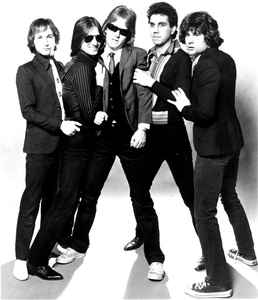
Sniper
The First Time I Saw Joey Ramone: For His Birthday (May 19, 1951)
The very first time I saw
Joey Ramone perform live was as “Jeff Starship,” fronting the glam rock band
(we called it “glitter” back then) SNIPER, at Coventry, on Queens Blvd in
Sunnyside, Queens in 1973. I was 16 at the time and going to Art & Design High
School in the city. SNIPER was opening for a duo that my Art & Design
friends and I had heard much about, and we’d gone to check out: SUICIDE. We
knew the singer was a painter/sculptor/installation artist that was getting a
lot of attention, so we were intrigued.
When we got to the club,
we found a place to sit on the floor about twelve feet from the stage. The
crowd all found seats on the floor around us. The room filled up fast.
When the lights went down,
and SNIPER got on stage, I was immediately spellbound by the lanky front man
with bangs and sunglasses. First of all, he was taller than anybody I had ever
seen in my entire life – let alone someone fronting a rock and roll band. Even
without the 8-inch-high hot pink platform boots he was wearing, he would’ve
been taller than anyone I’d ever seen. Super long skinny legs in hot pink shiny
hip-hugger spandex pants, hot pink platform boots, and a dangling long black
scarf. Long dark wavy hair with short bangs, big cheekbones, and round shades.
And he had a stance that looked as if he was hardly moving, but even without
moving much, his delivery actually seemed quite aggressive. He had a unique
vocal style. Everything about him was unique.
I don’t recall the music
very well to tell you the truth. And I don’t recall the other members of the
band because I couldn’t keep my eyes off the singer. I just remember thinking “I
will never forget this front man for the rest of my life.”
After their set, we were
anxious to see the headliner. I’ll make this next part short because this story
is really about Joey, but I can’t leave out my first impression of SUICIDE.
Suicide
It got dark, and all of us
in the audience were sitting on the floor, waiting for what seemed like an
interminable amount of time, looking at the door behind us from which the duo
would be entering. Finally, a guy dressed all in black leather comes into the
room, dragging a large thick chain behind him. Slowly approaching the stage, he
wields the chain menacingly around the edge of audience, shouting
unintelligible stuff, and being incredibly menacing. I can’t remember if he was
on a mic yet, but he was loud. And I don’t remember if the keyboard player,
Marty Rev, was on stage yet at that point. I only remember my first glimpse of
the singer, Alan Vega, and he held us all in thrall. I was sitting there, and I
remember thinking, “Okay this is scary. If I get up now and try to leave, I’d
have to make my way out by stepping over all these people in the dark, and he’s
gonna see me, and he’s gonna come running after me with that goddamn chain...”
I had no choice but sit there and wait and see what happens next. So, I stayed.
When they were finally on stage, the music was deafeningly loud and strange,
and different from anything I’d ever heard before. And despite the terrifying
theatrics of Alan’s entrance, the music was actually mesmerizing, and I became
of a big fan of SUICIDE. Years later at Max’s, Alan and I would become great
friends. He was a real sweetheart. A true innovator.
Back to my Joey story…
For three years, after
seeing that show at Coventry, I would remember that strange looking singer I
saw fronting that opening band, wondering what ever happened to him, if he was
still performing.
By 1976, I was still
living at home in Queens, and going to SVA (School of Visual Arts) in the city.
One day I was at my boyfriend’s place. He had just bought a new album. It was
by this band THE RAMONES; he said that I just had to hear because they were
great. Totally different than anyone. Then he showed me the album cover. I
couldn’t believe it. I was like, “Oh my God, that’s the GUY!!! That’s
the GUY!!! That’s that front man I told you about! The lanky one with
the bangs and the glasses! It couldn’t be anyone else! That’s the singer of
SNIPER!” It was so weird that I was the only one in my crowd that ever saw him
play in any band before THE RAMONES. Needless to say, that was a great first
album, and the rest is history.
I saw them for the first
time at Hurrah’s in August 1978 with my friend Jane. She and I were up front
and center, standing right against the stage. And many years later I met his
beautiful mom, Charlotte, a very sweet lady. And it was obvious that he
inherited those big high cheekbones from her.
There have
been very few interviews where the people involved have just annoyed me right
off. One was the great guitarist Chris Spedding (although I was just an observer; he was obnoxious to both the interviewer and
about the topic, rock’n’roll); another was Teenage Jesus and the Jerks.
I had never
heard of Teenage Jesus and the Jerks until I saw an ad that they were playing
at Max’s on a Monday night. I said to myself, what a great name for a band, I
gotta interview these guys.
Going upstairs
to the dressing rooms, I found the band, passed out copies of FFanzeen No. 1 to them, and
asked for the interview. I did not yet know anyone playing in the band at that
time. If I had been a bit more of a scene-hanger-outer, I probably would have known
of the exploits of Lydia Lunch, another of the Max’s groupie collection (e.g.,
Nancy Spungen). I later heard the stories of her famous taxi ride with the Dead
Boys, who named at least two of their songs after her (“Caught With the Meat In
Your Mouth,” and “I Need Lunch”). I was obliviously innocent.
As well, I had
no idea who James Siegfried was – who would later turn up variously as James
Chance (of the Contortions) and James Black (and the Whites) – or the late
Bradley Field (who worked at the Strand Bookstore). Bass playing Reck, from
what I gather, was recently from Japan and was not well versed in English. At
least, that was the impression that was presented to me.
In an
interview for Playboy, if I remember correctly, Marlon Brando once said that
the reason he hated doing magazine interviews was because in print, you can’t tell
when someone is joking. I fully understood that statement, especially after
interviewing this band. The reader cannot tell the contemptuous tone to which
the band answered my admittedly unprepared questions (remember, I hadn’t seen
them, nor heard of any of them, having gone in totally blind). In hindsight, I
should have interviewed them afterwards.
As the
interview – if you want to call it that – proceeded, I was getting more and
more put off, to the point that a “whatever” feeling finally took hold of me. It was published in FFanzeen No. 2, dated October 31, 1977.
Teenage Jesus and the Jerks
At first, I was seriously
thinking of not printing this interview with this bunch of poseurs, but the way
I figure it, because a group grabs me the wrong way is no reason to deny you,
the reader, the pleasure of learning to feel the same.
It is not that this band is
obnoxious, but that it is bullshit obnoxiousness. Their “attitude” is their gimmick.
People like to be assaulted, as long as they know there is no physical threat
(i.e., fans of Ruby and the Rednecks).
Oh, yeah, if you read FFanzeen No.1, you may have
remembered I mentioned that some of the Cramps interview was drowned out by
people telling dead baby jokes. Well folks, these are those people (along with
Jim Marshall, editor of New Order fanzine).
The band consists of lead
singer / guitarist Lydia Lunch (Teenage Jesus), saxophonist (?) James
Siegfried, bassist Reck (who quietly sat tuning his bass during the whole
interview), and drummer Bradley Field (not present at the time). Also in the
room were two of their female roadies who got into the action.
You will note, towards the
end, I more or less gave up and let them go on by themselves. This interview
took place in the Max’s Kansas City dressing room on August 8, 1977.
(ffoto by Robert Barry Francos)
Roadie 1: Ask them what
they think about God? FFanzeen: What do you think about God? Lydia Lunch: My father, you mean?
FFanzeen: I
take it you’re Teenage Jesus. Lydia: You take it. And you know what you can
do with it.
FFanzeen: How
long have you been together? Lydia: Two and a half months.
FFanzeen: You’ve
been gaining a lot of popularity ... Lydia: Who wants popularity? I don’t care if
we have popularity. We want unpopularity.
James Siegfried: We were really mad that people liked us. We wanted them to hate
us.
Lydia: They don’t have the right idea if they’re outright fans. I don’t care if
they don’t like us as long as they don’t like us for the right reasons. I’d
rather have them hate us for the right reasons than to like us for the wrong
reasons.
FFanzeen: Why
do you want to be hated? Lydia: I don’t want to be hated, but I don’t
want mindless assholes to like us so we can have a KISS army, a Teenage Jesus
army, no. We’re annoying. We have annoying sounds. If you like to be annoyed,
you should love us. Otherwise stay home and listen to Dictators’ records. Because
everything is so boring.
James: We make that normal stuff obsolete.
Lydia: We don’t play chords. I never played guitar before but I wrote all the
music and all the words, except for the two that (Siegfried) wrote.
FFanzeen: What
type material do you do? Lydia: Factory, mechanical, and military.
FFanzeen: What’s
the purpose of getting a group together if you ... Lydia: Because I was bored with all the other
bands. We have to entertain ourselves.
FFanzeen: Does
that include the Cramps? Lydia: Don’t bring band politics into this
interview.
FFanzeen: What
do you consider the ultimate goals of the group? Lydia: The ultimate goal of the group is to
annoy. We just want to show the other bands how bad they are. New Wave is dead
wave. There’s no such thing because all the New Wave bands are re-hashed Who. We
have one influence: I live in front of a factory. That’s the only influence.
James: Wait until you hear the music.
Roadie 1: Their music is comparable to riding the IRT.
Roadie 2: During rush hour. It smells the same.
Lydia: It’s smell for the ear. It’s stench for the ears.
FFanzeen: If
you have no influences and you don’t listen to any of the new bands, what do
you listen to? Lydia: Nothing. I don’t even have a stereo or
a record player. I don’t have a TV, and I hate bands and I hate music.
FFanzeen: And
what do you do to amuse yourself? Lydia: I play with myself. I have my band to
be amused by, (and) the asinine audiences who’ll sit there and applaud for anybody.
How are you amused?
James: He amuses himself by asking dumb questions.
Roadie 2: Why did you start your magazine?
FFanzeen: Well
... Lydia: We really don’t care. Just ask your
questions and get out. [laughs] [breaks
character – RBF, 2022] Who’s the grouchiest band
you know?
FFanzeen: What
songs do you perform? Lydia: [Back into
character – RBF, 2022] You want the titles? Forget
it. You can listen to it when we play. We don’t even announce the songs. If you
want titles, forget it. Wait until our album comes out.
Roadie 1: I want to turn your brain to mush so it will be soft enough to touch.
Lydia: That’s not one of our songs.
FFanzeen: If
you come out with an album, are you going to listen to it yourself? Lydia: That’s the only thing I’d listen to.
Roadie 2: Ask her some of
the questions you asked the Cramps. [Looking through FFanzeen
No. 1] “What’s your favorite song in the set?”
Lydia: No comment. They’re all my favorite.
Roadie 2: “Is there such a
thing as punk rock?”
Lydia: I guess. That’s what my mother listens to.
Roadie 1: Don’t they play that on WABC or something?
[ffoto by Robert Barry Francos]
Roadie 2: “How was the
group formed?”
Lydia: I said, “Do you play anything” to (Reck) the bass player at CBGB. He
couldn’t speak English. I knew Bradley, and he never played drums so I just got
him in the band. I won’t mention how we got (Siegfried).
Roadie 2: “How did it pass
that there would be no bass?” FFanzeen: That one won’t work. You can ask some of the
other questions, from the other interviews. Lydia: Why don’t you (roadies) ask questions.
You probably think of better ones than he does.
Roadie 1: Does your feet
smell?
Roadie 2: OK. “How do you like playing CBGB” [from the Tom Petty interview –
ed., 1977]?
Lydia: We hated it. We hated playing Max’s. We hated playing out. We like
rehearsing.
Roadie 2: “Do you like
playing the Bottom Line?”
Lydia: We loved it only we never played there.
Roadie 2: “Are you on tour
now?”
Lydia: Yes, we are. We’re touring all the local washrooms.
Roadie 2: “What was it like
playing with the Runaways?”
Lydia: Playing with the Runaways is equitable to playing with dead babies, only
not as much fun.
Roadie 2: “How did you meet
the Heartbreakers?”
Lydia: We never have and never wanted to. Why don’t you ask us what we think of
certain bands in particular?
Roadie 2: OK. What do you
think of the Dead Boys?
Lydia: They’re dead.
Roadie 2: What do you think
of ... .
Roadie 1: The Erasers?
Lydia: Erase the Erasers. That’s what I say to all bands.
Roadie 2: OK, I like this
one: “What single?”
Lydia: We’re going to do a single at the end of the month for Ork Records [this record was not released on Ork’s imprint – RBF,
2022]. Who cares. Big deal. We’re gonna get ripped
off like Richard Hell and Television, and all the others who did singles for
Terry Ork and didn’t get a penny.
Roadie 2: “What is your
ultimate goal?”
Lydia: To die. To live and die.
Roadie 2: “Do you see
yourself branching out into other media, like television?”
Lydia: I’m gonna be a movie star. Or an attraction. I already am.
Roadie 2: “Do you have any
hobbies?”
Lydia: No.
Roadie 1: Don’t you basket
weave?
Lydia: I used to. Don’t you want to know how old we are?
FFanzeen: No. I
don’t think it matters. Lydia: I think it matters.
FFanzeen: Alright,
how old are you? Lydia: Eighteen. The bass player’s nineteen. The
rest I guess it doesn’t matter.
James: I’m twelve.
FFanzeen: You
don’t want a following, but do you have one? Lydia: Yes.
FFanzeen: What
kind of people ... er ... follow you? Lydia: Scary ones. Only in the dark. Usually
big and black.
FFanzeen: Where
are you from originally? Lydia: Why do you ask these questions?
Roadie 1: Originally she was from her mother.
Lydia: That’s unoriginal.
Roadie 1: Originally she was from her father. They had a weird family.
Lydia: You might as well let the tape run out since we don’t have anything else
to say.
While the band would be at
the forefront of the whole No Wave movement, it was doomed to fail because
there was nothing to determine what was interesting. Very little of it was,
though the sub-scene would later transform into the industrial / noise
movement. Reck would eventually go back to Japan, and form the punk band,
Friction.
Lydia, of course would
re-emerge in various incarnations in multimedia, including music (with the
likes of Beirut Slump, Eight-Eyed Spy, Queen of Siam, Devil Dogs, 13.13,
Honeymoon in Red, Stinkfist, The Drowning of Lucy Hamilton, Shotgun Wedding,
and Lydia Lunch Retrovirus), a written word performance artist (sometimes in
cahoots with X’s Exene Cervenka), and acting in a number of independent films (often by director/writer Richard Kern), many of which helped spearhead the whole transgressive DIY movement. So, in a way, she did get her wish and become a movie star.
Later on in the 1980s, she
would turn up on Alan Abramowitz’s cable access music/interview program, Videowave,
on which I worked as a crew member. When she walked in with her manager, she made a snarky remark, and the manager
said she should cool it. I think the manager knew how low-budget we were and
how hard we were trying. After that, Lydia was pleasant to everyone. I’m not
sure which of the two sides was the honest one, but it was easier to deal with
her in this private incarnation than her public one.
Currently she has a podcast,
co-hosted with experimental bassist Tim Dahl (the band Child Abuse, among
others), called “The Lydian Spin.”
Lydia has a very large and strong
following, and people who really like her personally, but for me the turning
point of the FFanzeen interview that pissed me off more than anything else was when Lydia
says, laughing, “Who’s the grouchiest band you know?” On some level, I could
have respected the group if the band had truly believed what they were saying,
but to put me through all that and then for it to actually be bullshit posturing,
well, that puts it into another territory.
Nightclubbing:
The Birth of Punk Rock in NYC
Directed by Danny Garcia Chip Baker Films; Dudeski; MVD Entertainment
80 minutes, 2022 www.facebook.com/nightclubbingdoc
From 1975 through its
closing in 1981, I was frequently a denizen of Max’s Kansas City, a club that
had been open much longer than I had been attending, and was about a block
north of the northeast end of Union Square Park, right on Park Avenue. The
reason for my being there was not for the imbibition of alcohol, drugs or
bathroom sex (all of which was concurrent with the scene), but I was there to
hear the music.
Over the years, I
attended a multitude of shows, supporting the venue in that way. The Heartbreakers,
Wayne County and the Backstreet Boys, the Fast; heck, we interviewed thefreakin’ Ramones in the upstairs dressing room the night
before they left for their first tour of the U.K. in July 1976.
Relatively early,
after 10 PM, I would drive to the venue, usually finding a spot around the
corner, being post-neighborhood suppers and pre-show times. I’d wait for my
companions in front of the downstairs restaurant bay window, with a sill that
had a 3-inch round sticker that read “Kinky Friedman and the Texas Jewboys”
stuck to it for years.
I honestly don’t
remember ever eating in the downstairs restaurant, nor managing to be cool
enough to get into the infamous back room, but one of my writers, Nancy Neon,
interviewed the Heartbreakers’ Walter Lure there the night they closed the back
room down.
Then came the walk up
the long and broad staircase, manned at the top by the person taking the
admission fee. Often, this was the patron saint of the club and booker, Peter
Crowley. Occasionally, he would just let me in.
When walking into the
main room, you were facing the middle of the bar, the walls surrounded by
artfully placed photos of some of the larger names to come to the site, taken
by the leading photographers of the scene.
To the right was a
huge bay window overlooking Park Avenue (funny, I don’t remember ever seeing it
in the daylight) and immediately to the right were the bathrooms, which had
some quite raucous and humorous graffiti, such as intimations to DeeDee
Ramone’s appendage offering.
Wayne County and the Backstreet Boys (photo by Robert Barry Francos)
Entering the staging
area, the DJ booth was to the left, and if you were lucky, it was a night when
Wayne/Jayne County was spinning. In front was a row of dining booth, and then
there were the long, vertical communal tables where you sat near whomever you sat
nearby. The view of the stage was clear wherever you were. These tables were up
against the stage, so there was usually no dancing (much to the chagrin and
annoyance of Eddie and the Hot Rods, the night I saw them, with the Fast
opening). Because we got there early, we would sit in the middle to get a great
view, and order some fries and a beer. I don’t believe I ever had any of their
infamous chick peas (I’m not a fan).
At the time I was
attending Max’s, there were two venues that “invented punk rock,” both in
rivalries, but they often had the top bands playing at both (e.g., the Ramones).
They honestly (in my opinion) both deserve the title of birth of punk, though
the other site gets more credit, and I believe that is because of a well-timed,
on-air tee shirt worn by a member of Gun N’ Roses. However, Max’s was there
first, open for proto bands like the New York Dolls, the Stooges, and the
Velvet Underground, who were creating a scene half a decade before the other place.
The Fast (photo by Robert Barry Francos)
That is where Danny
Garcia comes in. The man has a history of documentaries about nascent punk,
such as Looking for Johnny: The Legend of Johnny Thunders (2014), Sad Vacation: The Last Days of Sid and
Nancy (2016), and STIV: No Compromise, No Regrets
(2019), the latter about the lead singer of the Dead Boys.
By this point, Garcia
knows all the key players and assembles them to do this film version of an oral
history that absorbs the viewer right from the start. The documentary begins
with quick, unidentified clips of musicians and artists making comments, but
this is the prologue. I recognized 90 percent of them.
Donna Destri (photo by Robert Barry Francos)
After respectfully
setting up the idea that this was about Max’s and not CBGB, the history of
Max’s early days is given, during its Andy Warhol phase and after, when the
artistic elite – such as musicians, painters, and writers – all packed that
small room, much to the delight of each other. Many a major record deal was signed
in that hallowed spot. Musician Elliot Murphy makes a wise analogy connecting
Max’s back room with the infamous Algonquin Round Table. This is off to an
excellent start.
There are plenty of
early clips of artists on the Max’s stage, focusing on the big ones like
Alice Cooper, the Stooges, the VU, the New York Dolls, and even Sid Vicious
(though that was later), who was both a regular there in his later days, and
even played on its stage a number of times. Due to the age and technology, many
of these clips are shown as B-roll over contemporary interviews with the likes
of Cooper, or music bytes.
The Heroes/Heartbreakers (photo by Robert Barry Francos)
While there are other
sources for the early days of Max’s (such as the book High on Rebellion:
Inside the Underground at Max’s Kansas City by Yvonne Sewalll-Ruskin), this
documentary is all truly fascinating; for me, however, the story ramps up for
the second phase of Max’s, when the original owner Micky Ruskin gave way to different
ownership by Tommy Dean, and then Crowley came on the scene to turn a
restaurant that played music occasionally to a venue known mostly for the bands
that would play there. At this point, there is a bit of a screed again CBGB
(“…where the style of dress is different, and the attitude is different, and
the presentation is different.”); CBs definitely finds its way into this story,
but the primary focus is on Max’s.
Along with the obvious
historical timelines, etc., part of what makes this documentary so compelling to
me is the numerous side stories, such as DeeDee’s girlfriend trying to dismember
the member mentioned above, or the fight between Jayne County and a very
belligerent and drunk Handsome Dick Manitoba of the Dictators, and the schism
it caused in the scene at the time. The almost Comix style animation used to
highlight this little groundbreaking bout that would synergize the two clubs is
spot on.
The Senders (photo by Robert Barry Francos)
The interviews are a
large part of the story, but it does not feel overwhelming. There are a lot of
talking over the live performances and still photos, and even, as mentioned
above, the occasional animation. This keeps the focus on the oral history,
without becoming tedious.
As with most
documentaries that are heavy with interviews, there is a level of participation
needed from the audience as to who the main characters are, even with the
briefest of information given about them (name, name of band, for example). This
is no issue with people like Cooper, or Billy Idol, HR (Bad Brains), Neon Leon,
or even probably the amazing Lenny Kaye. But I wonder how the novice to the
scene would know about some really important personalities, such as the lovely
Singer/scenestress Donna Destri or Leee Black Childers (heck, I can’t even
begin to list his accomplishments, they are so deep and varied to especially
Max’s).
Eddie and the Hot Rods (photo by Robert Barry Francos)
There are dozens of
people who are crucial to the music scene, presented in both contemporary and
archival footage, including (but not only) Jesse Malin, Jimmy Zero (Dead Boys),
Steve Stevens (Billy Idol Band), Harley Flanagan, Mickey Leigh, Penny Arcade,
and arguably one of the biggest Max’s supporters over the decades and
interesting musician in his own right, Jimi Lalumia. Archival footage includes
some that have passed on too soon, like Leee Black Childers (d. 2014), Sylvain
Sylvain (d. 2021), and Alan Vega (d. 2016), among others.
Presented is also some
clips from live shows, such as Alice Cooper, the Testors, Ruby and the
Rednecks, the Stooges, and a very fuzzy Sid Viscous. For those interested, and it should be anyone reading this, both the Stooges and Vicious footage are newly found and this is its premiere.I like that they mixed some bands that
are unknown to the mainstream, along with some of the bigger names.
Ronnie and the Jitters (photo by Robert Barry Francos)
Overall, this is a
riveting revival for Max’s (though the brief uptown Max’s revival is wisely
ignored), and this is a bit rambling over the history in a way that keeps the
interest rather than getting bogged down in logistics and historical timelines.
And if one if into punk of that period, whether you were there or not, it is
worth a watch. Maybe take some notes.
Meanwhile, the film will be opening up this summer teamed along with another new Garcia documentary, Sid: The Final Curtain, about Sid's adventures in New York between leaving the Pistols and his ridiculously unnecessary
death. Sid has long been a topic of interest to Garcia; however, I am hoping at
some point he will direct his skills towards a study on Jayne County, the Person
Zero (along with Suicide’s Alan Vega) who – this film acknowledges in its
opening – kick-started the whole New York City punk rock scene.
Jeff Salen is on the far right, next to Robert Gordon
Excuse me, but
Jeff Salen was robbed. You ask, who is Jeff Salen? Well, that just proves the
point. Jeff was the brainchild of a group called Tuff Darts that was thisclose
to breaking. Then, just as the labels started to come sniffing, the lead
singer, Robert Gordon, took a powder to go his own separate rockabilly way as a
solo act and joined forces on occasion with Link Wray along the way. For a long
time, Gordon refused to even acknowledge his stint in the band, but the cuts
from the Live at CBGB’s album of Tuff
Darts with Robert Gordon, “It’s All for the Love of Rock’n’roll” and “Slash,”
are arguably the best cuts on the collection. The former was written by fellow
bandmember Jeff Salen. When Gordon left, Jeff tried to reform the band with
another singer, Tommy Frenzy, and even recorded the Tuff Darts! album, for Sire
Records. It was a failure, basically because, in my opinion, lead singer Frenzy
could not fit the image of the band. He tried nobly but the songs felt false
under his tutelage. Decent singer, wrong band for him.
But Jeff’s contribution
to the scene goes beyond the music, he was also a driving force in the style of
the time, going in the opposite direction of the Richard Hell minimalism and instead
he went for flamboyance, like the Byrds and Bowie. This is actually not very
surprising, considering he worked for such flashy fashion icons as
MainMan/Bowie and Wayne/Jayne County.
During his
tenue with Tuff Darts, Jeff sidelined as a studio musician for the band Sparks
in their heyday.
After the Tuff
Darts broke apart, Jeff started working with the American Passions, which also crashed
and burned. Between bands, jeff opened his own high-fashion clothing store on
the Upper West Side of Manhattan, near the Beacon Theater. It was here I caught
up with the man.
This interview
was published in FFanzeen, No 9, dated 1982.
Jeff at far left
Jeff Salen: Not So Tuff
Back in 1975, when I
started going to CBGB, Max’s, and others, I slowly but surely became aware of
the name of Jeff Salen. At that time, it was of his work in one of the better-known
underground bands, Tuff Darts. But he began way before that.
Many years ago, Jeff worked
as a studio musician for the ill-fated MainMan operation, David Bowie’s
organization. When that ended in the early 1970s, he worked his way up to Tuff
Darts. All was going well with the world until the lead singer, Robert Gordon, left.
The band floundered and, despite a LP released on Sire (Tuff Darts!), the band slowly but surely dissolved. The public was just too used
to Robert.
A few years ago, he became
involved with a band from Washington, DC, called the American Passions, but
again, that just didn’t work out.
While all this trial and
error with the Passions went on, he worked in a clothing store on the Upper
East Side, a perfect setting for him since he was always engrossed in fashion,
feeling that fashion is an integral part of rock’n’roll. This led him to owning
his own clothing store extraordinaire, called simply Jeffries, at 50 West 72
Street, in New York City.
Time passed, and now Jeff
is ready to put another band together, for as fashion is a part of rock’n’roll,
rock’n’roll is also connected to fashion. He’s halfway there.
FFanzeen:So, tell me about your
pre-MainMan days.
Jeff Salen: I started out in a group called Butch, with Tommy Ramone. We used
to play the Mercer Arts Center, and one of the bands that played there was
Queen Elizabeth, which was Wayne County and the Miamis, put together with Dale
Powers. Tommy and Jimmy Wynbrandt. [both were in the
Miamis – RBF, 2022]. So, they broke up and we
broke up. Wayne got signed to MainMan, which was Bowie’s production company.
They had all these artists [e.g., Cherry Vanilla,
John Cougar (Mellencamp), Cindy Bullens, Iggy Pop, Mott the Hoople – RBF, 2022].
I got signed by MainMan to back up all these
people, to be a guitarist for them. So, I was in the Back Street Boys for Wayne
County for a long time – for about two years. We were, like, the No. 2 band
under the Dolls at the 82 Club. The 82 Club was a good scene. We had a good
time. Bowie had a good time. And then something happened with Bowie. He had a
lawsuit or something with MainMan - with Tony DeFries – and that was the end of
MainMan. And so we got off the gravy train and we broke up. Then I joined Tuff
Darts, which was John DeSalvo of Jim Morrison’s band. That got pretty popular
and I was pretty popular at that time from the Back Street Boys. We played and
we were pretty good. You’d have bills like the Ramones, Tuff Darts, and
Blondie. Blondie was third billed, believe it or not. That was, like, at
rehearsal studios. There’s a studio called Performance Studios, which the
Ramones owned. Everyone used to play there because there were no venues; there
was no places for a band to play, except for CBGB’s. I don’t think Max’s even
had bands then. Max’s had bands, but they were, like, Kinky Friedman. They were
like the Lone Star is now. Tuff Darts took off; all the bands took off, and
there got to be more clubs.
FFanzeen: Was
Robert Gordon in Tuff Darts when it formed?
Jeff: Yeah. Tuff Darts played only with Robert Gordon in the beginning. There
was this guy, Richie Rich, who played rhythm guitar, but they threw him out before
I was in the band. That was it. Then we auditioned singers and Robert pushed
his way into the audition. We had a whole bunch of people in line, and he said,
“I’m the guy,” and he pushed his way right into it. He sang like Paul Rodgers [of the band Free – RBF, 1982] then. And that was what was happening at the time. It was very Bad
Company-oriented. We were really knocked out with Robert. We stayed with him
for about three years. We built things up pretty good and then he got a deal
and he went.
FFanzeen: How
did you get approached to do the Live at CBGB’s album?
Jeff: It all had to do with Hilly (Kristal; d. 2007). He picked all the best
bands. The only band that had a record deal then was the Ramones. Everybody
else didn’t. Everybody except Talking Heads, who backed out of [the live album]
at the last minute. But they’re on the back cover. I think that’s pretty funny.
The front cover looks like a pizza. It’s, like, one of the worst covers of all
time. It looks like a bunch of hippies, ya know? But I can’t bad-mouth Hilly. I
have to watch my Ps and Qs. It was a nice scene, though; I was pretty happy.
And, you know, if you played CBGB’s you couldn’t play Max’s. Our album (on
Sire) came out in early ’79-late ’78. And then I did this thing with Lisa
Burns, Sal Maida from Sparks [and Milk and Cookies
– RBF, 1981]. Bobby Butani from Tuff Darts, and David
Bowler from the Marbles.
FFanzeen:
After Robert left, why did you have so much trouble keeping a lead singer?
Jeff: We didn’t know what to do. Ian Hunter set us up with this guy, Kelvin
Coney, from England. He was okay, but nobody liked him. He got disgusted and he
wanted to get paid, like, to stay in this country, and we didn’t have any money
to pay him. Actually, he was causing turmoil between Ian and us. So he went. We
tried a bunch of kids from New York, like one gig apiece. Then we got Tommy
Frenzy, ‘cause Tommy was a fan. He was the guitar player in a band called
Frenzy up in Westchester. They used to do our songs. When they would play
CBGB’s, I would jam with them. He was a nice guy and he was into what we were
doing, so we figured he would be cooperative. He was pretty cool. I liked what
he did, but the critics, like, tore him apart. I wanna go on record, I thought
the record was pretty good. Cream’s Mitch Comb says that I’m really good when left to my own devices,
but he didn’t like the John DeSalvo songs. The sexist songs. But it’s all fine;
it’s a joke. Actually, that’s what got us attention. My songs are just love
songs, very standard fare, but they’re not things that would draw attention in
a jaded music scene here in New York. John’s were the one’s that got attention,
like, “I’d rather slash my wrists and cut my throat (then have to spend the
night with you)” [“Slash”]. I think it’s a great song. The critics ripped it apart and they ripped
Tommy apart, and I don’t know why. He did it pretty close to how Robert did it.
He did his best.
FFanzeen: I
think that was part of the complaint, that he was imitating Robert rather than
being original.
Jeff: What else could he have done in that situation?
FFanzeen:
Created his own style, like Ultravox did after John Foxx left. .
Jeff: Yeah, Midge Ure in Ultravoxdid that. I’m glad they could do that. I saw them down at Irving Plaza
and I was glad they could do that. Maybe that’s what Tommy should have done,
but he decided what he wanted to do. We were just happy doing the record. I was
just working on my guitar parts and trying to keep the band together. That sort
of thing.
FFanzeen: When
you were at MainMan, did you record anything?
Jeff: Yeah, we did recordings with Michael Tschudin producing, who used to run
the Mercer Arts Center. When people read this article, somebody will remember
these names. He’s a cool guy. I wonder what ever happened to him. We did nice
little recordings with him; we did a movie. It was a movie with me kissing
Cherry Vanilla, or something. And we did a show called Wayne County at the Trucks. You know what the “trucks” are? It’s like a gay thing. All the boys are
at the trucks, you know, fist-fucking. Anyway, we did this movie and we rented
out the Westbeth Theater, which I’ll come back to later, ‘cause it’s
interesting, I think. That was MainMan. They spent, like, you know, $50,000 on
this show and filmed it for a movie, with other footage, too, with Bowie and
Mick Ronson (d. 1993), and all the MainMan artists: Iggy, Cherry – mainly
Cherry Vanilla – and Wayne County, because they were New Yorkers. People came.
Everyone thought Wayne and the Back Street Boys would get a record deal from
this. This was, like, when Alice Cooper was happening. I played guitar. I was
just into being popular.
FFanzeen:
Fame. The star-trip.
Jeff: I liked it. They had little ushers who wore cock-and-balls shoes. That
was fabulous. Papier Mache cock-and-balls shoes.
FFanzeen: You
were going to say about the Maspeth Theater –.
Jeff: Westbeth Theater. Maspeth is in Queens, where I went to Junior High School.
Okay, what was I gonna say? The Westbeth Theater pops up all the time because
Bobby, from Tuff Darts, did a play. He did some recordings with some guys who
worked at Westbeth who were directors there. The guitarist – the other
guitarist, Bobby Butani – and I did a couple of gigs with him in a group called
the Passions. Maybe people will think that it’s a continuity. Maybe they think I’ve
been working on this band for a long time [giggles]. It’s not true! I just joined this band [American
Passions – RBF, 2022] a couple of months ago.
FFanzeen: How
did you come to join the American Passions?
Jeff: Jonathan Blank is a lawyer for a lot of musicians, like Richard Lloyd, the
Rockats, Lisa Burns. Anyway, he’s the lawyer for the manager of the group. He’s
not my lawyer now, but at the time he was. Now I’ve got Blondie’s lawyer, the
Cars’ lawyer. I’ve moved up in the world a bit. I had come back from LA and I
called up like everybody I knew in New York, and said, “What’s happening? Who
should I play with? What should I do?” And he told me about this wonderful band
in Washington D.C., that were about to be signed, and they just needed a lead
guitarist. I said, “I’m not interested because I’m a songwriter, I’m not a lead
guitarist.” He said, “Well, go down there anyway, maybe they’ll do one of your
songs.” So I went down and I joined the band, primarily because the singer
(Steve Avery), like, really loved my songs and was willing to do my songs. And
now, it’s, like, half-and-half between Steve Avery and me. We’re even trying to
write together with some success.
FFanzeen:
Sparks –
Jeff: Sparks is great. Sparks is the most fun I’ve had.
FFanzeen: How
did you get involved with them?
Jeff: We had just finished working on the Live at CBGB’s
album and the guys from Sparks came to see
us. At this time, everyone was comin’ to see us. Mick Jagger came to see us,
Ian Hunter, Bowie (d. 2016) – in fact, a great many people – notable people –
told us that Robert (Gordon) was more trouble than he was worth; that we would
be better off without him, believe it or not. I never thought that. When it
came time for Robert to leave, I tried to pull a Henry Kissinger and tried to
beg him, please don’t go, stick around. But he thought he was prostituting
himself. Tuff Darts was more like John and my band. It was John’s band when he
did his songs and my band when we did mine. The other guys were pretty passive.
Bobby came more to the front towards the end, but basically it was pretty much
playing rhythms and keeping things going in the background. Robert Gordon
didn’t have much of a personality in Tuff Darts. Maybe he has one now. I don’t
know – I don’t think so. You can print that, I don’t care [giggles].
FFanzeen: Do
you ever talk to him?
Jeff: Yeah, we’re amicable.
FFanzeen: The
reason I ask is because he practically denies those days even existed.
Jeff: He’s not as reasonable about it as we are. Put it this way: I thought it
was a bad time to leave a band. You work together a certain amount of time and
you’re accomplishing something – we were supposedly doing very well. At that
point, (Amos Poe’s) The Blank Generation movie came out. It just looked like everything was going great. A lot
of major labels were interested in us, not just Sire. It was kind of a crummy
time to leave a band. Couldn’t he have waited until at least the rest of us had
gotten something? I remember he thought he was prostituting himself and he
wanted to do something else. Other people had gotten involved with him, and
everything seemed to have been falling into place when he left. We just kept
trying other singers. We didn’t know what else to do. Did I handle that
diplomatically? I hope so. I don’t have anything against Robert; I don’t have
any great love for him, but I don’t – he’s a professional. He did what he
thought was good for him. I picked up the pieces and did what I could with
them; I think he’d acknowledge that. And he’s not doin’ so hot either. Like I
said, at the time, a lot of people told us that if he wanted to leave, let him
leave. Aside from artistic or aesthetic reasons, I thought it would be bad for
him to leave because people had associate him with our songs already. With my
songs and John’s songs. I tried desperately to get him not to leave. He didn’t
want to know. His management didn’t help. Everybody always thinks they know
best. At some point, I’d like to be a producer so I can be the one who knows
best.
FFanzeen:
Sparks –
Jeff: Okay, Sparks was produced by Rupert Holmes, who did Sailor, Barbra
Streisand, and John Miles (d. 2021). Anyway, I remember they called me up –
they had Joseph Fluries called me up, who worked for them, and he said, would I
be interested in joining Sparks. I said, well, I’m in a group that I really
think is gonna break big – this is Tuff Darts with Robert – so I said I would
love to come down and talk about it. I’d play on the album, but I wouldn’t join
the group. He said come to the Carnegie Deli that night, ‘cause they were
staying at the Warwick Hotel, and they were sitting in the back – in the very back.
My girlfriend at the time wasn’t into Sparks. I was into the MC5. And Motown; I
was really into Motown at that time. I wanted to be black, like Eric Burdon.
So, we went to the Carnegie and they said they liked the way I played guitar
and would I like to play on the album. They were going to do the album in New
York. Sal Maida recommended me. This guy Sal is always doin’ me favors. Sal had
been with Roxy Music and Sparks at one point, I think [he was in the band, including on the 1978 album Big Beat, and with the band in
the 1977 film Rollercoaster– RBF, 2022]. So I said, sure, I’d love to do it and we talked about the money and
that sort of thing. Then we rehearsed for two weeks. They already had a title
for the album, Big Beat, so we concentrated on that. Hilly Michaels was the drummer, who later
became Ian Hunter’s drummer, because I played on the Sparks album. Anyway, we
rehearsed. I’m trying to find a good story outta this. I don’t think there is
in this one. We rehearsed, I did the record, had a good time doin’ it, got
paid, and declined to tour [missing out on the Rollercoaster appearance – RBF,
1982]. If I would have toured, there would never
have been a Tuff Darts album. [Big Beat] was the most fun album I ever worked
on. I had a ball working that record.
FFanzeen: Why
was it so much fun?
Jeff: First of all, they’re really easy to work with, Ron and Russell (Mael). I
have no idea why they have such a difficult time in this business. They can’t
get a record company to push their records. They always get shafted. I don’t
know what the fuck it is. They’re just wonderful to work with. They’re so
loose, they’re so much fun. Very talented. I think they’re great lyricists. I’m
just really into what they do. Everything they did was clever and it was so
challenging for me to find intelligent guitar parts, ‘cause they just wanted
loud guitar, you know, which is sorta my trademark, but there is a sensitive
side to me and I try to be in tune with what I’m doing. There was no pressure
because it wasn’t my band; I didn’t have any worries. I just showed up at
rehearsals, showed up at sessions, and when I left I had a clear head. I had no
concerns. Tuff Darts was so mind-boggling with concerns. Not in the beginning,
because I was oblivious. I didn’t care. I was still into being just popular and
being creative and just living out my Ronnie Wood/Keith Richards fantasy.
Towards the end, trying to save it and everything, that took years out of my
life. Not just mine, everybody’s. The whole band tried. Bobby tried hard. We
kept trying to do things. If I have any success with this, I’m gonna try and do
something with Bobby, like produce him or something.
FFanzeen: Is
Bobby in a band now?
Jeff: It’s hard to find sympathetic musicians. There are a lot of musicians
like Lydia Lunch – that sort of thing – like, what can you do? I can’t play
that stuff. Bobby can’t play that stuff. I like avant-garde things. I like
innovative bands. I like, you know, John Lydon’s band (PiL). I love all those
English bands like Spandau Ballet and Ultravox. They all sound like King Crimson to me, with a disco beat, but – I
like the way they look, you know.
FFanzeen: I
always picture you on stage in vests and three-piece suits. Are you still into
that?
Jeff: In Tuff Darts, but not anymore. I like layers. I’ve always been into
fashion. I’m not a superficial person, but I like the trappings of things. We’ve got a whole bunch
of pirate clothes now.
FFanzeen: Oh,
no! Adam and the Ants strikes again!
Jeff: Actually we got them before Adam and the Ants came to town. We were
already into it from reading about it before, and we know some people who work
for Ian’s, the clothing store (in New York). They go to England all the time
and they told us what was happening. They usually keep me in good clothes. I’m
like a mannequin for them, sometimes. We wore a lot of that stuff when the
American Passions played Bonds. (Fashion) is what I got off on when I first got
into music. I liked the way the Stooges dressed; I like the way they looked. I
liked the whole bit. It was, like, you didn’t have to be that handsome –
naturally handsome – you didn’t have to be George Hamilton or some shithead
like that, but you could still be cool. I think that’s a big part of
rock’n’roll. You didn’t have to be perfect – you could be Keith Richards or
Mick Jagger, who are not perfect looking but are really cool. Brian Jones (d.
1969) was prettier than most girls, though. You didn’t have to be so manly with
this macho-silly thing. I picked up on that and that stayed with me. I like
fashion. I think fashion is very important in music.
I lost track of Jeff Salen
after this. I do know that in 2002, the Tuff Darts reformed (sans Butani and,
of course, Gordon) for the CD release of Tuff Darts!, going on to record the 2007 album You Can’t Keep
a Good Band Down. His presence as a
rock’n’roll icon was still underappreciated and underserved by the scene,
however, when he passed away from a heart attack on January 26. 2008.
Since his passing, as Wikipedia announced, “Tuff Darts have been
performing since 2011 with a reformed lineup in and around New York City.”
Currently living in Saskatoon (email at RBF55@msn.com for address). From 1977-88, I used to publish a print version of a music magazine in New York called FFanzeen, which dealt with the wide-ranging independent music scene. I also photographed many bands from the period (and since). Now I write this blog. And the beat goes on.




 Posts
Posts

