Text by Julia Masi / FFanzeen, 1985 / 2021
Images from the Internet unless indicated
Miki
Zone Sings Gene Pitney
This
article was originally published in FFanzeen, issue #13, dated 1985. It was written
by Julia Masi.
The Fast essentially
went through four phases, starting in the early 1970s and ending well into the
1980s. At the core of The Fast were three Brooklyn brothers: Armand “Mandy” Zone
(keyboards, vocals), Miki Zone (guitar and vocals), and Paul Zone (vocals). The
first phase was before Paul joined the band; I saw them play the bandshell in Prospect
Park around 1973 or ’74. Next was the Fast’s golden era (in my opinion), when
they were on the Live at
Max’s Kansas City album, doing songs like “Kids Just Wanna Dance,” “Boys Will
Be Boys,” and “It’s Like Love.” The third was after Mandy left to form his own
band, Ozone, when the Fast became more metal and leather based. They did the
same songs, but a lot stronger without Mandy’s pop synth. The last was when
Miki and Paul became a Eurobeat twosome with a strong gay focus called Man 2
Man (though originally called Man’s Favorite Sport for a brief moment).
Through
all this, Miki’s guitar was a fireball, as he mastered the craft and he became
one of the most underrated guitarists on the New York scene. Not surprisingly,
he became bored playing the same notes and the same songs, so he would improvise,
such as using the eraser ends of pencils to play rather than a pick.
Miki also
had some side gigs going on, with a solo project of singing the songs of the
great Gene Pitney (d. 2006). Miki died in 1986, and Mandy in 1993. – RBF, 2021
 |
| Miki Zone in The Fast (photo by Robert Barry Francos) |
In any medium, the most difficult part
of performing is interpreting someone else’s material, so that it remains fresh
and intact, while still allowing individuality and talent to surface. In an era
when cover songs are the junk food of our musical menu and “incredible
simulations” infest the stage and screen, it’s rare and refreshing to find a
performer like Miki Zone, who honors his idols without imitating them.
Last Spring, Miki Zone’s Gene
Pitney Review slipped into the New York club circuit without enough
fanfare. It’s a short (approximately one hour) cabaret act that’s campy, classy
and reveals another side of Miki: his voice!
It shouldn’t surprise anyone that Miki
can sing. Nothing he does should surprise his fans after all the musical styles
he adapted and discarded over the years, with his brother Paul, in The Fast.
But throughout his career, he’s always been known as an instrumentalist and
songwriter with a distinctive style. A style that, unfortunately, has yet to be
rewarded in the mainstream markets.
Gene Pitney in his heyday, was very
heavily absorbed into the mainstream. He is most often remembered for “Town
Without Pity,” but he also wrote several dozen Top-40 tunes for himself and people
like Roy Orbison, Rick Nelson, the Crystals, and Steve Lawrence. He had a
country hit with George Jones, as well as numerous hits in foreign countries
that he sang and recorded in almost every language.
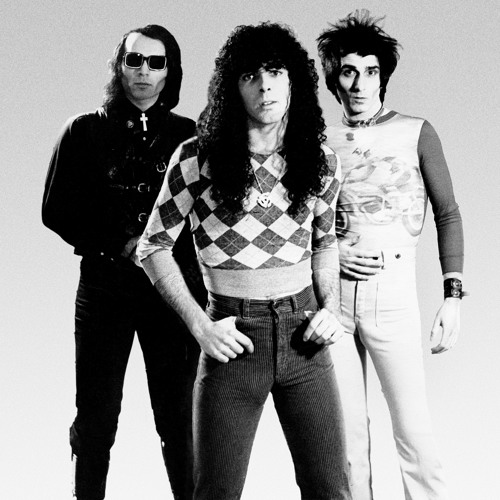 |
| Mandy Zone, Paul Zone, Miki Zone |
According to the fact sheet that Miki
graciously compiles for interviews, Pitney “played all his own instruments on
his first single, “I Wanna Love My Life Away,” and would over-dub seven of his
voices on the record.” The most interesting item on the list, however, claims
that he was “an amateur taxidermist,” a hobby that probably fostered many weepy
love songs. He dropped out of the public eye about a decade ago and, since
then, there have been only vague rumors concerning his whereabouts or career. [Ed.
Note: Pitney died after a performance in Wales, and is buried where he lived in
Connecticut. – 2021]
“I don’t want to be a messenger to the
masses,” explains Miki, “but it feels good to have people react to the things
that they like.” Part of the reason why this act is entertaining is that you
don’t have to be a die-hard Pitney fan to appreciate it. In fact, you don’t
even have to know who he is to enjoy it. The set is filled with familiar, catchy
pop ditties that have been nestled in the cobwebs of our brain for ages. And
Miki is not a Gene Pitney clone. He may be able to croon in the same key as the
eclipsed star, and dress in the elegant smoking jackets of that era, but only
the blind could confuse their faces. Miki’s eyes are riveting. They’re like
tiny, brown computer screens beaming with information until he hears a dumb
question, then they abruptly shut down to an icy darkness. Luckily, a sincere
inquiry – like why would a talented songwriter want to sing someone else’s
lyrics – flicks their light switch back on.
“I’ve got a big romantic part of me
which I’ve never brought out in the music, which I’m starting to do now. I’ve
written a lot of things like that which I’ve never performed. I’ve never used
them in any of my past groups.
“I always had an affection for… would
you call it torch singing? Or crooning? Not crooning like Alfalfa, but like, crooning
like the way Gene Pitney did it. He could sing a rock song like “I’m Gonna Love
My Life Away,” or “Hello, Mary Lou,” and he would also sing a ballad like “Town
Without Pity” or “Half Heaven, Half Heartache” and still make you wanna cry.
Those emotions used to amaze me in any singer, even female singers like Dusty
Springfield. People like that amaze me with the way they can milk all your emotions.
I always felt that I could do that. Wanted to do that. And that’s what I’m
doing. I used to try to emulate his voice. I used to be able to sing like that
for years, but I never had a chance to sing in any of my rock bands. I never
would sing. It was always up to my brothers (Paul and Armand) to sing.
“The reason I am doing Gene Pitney is
it’s a tackling thing to do. He’s got an amazing voice. I’m not saying I can
sing like him, but I hang in there with the notes, and I’m proud of that!
“There’s a lot of things in me that I
don’t want to have to be Miki Zone to keep on changing them. I’ve changed many,
many times over the years. I’ve put The Fast through heavy metal, through
glitter rock, through pop, through punk, through many different things. What I
did wrong, I’d say, is that it should have been a different group each time.
That would have saved a lot of problem and a lot of egos, and a lot of people’s
confusion. I should have called it something different every time I went in a
different direction. I have a lot of those ambitions to do different kinds of
music and I don’t want to be stuck under one name doing it. I’m not in the position
of David Bowie, where I can do what I want and still be the chameleon. I have
too many other things in my head that I want to do and be. I think I can do
them under different titles, ‘cause none of them will step on each other.
 |
| Gene Pitney |
“The Gene Pitney thing is just the
beginning of the acts I’m gonna do. I think I’m gonna be doing a couple of
other acts of different people’s materials; other singers, because I like to
sing as much as I like to play an instrument. And I just want to get it out of
me. It’s just satisfaction for me. Maybe it’s ego, too, to see people enjoying
me doing things. I’ve got the best reactions, I think, ever in my career, since
I’ve been doing the Gene Pitney thing, just through the response of people.
“I’d rather have different outlets for
different things. And if one of them works out better than the others, I’ll
follow that one up. But me and my brother will always work together.” Paul and
Miki now have a band called Man’s Favorite Sport. Paul is very supportive of
his brother’s solo endeavors, and usually helps out with the lights.
Although he’s trying to keep the identities
of his other solo personas a secret, Miki has mentioned that one of them will
be Bruno Beats, an original character who sings all of Miki’s “romantic, lush pop
things. It’s going to be very pop, maybe ‘60s. All the things I wouldn’t use in
the group.”




 Posts

