Back
in the 1980s, there was a huge ‘50s revival. It was spearheaded, like it or
not, by the Stray Cats. The reason I phrase it like that is because while the
two guys backing up Brian Setzer, who seems to have garnered the lion’s share
of the attention in his cutsie looks,
were so much better than he was; musically, Setzer was by far the weakest link.
It would be as if Billy Idol’s and Generation X was the face of British punk.
Like Setzer, Idol’s okay, but he’s not really
a good example of the actual sound, more a pretty face that’s built on ego.
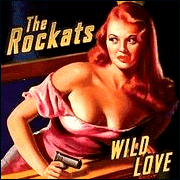
For more authentic rockabilly, we in the know relied on bands like the Rockats.
The
reason I bring this up is because a member of both those post-rockabilly groups
are at the core of the supergroup
cover band called the Head Cat. Recorded in 2004 and originally released in
2006, this musical collective is made up of Lemmy (of Motörhead) on vocals and acoustic
guitar, Danny B. Harvey (the Rockats) on electric guitar, Slim Jim Phantom (the
Stray Cats) on drums, and Jonny Bowler (the psychobilly Guana Batz) on stand-up
bass. One look at the set list below will give you some idea of the direction
of the music.
If
you are familiar with Lemmy’s sound, you may think, hmm, how authentic a rockabilly sound is that going to be? He’s
more known for the growling, metal-punk cross-over of “Ace of Spades,” which
feels like a vocal oil spill sludging across the speakers. You know, a great
sound… but rockabilly?
From
the first notes of “Good Rockin’ Tonight,” one of the earliest rock’n’roll
songs from 1947 by Roy Brown – which, if I may digress, proves that rock’n’roll
did not start with (a) “Rock Around the Clock” in ’55, nor (b) with Elvis – you
know you are in for an interesting show. The trio comes out swinging and out to take no
prisoners (yeah, I’m full of cliché’s tonight). Lemmy’s growl is perfect for
the effect, Slim Jim simply pounds the skins at full tilt, and Danny dances
around the melody to a tight-yet-loose sound like a piledriver. This is rock and roll mixed with just the right touch
of rock’n’roll.
The
visuals are crisp and digital, but definitely pre-HD, and the sound is totally
clean and loud. The lighting is cast
in mostly hues of greens and reds, as they should be. Also, the stage is small,
which is actually appropriate for the sound, rather than having musicians
running around the stage.
Next
up is Lloyd Price’s “Lawdy Miss Clawdy,” more commonly known by Richard
Penniman, aka the Little Richard. This
medium-speed grinder is a great selection, even though tethered by the sheer
weight of the rhythm section. Not a complaint, by the way. Sometimes I can be a
purist, but hey, it’s Lemmy. This is followed by the similarly paced “Talkin’ ‘Bout
You” by Ray Charles from 1958, though more know the Animals’ cover in ’64.
One
of my major complaint about this DVD is the editing by Kari Pearson and King
Romero. This isn’t ‘80s rock and it’s not M-TV; there is enough energy onstage
that the editing doesn’t need to denote tension or excitement, as Sergi
Eisenstein famously posited. The cameras move around way too much, swinging and
swaying, and edited together so quickly that by the time you get your bearing
on what you’re watching, it’s gone to the next shot. It seems like they average
about every two-to-three seconds, which is not only annoying (and bad
direction), but literally nauseating via motion sickness. I felt like turning
off the screen and reviewing it like a CD rather than DVD. You can see a sample
below.
Eddie
Cochran’s “Something Else” has been interpreted by many, including an enjoyable
one by Sid Vicious in ‘79, but the Head Cat are a bit more loyal to the ’59
version. The pace, however, picks up when they next cover Chuck Berry – in my
opinion the true King of Rock and
Roll – with 1957’s “Reelin’ and Rockin’,” a rave up all the way. I remember the
Rockats did an outstanding version of it as their encore the night they
recorded their Live at the Ritz album;
though the song never made it to the vinyl, sadly. But I digress…
The
camera hovers around the three big-name members, including Phantom’s minimal yet-highly
effective drum set, but you almost never see Jonny or the stand-up bass except
in the background. The best I can tell there are three cameras, one for Slim
Jim who is off to the far left rather than behind, one for Lemmy and Danny
(though it’s usually up Lemmy’s nose), and one for a longshot from the back of
the room. The bassist gets squeezed out. As a fan of bass players, this was
disappointing, as well.
Putting
aside some of the growl, they do the almost ballad-like “Fool’s Paradise.”
Lemmy explains this is off the first album he ever bought, by Buddy Holly and
the Crickets in ‘58, which explains why he singing it more straightforward. It’s
a more obscure track of Holly’s, as is their next choice, Chuck Berry’s medium
rocker “Bye Bye Johnny” (which was also covered by the Stones). Keeping the
pace, they play Fats Domino’s 1958 “Sick and Tired,” which actually as a very
similar feel to the previous song.
It’s
important that they did not just pick the “top 10” kind of songs that you hear
at most revivals, but rather chose some that you don’t hear very often, such as
Larry Williams’ 1958 “Bad Boy.” While I’m familiar with it, it’s not one that
shows up on oldies radio shows often. More people know the Beatles’ cover from their
Help! album. However, the next song
gets covered a lot, Carl Perkins’ “Matchbox,” which is solid I-IV-V
progression. Danny’s guitar really flashes on this one.
For
the final number in the main set, it’s the third Berry number with the raver “Back
in the USA.” Lemmy is in full growl mode for this one. It’s a fine number to
end the set proper, just as Jimmy Reed’s “Baby What You Want Me to Do” is
perfect to start the two-song encore. Danny B. again gets to show off his
guitar skill in a more modern vein that still stays loyal to the heritage.
The
last on the DVD is “Blue Suede Shoes.” Knowing this band’s fondness for Elvis,
I am assuming that’s the version they are covering, but for me, it’s solid Carl
Perkins, who got jyped out of his career potential by an accident. But I will
say this: no matter who’s they are doing, it’s a kick-ass song and a solid way
to end the show.
The
last thing Lemmy says as he ends the gig is “Thank you very much; live forever.”
After Lemmy’s passing in 2015, he was replaced by death metal bassist David
Vincent (aka Evil D, of Morbid Angel and Genitorture); I’m guessing Bowler is
no longer with the band?
The
extras are nice. The obvious ones are the set list (i.e., chapters) and a 2:40
slide show over a song not included in the DVD’s show, which is a killer cover
of Buddy Holly’s great “Not Fade Away.”
The
other more significant extras are two sets of interviews. The first is 20:33 of
Lemmy and Slim Jim. They discuss a wide range of subjects including how they
met and became friends, bonding over rockabilly, music from that period’s
effect on the youth then and “still going on all the time” (Slim Jim), and the
mythology of Elvis of course. For the 19:18 second interview segment the focus
is Johnny D., on his history in music, his bands, and his musical philosophy.
Despite
the terrible direction/editing and shaky camerawork in the feature, the
important thing is the music, which is fantastic. I will gladly play this DVD
more, but I will have it go through my speakers, and turn the visuals off. It’s
still a great record.
In my opinion, the punk rock that is generally
acknowledged by the mainstream as Punk Rock officially started with the
Ramones.However, the role of both
the proto-punk New York Dolls and paradigm-changer the Heartbreakers cannot be
under-appreciated for bands like the Ramones to have existed, and more
importantly, to succeed.
The first time I saw the Dolls play,
it was just after guitarist Johnny Thunders and drummer Jerry Nolan had left the
band, I’m sorry to say (I started in the scene in Spring of 1975). For me, my
love affair of the music of Johnny and Jerry started at CBGBs in early ‘76, at
the premiere of Amos Poe’s film, Blank
Generation. The band that opened that night, with the tiny stage still on
the left side of the club, was the Heartbreakers, when the “lead” was still
Richard Hell. I found the musicianship kind of rattling and lovingly sloppy. Johnny
style of guitar and Hell’s bass playing was all over the map, but they could do
that because of the consistency of Jerry’s drumming.
After Hell was ousted, I saw Jerry in
many different incarnations, including the revamped Heartbreakers with Thunders
and Walter Lure up front (probably the band I’ve seen live more than any other),
the Rockats, and the final time at Johnny Thunders’ memorial just a few short
months before it was Jerry’s turn to join Johnny one more time.
Johnny and Jerry, pic (c) Robert Barry Francos
It’s true that Johnny received more
relative fame than Jerry. Hell, Walter was technically a better guitarist and
just as enjoyable onstage as Johnny, but Johnny had that danger element that Walter lacked (not meant as an insult; I’m
looking forward to someone doing a book about him as I find Walter fascinating),
and Jerry was so consistent and
excellent, that it almost worked against him for standing out. However, other musicians
knew how good he was, including the author of this book, Curt Weiss, a drummer
in his own right.
There are definitely some themes that
flow through the Jerry Nolan story, such as style,
women, music, temperament, and especially drugs. It’s hard to underestimate
just what a lynchpin hard drugs were to the New York scene on the Lower East
Side, which is one of the reasons why I would go see these bands and write
about them, but did not hang out with them very much; they scared the shit out
of me. This book does not shy away from it, and rightfully so.
Depending on whom you talk to, Jerry
Nolan was either a really nice guy or a complete self-absorbed shit. Johnny had
a reputation of being more on the asshole side, but Jerry could be either, depending
on what his needs were, what he could get out of you, or what condition his
state of fix was in at the moment.
The term “Wild Ride” is appropriate
for Jerry’s life, and there was so much about him I did not know, such as his
being a member of the Suzi Quatro band early on (I saw them in 1975, after
Jerry left, opening for Alice Cooper at Madison Square Garden), his relationship with Bette Midler, and that’s only
the tip of the story.
Told in mostly chronological order, right
from birth, Curt manages to avoid many of the traps of biographies (and
autobiographies) that seem to follow the same path: troubled youth, find an
instrument, bunch of bands, hit the big time, and then fun and trouble brings
it all down. Yeah, there is some of all of that here, but it’s kept
interesting. I like how rather than quoting people by saying “Joe Blow recalls
that…” and similar passages, Weiss breaks it down to simple “Joe Blow: quote”. It may not be as literary, but it’s certainly more
effective. My one complaint about this, though, is that after the person is quoted
later, even if it’s dozens of pages than being introduced, he just uses the
first name. As someone familiar with the scene, I usually knew who he was
quoting, but a casual follower, with this many people interviewed, it’s easy to
get lost in the names of who is who. My rule of thumb would have been if the
person isn’t mentioned in 10 pages, give both names as a reminder. Perhaps I’m
nitpicking?
Still, the book and especially the
story kept me drawn all the way through. There is no doubt in my mind, and
Weiss also makes this pretty clear that he holds the same belief, that Jerry
tended to blame others for his own lack of success, but that falls straight into
his own lap. Or vein, anyway. Jerry hated sloppy drug users, but he did not see
past his own blinders. Sure, he could play under the influence better than,
well, just about anyone in his bands, but that does not mean when he wasn’t on
stage he wasn’t sabotaging himself at every turn. That’s why managers of his
bands always warned other managers about him, another consistent theme in the
book.
One of the more powerful and
interesting motifs here is the relationship between Jerry and Johnny. Someone
mentions near the end of the book how they were like an old married couple, and
that’s pretty accurate. Johnny was always his best when he was backed by Jerry –
but I want to add that Johnny was especially effective when he shared a stage
with Walter more than anyone else, in my opinion; their verbal putdown
exchanges were part of the reason to go see them perform. With Jerry and Johnny
though, it was more their between gigs interactions that made them the best of
friends and the worst of enemies, sometimes at the same time. Walter has told
stories about how Jerry would beat the hell out of Johnny if he was acting up
or sloppy-drugged. Yet, it was obvious when they worked together in front of any
crowd, it was a bond that was hard to break. Even at times when they despised
each other, they would still find a way to play. And it was a joy to watch.
As enjoyable as the book is, there is
some controversy about it, such as questions about the means Weiss used to get
some of the information. He made some of the people mentioned and quoted in the
book not too happy, one in particular threatening to take legal actions. The
question here is one of whether the ends justify the means. I’m not going to
judge one way or another.
My other issue with the book is that
there is a certainly level of assumptions, with Weiss stating things like “Jerry
felt that…” or “Jerry thought that…” That’s solid Victor Bockis territory. Second
hand “feelings” are untrustworthy, and I would have preferred if he had more
often used the style on page 231, where he has the direct source of Swedish
musician Hank Eriksson quoting Jerry saying, “Don’t worry about it. It’s rock ‘n’
roll.” Other people quoting him is not the same as assuming what Jerry was
thinking or feeling, unless a direct source is given.
Jerry at Johnny's memorial concert, pic (c) Robert Barry Francos
Towards the end of Jerry’s life – and
the book – is where Weiss makes the most assumptions, mostly about his
relationships and his means of death. I’m not saying Weiss is right or wrong, I
don’t know as I do not have the direct sources, but in this case when he states
on page 256, “There was no doubt…”, it is still an assumption on his part,
unless someone in the medical field or someone close to him told him directly,
and he can use that person as a citation.
To be fair, I have read an “Advance
Uncorrected Reader’s Proof,” so I’m not sure what has been changed between this
and the final printing. Heck, I don’t even know if there are photos added. What
I do know is despite all the possibly rightful controversy over this biography
of arguably one of the best drummers to every hit the rock’n’roll skins, it is
an enjoyable read, and an important piece about someone, under different
circumstances, would (and should) be on everyone’s list of important musicians in
his field.
This interview was originally published in FFanzeen, issue #8, dated 1981. It was written by “NanSuzy Q. Foster,” aka
Nancy Foster, Nancy Neon, Nancy New Age, and Suzy Q.
Note that I have linked some music to artists mentioned by Dexter throughout this piece. Click on them to hear it.
Fanzine publisher / music fanatic / ”The hottest thing from the North to
come outta the South” / my-sister-from-another-mother Nancy Foster and I had
tickets to see the Clash play at Bonds, in Times Square. It was the thing to
do, I suppose, more than anything else. When we got to the venue and we saw the
over-sold crowd on line being obnoxious and bullying, Nancy suggested that we
ditch the gig and head downtown. The Rockats were performing that night,
recording their Live
at the Ritz album. We sold our tickets to
someone for just enough of a profit to pay for our way into the Ritz, and hopped
on the subway. If you are thinking, “Are you crazy?” then I recommend you check
out the video clip below. The Rockats were an exciting band, in a way that the
Stray Cats could never achieve, even though they were better at marketing themselves
because they were all Yanks. The encore, which does not appear on the record,
was a cover of Chuck Berry’s “’Round and ‘Round,” which Levi bend down on stage
and shared his mic with Nancy, who has a booming voice of her own. It was a
great show. – RBF, 2015
FFanzeen: Was the Rockats your first group? Levi Dexter:
Yes, they were the first group that I ever professionally played with. A couple
of years before that, there were other rockabilly bands in London, like Crazy Cavan, the Flying Saucers, and Shakin’ Stevens.
FFanzeen: What year was that?
Levi: Late ’75
to late ’77. I’d get up and do one song with them for a laugh. I never had a
band. One day I was doing a song with Shakin’ Stevens in a movie theater, of
all places, and Leee [Leee BlackChilders, famous photographer and scene maker who worked for MainMan, managed
the Heartbreakers, and is currently Levi’s manager – NF, 1981; Leee passed away
in 2014 – RBF, 2015] saw it and said, “Wow!” and helped me to get a band
together.
FFanzeen: So, were Smutty Smiff and Dibbs Preston in the original
Rockats?
Levi: The original
Rockats formed in 1977. It was an all English group. There was Don Deveroux (on
drums), Dibbs on guitar, Smut on bass, and Mick Barry on rhythm, and me.
FFanzeen: How did you meet Dibbs and Smutty?
Levi: It was
really quite a punk thing. Leee said, “I’ll get you a band.” And I was with Smiff’s
family then, and Dibbs was hangin’ around the Vortex (a punk club) and said, “Hey! I
can play guitar kind of okay.” And so, Leee introduced me to him; and we met at
the Vortex. We met the drummer at a Wayne County concert and we said, “Do you
want to be in our band?” Smut was there
fussin’ around and Leee said, “That looks great. Why don’t we have him in the
band?” He could play enough instruments.
FFanzeen: So, he started playing bass after he joined the band?
Levi: Yeah. He
could play. Originally, he learned like, two songs that we would play first,
really horribly loud. Then we’d unplug him and say, “Oops! Sorry, something
went wrong with the bass amp.” And then he got into this trip where he’d have
half a drum stick and he’d just wack on the upright bass. It sounded awful, but
it was good fun.
FFanzeen: Where were the two Levi and the Rockats singles recorded [“Room
to Rock” / “All Thru the Nite”; “Rockabilly Idol” / “Note From the South,” both
1979, on Kool Kat Records and Peer Communications – RBF, 2015]?
Levi: Out in
Los Angeles. I can’t remember the name of where we actually recorded it [LRS – RBF, 2015], because it was such a
little place. But out in Radio City, there’s a big joint, where we mixed it [Greg Lee Processing – RBF, 2015].
FFanzeen: Were your British fans exclusively Teds, or did you have punks
as fans, too?
Levi: No, we
never played to the Teds or rockabilly audience because it wasn’t pure, original
– Charlie Feathers – they would freak out. Back then; they could deal with it
now. The first date we did was, like, a reggae thing. Then we played with the
Fabulous Poodles at some college date. And then the next date we did was with
Spiv, of Athletico Spiv. I think it was Spiv Oil back then. The Unwanted,
Siouxie and the Banshees, and Adam and the Ants.
FFanzeen: So, your fans were mostly punks, right?
Levi: Yeah. We
went on last that date, so it was really scary. The punks really loved it, cos
it was noise and fun and rowdy. And it gave us time to learn to play.
FFanzeen: When did you first get into rockabilly?
Levi: My
father was a drummer so there was always a lot of that goin’ on. And my mother
would play rock’n’roll records, like Eddie Cochran and Little Richard, and
Elvis and stuff. I was eleven or twelve, and I got into being a Ted for about
two years. And then I just started goin’ out to the rock’n’roll joints and just
started hearin’ nothin’ but ’50s music. When I was (first) bein’ aware of
music, the only places I’d go were, like, Ted joints. It was all pre-‘60s and
it was really all a small-minded, simple attitude of, like, if it’s after 1960,
it’s not cool. “The Twist” is not cool because it’s, like, the third number is
a six. But some garbage song from 1955, of some guy singing rockabilly was cool,
because it was rare. There’s two levels of music: there’s the constant changing
thing, level one, where this is in, that’s out, this is in, that’s out; and
there’s a level just below that, of the boring, middle-of-the-road stuff, like
the radio plays.
FFanzeen: Like AM pop?
Levi: So,
either you’re one of those kids that gets into what’s on the radio or you get
into the cults, like Teds or Mods or skinheads. But it seems that everybody
eventually gets sick of all this constant switching, so thy just settle into
whatever fits them most. So, if they’re into, like, ‘50s rock’n’roll, they
become Teds, or not really Teds anymore; they’re finished now. Well not really finished. They’ll be around ‘til
doomsday. But they became rockabillies, or hepcats – things like that.
FFanzeen: Do you like the new stuff, like Tex Rabinowitz?
Levi: My kind
of stuff. Now that I’m into live (performing), it’s hard to tell what’s going
on, record-wise. In Los Angeles now, it’s the Blasters,
the Cramps
– even though they’re going psychedelic. In England, the Hepcats.
They’re brilliant live. Always dependable live; they’re gonna be really crazy.
The Meteors. They’re the ones to watch cos they’re coming up out of the
underground. They’re sort of like the English equivalent of the Cramps, their
sort of style. They do horror, like, “My Daddy Is a Vampire.”
They’re really scary, but they’re lots of fun. They haven’t played America yet,
but they’re brilliant. They’re really great.
FFanzeen: When did you decide that you wanted to make music your career?
Levi: When it
first dawned on me that I would put a band together.
FFanzeen: What was your first impression of America or New York?
Levi: When we
first came over to America, we landed in California. And I went, “This is it!
This is America! I’ve made it!” and just stated huggin’ palm trees. I loved it.
We were there six weeks and then we went down South. The idea, when we first
came, was that we weren’t gonna play. We were just gonna drive around because we’d
been singin’ songs about New Orleans and down South, and stuff like that. We’d
never been out of England, so we couldn’t really sing about American rock’n’roll
stuff. Then we went to Texas and we got into a lot of crap there. We went to
Dallas, had a party there for about two days. Then we went to Kentucky. We were
expecting guys with guitars coming out of their pockets, and it was all these farmers
and rednecks and hippies, and people who were into KISS and Aerosmith and
stuff. And I thought, “This is not what I thought it would be!” We stayed there
for four months. Then we finally made it to New York and it was like a breath
of fresh air. Kids that were really sick of that stuff. To me, rockabilly doesn’t
have a lot of messages. It’s supposed to be spontaneous fun, but it has a lot
of passion in it. The only people that I believe can really do it right are the
kids. They do not only rockabilly, but rock’n’roll in general – with a lot of
passion – and people can feel it. If somebody’s stuck-up and they’ve got a
cushy number, they come off real polished and slick, and people feel that. It’s
just not what it’s all about. To a lot of straight people, that’s why rock’n’roll
is scary. You can have a whole band gettin’ sweaty and throwin’ themselves all
over the place and rolllin’ around on the floor. And straight people will go, “What
the hell is goin’ on?” It’s just as scary for the kids, with problems and a
hard time to watch some slick band. I believe that you should be larger than life.
I’m not saying that you shouldn’t wear jeans and a t-shirt, cos I’m supposed to
be bigger than life, as opposed to who I am – or what I am. I like to dress
flashy. And I don’t like people to tell me I should or I shouldn’t.
FFanzeen: Who are some of your favorite rockabilly singers?
Levi: My taste
fluctuates to whatever I’m being exposed to at the time. If you asked me that question
two years ago, I would have gone, “Oh, Charlie Feathers,
Johnny Carroll
and all these very obscure rockabilly guys. But now, that’s not really enough
for me. I like the sex life of rockabilly. I like it to be really wild and
crazy. But I like it to be pretty sick. Old stuff I like are the guys that
never really made it, like Jackie Morningstar
that did horrors in the ‘50s. And this blonde girl, Sparkle Moore, who does a
song called “Skull and Crossbones.”
She was really sick. She does this heavy breathing, like panting and stuff,
like really bad taste. She was great. Pure ‘50s trash! She wore a leather
jacket with skull and crossbones on the jacket. Like trashy, mayhem stuff. That’s
what I like now. I’ve gone through all the, “Oh, I like that stuff cos it’s
rare.” Now I’m just into what gets me excited.
FFanzeen: Have you found any places in New York that are cool to pick up
rockabilly records?
Levi: Yeah.
The trouble is it’s, like, record companies release the record and they’re,
like, country-swing rockabilly stuff. There’s too many people rippin’ off the
rockabilly kids cos they put out an album that has two wild rockabilly tracks
and the rest of it is bad. It’s not fun; it’s not wild; it’s not sick – it’s
garbage. It’s just like third-rate country and western with a beat. I may dress
in things that cost me a lot of money that I work hard for, but that won’t stop
me from rollin’ around the floor and getting’ it all scuffed up. It doesn’t’
matter to me. All that matters is that you’re doin’ what you feel.
FFanzeen: Do you dress the same offstage as on?
Levi: Pretty
much. When I’m playin’ I like to wear baggy pants, mainly cos I can move. I like
to wear jackets for security. Like some people like to go out holdin’ their
guitar, even though they don’t play nothin’. I like to wear a jacket, then take
my jacket off. Once I get my jacket off, then I’m, like, “Now I’m ready to deal
with the whole thing!” I’m not some prissy showman. I don’t buy $300 suits and
then I’m too scared to get them wrinkled up. When I’m on stage, I like to dress
like I’m on stage. When I’m off stage, it doesn’t matter. But if there’s gonna
be a lot of lights, I like to clash colors, sparkles; cos if you’re on stage,
no matter what ya are, no matter if you’re in the biggest joint or the seediest
hole, if somebody is watching ya, somebody is watching ya. I’m not going to
pretend that I don’t want people to look at what I’m doing. A lot of bands –
not just in rockabilly but music in general – are brilliant bands, but I just
don’t wanna look at them. Some bands I can watch that are dressed in jeans and motorcycle
boots and I’m just entranced by their music. But I really don’t’ give a crap
about what they’re doing onstage. Some bands look good in boots, a t-shirt, and
a leather jacket. And some bands are so obviously miserable cos they think that’s
what they have to wear. No matter what anybody says, an audience of honest kids
can feel whether you’re fakin’ it. Whether it’s music or attitude, or clothes
or anything.
The day that the Clash performed at Bonds in Times Square, the Rockats played the Ritz, recording their live album. Nancy and I sold our Clash tickets to go down and watch the taping, for which we were both happy. The Rockats’ finale was a rousing version of Chuck Berry’s (the true king of rock’n’roll) “Round and Around.” A mic was handed down from the stage to Nancy, as we were standing near the front as always, who joined in the singing. Though it never made it to the album, this was a highlight of the evening. – RBF, 2010
The October 7 and 8 Rock Lounge gigs were the hottest Rockats shows I’ve seen so far. I never saw them when they were Levi and the Rockats, except on television. My first time experiencing the Rockats’ rockabilly fever in the flesh was at The Other End, August 1. I walked into their first set late and was stunned by their devastating color flashing like neon, their hot-to-trot drive-in back-seat sexuality, and their good-time rock’n’roll dynamics.
The energy transmitted in their interplay is overtly sexual: Dibbs’ mussing up Smutty’s hair or pinching his nipples – and all that erotic hair combing. It is no wonder the Rockats have made screaming females an integral part of rock’n’roll again. (Excitable girls should always have Sucrets on hand for when Smutty and Tim take off their shirts!)
In August, Smitty and his then-pink stand-up bass (coordinated with [then-Rockat] Jerry Nolan’s pink drums) were a major focal point, and the whirling nucleus for the group’s hyperactive hijinx. Though Smutty is, for many, the main attraction, each member has a definite personality.
There’s Barry Ryan – the moody, melancholic, strawberry blond that the girls want to cuddle and console. There’s Dibbs Preston – the long, lean, blond, stray Briton alley cat with evocative / provocative dance steps, pointed humor and a big, beautiful voice that fills a room with that ‘50s ambience and gut-wrenching emotion. There’s Tim Scott – the more mystical member.
As I admired a photo of Tim, I said to an acquaintance, “He looks like a warlock or vampire!” The answer came back, “He is! He has such cynical eyes!” Perhaps Tim could star in the rockabilly version of A Clockwork Orange. His perfectly chiseled features, his crazed shrieks, the tight set of his almost cruel yet sensual mouth, and his dangerous laser-blue eyes make him perhaps the group’s most intriguing member – and the perfect foil to the swoon-inspiring, sweet nineteen, baby faced, angelic, “Tattooed Love Boy,” Smutty Smith.
Although Jerry Nolan did look a bit like the overseeing (debauching?) uncle amongst the Rockats boys, at least he fit in. The new drummer looks like he should be in an Italian hard-rock band (Ozone, maybe?). Whoever said that looks do not matter has never seen the Rockats. Outside of the visual incongruity of the new guy, everything is tightly unified and all elements – looks, clothes, moves, and sound – reinforce and enhance each other.
Smutty is the acrobat of the group, skittering all about the stage, balancing high atop his bass, and even hovering precariously over the fans like a precipice threatening to tumble down at any moment. Avalanche!
And yet, Tim is getting in a few acrobatic riffs of his own. At the Rock Lounge gigs, Tim jumped down amongst the crowd, slashing at his gorgeous blue guitar in violent frenzy. Then he jumped back, seating himself on the edge of the stage, continuing to wring the neck of his instrument. Then came the back-flip, executed with finesse, leaving both guitarist and guitar intact. Once returned to his original stance, his arresting manner of balancing on his toes and rolling his eyes like planets enhanced the wacky charisma of the Rockats.
From the opening number, the tone is established immediately. Rock’n’roll, drive-ins, late-night fun, love/lust – what else is there? The Rockats’ rock’n’roll utopia is uncluttered by adult problems and preoccupations. It is the realm where dementia praecox reigns supreme and everyone is sixteen forever.
Merde on the old or young fogeys who cannot get it up for the Rockats, because they are not old, southern, or ugly. As much as I adore Gene Vincent, Eddie Cochran, early Elvis, Carl Perkins, Buddy Holley, et al., and even the new rockabillies like Tex Rabinowitz or Billy Hancock, it is still more fun to hear and see this raw, sexually hyperactive music from boys who look young enough to still have wet dreams. Besides, Carl Perkins never was a convincing teenager.
Moreover, it does not seem wrong to me that the two original members – Dibbs and Smutty – are British. In fact, the British always appreciated Vincent, Cochran, and other rockabilly songs more than their own countrymen. Yes, leave it to the British to play great rockabilly while the true decedents of The Killer and The King sit down in the bayou and numb their brains with too much pot and Molly Hatchet.
The Rockats have a mastery of musical dynamics that would be admirable even in veteran rock’n’roll. They execute with appropriate fervor both slow, poignant Blues-flavored numbers like “You Ought to Be with Me,” “I Miss Your Lovin’,” and “Start All Over Again,” and the fast, super-upbeat numbers like “Be My Rockabilly Doll,” “Love This Kat,” “Tanya Jean,” “Room to Rock,” and their other danceable, impassioned rock’n’roll numbers.
Another one of the fabo things about the Rockats is that it is not a dictatorship. None of this So-And-So-And-the-Blanks stuff. They are all Rockats – a real tight group. Tim Scott takes the vocal spot on one smoldering, manic-paced number as Dibbs landing in, playing Tim’s guitar.
The Rockats are signed to Island, so our rockabilly babies will be down in the grooves soon. By the time of this printing, the Jerry Lee Lewis and Rockats gig at the Ritz has probably taken place and proved to be one of the best rock’n’roll events of the year.
The following interview with musical impresario Lee Black Childers was originally published in FFanzeen magazine, issue #9, in 1983. It was conducted by Nancy Foster, credited under “NanSuzy Foster.”
Back in the ‘70s and ‘80s, Leee Black Childers was everywhere, but where I encountered him the most was Max’s Kansas City (introduced to me by Nancy). Before anything about the man, I must say that I so coveted his leather motorcycle jacket, which had an amazing painting of Eddie Cochran’s face on the back.
Childers has had an astonishing carreer behind the scenes to levels that have changed the scope of the music world. When he wasn’t running David Bowie’s MainMan empire, he was managing the Heartbreakers (with Johnny Thunders), or he was photographing living icons into household memories with shots that were published worldwide.
I liked Leee the first time I met him, and though he probably doesn’t remember me, well, I still want that jacket! – RBF, 2010
/www.leeeblackchilders.com/
FFanzeen: When was the first time you came to New York from down South?
Leee Black Childers: Well, I kept leaving and going back. The first time was the Summer of Love, 1967. Me and this girl from England, who was down in Kentucky – the Israeli war happened and she got all crazy and decided the world was gonna end and we’d have never seen New York, so we got on a plane and come. I arrived with eight dollars in my pocket at Kennedy Airport, didn’t know a soul in New York; a solider picked us up and took us to the “Y” and paid for our rooms and everything for a few days. He could see that we were helpless. He housed us until we made friends with someone and we moved in with him.
[Wayne County, Max's Kansas City, 1976]
FF: When and how did you connect with people like Cherry Vanilla?
Leee: Well, Cherry was back in the old underground theater days. There’s this brilliant director named Tony Engrassia who did Off-Off-Broadway shows like La Mama and New York Theater Ensemble, and the day the men landed on the moon, Jackie Curtis got married. Do you know who Jackie Curtis is?
FF: A transsexual; an Andy Warhol starlet.
Leee: Sort of. Whatever. A drag queen. She got married on a rooftop that same evening. She was supposed to marry Eric Emmerson, but he didn’t turn up, so she married someone else.
FF: A publicity stunt?
Leee: Yeah, you know, it was just a joke. And everyone was up there, so we got invited up to that, me and Wayne County. Wayne County was my roommate at the time, and at that thing up there we met Tony Engrassia and Holly Woodlawn, and all those people. So Tony invited Wayne down to start being in the plays, and I became stage manager. And that’s when Cherry Vanilla turned up for the one Wayne wrote, called World.
[Cherry Vanilla, Max's Kansas City, 1976] FF: What year was that?
Leee: ’68 or ’69; I guess ’69. Yeah, it would be ’69, because then the most successful one (play) was Pork, which went to London in 1970, with Cherry in the title role. [Laughs]
FF: Could you tell me a little bit about your work with MainMan, and how you got associated with Tony DeFries, David Bowie –
Leee: Right. That comes through Pork. I was stage managing and Cherry was in it, and Wayne County was in it, and Tony Zennetta played the Andy Warhol figure in it, and we took it to England. Cherry and I were pulling this scam at that time in England, saying that we wrote for Circus magazine. She was supposed to be the writer and I was supposed to be the photographer and, in fact, we didn’t write for them, of course, but who’s to know? We were loud Americans. They believed us, so we got into all the rock shows free.
FF: Love it!
Leee: Right, so one day I was reading this thing, and in a little garage behind a shopping center in Haberstock Hill, was David Bowie. So I say, “Oh, I read about him somewhere. He wears dresses and things. Let’s go see him.” So Cherry, and Wayne and I went to see David and, of course, David was entranced ‘cause we were doing an Andy Warhol thing. So David came to see the opening when Pork opened up and he came to see the show, I don’t know, eight or ten times. When the show closed, we came back to New York and we all said we’d keep in touch; then we hadn’t heard from David in about a year. Then Tony DeFries called up Tony Zennetta and said that David was planning his first American tour. In that year, David had become a big success in England. And so Tony said he was planning his first American tour and he didn’t want the normal sort of crew that you get – you know, a bunch of hippies and everything; he wanted us, would we be the crew? I was working at 16 Magazine at the time, Tony Zennetta was working in a photo lab, Cherry Vanilla wasn’t working at all and was deeply in debt – so of course we all said yes – of course, we’ll be MainMan – and so we were. We had no experience, which make it work out, because we were able to ask for the impossible because we didn’t know you couldn’t get it. So we’d walk into the record company or into the club where we were going to perform and make all these impossible demands, and just because we didn’t know that you couldn’t ask for things like that, we’d end up getting it. When I was in St. Louis, we were at this strange little hotel and I was on the phone with Lisa Robinson, who was in Los Angeles, ‘cause we were going to Los Angeles next. She said, “Where are you staying?” – and I forget where it was, somewhere weird – and she said, “Oh, that place is awful, you can’t stay there,” and I said “I’ve never been to Los Angeles, where should I stay?” She said the Beverly Hills Hotel, so I said, okay, and I called up RCA and I said switch our reservations to the Beverly Hills Hotel. Forty people. In the Beverly Hills Hotel. The bill there alone was, like $60,000 or something.
[Holly Woodlawn, set of "Good Night America" with Geraldo Rivera, 1975]
FF: Bless their abuse.
Leee: I didn’t know what the Beverly Hills Hotel was; RCA couldn’t say no to me, so they booked us in. I don’t know why they couldn’t. The roadies would go down to Hollywood and pick up tourists and say, “Come back to the Beverly Hills Hotel with us, you can have a complete Beverly Hills Hotel dinner for five dollars a head.” All these people would come back with them, they’d collect the five dollars, and the tourists would order anything they wanted.
FF: That’s incredible!
Leee: So these tourists would get $250 meals for five dollars. The roadies, in turn, would make fifty dollars a night, plus tips. Now, if RCA reads this, they’ll know what happened.
FF: Around ’75 or so, I joined the Wayne County Fan Club, and I was in touch with this guy named Eve Emmerson, and he said that David Bowie thwarted Wayne’s musical career by saying Wayne was an actor, rather than a singer. Was there any truth to that? Did David Bowie sort of encourage Wayne to concentrate on acting?
Leee: Yeah, a lot of people say that. Even looking back now over the years, it’s really hard to remember exactly what happened. Because those were really peculiar times. There was an incredible amount of money, which none of us had ever had before, all of it really stemming from David. Tony DeFries was such a charismatic character; everyone thought everything he said and did at the time was just perfect. We thought he was a genus. So he moved us out of this crummy apartment on the Upper West Side, where in the bathroom, when we went to the toilet, we had to open an umbrella because there was a constant leak. We moved from that into an Upper East Side duplex, with a balcony and the whole number; you know, got us video tape machines, gave us anything we wanted. We had charges at restaurants all over town; we had American Express cards and MasterCharge. And then, Tony DeFries announced to Wayne, “Now you won’t work.” ‘Cause Wayne had been playing a lot, you know. He said, “The idea is to sit. And wait. And not make you available.” In the course of that, he said, “So you wont’ be doing nothing, we’ll concentrate on some acting and we’ll make a movie and stuff like that.” It could have been David’s idea, ‘cause now we know that 90% of those brilliant ideas we thought Tony DeFries was having had really been coming from David, who was in England at that time. And so we sat. And nobody complained much. He wasn’t just doing it to Wayne, he was doing it to a girl-singer named Ava Terry, he was doing it to Dana Gillespie, he was doing it to Amanda Lear; everybody was getting huge salaries, living in style, and being told to do nothing.
FF: Where can I get a job like that?
Leee: Now there are people who say that David did that particularly to all those people to keep them out of the limelight while he, you know, did his number. And he’ll be the first to tell you he used all of those people’s ideas. Periodically, he would either visit, or the people would be sent to England and live with him for a while. He’d pick their brains and he’d get ideas for songs and concepts and everything, I mean, Tony Engrassia wrote a play named Fame a year before David Bowie wrote a song named “Fame.” And Tony spent, like, two months with David, supposedly working on a script of a play about 1984, and in the course of it, of course, he told him all about Fame and his concept, you know, of the whole idea of the destructiveness of it. Out came the song. What can you do? David would say, “Yes, I got the idea (from someone else),” but David’s great genus is knowing which ideas are the good ones. So, we sat, and Wayne couldn’t do a thing, not even acting for that matter. Every once in a while a film crew would come around and point a camera at us, at whatever we were doing. I’d love to see that film now – I don’t know where it is – ‘cause they spent thousands on it. Finally he went crazy and demanded to be allowed to play. So then they did this one show, which was Wayne County at the Trucks, which cost a fortune to put on. Which wasn’t really Wayne. Wayne would put on garbage and would dance around in the back room of some slezoid dive. Suddenly they had this theater down on West Street, that Arts Center, and Tony Engrassia staged and directed it, and they had dancers and they had lights and costumes, and it cost fortunes, and it was an all-invited audience. Nobody could get in who just wanted to play. Champagne and all kinds of stuff that costs fortunes and only the wrong people saw it; a bunch of snobs and businessmen, and people like that. And then he was told to sit again, so then he stared going crazy. Flipping out, you know. And so that’s when Tony (DeFries) said, “I don’t think we can work together,” and that was the end of the relationship. And, of course, as soon as all of the money was cut off and Wayne was back on the Upper East Side, and had to fend for himself, then everything was fine and he wasn’t crazy anymore. Before, he was out all night, taking pills like crazy. He’d come storming into the house at six in the morning with a string of the most dreadful people hanging on him. I’d be throwing them out, you know, and Wayne would be shouting, “Theah mah friends, theah mah friends.” “No, they’re not, get them out; out you go.” And as soon as he was back working for himself, well then, everything went back to normal. He was fine; puttin’ on shows for $25, making $35, and being very happy, and it was great again. It was very peculiar times and we’ll never know how much of it was Tony DeFries megalomania, how much of it was David.
FF: Tony was probably the hatchet man.
Leee: Right. [Laughs] Perhaps David meant well. Perhaps he really thought Wayne shouldn’t do anything. The other thing that’s nice is since that time – all those people got dropped at the same time, Amanda, Ava, and everybody – they’ve all gone on to great success.
FF: I’m being a typical gossip mongering reporter here, but can you tell the story of how David Bowie’s “Space Oddity” single first got played on New York radio? Or is that too risqué?
Leee: You’ll have to ask Cherry that! [Laughs] I think everybody knows!
[Johnny Thunders, Irving Plaza, 1978]
FF: When and where was the first place you saw the Heartbreakers, and what was your first impression?
Leee: Well, the same thing everyone said. Actually, it was Tony Zennetta who went to see them somewhere – CBGB’s or somewhere – and I hadn’t gone. Tony went crazy, and he was on the phone with me and he said, “You can’t believe how completely destroyed these people are. If they manage to live to another set you must go.” And, of course, that’s what everyone then said, and everyone still does. “Catch them before they die.” A thousand shows later, they’re out-living everybody; they’ll out-live us all. It was very macabre, but that’s what I went for at first, to see how physically destroyed – Johnny (Thunders) and Jerry (Nolan) were old friends of mine and I wanted to see what sort of shape they’d fallen into. But then, of course, I really liked the music. It really, immediately, got me. “Blank Generation,” I thought was brilliant. I remember once, at CBGB’s – Cherry Vanilla had this boyfriend named Michael Linder who was a radio talk show type person, and he did reviews and things. Very, very straight: Brooks Brothers suits and this naturally blond hair cut perfectly and all. Clean fingernails and the whole number. So she brought him down to CBGB’s. They were sitting sort of at the back, and the music was going on, but they couldn’t really see anything, and he liked the music. So then, I was so gun-ho on it at the time. I gave him the speech about this music is the future of rock’n’roll and it’s finally getting rid of guitar solos and all this Eric Clapton shit, and I went on and on an on, and I got him real excited, and he said, “Oh, do you think I could talk to one of the Heartbreakers?” And I said, “Sure, sure, I’ll go get one.” So the set was over and I got Richard Hell and brought him and set him down, and then Cherry and I both realized what we’d done. Here was this perfectly groomed person talking to Richard Hell. His (Hell) lips were all cracked and chapped and he had scabs on his face, and his hair was cut in all different directions and he was dirty and his clothes were falling off, and one eye was closed and he was sitting there. And, of course, Richard was adoring it; he was putting it on as much as he could, to see how horrified he could get this poor man. Michael Linder was sitting as far back in the booth as you can get. It was great. I didn’t start managing (the Heartbreakers) until Richard left, unfortunately, ‘cause I adore Richard. I guess it’s just as well, though, ‘cause I hear he’s suing Sire Records and everything, saying Sire destroyed his career. If any of us look back, if anybody could get anything in edgewise as far as destroying with, Richard was doing a very good job himself.
[Billy Rath, Irving Plaza, 1978]
FF: Could you give us a few words on the personalities of each of the Heartbreakers?
Leee: Yeah. It’s funny to do it now, not working with them. Probably this is the best time to do it. Johnny (Thunders) is totally adorable. He could be a great con man if he weren’t so self-destructive, ‘cause he’s a very good con artist. But he’s too greedy, so he gets you madly in love with him – and this is anyone – everybody he meets just thinks he’s so sweet and wants to protect him. And to help him. And he is; he’s very good-hearted. But he’s greedy and so he’ll get a little bit. Someone that he could con out of $500,000, he cons him out of $500 instead, and rips him off and then ruin the relationship. He goes for the moment. He over-indulges everything, you know? When we first started recording [the album L.A.M.F. – RBF] for Track Records in England, I told these people – they were all well meaning, I guess, but they were used to the Who and everything, and you’d think they’d have known better – “When we get in the studio, it’s nothing but Coca-Colas and no drugs and not anything that’s destructive.” So they said, “Okay, Okay.” I said, “Please trust me, that’s the way it must be.” Of course, we got in the studio and Johnny said, “I don’t want any drugs or anything, I want to work, but c'mon, I gotta loosen up. How about some Scotch? Just Scotch.” And I was saying, “No, no, no,” right? The record company people, Chris Stanton, they though I was crazy. “We can’t turn him down for that,” so they went out and got him a bottle of Scotch, which he downed instantly, and then fell on the floor. First day of recording. All I could say was, “See, I told you.”
[Jerry Nolan, Johnny Thunders' Memorial, 1992]
FF: No moderation.
Leee: No moderation, which, I guess, helps make him an artist. Walter (Lure) is possibly the most talented one, creatively, in the group. I don’t want to say the most talented, but creative. Because he always had new ideas, he was already ready to try new things, and he didn’t realize, and probably still doesn’t, that he had become a really big star in England. There were as many kids imitating him and cheering for him and freaking out over him as there were for Johnny. He always acted like it was Johnny and assumed it was Johnny. I don’t think he ever really realized that if he ever went back – Johnny has since been back to England a few times. Walter’s never gone back – he’d be a big draw; he was really a big star. The kids loved him ‘cause he’s a psycho.
[Walter Lure, CBGB's, 1980]
FF: That might be what the Heroes (Walter’s group) have to do because in New York, it’s Johnny, and Walter will always be in Johnny’s shadow according to, like, the club owners and stuff, and the Heroes really get a hard time.
Leee: Really not so in England. In fact, Walter might be even more fashionable ‘cause England has gone very psycho right now. And Walter has the look and delivery to go with that. I think he’d really do well.
FF: Maybe if he gets a record deal they could send him over there. There’s this real anti-rock’n’roll backlash in New York right now. But I think the rockabilly here’ll knock that right out. That’s gonna be the pervasive thing. It seems like it’s the most healthy branch of the music right now. It’s alive.
Leee: That’s why I got into it. That’s why I was first working with Levi (Dexter), and I realized I couldn’t work with both him and Johnny. I talked to Johnny about it, and I said, this is fun for me. I enjoy every (Levi) show, I enjoy touring, and much to Johnny’s credit, he completely understood. He said, yeah, he could see that that would be much more what I would enjoy than working with him, so we parted on the best-of-friends.
FF: Levi’s like a big breath of fresh air; he’s so anti- that junkie jadedness that pervades New York.
Leee: After two years with the Heartbreakers, you can imagine what it was like to suddenly be with little sixteen and seventeen year-old kids who were saying, “Ohhh, can we really play? Can we really do a gig?? Two gigs in one night? What fun! [Laughs] With Johnny, I’d have to slap him and say you will do this show. “No, I’m not getting out of bed.” And we’d have a rough ‘n’ tumble and eventually he made every show but one in two years, which is fully to his credit, really. Because sometimes he was in no shape to, but he did. He always made it while I was working with him.
FF: What about Jerry (Nolan)?
Leee: I can’t talk about Jerry.
FF: What was your most memorable thing about working with the Heartbreakers?
Leee: Oh, well, besides them, generally, which was some experience, I guess that whole period in England when we did the Anarchy Tour [1977 – Ed.]. It came as such a surprise to us; none of us knew what was going on over there. From playing Max’s (Kansas City), it had become very routine here. Then three days later we had to run with our coats over our heads while photographers were trying to get our pictures, and keep our hotel room locked. There were people meeting us at the edge of town with pickets, turning us away, not even letting us in the town. It was such a weird experience. It didn’t know that much anti-rock’n’roll feeling – which is what it came down to – existed anymore, and there it was. It was really such a strange experience. That’s why I told everyone in New York to come to England. Cherry Vanilla sold everything in her apartment. She put a “for sale” sign on her door and sod everything – everything –to get all the money she could to come to England. She was there in a month. Wayne was there in a month. They came fast and cashed in.
FF: Where did the Heartbreakers get the best response?
Leee: Well, I guess in London. Pretty well all over England. There was a lot of hysteria in Scotland. Scottish audiences are dangerous. Liverpool, they go crazy for ‘em. They built a very, very good following in Amsterdam. It’s much more hysteria there, and in France, then they ever got in New York because half the people in the audience in New York had slept with them. Some of the glamour isn’t there, where kids in Leeds had only ever seen their pictures and heard the rumors – and suddenly there they were on stage in front of them. It was fantastic to them.
FF: They still had that aesthetic distance.
Leee: Yeah, right.
FF: Do you ever go see the Heartbreakers any more?
Leee: Do the Heartbreakers play any more?
FF: Yeah. Tony (Coiro) from the Knots plays bass because Billy Rath went to Cape Cod and became a father. He moved in with his girlfriend, Marsha. He got hepatitis in, like, December (1980), and that sort of turned his head around. He said, “Enough of that.”
Leee: He’ll probably be a lot happier. He was never really happy doing that (music).
FF: He’s supposed to be really happy getting up six in the morning and doing farm chores, and that kind of thing.
Leee: He got very self-destructive, too, but it always seemed sort of imitated, like he thought, “Oh, well, I might as well be self-destructive, too, otherwise what am I gonna do? Read a book?” So he’s probably very happy and Marsha probably is, too. Good, I’m glad. Sure, I’d go see them (the Heartbreakers). It would be a great experience.
FF: Have you seen the Heroes yet?
Leee: No, but I haven’t –
FF: Mucho upbeat. Walter’s my favorite dresser and comedian, too. What did you do between managing the Heartbreakers and managing Levi? Or was it straight to Levi?
Leee: Straight from. I was in England, and the punks / Teddys war started, and I’d see pictures of Teddy Boys in the papers and they looked awfully glamorous to me – more glamorous than the punks. So I began going in disguise to Teddy Boy shows. It would always be dark so they never knew. Although my hair was quiffed, it had an electric blue streak through it. But they never knew. So I started going and eventually the show where I met Levi the lights went on and I was about to be killed, but I met him. He just got up – it was a Shakin’ Stevens show – and did a couple of songs and I thought he was great, so I asked him to come around to the office. He didn’t have a band and didn’t know anything about starting a band, so I started working with him while I was still working with the Heartbreakers. Then all the trouble with Jerry started. That was in July, when I met Levi, and by about September, Jerry Nolan was pulling his numbers and quitting the group and then going back when Johnny would cry, “Come back for a week.” Then he’d come back if we’d pay him $1,000 a show and things like that, and I was going crazy with all that anyway. So eventually then, Jerry left. And we did whole tours with other drummers – Terry Chimes (of the Clash) and people – and then it really began getting crazy until it was clear the Heartbreakers were gonna break up. So Johnny asked if I’d continue to work with him as a solo artist, so I said yes. But by then, Levi had begun playing, too [with the Rockats – Ed.]. In fact, the very first show Levi ever did, it was the worst show you ever saw in your life. [Laughs] Johnny Thunders did the greatest thing: it was at the Royal College of Art, and Dibbs (Preston) didn’t even come on stage, you only saw a guitar cord go off-stage to nowhere for him to play; and Smutty (Smiff) wasn’t plugged in because he couldn’t play the bass at all; Levi was off-tune on nearly every song. The rhythm guitarist we had at that time jumped off-stage in the middle of the show to dance with his girlfriend – he just laid his guitar down.
FF: Oh, wonderful.
Leee: The drummer couldn’t drum. It was just awful! We were on supporting Steel Pulse, and it was a big show at the Royal College of Art, you know, and our agent had just bragged us into it. So everybody was just ready to die, and you could see Levi was just mortified. He was so terrified, he felt so horrible. So all of a sudden, Johnny got on stage – and Johnny could hardly stand up – grabbed a guitar, and he started playing, and he did this, like, Chuck Berry thing, a medley. And soon as he finished one song he’d go into the next one, and he forced Levi to sing along with him, and he forced the band to keep playing and it went for, like, twenty minutes solid. And the audience, of course, by then was going completely crazy, cheering and screaming. When they came off and were back in the dressing room, Levi said, “Oh, Johnny, thank you, thank you. You saved the show. I was horrified.” Johnny said, “I just did it to teach you one thing: it’s impossible to make a fool of yourself on stage.” It was great. We loved him for that. Levi still adores him.
FF: That is a wonderful story.
Leee: Yeah, and it was so good of him. So by then, Levi was touring a lot. We did the whole tour with Wayne County – the Eddy and Sheena Tour – all over England and Scotland, and everywhere. A lot started to happen. It was then that Johnny and I mutually realized that I was better off working with Levi.
FF: Which person or persons have you enjoyed photographing the most?
Leee: Oh, Lord! Probably the most fun I’ve had taking pictures were (of) a lot of people you probably wouldn’t know. A lot of the early drag queens and everything. They’re all dead now, or old. And also I really enjoyed a series I started and will someday finish photographing people as – I don’t want to say my favorite movie star as much as the movie star they would have been if they had been a movie star, instead of whatever they are. And that’s when I did that Wayne County session of Wayne as Thedda Bara, that picture that’s up at Max’s.
FF: Oh, yeah. When I was in the Wayne County Fan Club, they sent me that one for Christmas.
Leee: Yeah? Great! And that picture of Cherry that’s up at Max’s is Cherry Vanilla as Clara Bow. And that was fun ‘cause we’d build whole sets and create characters, and it was really fun. Some day I’ll finish the series. Do Levi as Rudolph Valentino [Laughs].
FF: If you could photograph anyone you haven’t yet, who would it be?
Leee: Who are still alive? There are a lot of people I feel very –
FF: They don’t’ have to be alive now.
Leee: ‘Cause there are a lot of people I’m really sorry I missed. Great, classic people like Tallulah Bankhead, with brilliant faces. Even when she was old and ravaged – you know, she drank spirits of ammonia for eight years. She gave up booze during the war. She swore she would never drink another drop of booze as long as Hitler was in Europe, and so she drank spirits of ammonia instead.
FF: I would imagine that wouldn’t do very much for your skin.
Leee: Right, so she was real ravaged by the time she finally died, but still amazing. I’d love to have done her. Of people that are around now, I wonder who would be really good. I can’t think. Old people still, I think. The real classics, like Estelle Winwood and James Cagney, and people like that. I’d be astounded just to be in their presence. And would like to photograph them. Other than that, probably my next favorite sort of people to photograph are completely unknown. You know, really young kids, because you can do anything with them because they’re excited at being photographed. People like Robert Redford or something; think of how many times he’s been photographed. What more can he do? But you get somebody like – another one of my favorites was a Debbie Harry session I did, you know, when she was just starting, and I don’t know if it was the very first time, but it was one of the first times she had ever been in a real studio with full lights and, you know, seamless paper backdrop, and the whole thing, so she just went bananas. She was wonderful to photograph ‘cause she was living her fantasy.
Currently living in Saskatoon (email at RBF55@msn.com for address). From 1977-88, I used to publish a print version of a music magazine in New York called FFanzeen, which dealt with the wide-ranging independent music scene. I also photographed many bands from the period (and since). Now I write this blog. And the beat goes on.






 Posts
Posts

