This was first published
in another form from my column in Jersey
Beat fanzine (digital version) in 2005, which is no longer available. I have
updated it and added new text.
Ramones (pic by Robert Barry Francos)
As a gross generalization,
there are two ways to look at music: forward and backward. In the modern punk’s
vision, bands and fans imagine themselves doing the former more than the
latter. They often deride the First Wave pre-1975 (or so) music as hippie
and too structured. Well, as someone pointed out to me, more time has
passed since the Sex Pistols broke up (1978) than from the beginning of
rock’n’roll (for argument’s sake, let us say 1955) until that point. We all use
what we grew up with as a point of reference for what we see in the future. It
is easy to look back and say anything pre-Ramones, or even pre-hardcore, is
worthless. Okay, but if you were there when the Ramones started in ’74, you had
rock’n’roll – not punk – to use as your starting point.
Eddie and the Hot Rods (photo by Robert Barry Francos)
The Ramones used surf and
pop as their foundation and gave that a twist, giving the British punks
something newer to build upon (Malcolm McLaren learned it here from the likes
of Richard Hell and disastrously managing the New York Dolls, and then returned
to England to help create the Sex Pistols), and then the hardcore scene
combined the First Wave New York and Second Wave London scenes to create the
Third Wave. One of the first US hardcore fanzines by the late Paul Decolator was
even named Third Wave. Each Wave brought something different into the
mix.
As I discussed with a
former fanzine editor, some of us who are old enough to remember pre-Ramones
seem to find it somewhat easier to see other kinds of music as possibilities. Many
of those early ‘70s punks came from the harder sounds of glam and metal (e.g.,
John Lydon singing along to Alice Cooper’s “Eighteen” as his audition for the
Pistols), and I came from listening to folk, both traditional and modern. My
punk sensibilities are a bit different than most I know, for that reason.
Dead Boys (photo by Robert Barry Francos)
I have often posited that
folk music (e.g., Dylan, Ochs) of the ‘60s is the same in spirit of those of
the punk era: protest music that just became more electrified, simplified,
faster, and louder. But the themes are often the same (tell me “Positively 4th Street”
is not punk). That is why so many members of punk groups started doing solo
singer-songwriter styles as they aged and their bands dissipated.
Husker Du (photo by Robert Barry Francos)
The up-and-coming punks
have bands like the Ramones, the Pistols, Black Flag, and arguably Nirvana to
use as their history, but we did not. There was no punk. There were bands like
the Velvet Underground, the MC5, and the Stooges, but in a time when FM radio
was basically album rock (such as Led Zeppelin, Lynyrd Skynyrd, Yes and CSNY),
the odds of even finding out about VU and the like was slim. Unless you knew
someone who was hip enough to turn you on to that stuff (in my case, it was
Bernie Kugel, the first record collector I had met and a fine musician in his
own right).
Richard Hell (photo by Robert Barry Francos)
But mostly we who were
rebelling had very few alternatives. I mean, if you wanted to be really
radical, you could listen to Bowie (of whom I was never a fan), or the Count V
(who did “Psychotic Reaction” in the mid-‘60s, before just about anyone knew
about maniacal fuzz). Hell, even the Rolling Stones were looked on as scary. Once
the ‘70s started, I almost stopped listening to broadcast music because there
was such a dearth of anything out of the mainstream. I was fortunate enough to
see Slade during the early ‘70s though, who showed me what was possible, but
even they were arena rock, just as loud and hard as can be (the opening band, that
I found tedious, was Aerosmith).
Johnny Thunders/Heartbreakers (photo by Robert Barry Francos)
To sum up: from the
opening of CBGB as an alternative music venue in 1974 to now is nearly 50
years. If one was to flip that from the time before CBGB, which would be the Roaring
Twenties, when Jazz and Swing were considered radical. When punk started, there
was only a 20-year history of rock’n’roll to build on, as opposed to the 50-years
of the present punk sound. You can poo-poo early rock’n’roll as being too
standard (aka boring), but considering the shift of what the Ramones (and the
like) listened to with what they ended up bringing, was far more radical than
just about anything going on today. How much of what you are listening to now
is fundamentally different than the bands of the late ‘70s and early ‘80s? Or even
the Blink-182s of the ‘90s? You better start swimming or you’ll sink like a
stone…
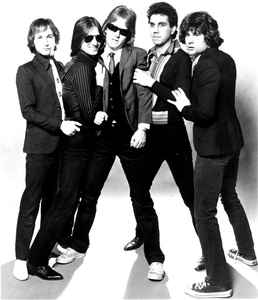
Jeff Salen is on the far right, next to Robert Gordon
Excuse me, but
Jeff Salen was robbed. You ask, who is Jeff Salen? Well, that just proves the
point. Jeff was the brainchild of a group called Tuff Darts that was thisclose
to breaking. Then, just as the labels started to come sniffing, the lead
singer, Robert Gordon, took a powder to go his own separate rockabilly way as a
solo act and joined forces on occasion with Link Wray along the way. For a long
time, Gordon refused to even acknowledge his stint in the band, but the cuts
from the Live at CBGB’s album of Tuff
Darts with Robert Gordon, “It’s All for the Love of Rock’n’roll” and “Slash,”
are arguably the best cuts on the collection. The former was written by fellow
bandmember Jeff Salen. When Gordon left, Jeff tried to reform the band with
another singer, Tommy Frenzy, and even recorded the Tuff Darts! album, for Sire
Records. It was a failure, basically because, in my opinion, lead singer Frenzy
could not fit the image of the band. He tried nobly but the songs felt false
under his tutelage. Decent singer, wrong band for him.
But Jeff’s contribution
to the scene goes beyond the music, he was also a driving force in the style of
the time, going in the opposite direction of the Richard Hell minimalism and instead
he went for flamboyance, like the Byrds and Bowie. This is actually not very
surprising, considering he worked for such flashy fashion icons as
MainMan/Bowie and Wayne/Jayne County.
During his
tenue with Tuff Darts, Jeff sidelined as a studio musician for the band Sparks
in their heyday.
After the Tuff
Darts broke apart, Jeff started working with the American Passions, which also crashed
and burned. Between bands, jeff opened his own high-fashion clothing store on
the Upper West Side of Manhattan, near the Beacon Theater. It was here I caught
up with the man.
This interview
was published in FFanzeen, No 9, dated 1982.
Jeff at far left
Jeff Salen: Not So Tuff
Back in 1975, when I
started going to CBGB, Max’s, and others, I slowly but surely became aware of
the name of Jeff Salen. At that time, it was of his work in one of the better-known
underground bands, Tuff Darts. But he began way before that.
Many years ago, Jeff worked
as a studio musician for the ill-fated MainMan operation, David Bowie’s
organization. When that ended in the early 1970s, he worked his way up to Tuff
Darts. All was going well with the world until the lead singer, Robert Gordon, left.
The band floundered and, despite a LP released on Sire (Tuff Darts!), the band slowly but surely dissolved. The public was just too used
to Robert.
A few years ago, he became
involved with a band from Washington, DC, called the American Passions, but
again, that just didn’t work out.
While all this trial and
error with the Passions went on, he worked in a clothing store on the Upper
East Side, a perfect setting for him since he was always engrossed in fashion,
feeling that fashion is an integral part of rock’n’roll. This led him to owning
his own clothing store extraordinaire, called simply Jeffries, at 50 West 72
Street, in New York City.
Time passed, and now Jeff
is ready to put another band together, for as fashion is a part of rock’n’roll,
rock’n’roll is also connected to fashion. He’s halfway there.
FFanzeen:So, tell me about your
pre-MainMan days.
Jeff Salen: I started out in a group called Butch, with Tommy Ramone. We used
to play the Mercer Arts Center, and one of the bands that played there was
Queen Elizabeth, which was Wayne County and the Miamis, put together with Dale
Powers. Tommy and Jimmy Wynbrandt. [both were in the
Miamis – RBF, 2022]. So, they broke up and we
broke up. Wayne got signed to MainMan, which was Bowie’s production company.
They had all these artists [e.g., Cherry Vanilla,
John Cougar (Mellencamp), Cindy Bullens, Iggy Pop, Mott the Hoople – RBF, 2022].
I got signed by MainMan to back up all these
people, to be a guitarist for them. So, I was in the Back Street Boys for Wayne
County for a long time – for about two years. We were, like, the No. 2 band
under the Dolls at the 82 Club. The 82 Club was a good scene. We had a good
time. Bowie had a good time. And then something happened with Bowie. He had a
lawsuit or something with MainMan - with Tony DeFries – and that was the end of
MainMan. And so we got off the gravy train and we broke up. Then I joined Tuff
Darts, which was John DeSalvo of Jim Morrison’s band. That got pretty popular
and I was pretty popular at that time from the Back Street Boys. We played and
we were pretty good. You’d have bills like the Ramones, Tuff Darts, and
Blondie. Blondie was third billed, believe it or not. That was, like, at
rehearsal studios. There’s a studio called Performance Studios, which the
Ramones owned. Everyone used to play there because there were no venues; there
was no places for a band to play, except for CBGB’s. I don’t think Max’s even
had bands then. Max’s had bands, but they were, like, Kinky Friedman. They were
like the Lone Star is now. Tuff Darts took off; all the bands took off, and
there got to be more clubs.
FFanzeen: Was
Robert Gordon in Tuff Darts when it formed?
Jeff: Yeah. Tuff Darts played only with Robert Gordon in the beginning. There
was this guy, Richie Rich, who played rhythm guitar, but they threw him out before
I was in the band. That was it. Then we auditioned singers and Robert pushed
his way into the audition. We had a whole bunch of people in line, and he said,
“I’m the guy,” and he pushed his way right into it. He sang like Paul Rodgers [of the band Free – RBF, 1982] then. And that was what was happening at the time. It was very Bad
Company-oriented. We were really knocked out with Robert. We stayed with him
for about three years. We built things up pretty good and then he got a deal
and he went.
FFanzeen: How
did you get approached to do the Live at CBGB’s album?
Jeff: It all had to do with Hilly (Kristal; d. 2007). He picked all the best
bands. The only band that had a record deal then was the Ramones. Everybody
else didn’t. Everybody except Talking Heads, who backed out of [the live album]
at the last minute. But they’re on the back cover. I think that’s pretty funny.
The front cover looks like a pizza. It’s, like, one of the worst covers of all
time. It looks like a bunch of hippies, ya know? But I can’t bad-mouth Hilly. I
have to watch my Ps and Qs. It was a nice scene, though; I was pretty happy.
And, you know, if you played CBGB’s you couldn’t play Max’s. Our album (on
Sire) came out in early ’79-late ’78. And then I did this thing with Lisa
Burns, Sal Maida from Sparks [and Milk and Cookies
– RBF, 1981]. Bobby Butani from Tuff Darts, and David
Bowler from the Marbles.
FFanzeen:
After Robert left, why did you have so much trouble keeping a lead singer?
Jeff: We didn’t know what to do. Ian Hunter set us up with this guy, Kelvin
Coney, from England. He was okay, but nobody liked him. He got disgusted and he
wanted to get paid, like, to stay in this country, and we didn’t have any money
to pay him. Actually, he was causing turmoil between Ian and us. So he went. We
tried a bunch of kids from New York, like one gig apiece. Then we got Tommy
Frenzy, ‘cause Tommy was a fan. He was the guitar player in a band called
Frenzy up in Westchester. They used to do our songs. When they would play
CBGB’s, I would jam with them. He was a nice guy and he was into what we were
doing, so we figured he would be cooperative. He was pretty cool. I liked what
he did, but the critics, like, tore him apart. I wanna go on record, I thought
the record was pretty good. Cream’s Mitch Comb says that I’m really good when left to my own devices,
but he didn’t like the John DeSalvo songs. The sexist songs. But it’s all fine;
it’s a joke. Actually, that’s what got us attention. My songs are just love
songs, very standard fare, but they’re not things that would draw attention in
a jaded music scene here in New York. John’s were the one’s that got attention,
like, “I’d rather slash my wrists and cut my throat (then have to spend the
night with you)” [“Slash”]. I think it’s a great song. The critics ripped it apart and they ripped
Tommy apart, and I don’t know why. He did it pretty close to how Robert did it.
He did his best.
FFanzeen: I
think that was part of the complaint, that he was imitating Robert rather than
being original.
Jeff: What else could he have done in that situation?
FFanzeen:
Created his own style, like Ultravox did after John Foxx left. .
Jeff: Yeah, Midge Ure in Ultravoxdid that. I’m glad they could do that. I saw them down at Irving Plaza
and I was glad they could do that. Maybe that’s what Tommy should have done,
but he decided what he wanted to do. We were just happy doing the record. I was
just working on my guitar parts and trying to keep the band together. That sort
of thing.
FFanzeen: When
you were at MainMan, did you record anything?
Jeff: Yeah, we did recordings with Michael Tschudin producing, who used to run
the Mercer Arts Center. When people read this article, somebody will remember
these names. He’s a cool guy. I wonder what ever happened to him. We did nice
little recordings with him; we did a movie. It was a movie with me kissing
Cherry Vanilla, or something. And we did a show called Wayne County at the Trucks. You know what the “trucks” are? It’s like a gay thing. All the boys are
at the trucks, you know, fist-fucking. Anyway, we did this movie and we rented
out the Westbeth Theater, which I’ll come back to later, ‘cause it’s
interesting, I think. That was MainMan. They spent, like, you know, $50,000 on
this show and filmed it for a movie, with other footage, too, with Bowie and
Mick Ronson (d. 1993), and all the MainMan artists: Iggy, Cherry – mainly
Cherry Vanilla – and Wayne County, because they were New Yorkers. People came.
Everyone thought Wayne and the Back Street Boys would get a record deal from
this. This was, like, when Alice Cooper was happening. I played guitar. I was
just into being popular.
FFanzeen:
Fame. The star-trip.
Jeff: I liked it. They had little ushers who wore cock-and-balls shoes. That
was fabulous. Papier Mache cock-and-balls shoes.
FFanzeen: You
were going to say about the Maspeth Theater –.
Jeff: Westbeth Theater. Maspeth is in Queens, where I went to Junior High School.
Okay, what was I gonna say? The Westbeth Theater pops up all the time because
Bobby, from Tuff Darts, did a play. He did some recordings with some guys who
worked at Westbeth who were directors there. The guitarist – the other
guitarist, Bobby Butani – and I did a couple of gigs with him in a group called
the Passions. Maybe people will think that it’s a continuity. Maybe they think I’ve
been working on this band for a long time [giggles]. It’s not true! I just joined this band [American
Passions – RBF, 2022] a couple of months ago.
FFanzeen: How
did you come to join the American Passions?
Jeff: Jonathan Blank is a lawyer for a lot of musicians, like Richard Lloyd, the
Rockats, Lisa Burns. Anyway, he’s the lawyer for the manager of the group. He’s
not my lawyer now, but at the time he was. Now I’ve got Blondie’s lawyer, the
Cars’ lawyer. I’ve moved up in the world a bit. I had come back from LA and I
called up like everybody I knew in New York, and said, “What’s happening? Who
should I play with? What should I do?” And he told me about this wonderful band
in Washington D.C., that were about to be signed, and they just needed a lead
guitarist. I said, “I’m not interested because I’m a songwriter, I’m not a lead
guitarist.” He said, “Well, go down there anyway, maybe they’ll do one of your
songs.” So I went down and I joined the band, primarily because the singer
(Steve Avery), like, really loved my songs and was willing to do my songs. And
now, it’s, like, half-and-half between Steve Avery and me. We’re even trying to
write together with some success.
FFanzeen:
Sparks –
Jeff: Sparks is great. Sparks is the most fun I’ve had.
FFanzeen: How
did you get involved with them?
Jeff: We had just finished working on the Live at CBGB’s
album and the guys from Sparks came to see
us. At this time, everyone was comin’ to see us. Mick Jagger came to see us,
Ian Hunter, Bowie (d. 2016) – in fact, a great many people – notable people –
told us that Robert (Gordon) was more trouble than he was worth; that we would
be better off without him, believe it or not. I never thought that. When it
came time for Robert to leave, I tried to pull a Henry Kissinger and tried to
beg him, please don’t go, stick around. But he thought he was prostituting
himself. Tuff Darts was more like John and my band. It was John’s band when he
did his songs and my band when we did mine. The other guys were pretty passive.
Bobby came more to the front towards the end, but basically it was pretty much
playing rhythms and keeping things going in the background. Robert Gordon
didn’t have much of a personality in Tuff Darts. Maybe he has one now. I don’t
know – I don’t think so. You can print that, I don’t care [giggles].
FFanzeen: Do
you ever talk to him?
Jeff: Yeah, we’re amicable.
FFanzeen: The
reason I ask is because he practically denies those days even existed.
Jeff: He’s not as reasonable about it as we are. Put it this way: I thought it
was a bad time to leave a band. You work together a certain amount of time and
you’re accomplishing something – we were supposedly doing very well. At that
point, (Amos Poe’s) The Blank Generation movie came out. It just looked like everything was going great. A lot
of major labels were interested in us, not just Sire. It was kind of a crummy
time to leave a band. Couldn’t he have waited until at least the rest of us had
gotten something? I remember he thought he was prostituting himself and he
wanted to do something else. Other people had gotten involved with him, and
everything seemed to have been falling into place when he left. We just kept
trying other singers. We didn’t know what else to do. Did I handle that
diplomatically? I hope so. I don’t have anything against Robert; I don’t have
any great love for him, but I don’t – he’s a professional. He did what he
thought was good for him. I picked up the pieces and did what I could with
them; I think he’d acknowledge that. And he’s not doin’ so hot either. Like I
said, at the time, a lot of people told us that if he wanted to leave, let him
leave. Aside from artistic or aesthetic reasons, I thought it would be bad for
him to leave because people had associate him with our songs already. With my
songs and John’s songs. I tried desperately to get him not to leave. He didn’t
want to know. His management didn’t help. Everybody always thinks they know
best. At some point, I’d like to be a producer so I can be the one who knows
best.
FFanzeen:
Sparks –
Jeff: Okay, Sparks was produced by Rupert Holmes, who did Sailor, Barbra
Streisand, and John Miles (d. 2021). Anyway, I remember they called me up –
they had Joseph Fluries called me up, who worked for them, and he said, would I
be interested in joining Sparks. I said, well, I’m in a group that I really
think is gonna break big – this is Tuff Darts with Robert – so I said I would
love to come down and talk about it. I’d play on the album, but I wouldn’t join
the group. He said come to the Carnegie Deli that night, ‘cause they were
staying at the Warwick Hotel, and they were sitting in the back – in the very back.
My girlfriend at the time wasn’t into Sparks. I was into the MC5. And Motown; I
was really into Motown at that time. I wanted to be black, like Eric Burdon.
So, we went to the Carnegie and they said they liked the way I played guitar
and would I like to play on the album. They were going to do the album in New
York. Sal Maida recommended me. This guy Sal is always doin’ me favors. Sal had
been with Roxy Music and Sparks at one point, I think [he was in the band, including on the 1978 album Big Beat, and with the band in
the 1977 film Rollercoaster– RBF, 2022]. So I said, sure, I’d love to do it and we talked about the money and
that sort of thing. Then we rehearsed for two weeks. They already had a title
for the album, Big Beat, so we concentrated on that. Hilly Michaels was the drummer, who later
became Ian Hunter’s drummer, because I played on the Sparks album. Anyway, we
rehearsed. I’m trying to find a good story outta this. I don’t think there is
in this one. We rehearsed, I did the record, had a good time doin’ it, got
paid, and declined to tour [missing out on the Rollercoaster appearance – RBF,
1982]. If I would have toured, there would never
have been a Tuff Darts album. [Big Beat] was the most fun album I ever worked
on. I had a ball working that record.
FFanzeen: Why
was it so much fun?
Jeff: First of all, they’re really easy to work with, Ron and Russell (Mael). I
have no idea why they have such a difficult time in this business. They can’t
get a record company to push their records. They always get shafted. I don’t
know what the fuck it is. They’re just wonderful to work with. They’re so
loose, they’re so much fun. Very talented. I think they’re great lyricists. I’m
just really into what they do. Everything they did was clever and it was so
challenging for me to find intelligent guitar parts, ‘cause they just wanted
loud guitar, you know, which is sorta my trademark, but there is a sensitive
side to me and I try to be in tune with what I’m doing. There was no pressure
because it wasn’t my band; I didn’t have any worries. I just showed up at
rehearsals, showed up at sessions, and when I left I had a clear head. I had no
concerns. Tuff Darts was so mind-boggling with concerns. Not in the beginning,
because I was oblivious. I didn’t care. I was still into being just popular and
being creative and just living out my Ronnie Wood/Keith Richards fantasy.
Towards the end, trying to save it and everything, that took years out of my
life. Not just mine, everybody’s. The whole band tried. Bobby tried hard. We
kept trying to do things. If I have any success with this, I’m gonna try and do
something with Bobby, like produce him or something.
FFanzeen: Is
Bobby in a band now?
Jeff: It’s hard to find sympathetic musicians. There are a lot of musicians
like Lydia Lunch – that sort of thing – like, what can you do? I can’t play
that stuff. Bobby can’t play that stuff. I like avant-garde things. I like
innovative bands. I like, you know, John Lydon’s band (PiL). I love all those
English bands like Spandau Ballet and Ultravox. They all sound like King Crimson to me, with a disco beat, but – I
like the way they look, you know.
FFanzeen: I
always picture you on stage in vests and three-piece suits. Are you still into
that?
Jeff: In Tuff Darts, but not anymore. I like layers. I’ve always been into
fashion. I’m not a superficial person, but I like the trappings of things. We’ve got a whole bunch
of pirate clothes now.
FFanzeen: Oh,
no! Adam and the Ants strikes again!
Jeff: Actually we got them before Adam and the Ants came to town. We were
already into it from reading about it before, and we know some people who work
for Ian’s, the clothing store (in New York). They go to England all the time
and they told us what was happening. They usually keep me in good clothes. I’m
like a mannequin for them, sometimes. We wore a lot of that stuff when the
American Passions played Bonds. (Fashion) is what I got off on when I first got
into music. I liked the way the Stooges dressed; I like the way they looked. I
liked the whole bit. It was, like, you didn’t have to be that handsome –
naturally handsome – you didn’t have to be George Hamilton or some shithead
like that, but you could still be cool. I think that’s a big part of
rock’n’roll. You didn’t have to be perfect – you could be Keith Richards or
Mick Jagger, who are not perfect looking but are really cool. Brian Jones (d.
1969) was prettier than most girls, though. You didn’t have to be so manly with
this macho-silly thing. I picked up on that and that stayed with me. I like
fashion. I think fashion is very important in music.
I lost track of Jeff Salen
after this. I do know that in 2002, the Tuff Darts reformed (sans Butani and,
of course, Gordon) for the CD release of Tuff Darts!, going on to record the 2007 album You Can’t Keep
a Good Band Down. His presence as a
rock’n’roll icon was still underappreciated and underserved by the scene,
however, when he passed away from a heart attack on January 26. 2008.
Since his passing, as Wikipedia announced, “Tuff Darts have been
performing since 2011 with a reformed lineup in and around New York City.”
There
are lots of stories surrounding the making of this important, yet Grade C level
film. One of my favorites – and I am not positing it is true or not – that the
director, Ulli Lommel (d. 2017), was so envious of the love scenes between stars
Richard Hell and Carole Bouquet, that he wrote himself into the plot so
he could possibly have his own chance with her. This jealousy also took
a simple story and flushed it down the toilet as far as plotline quality goes.
Well, to be honest, I have not seen the film since around the time it came out
and saw it at some art house in New York City, so this will honestly be like
watching it for the first time.
After
a brief prologue, we get smacked in the face with the title song, one of my all-time favorites (it’s the Voidoids version, not the original Ork release).
The sound is crisp and clear, but we only get to hear the first two stanzas,
and it fades out after Hell tells Bob Quine to “take it.”
Richard Hell
Richard
Hell plays up-and-coming punk singer Billy. Musically, it’s Hell pure and simple,
no matter what name they give him. He’s vying for a record contract and while in
the recording studio (singing “New Pleasure”). It is there he meets French video journalist Nada (Bouquet), and sparks fly
while we get to hear the complete song. Yay. This leads of a volatile, almost schizophrenically
up and down relationship between the two.
Billy
is quite cynical about the music biz and is trying to figure out his role
either in or out of it, while his long-suffering manager with a thick NYC
accent, Jack (Howard Grant), is trying to guide his career, though the question
is whether it is for Billy or his own financial stake that he is there.
Carole Bouquet
At
some point, German journalist Hoffritz (Lommel) enters the picture as Bouquet’s
former lover who has shown up looking for Andy Warhol (d. 1987), who makes a
cameo in the film. This sets up a dynamic of a “who will she choose?” scenario:
the rock star who wants nothing more to do with music (with no reference on
what he would do instead) or the cynical journalist who is obsessed with
Warhol. While Nana is hooking up with Hoffritz, Billy is with Lizzy (Suzanna
Love), another filmmaker. One minute it’s Billy and Nada, then it’s not, then
it is, then it’s …
Whatever
the weaknesses in the storyline and especially the dialogue, which often borders
on the ridiculous (the “beach” conversation in the car is a perfect example),
this film is a must-see just for the visuals of the gritty New York City of the
late 1970s, including under the West Side Drive, on a rooftop with the iconic
water towers, and especially the scenes in CBGB, which are both a joy and
heartbreaking. [As they scanned the tables, I realized that I have sat at just
about every table there; small digression that has nuthin’ to do with nuthin’:
I was in the hospital having a procedure, and as the doc was getting ready to
give me a huge needle, he said, “think of a happy place, like a beach or a
mountain.” My mind went immediately to sitting at a table at CBGB waiting for the
band to start…] It was also fun to see the backstage (a room I have been in
numerous times) which highlights some graffiti of The Senders. Meanwhile, the
Voidoids (Hell, bass/vox, Quine on guitar, Ivan Julian on guitar, and Mark Bell
– the future Marky Ramone – on drums) get to show off live on CBGB’s stage. Warms
the cockles of my heart. Amusingly, perhaps, there is a scene shot at CB’s of
Nada interviewing a bunch of club denizens (I am assuming they are real rather
than actors), reminiscent of the early Amos Poe film, TheBlank
Generation, reviewed below.
Ulli Lommel, Andy Warhol
There
are lots of cameos by some who were critical and omnipresent to the scene at
the time, such as violinist Walter Steding, fashion maven Natasha, and of course, Warhol.
Bouquet is quite beautiful, and Hell is in his prime
(1977 Big Star magazine interview with Hell from 1977 HERE), (with his original teeth and all). What he lacks in acting talent, he makes up
for in enthusiasm and making some amazing music that helped spark the whole
British punk movement when Malcolm McLaren (d. 2010) infamously ripped him off
from sound to fashion.
Most clips I have seen of the film over the years have
been taken from VHS copies, and were highly grainy (as VHS tends to be), but
this Blu-ray is crisp, as it is a 2K scan taken from the only remaining 35mm print!
That only one survives is something I am both grateful for, and indignant about
its lack of care of the rest of the prints. That being said, for a Blu-ray
release, there are zero extras on this, but I don’t care because the main meat
of the matter, the film itself, is the rightful focus.
Speaking of technology, it is fun to see the state of
art mechanics of the time, such as video recorder cameras that are separate from
the tape deck, dial phones, old cars, and the such.
The biggest problem with the film is that it is
inconsistent to its own theme, jumping back and forth between stories with gaps
in-between that make the viewer feel a bit shell shocked and while it’s not
confusing, it really doesn’t make much sense. I was more interested in the Billy/Nada
relationship, and the adding of Hoffritz
just feels superlative. If the film could have focused on just the couple, with
their ups and downs, it would have been much more interesting. Though the live
music helps, even though there is excessive use of the title cut throughout,
and there is obvious reuse of some shots such as Billy coming up from the CBGB
bathrooms, and of the Voidoids on stage (shown at least three times). I
understand why this film has a rep for being a muddled mess, because on one
hand it is just that, but if you were there at the time, or if you wanted to
know what it was like, this is more an important time binding document than
story.
According
to IMDB, Lommel still presently has projects in works, both as director and actor, 5
years after he has died; his other big success might arguably have been The
Boogyman, a film he directed that came out the same year as this release.
His later works seemed to rely on stories of real serial killers.
This
film documents, what it calls, the birth of punk rock in New York during the
early 1974-75 CBGB (mostly here; closed 2006 and is now a clothing store) and
Max’s Kansas City (closed 1981 and is now a deli), with some shots from other
venues such as the Bottom Line (closed in 2004, and is now a student’s residence
for New York University). But in some ways, it overlaps with its own midwife,
but more on that later.
The film is jumpily shot by Patti Smith Group
guitarist Ivan Kral on silent 16mm, and is then audibly superimposed by the
sounds of the band’s recordings, either legitimate releases, demos, or live
cassettes.
The premiere of the film was held in CBGB,
when the stage was still on the left side, so needless to say in all the CBGB
footage in the documentary, that is where the infamously (and hotly debated) Television-built
stage was located. It is nice to see the huge photos sans stickers and band
graffiti that would eventually cover them up in the 1980s and ‘90s. The band
that played the night of the opening was the Heartbreakers, with Richard Hell
still a member. I saw the Heartbreakers so many times on stage, but that was
the only time with the Hell line-up, before Billy Rath replaced Hell on bass), and
Johnny Thunders and Walter Lure moved to the front permanently out of Meyer’s shadow.
The Patti Smith Group
The film is broken up, essentially though not
officially, into three chapters. The first one is the “birthers of punk,” for
lack of a better term, starting with The Patti Smith Group performing in various venues (as is true with most of the bands) to the
soundtrack of “Gloria (In Excelsis Deo)” off the Horses album, followed
by a live version of “We’re Gonna Have a Real Good Time Together.” It would
make sense to start off with her group since they were considered the first
“punk” band to be recorded…though I do wonder who filmed the footage since not
only was Kral in the band, but there are shots of him playing. Anyway…
The Ramones
Other major bands flow into each other
visually, with the songs starting abruptly. That’s no issue at all, though I
thought it would be good to have some kind of crawl that said which band was
which, rather than just waiting until the end credits. But that’s punk, do
what’s unexpected, right? Patti flows into Television’s “Little Johnny Jewel (Parts I and II)” (with a shot of Terry Ork for good
measure, who released the single on his own Ork Records), and then to theRamones playing over only live recordings as their seminal eponymous album had not yet
been released. It was interesting to hear them doing a song that would show up
on their second album. Then there are the likes of Talking Heads.
Wayne County
The second section is the next level of bands,
or first-level Max’s groups, such as the trendsetting Wayne County, The Miamis, Harry Toledo, the Marbles (one of my favorites back then, doing almost a music video), the Shirts, and Tuff Darts (with Robert Gordon).
The third is an odd mix of non-venue related
footage (though the music concept stays the same) of bands such as backstage.
There is also the post-Thunders/Jerry Nolan New York Dolls that focuses only on David Johansen while “Funky But Chic” plays, and there is the Hell version of the
Heartbreakers to end it with the title song. The Dolls were kind of the midwife
to the New York punk scene, and the Hell version of the Heartbreakers almost
the transition into the now more infamous version of the band.
I’m proud to say I have seen all of these
bands perform live save two (Miamis and Tuff Darts, though I did interview the founder
and lead guitarist, Jeff Salen). When I first saw the film at its premiere, I
was a bit flustered by the dissonance between the footage and the sound, but
over the years, I have come to admire it. Many of the songs are not shown all
the way through (cut short or edited), but it just means more songs. The film
is a treasure.
When I started
to collect pieces for the second issue of FFanzeen, I decided to begin with
a band I enjoyed: The Marbles were an amazingly entertaining band. Their sound was
a unique combination of power-pop / rock’n’roll that they made their own.
I was a fan of
the group and saw them often, sharing bills with bands like Television, Mong, the
Mumps, and Milk & Cookies (another personal power pop fave). And yes, they shared
the bill with the infamous CBGB AC/DC show, which was Bon Scott’s last New York
performance, to which I was present (the enclosed pictures by me here are from
that night).
The musicians had
similar pageboy hairstyles and looked very boy-next-door, in fresh pressed white
shirts and slacks. Their main power lay in their songs, which were hard-hitting,
killer pop tunes, fueled by Howard Bowler’s lead guitar and bolstered by Eric Li’s
keyboard. This is evidenced especially in their first single, on Ork Records, “Red
Lights” b/w “Fire and Smoke” (“Red Lights” was also included on ROIR’s excellent
Singles cassette collection). Eventually they would come out with another single,
“Forgive and Forget” b/w “Computer Cards.” Unfortunately, these two 45s represent
all the existing officially released catalog of the Marbles. What happened to the
tapes they refer to in the interview following is a mystery. According to their
ex-manager, Alan Betrock (d. 2000), they no longer exist. It’s a shame, because
they had some killer tunes, like “Closing Me Down,” “She’s Cool,” “Jealousy,” “She’s
Pleased,” and especially the bouncy “You Tomorrow.” Live versions of many of these
songs can be found online. After all this time, I still remember the tunes to many
of these songs. Despite being a pop band, they also had a snotty attitude, which
help them fit into the scene.
I was fascinated
with Jim Clifford’s bass, and bass playing style. It was Clifford’s bass that made
me first notice the Rickenbacker brand. I couldn’t figure out how anyone could play
a bass with a neck that long. I was also amazed at his technique, which I have rarely
seen since. Rather than just bending his wrist around the bass and curling his finger
to play the frets, his wrists were turned at an almost ninety-degree angle so the
fingers were nearly straight. I tried duplicating it, but couldn’t come close.
This interview
was published in FFanzeen No. 2, dated October 31, 1977.
The Marbles – For Rockers of All Ages
The Marbles are really one of
the better bands around now-a-days. I have been a fan of theirs for a few years
now and have caught their act whenever I could. Recently they went on vacation.
When they left, they were very good, but now, they are just great. I had to interview
them, and below is the outcome.
It was a hot night when I visited
the Marbles’ loft, that last day of August 1977. The entire band, Howard Bowler
(guitar, vocals), Jim Clifford (bass, vocals), Eric Li (keyboards, vocals) and David
Bowler (drums, vocals), was present:
FFanzeen: How did
the first single (“Red Lights”) sell? Jim Crawford: There were 1,500 copies made at
the most, and they all sold out.
David Bowler: We’re negotiating for a re-pressing.
FFanzeen: How did
Terry Ork [d. 2004] approach you to do the record? Jim: Over a joint.
David: He got us our first gig at CBGB on the same bill as the Ramones. And I work
at Cinemabilia [with Ork]
Howard Bowler: He likes the band. He wanted to do a single … and he was picking
bands he wanted to record. He started with Television [“Little Johnny Jewel, Parts 1 and 2” – RBF, 2022]. The second was …
Eric Li: Hell. Richard Hell [“Blank Generation”
b/w “Another World” – RBF, 2022].
David: Then we came out.
Jim: Then he went berserk.
Howard: And we haven’t seen him since [laughs].
FFanzeen: His next
single is going to be with Teenage Jesus and the Jerks. [Note: either this
never happened or was not released – RBF, 2022] Jim: Yeah? The New Wave bands have to make a splash
with the critics.
FFanzeen: Are you
satisfied with the single? Jim: No. The master recording we did for Terry
Ork was very clear; you could hear every instrument. You could hear the vocals:
... We’re satisfied with our performance on the record. There’s a lot of energy
on that record, but as far as the actual pressing and mastering of the record, it
was done – well, face it, Terry Ork doesn’t have that much money to work with. He
tried the best he could but with the things he was using, the best is very sub-standard.
Plus, this was one of the first recordings he put out, so he was still experimenting
with different pressing companies. And unfortunately, the ones he experimented with
us were really crummy. I mean, the first press cuttings of the single came back
and it wasn’t even printed on the record straight. You’d put on the needle and it
would speed up and slow down. It wasn’t on the central axis. The second one had
a skip on it that was printed on the record. And five test pressings later, we finally
decided to just go ahead with it. The third test pressing sounded like there were
five thousand mosquitoes in the room. We were not satisfied with the sound quality,
but we were satisfied with the energy. We like the record. The songs come through
anyway.
Eric: After the last pressing, we just got so disgusted we just said, “Go ahead
with it,” ‘cause it was just taking so long.
Howard: We had planned to release it in September, and by the time we were finished,
it was January when it was released.
David: Now it’s over a year old to us and we know we could do it better.
Jim: Anyway, we’re gonna put out a new one now.
Eric: That’s the main thing.
Jim: I don’t know if it’s gonna be by Ork or not, but we’re going to record a new
single, “Free World” and “Love Today.”
FFanzeen: Are they
new songs? Howard: No, they’re about a year old now, but
they’re very mature, and ripe for recording them. One of the songs is sort of a
political statement, “Free World.” “Love Today” is, well, a love song about “every-man.”
Jim: It’s a revolutionary single. You have never heard a single like this.
David: Next question.
Eric Li (ffoto by Robert Barry Francos)
FFanzeen: I was
going to ask if you were satisfied with the way Ork promoted the single, but … David: He didn’t do any promotion, so we’re very
satisfied.
Eric: We did about what we expected.
David: No, really. He told all his friends.
Jim: Well, actually, they sold out so we can’t be unimpressed. He only pressed 1,500
copies, and the fact that it was an Ork record and we were a part of the New York
rock scene. We were just so disappointed in the sound quality, that before he printed
any more, we wanted it pressed at a different place. He has to come up with the
money to do that before we’ll go ahead with it. (We) want to do it, but it’s just
a matter of getting the monkey wrench out of the works.
FFanzeen: Was “Jailbait”
recorded at the same time? Howard: Yeah.
David: There were two others. “From Me For You” and “Closing Me Down.” All recorded
at Douglaston.
FFanzeen: Will
you release those? Jim: No, actually those will be burned.
Eric: We’re thinking of changing the B-side to “Jailbait.”
FFanzeen: When
was the last time you played together publicly? David: Our last New York job was four months earlier.
Jim: In May
Howard: We took a summer break. We went to Minneapolis. And we played there three
nights.
David: It was great. Parties every night. Encores every night.
Eric: Unqualified success.
Jim: Everyone liked us a lot.
Howard: The bar owner there did the best he had ever done, and they want us back.
That’s part of this tour. The reason we set up this tour is because we did so well
in July when we played there and he asked us back in October, and we figured if
we’re going out there in October, this time let’s make some money, so we want to
have jobs stopping off in Cleveland and Ann Arbor. We have connections for a few
jobs on the way out and hopefully on our way back. And we’ll be playing. That’s
another thing.
Eric Li, David Bowler, Jim Craford, partial Howard Bowler (ffoto by Robert Barry Francos)
FFanzeen: Did you
enjoy your vacation? Eric: Oh, yeah!
Howard: It was great.
FFanzeen: Why did
you take a break? Jim: Because we couldn’t get a job in New York.
Summer in New York is so hot, and Hilly [Kristal, of CBGB] at that point was not
really excited about hiring us. We didn’t want to play at Max’s because – eh – we
just didn’t want to play there. And the summer here was just very dead.
David: We had to get our heads together.
Eric: We just wanted a break. We needed a vacation and it was really fun.
David: We kept on rehearsing, we worked on our material, and we were going through
managerial problems that was taking up a lot of our attention.
FFanzeen: That
was Alan Betrock? Jim: Boy, you leave no stone unturned. Next question.
FFanzeen: How did
you get to play at the ECHO convention (two years ago)? David: Our first manager [Betrock] got us the
convention. Next question.
FFanzeen: OK, I'll
pass on that one. Never let it be said I couldn’t take a hint. Jim: He’s a fine rock writer.
FFanzeen: What
do you call what you play? Jim: Music. Definitely music.
Howard: Noise with a sprinkling of screaming. No, I call it Alfred.
David: Marbles Music Mania.
Jim: It’s hard to classify us. We’re somewhere between AM and FM, whatever that
means.
Howard: Nirvana.
FFanzeen: What
do you think of some of the other New York bands? Howard: We like the Mumps. I like the Heartbreakers.
I like the Voidoids, despite their music. I used to like Television. Blondie’s gotten
better. Patti Smith is dead. She was great.
Jim: That about covers it.
Howard: You see, the bands that we listen to are not the so-called New Wave bands
that have cropped up in the last eight months. Teenage Jesus, the Cramps. They’re
just awful. There's a fundamental philosophy that if you get on stage with an instrument,
you should know how to play it.
Jim: I just find it boring. I have no place in my mind for the thoughts those people
have.
David: I mean, what does it mean to be “cramped?”
FFanzeen: If you
had a choice, what band would you choose to play with? Jim: Marbles and Mumps are the strongest. Actually,
the Rolling Stones.
FFanzeen: What
are your ultimate goals? Jim: To be the first rock band on the moon.
David: First goal is Number One single, ten gold albums.
Jim: Right now, my ultimate goal is to have enough money to buy a TV set. We’d like
to tour Europe. I don’t know. Just to be rich and famous. To have fun. Pleasure.
Eat a lot of beans. I want to be a major political force: ... for the youth of America.
We want to lead America out of the depression. To give people something to believe
in again.
David: We want to put rock music back on the map.
FFanzeen: What
kind of fan is a Marbles fan? David: Beautiful. Female. Eighteen.
(At this time, Jim got up to
show me something and accidentally knocked my tape recorder off the table, and being
consistent, my tape recorder stopped taping).
The publishing
of this interview, in part, may have led to the dissolving of the band. At a time
when CBGB and Max’s were the two key places in the city to play, the Marbles were
considered a CB’s band. And from this interview, you can tell that not only did
they insult Max’s, they were not on Hilly Kristal’s A-list either. At the time this
interview was completed, the Cramps were CBGB’s Number One house-band. A week after
this issue came out, the Marbles were booked to open for, who else, the Cramps.
The story I heard is that when the Cramps read the interview, they told Hilly it’s
“them or us.” Of course, Hilly went with the money (who wouldn’t) and blackballed
the Marbles.
Having burned their
bridges with Max’s, there really was no decent venue for them, and they could either
move out of the city or dissolve. For a long time, I felt guilty for printing their
comments about the Cramps, but in retrospect, I did not ask the Marbles about specific
bands, they spoke up voluntarily, and on the record.
The band was very
antagonistic in the interview. They were fresh and just back from vacation, excited
about their material, and yet they were bitter about the whole scene. Others who
have worked with Terry Ork were disappointed in his production, management of the
promotion, and especially his handling of the cash, so that’s understandable. David
told me years later, with some chagrin, that they were “young and arrogant.”
After Clifford
left the band (he became a teacher in Minneapolis), they broke up, and then reformed
with the late Richie Lurie (who would eventually join the Waldos with brother Walter
Lure), calling themselves the Volts. I had the chance to catch them on February
13, 1981, at the long-since-gone Botany Talk House (Sixth Avenue and 27 Street).
When that ended,
as David later explained to me, “Eric, Howard and I formed a production company
called Atomic Records, and began writing and producing records for other artists.
In 1988, we had a number one dance record with Denise Lopez, whom we had signed on to A&M. During this time, unbeknown to Howard and me,
Eric developed a drug habit. Our record actually went Top 40 with … Denise Lopez,
and we did two LPs for A&M Records [Truth in Disguise in 1988, and Every Dog Has Her Day in 1990 – RBF, 2022].
At any rate, Eric didn't show up at rehearsal for a few days and we knew something
was up. So, I went to his apartment and found him. He'd been dead about 2 days.”
In the early
2000s, the Bowler brothers formed a new band called Contraband, leaning more towards
a roots/folk rock sound. I have since regained contact with them and have even taken
some publicity photos, including one that is incorporated in their second CD.
Currently living in Saskatoon (email at RBF55@msn.com for address). From 1977-88, I used to publish a print version of a music magazine in New York called FFanzeen, which dealt with the wide-ranging independent music scene. I also photographed many bands from the period (and since). Now I write this blog. And the beat goes on.




.jpg)


 Posts
Posts

