Friday, March 18, 2016

PATTI SMITH: A Rhythm Generating [1988]

Text by Mary Anne Cassata / FFanzeen, 1988
Introduction © Robert Barry Francos / FFanzeen, 2016
Lyrics © Patti Smith
Images from the Internet; recording and book covers from personal collection of RBF

This article was originally published in FFanzeen, issue #15, dated 1988. It was written by high-end rock writer and editor Mary Anne Cassata, who has a number of books under her name, including bios of Cher, Elton John, and Jim Carrey. Since this article was published, Mary Anne has interviewed Patti a few times, including some that have been referenced in biographical books about her. I’m happy to say we’ve been good friends for over 30 years now!
                                                                    
As for Patti Smith, there are few who can argue her first album, Horses (1975), was transformative to the music we heard afterwards. Same can be true about her poetry, many of which have been turned into her songs, but her scope goes beyond that.

Honestly, I can’t remember the first time I saw her play, but I do know I was there at her infamous Bottom Line show (1975), when she played the short-lived CBGBs Theater (1977, with Richard Hell and the Void Oids opening), and her last show in New York at the Wollman Rink in Central Park (1979). There were a few in-between, as well. Infamously, she was the final performer when CBGBs closed its doors in 2006.

The closest I came to having a conversation with her was a time in 1977 when I was toddling down St. Mark’s Place passing in front of Natasha’s Clothing, near Third Ave, and I saw her walking in the opposite direction, wearing a neck brace. She had recently fallen off a stage and broken her neck. As I passed her, I said something like, “Patti! Thank you for all the great music” She replied, “Hey, thanks, man!” and that was that.

When she kind of disappeared when she married Fred “Sonic” Smith [d. 1994] and moved to Detroit, there was a definite void. Since her re-emergence, Patti was inducted into the Rock and Roll Hall of Fame in 2007. The only way I know how to say this is that Patti is a force. Like a hurricane, her Detroit phase is the dormant eye, and she has certainly come back with strength. I welcome it. – RBF, 2016
                             
The words, “I’m an American artist, and I have no guilt,” were once said with true passion and much conviction. A poet-turned-rocker, Patti Smith has won acclaim for being the ‘70s female cult phenomenon.

Perhaps to really understand the full influential impact that such classic albums as Horses and Easter initiated to the rock world, you must know where its inventor’s inspirations were originally devised.

Before acquiring her movement as metaphor, Patti Smith was all too captivated by 19th Century poet Arthur Rimbaud. His influence was not widespread at first, but expanded to easily defined areas of symbolism and surrealism. As a young girl, Patti first became immersed in Rimbaud’s words and visions after seeing his picture on a book cover; looking at his face had reminded Patti of her father. The effect: profound; its result: the beginning of a celebration of Rimbaud in her poetry and music.

Patricia Lee Smith was born December 30, 1946, in Chicago, the eldest of four children: two sisters, Kimberly and Linda, and a brother Todd [d. 1994]. Her father worked in a factory and her mother was a waitress. The Smiths lived for a short while on a sheep farm in Tennessee before relocating to South New Jersey. When asked about her childhood hears, Patti replied in a ‘70s interview: “I’m just a Jersey girl. I really loved that I was from South Jersey because it was a real spade area… When I was a little girl, I was a very sick little girl and skinny. They didn’t even know that I would live. We had no money. We were very poor, but I never stopped believing.”

Patti’s father was an “intellectual” type, who preferred that his eldest daughter wouldn’t talk in a New Jersey street slang. “I wanted to be like the kids I went to school with,” Patti said, “so I never intentionally learned to speak good. I thought I couldn’t use it on the dance floor, so what good was it?”

At age six, the riveting sounds of ‘60s rock’n’roll music began to invade her vulnerable consciousness. Little Richard’s “The Girl Can’t Help It” was the first record Patti ever owned. Escaping into music helped to ease the pain of a traumatic childhood due to her health. Frail, she was struck with tuberculosis and scarlet fever, which more than often left her to suffer hallucinations.

Perhaps due to illness, combined with a large bout of shyness, Patti retreated into her own special world of fantasy. Even as a very small child, she had the ability to write and would often record her hallucinations and dreams into notebooks. Sensitive, introverted, and consistently creative in her efforts, childhood may have left emotional scars – but it also eventually helped make Patti a renowned poet/rock luminary. “Those who have suffered understand suffering. Thereby, extend their hand,” she would write in “Rock ‘n’ Roll Nigger nearly a decade later.

A growing devotion to rock music and its heroes had solidified itself by her mid-teens. After Patti witnessed the Rolling Stones for the first time on The Ed Sullivan Show, there was no turning back. She also enjoyed dancing, especially doing the Monkey, which was popular at the time.

Though focusing her talents on writing poetry and dancing to the latest sounds, Patti eventually conquered her shyness and, in the process, developed a cutting sense of humor. She also learned how to channel her helter-skelter thoughts intro captivating poetry and art. The search for complete freedom in self-expression became Patti’s personal vision. School didn’t mesh with her artistic rhythm either, so she left both ungratified and unqualified for work skills in the real world.

Smith attended Glassboro State College in New Jersey, but left when she was 19-years-old [1967]. Though it was a very unsettling period in her life, she also admitted to coming to terms with her own sexuality. Patti also maintained her poetry writing, portraying herself as both victim and aggressor. In a 1973 interview, she explained, “I was always a tomboy. I hated being a girl. I never identified with any female at all. When I had a baby, I was forced to look at myself as a female, although only physically, not intellectually.”

She found work in a New Jersey toy factory, but it didn’t last long. Standing in an assembly line for seven hours a day is unaspiring work. Exit factory. This ambitious, artistic girl had other dreams, like the burning lines in her song “Piss Factory”: “I’m gonna get on that train / And go to New York City / And I’m gonna be somebody / I’m gonna be a big star / And I’m gonna be so big / I will never return / Never return to this piss factory…” Patti, with a vengeance, pursued her dream.

In 1967, she headed for New York City, keeping the poetry flowing, and rock’n’roll close to her heart. She indulged in the greats, such as Dylan, Hendrix, and the Stones for references, and especially her mentor, Rimbaud. Using some of the factory savings, Patti decided to take a trip overseas to see the haunts of her poetic heroes. She made a pilgrimage to Paris, visiting the gravesites of Rimbaud and Jim Morrison. Captivated by the culture and the art, the aspiring poet/artist stayed for six months, working in cafes by day and reciting poetry at night. Patti said of her experiences:

“In Paris, everyone’s a poseur. The French are the best actors in the world. They’re not deceitful, but everyone is conscious of his image. When I left the States, I was still very much into image. I wore my black suit and dark glasses. Paris to me is completely a city of images. I found it impossible to work there.”

Returning to New York and ready to face another new adventure, she met up with avant-garde artist/photographer Robert Mapplethorpe. The two moved in together, living in a tiny apartment near Pratt Institute in Brooklyn. Motivated by student energy, Patti studied new art forms and was learning how to trade her hallucinations for some serious poetry. She also dabbled in the arts to keep her creative process fresh. From line drawings, cartoons, and using calligraphy to write poems, she remained consistent, while working as a cashier at a Greenwich Village bookstore.

A struggling guitarist named Lenny Kaye worked down the street from Patti at another bookstore. The two met and would soon team up to combine poetry and rock guitar.

From the late ‘60s to the early ‘70s, Patti was an influential part of the Warhol scene, holed up in the now infamous Chelsea Hotel. Patti and Mapplethorpe moved there, soaking up the inspirational remains of Dylan Thomas, Janis Joplin, Allan Ginsberg and the Velvet Underground. It was Mapplethorpe who initially encouraged Patti to transfer her visions and images into art. Some of that constructive energy resulted in a co-authored book with rising playwright Sam Shephard, titled Mad Dog Blues and Other Plays [published 1972 – RBF, 2016].

Through the urging of a close friend, Patti became more involved in the music industry as a means to channel her writings. By her 24th birthday, the poet/artist proved to be an undeniable force to celebrate at a Chelsea Hotel party. Breakthrough – forge ahead. During 1971, she exercised her insatiable writing abilities by co-authoring a play, Cowboy Mouth, with Shepard, appeared on BBC television, and made a documentary film for the Metropolitan Museum of Art (MOMA). Patti’s prime inspiration for the MOMA movie was an Italian female beatnik/artist named Valli [Patti and Valli, 1973 – RBF, 2016].

“I used to have pictures of her all over my walls. She was a big hero of mine when I was 14,” recalled Patti in 1973. “She lived on the Left Bank. I never considered her a real person. I was confronted with a real girl, and I thought, ‘Oh, man, what am I going to do?’ ‘cause I had dealt with the image for so long.”

She also admired the works of Edie Sedgwick; heroes were always essential to Patti in her younger years. When she became an artist in her own right, however, she learned to put images into their proper perspectives. “I never considered myself to be my own best hero. There’s almost no poet I’d read (other) than myself,” she continued. “I no longer need people to cloak me. Heroes die, images fade. Art for me in the beginning was never a vehicle for self-expression. It was a way to ally myself with heroes, ‘cause I couldn’t make contact with God.”

By late ’71, her next form of self-expression arrived as a collection of poems. Her debut solo book, entitled Seventh Heaven, aroused some interest from Rolling Stone and Creem, who then started to publish her poems regularly.

Though the early ‘70s may have been a lot harder than expected, it still didn’t diminish her energy level any. With Lenny backing her on guitar, Patti gave poetry readings at St. Mark’s Church, located in New York’s Bowery. Her words, supported by Kaye’s electric guitar and a tiny amp, had soon garnered a loyal cult following.

By the time her second book, Kodak, was released a year later, Patti and Lenny were joined by pianist Richard Sohl [d. 1990]. Thus was the beginning of the Patti Smith Group (PSG).

Due to her new-found recognition as a rock poet, Patti recorded her single, “Piss Factory,” backed with “Hey Joe (Version)” on MER Records, an independent label. The sound, raw and energetic, recalled those desperate days of working in a factory, and “Hey Joe,” the ‘60s rock classic [originally recorded by The Leaves, and Jimi Hendrix Experience, among many others – RBF, 2016], gave new meaning to the violent love theme.

“At first it was just me and Lenny Kaye on electric guitar during poetry readings,” Patti told a music journalist in regard to the formation of the PSG. “Then it started to gather force. We advertised for a piano player… And then we started looking for another guitarist. We had days and days of guitar players. We’d make them do 40 minutes of “Gloria”… Then we picked up a drummer.

Toward the end of ’74, an expatriate Czechoslovakian guitarist named Ivan Kral, and former Mumps drummer Jay Dee Daugherty, rounded out the PSG. Rock’n’roll dreams and visions grew stronger and closer to the musical goals of the five-piece band. Alan Lanier of Blue Oyster Cult provided Patti with further reinforcement in her lyrical writing and signing. The group called Manhattan home, and performed on the small club circuit.

In 1973, with the release of her third book, Wītt (pronounced “White”), Patti was fast becoming something of a local legend in the New York poetry circles. On her way to something much more than a career, Patti saw it as a crusade for rock’n’roll.

On stage, even the very smallest, she knew how to connect with an audience, whether it was poetry readings or music. Patti could reach in deep enough to hit a nerve with the public. It wasn’t until a year later that her true fate would await.
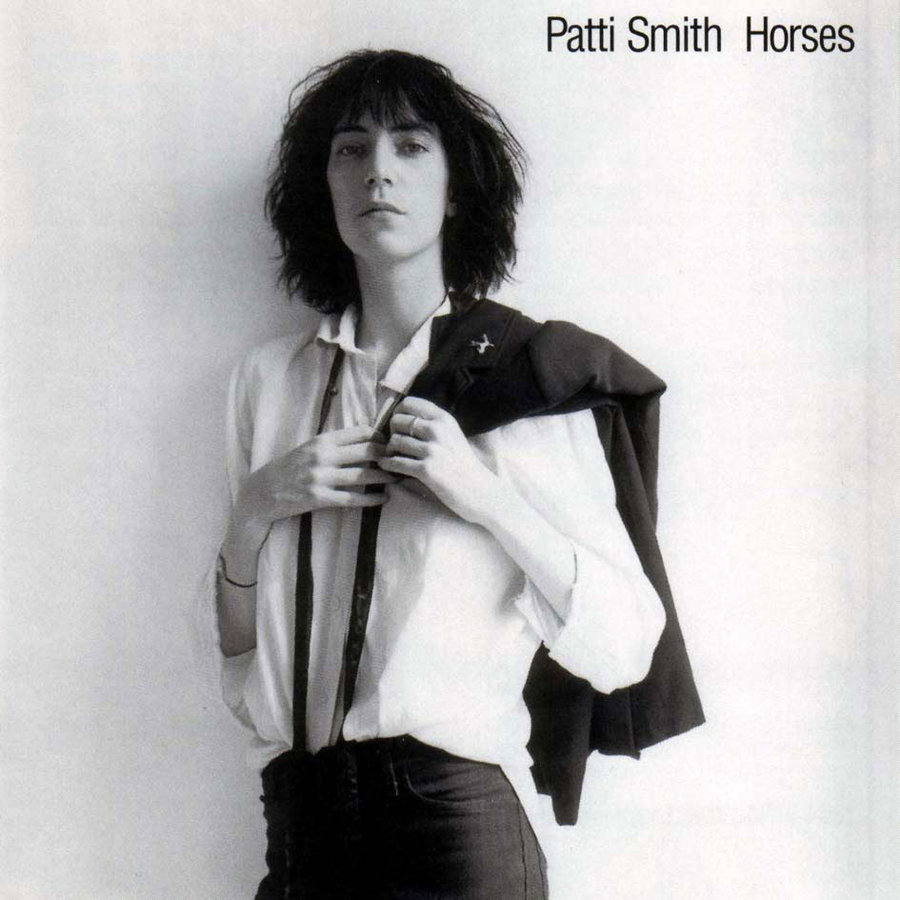
Already an established name in New York, PSG was signed on the strength of their sound to the newly formed Arista Records. Their debut album, Horses, was produced by John Cale and recorded at Electric Lady Studio in New York City. The PSG were one of the first acts to be termed “New Wave” or “Proto-punk” by the music press. Producer Cale, a former member and co-founder of the Velvet Underground, employed Lanier and friend of Patti’s, Tom Verlaine (of the band Television), to contribute additional guitar work to the album.

For a new band’s debut offering, it made a boisterous statement, not soon to be ignored. Patti Smith, a new breed of rock star, would eventually become an unforgettable figure in popular music for years to come. All across the country, FM radio stations spread the word and played cuts from the offering that was rapidly becoming a landmark album.

The prestigious The New York Times proclaimed that “Horses will shake you and move you as little else can.” Across the Atlantic, the New Musical Express (NME) was saying: “Albums this good are pretty few and far between. It’s better than the first Roxy album, good as the Doors, and Who and the Velvet Underground.” Generous praise coming from the notorious British press.

Back in the States, Horses rose up the music charts and into the hearts of record buyers. “Jesus died for somebody’s sins but not mine / Melting in a pot of thieves / A wild card up my sleeve / Tick, heart of stone / My sins are my own / They belong to me,” opened the album. Startling lines for a 29-year-old Patti Smith to declare. In 1976, she told Rolling Stone, “It’s time to figure out what happened in the ‘60s. I’m working on a link to keep it all going.”

Her debut single of a remake of Them’s “Gloria” was backed with a live version of The Who classic, “My Generation.” Using nothing less than the unexpected, original Smith approach to Townsend’s lines, “People try to put us down / Just because we get around,” Patti added, “I don’t need that fuckin’ shit / Hope I die because of it.” In England, the offensive words had been censored from the record pressings. Of course, the artist was not amused. Patti rebelled: “When I find out who’s responsible, I’ll break his balls…” Beware, danger lurks!

 A notable progressive artist on an American radio station in New York City spells trouble. Just prior to an interview on the famed rock station WNEW-FM, Patti was asked politely to curb her speech. Not one to dispense of profanity lightly, Patti took the request as a personal insult to her artistry. On the air, she broke into a litany:

“How alternative is this radio?... The first thing that happens when I walk in is that you tell me you don’t have a bleep machine and to watch what I say. That’s not alternative, that’s the same old stuff. Notice I said ‘stuff,’ being completely professional at this moment… All over the world there’s, like, these bursts of power and bursts of pleasure. Rock’n’roll is being taken over by the people again, by young kids again, who don’t want to hear about your digital display. They don’t want to hear about any of this stuff.”

Due to being banned from any further interviews on the noted station, Patti took her grievance out in the form of a poem called, “You Can’t Say ‘Fuck’ on Radio Free America.” The manifesto was published in an underground New York newspaper. A portion of it read:

“We believe in the total freedom of communication, and will not be compromised. The censorship of the words is as meaningless as the censorship of musical notes; we cannot tolerate either. Freedom means exactly that: no limits, no boundaries… Rock and roll is not a colonial power to be exploited, told what to say and how to say it.”

Her second album, Radio Ethiopia, proved to be nothing less than another explosion of raw energy and primal rock inspirations. With ace producer Jack Douglas at the helm, the assaulting, innovative rhythms and sounds gratified devoted followers, and at the same time captured new ones. Though some music critics felt her second offering didn’t quite measure up to the brilliant debut album, it still garnered an enthusiastic reception. One record reviewer noted the LP as “just another well-produced, competently played mid-‘70s rock and roll record.” Album sales were a bit disappointing, too, but the music? Never.

On January 23, 1977, in midst of a concert tour, Patti had an accident. She twirled off a stage in Florida, singing, “Ain’t It Strange,” falling 14 feet. While completely immersed in the number, the stage ended – and space began. Patti broke her neck and went into traction for a while. Commenting on the accident, she said, “I know the finger of God pushed me off the stage.” While recuperating from her injury, she began writing a new volume of poetry.

A year later, the PSG got back into action and made a triumphant return to the rock world. Their third album, Easter, was nearly as exhilarating as Horses. With some songwriting assistance from fellow Jerseyite Bruce Springsteen, Easter sprang a huge hit single, “Because the Night.” Patti penned the lyrics, and Springsteen the music. Unadulterated praise from rock critic purists poured in from both sides of the Atlantic. Dave Marsh, from Rolling Stone, proclaimed, “The Magic of Easter is undeniable. It is transcendent and fulfilled. Patti Smith is one of the greatest figures of ‘70s rock and roll.”

In England, Sounds stated, “Here you get unbridled perfection merged with raw fury, and it is stunning. NME followed suit with: “Patti Smith’s energy is irrepressible and contagious. She pours enough of it into Easter to keep an average artist going for years.” Having received such a grandiose reception by both critics and fans alike, how could the PSG’s third album be any less than a commercial success?

Some of the purest forms of the PSG’s assassinating rhythms are best displayed on tracks like “Till Victory,” “Space Monkey,” and “25th Floor.” Producer Jimmy Iovine channelled Patti’s original lyrical sense and the band’s commanding music appeals, and cleverly meshed it together in a suited rock style that would be identifiable enough to the Smith-starved legions worldwide. “Because the Night” had delivered a new means of respect for the group.

“Here we are condemned to navigate back to our beginnings,” stated the androgynous, thin female figure at the release of the album. Even some of Patti’s own religious convictions are passionately conveyed in such enlightening cuts as “Privilege (Set Me Free)” and the title song.

As Easter made chart history, the poet-turned-reluctant-rock-star released her fourth and widely read book of poems, Babel. The collection became her most indulgent work ever. Sources of inspiration varied from rock’n’roll heroes to the Bible to sexual identities and role reversals. Rimbaud, of course, lurked between the lines.

One alarming poem, perhaps her most familiar, “Rape,” caused quite a foundational shake at a New York live reading. The controversial rock poet was abruptly cut short as she recited the offensive words that excited spectators, but angered the police.

An outraged law enforcer jumped onstage in an attempt to pull the plug on Patti’s microphone. However, it was too late before he noticed his efforts were in vain. Patti, standing at the side of the stage, was grinning like a Cheshire cat. After all, she had been using a wireless microphone!

“Yum yum the stars are out. I’ll never forget how you smelled that night. Like cheddar cheese melting under a fluorescent light. Like a day old rainbow fish. What a dish. Gotta lick my lips… I’m gonna peep in Bo’s bodice. Lay down darling. Don’t be modest. Let me slip my hand in…”

In her earlier years (pre-rock and roll heroine), Patti remembers her writings being consistently rejected by magazines. However, in the wake of success, acceptance now seemed trivial. In a 1976 interview, the emotionally wounded poet told Penthouse magazine that publishers “objected to the style and content of my work. They said I had sick attitudes for a woman. I’d get letters” ‘We find your thinking and ideas and morals very immature. Write back when you are mature.’ I was 26.” Mature or not, by the late ‘70s, Patti’s dominating presence and invincible talent was definitely felt.

By the time her fourth album, Wave, arrived in 1979, the artist had pretty much accomplished all her poetic and musical goals. The time had come to end an era and move on to explore new horizons in life. The LP, a combination of quiet reflection, romantic love, and equalled revenge, represented the band’s fame, success, and their past and future.

Compared to the previous release, Wave commanded listeners, but was subdued next to Radio Ethiopia. The PSG, still recognized for its artistic integrity and previous musical accomplishments, rose eloquently above the shallow criticism.

Rolling Stone set the pace with: “Though a long way from being a total disaster, Wave is too confused and hermetically smug to be much more than an interesting failure.” Across the seas, England’s more populist music newspapers wrote in a more positive sense: “Wave will just as effortlessly endure the passage of time. If you are on the same wavelength, Patti Smith will always reach you to awaken some primal instinct that is dormant in all.”

Todd Rundgren-produced LP received moderate FM airplay. Patti’s choice in producers dates back to the time she used to write about his music in the pages of Creem many years ago. Opening with the friendly, “Hi, hello” in “Frederick,” Patti’s own special love ballad, Wave starts off in an unexpected mellow mood. Lines like, “But tonight on the wings of a dove / Up above to the land of love,” present a soft, gently side to Patti’s femininity. A welcomed change to some, and a deadly mistake to others. The pace soon turns mysterious in the moody “Dancing Barefoot,” but finds its way back to warm sentiments in the title track and “Hymn.”

The titular “Wave” on the cover can be interpreted as either a hand signal (perhaps Patti saying goodbye to her career for a while), or water finding its way to the shore. Whatever her intentions, Wave was a challenging album not to be ignored. The fiery sentiment on “So You Want to Be a Rock and Roll Star,” the Byrds’ classic ‘60s cut, portrayed our late ‘70s female cult hero to perfection.

Another strong point was “Citizen Ship,” an aggressive song about memories, castaways, and seeking liberty in the land of the free. Ivan Kral was the inspirational focal point behind the song. The music, explosive, combined with gravel-digging vocals, gave Smith purists exactly what they wanted to hear.

If anything, the music on Wave presented the events and emotional bond the PSG had experienced by 1979. The statements of her faith alone range clear on the title cut and “Hymn.” While most music critics continued to complain that Patti had softened around the edges, Patti started making plans for a new future. At the height of all her rock dreams, she walked happily away to a life of marital bliss with Fred “Sonic” Smith, of the MC5 [m. 1980], in Detroit, and the subsequent birth of their son, Jackson [b. 1982], and daughter, Jesse [b. 1986]. Patti didn’t even have to change her last name, she had joked to the press a short time after. It’s been said that the lead guitarist of the legendary Detroit-based outfit was one of Patti’s long-time music heroes. [In fact, on the back of Radio Ethiopia, read the words: “Free Wayne Kramer,” who was Fred’s co-guitarist in the MC5 – Ed., 1988.]

In the midst of the PSG’s last American concert tour, their Burbank California show was forced to cancel due to the town’s mayor. Smith, as well as other scheduled concerts by Todd Rundgren and Blue Oyster Cult, were disapproved. Patti, as one artist who never takes issues lightly, voiced her opinion in the City Council’s office:

“I am very sorrowful about the behavior of the City Council of Burbank in refusing to allow the Patti Smith Group to perform a concert because they object to the personal and political convictions of our audience. As I do not judge the children of the Councilmen and the citizens of Burbank, let them not judge mine.

“It is very hard to believe that in America the use of the public facility for a performance can be denied on the groups of personal prejudices of a few City Councilmen. Who will be the next one to be banned? Does it start with this audience and then move on to racial and ethnic groups? Who will determine? This is a dangerous precedent and contrary to the very essence of this country.

“I do not wish to be labelled as anything except as an American artist and allowed to present my work to whomever wishes to come and experience it. I am saddened that because of the bigotry and prejudices of a few, I will not be able to perform for the people of Burbank.

“When I pledge allegiance to the flag of the United States of America, and state the rods, ‘One nation under God, indivisible, with liberty and justice for all,’ I mean these words will all my heart. I feel that the people who have prohibited me and other performers from performing do not truly understand the meaning of these words.”

Whatever she executes, Patti Smith does it with not just her heart, but with her entire being. How can a rock and roll enigma such as this dark haired, strange woman-child settle for being pressed neatly between the pages of music history? Her lyrical, poetic and other writings today are still left unchallenged by other lesser artists. In the rock star category, she once reigned supreme on the same level as male contemporaries David Bowie [d. 2016], Mick Jagger or Bruce Springsteen. Her sexual ambiguity allowed Patti to appeal on a mass level to both men and women. An originator combining modern poetry and rock, she had chosen not to be another pretty Suzi Quatro decked in black leather or an alluring Debbie Harry laced in glamour.

Not once did the ever faithful Patti Smith purists worldwide believe her career would be over permanently. The phenomenon that brought the masses “Gloria (in Excelsis),” “Privilege (Set Me Free,” “Ask the Angels” and other landmark contributions, wouldn’t just fade into oblivion. Too much talent and energy is at stake. For the past seven years, anticipation has been settling in, waiting for the arrival of the new Patti Smith Group album. Due for release by winter [Dream of Life, released 1988; as of this writing, there have been six albums released after that one – RBF, 2016], it will be their fifth album together. Inside sources reveal the new music will certainly bring back fond memories for old fans, and at the same time, recruit other fresh young adherents.

Only time will tell.

Friday, March 11, 2016

THE CITY OF CHICAGO: Rock’n’Roll Paradise? [1980]

Text by Cary Baker / FFanzeen, 1980
Introduction © Robert Barry Francos / FFanzeen, 2016
Images from the Internet

This article was originally published in FFanzeen, issue #6, dated Year-End 1980. It was written by writer-turned-press agent extraordinaire Cary Baker.

Baker, who is well regarded in the music historian field, studied journalism at Northern Illinois University, and despite all his protesting below, moved to Los Angeles to work at Capitol Records and Discovery Records in the publicity field. He now owns and runs the Conqueroo PR firm, where he works long hours promoting some major talent. 

As for Chicago, well, I’ve never been there – yet. A good friend and musician/writer, JD Glass, moved to the Windy City (aka Chi-Town) recently, so who knows, I still may get there; then you can ask: “Chicagee? Did you drove or did you flew?,” in the words of Sid Dithers. – RBF, 2016

I’ve spent countless weeks in both New York and L.A. and you know what? I like Chicago better than either of ‘em. Enough so that if I could afford it, I’d buy a house right in the center. I’ve had ample opportunity to relocate; could’ve kissed a little ass and taken an editorial job in L.A., had I been willing to zero in on Bee Gees, KISS and Boston (to provide some time reference). Looked over Cleveland, Detroit, Nashville, Minneapolis (an almost, if it weren’t for the climate), Atlanta, Dallas, Milwaukee, Tulsa, St. Louis – Nothing compares. This city gives me the best feeling of all.

Chicago has borne the brunt of several misconceptions. Gangsters are relegated to the 1st Ward, which is miles from my neighborhood. Chicago (the group) plays here no more frequently than, say, the Eagles and go just as shunned by the rock’n’roll intelligentsia. At its worst, it is practically true that everyone knows someone who knows someone whose sister went out with Cliff Johnson of [the band] Off Broadway. Chicago is WLUP (“The Loo, FM 98”, Steve Dahl’s largely-metal AOR station) [now a Classic Rock station – rbf, 2016], but it’s also WXRT (“Chicago’s Fine Rock Station,” with lots of New Wave, Blues, Jazz, R&B and Reggae – hip enough to flail stills of Marley, Costello and Springsteen on its TV spots) [now an Adult Album Alternative station – rbf, 2016].

Whereas New York is The Village Voice, Soho and the Aquarian, Chicago is the Reader [aka The Chicago Reader] (free very Thursday night) and the Illinois Entertainer. While L.A. is pastrami tacos in hotdog-shaped outdoor stands, Chicago is El Taco Loco, Korean grills, gyros, corned beef and stuffed pizza. Where New York’s not the Mudd Club or CBGBs, Chicago‘s not Tuts or Jamie’s or Neo. Soho-style lofts are relegated to Printers Row in the North Loop; Chicago’s “look” is 1930-vintage Greystone six-flats which look like home and still hold up and cost $305-350/month – lower than New York but higher than Louisville or Rockford. For that, you have proximity to subways, the beach, restaurants, clubs and a copy of the Reader. You can also park your car out in front, some of the time anyway.

There’s no James White or Lydia Lunch in Chicago; there’s no Skafish or Desmond anywhere else I’m aware of; the Chicago influence (hale’n’hearty, blues bars in the neighborhood, X-rated flicks three blocks over) is particularly evident in the style of the latter. Chicago has never had a band like X – I doubt we could; Immune System, Dadistics, Bohemia and Phil ‘n’ The Blanks – for better or worse, are more our style. You don’t have club DJs as universally recognizable as Phast Phreddie or “Get-Off-the-Air” Rodney [Bingenheimer – rbf, 2016]; then again, the records you hear at Neo in Chicago are far better.

Chicago’s a pedestrian city. You can walk it at any hour of the day, except for certain sections (like Clybourne & Division or 63rd and Woodlawn). It used to be the good schools and corner grocery stores that kept people in the neighborhood; now it’s actually the Reader, which you can’t find in the auto-oriented suburbs. Chicago’s not an industrial city – most such activity occurs largely to the east in Gary or Hammond, Indiana, or south in the Calumet regions. There are suburbs that look variously like Westchester, Hackensack, Rockaway Beach, Edison, Shaker Heights, Culver City and Southfield. Some, like Schaumburg (home of B. Ginnings – the Capitol Theatre of the Chicago area) are mini-metropolises, with phenomenal growth rates over the past ten years (Schaumburg rose from 18,000 to 62,000 in that time [at last official count, in 2013, the population there is 74,907 – rbf, 2016]. Others, like Evanston, are old, landlocked, racially balanced, collegiate and comfortable. The less-descriptive suburbs have metal/glam groups that play shopping-strip nighteries like Studio One and Pip’s. No doubt Trillion, M&R Rush and the Boyzz recall Twisted Sister and their ilk. Such species have been tar’n’feathered from all but a very few inner-city clubs. Every so often, you’ll hear of an R. Stevie Moore disciple living in an exurb like Joliet or Aurora or Elgin. Occasionally, you meet someone who grew up in Rockford (2 hours by Interstate), where the five best minds are doubtless Cheap Trick [inducted into the Rock and Roll Hall of Fame in 2015 – rbf, 2016] and John Anderson. Or a place you never through about twice, such as East Chicago, Indiana, turns out of be the home of Skafish; or the nuke-invested Zion, Illinois, which unassumingly gave us Shoes, as well as six-inch spiders.

Chicagoans don’t ask a lot. A nice apartment/condo/coachhouse, a good meal (Schezwan, Sushi, fondue or Thai will do), a concert at Park West ($8.50 covers a two-drink minimum [tickets are in the $30 range now – rbf, 2016]) and a weekend for two in nearby Lake Geneva will hold you for a week.

Better pick up the Reader before you get too comfy on Thursday night or else all your phone pals will be quoting Don McLeese’s reviews despite you. They’ve been bombasting the reviews in the dailies all day. Saturday afternoons are spent at Wax Trax, possibly the best record store in the world with everything from Mickey Gilley’s Drive-In-Movie, to Human League, with videos, old fan mags, new British fanzines, Russian Beatle imports and very elaborate décor.

Sunday mornings are leisurely brunches at the 2350, Otto’s Coq Rouge, Oxford’s or the neighborhood hash house. Sometimes, brunch is followed by a sojourn to Maxwell Street Market where you can still see Big Walter Horton [d. 1981] and Blind Arvella Gray [d. 1980] playing Blues outdoors on the street corners. You can buy anything from a hot Fender bass to your stolen hubcaps there. In ten years, this strictly Chicago institution will be a memory, as the adjacent University of Illinois-Chicago Campus engulfs. Sunday afternoons – when a blizzard hasn’t hit – are well-spent exploring unknown sections of the sixty-square-mile metropolitan area. Or visiting friends in the ‘burbs for a brief respite. Or Cubs games or Bears games or corner laundromats or records in the living room. Or people-watching on the subways or at record collectors’ conventions or the Chicago Public Library.

When it comes down to it, Chicago is the most livable city in the U.S. that’s still exciting and omnipotent. The real lack of enlightenment is not among us-by-choice-Midwesterners, but rather those convinced there’s no life more intelligent than nocturnal fungus existing west of the Hudson and east of Riverside/San Bernardino. If you don’t believe it, visit. Bring lots of cash, plan to pick up (and devour) the Reader. Check out Tuts, eat at a decorless Korean grill for $4, spend $50 on rockabilly singles at Wax Trax, tune in WXRT between 7-11 PM, and visit the Maxwell Street Flea Market (home of Aretha’s soul Food Café). Take in a museum. Walk the lakefront.


I guarantee you’ll be profoundly moved.

Monday, March 7, 2016

DVD Review: The Dicks from Texas

Text © Robert Barry Francos / FFanzeen, 2015
Images from the Internet

The Dicks from Texas
Produced and directed by Cindy Marabito
MVD Visual
70 minutes, 2015
www.thedicksfromtexas.com
www.mvdvisual.com

Bands less-subtly named after body parts arose in the late ‘70s. The first I knew of was the Tits (from Rhode Island, I believe), an art rock performance duo that I saw at Max’s Kansas City. This was followed by the Clits (saw them at Irving Plaza), the Cunts, the Kuntz, and arguably, the Dickies. Likewise, Queercore has its forerunners to the Dicks, such as Lance Loud and the Mumps, the Student Teachers, and again arguably, the Speedies (who were definitely more pop, but had a punk edge). But the Dicks were a whole ‘nother ball of leather.

At a time when Texas was possibly even more rigid than it is now (including Austin), the ‘80s spawned a number of scenes around the State that would change and charge up some of the less countrified young’ns, if not the old guard (or most of the rural countryside, as their voting direction indicates). The Dicks were in the front line of that change, fronted by the self-proclaimed out of the closet and overweight Maoist, Gary Floyd. The rest of the band kind of formed around him, from 1980 through 1983, and then again in 2004.

This doc is, on one hand, your basic history of the nascent scene (basically Southern Rock), how the Dicks formed, and then how an almost new scene emerged around the band. Most of the talking head interviews are from the Dicks, the other bands on the scene such as the Torn Panties, Sister Double Happiness and especially the band-members-in-arms, the Big Boys (no mention that I noticed of MDC), and from other regular members of the audience (including the film’s director), many of whom went on to their own fame as writers, photographers and artists. Then, of course, there are the big name cameos that all punk/hardcore docs must have these days, in this case the nearly omni-documentary-presence of Ian MacKaye (of Minor Threat, Fugazi, etc.), Henry Rollins (Black Flag) and Mike Watt (Minutemen, fIREHOSE, etc.). Making a rare appearance is Texas Terri, who is an interesting person in her own right. But I digress…

But then, on the other hand, this comes across more like an Oral History, which improves the narrative a bit. Rather than single set-ups where the person tells his story and then has it sewn into the fabric of the story, the main players are shown in various locations, and also with others, who spurn on stories that would probably not have been inspired if they were by themselves (such as Floyd bringing his mother to… well, you’ll have to see it). Amusingly, for example, three members of the aforementioned Torn Panties are laying (dressed, but under the covers) in a twin-sided bed that is too small for all of them, or others are sitting in bars, at home, etc.

Laced into the history are tons of still photos and videos (b-roll type) of the Little Mexico area (the Bowery of Austin, apparently) both then and now, including of many of the people in the video. The documentary, though, is actually broken into two pieces, which is appropriate because the Dicks had more than one life. After moving to San Fran, the band went on tour, and when they played their home turf at the end of it, the band stayed and Floyd went back to SF.

Following that segment and a brief “In Memorium” not just for Glen Taylor, the guitarist from the Dicks who passed, but also members of the scene, the band reformed on a lark in 2004, and is still playing. It picks up Phase 2 at 55 minutes or so, and continues on. At 70 minutes, the film is the perfect length to keep the audience both informed and interested.

There are some fun outtakes during the credits, and the only extra is actually quite a special one, namely two live shows from 1982 and 1983, when the band was in its prime and with the original line-up. Considering it was obviously VHS tape masters, the first is pretty clear in both sound and visual. The second has a bit more noise and fuzz in the sound, but still helps give a better picture of why the Dicks had its cult following.

One of the differences between this and most of the other band/scene combo documentaries is that this does not discuss the end of the scene, its main focus at the end is the band. This was a nicely done film.


Friday, February 26, 2016

Jazz CD review: Missing // Jazz With Meaning, by Dave Nelson

Dave Nelson
Missing // Jazz with Meaning
www.davenelsonjazz.com
I first became aware of Dave as a trumpeter with the Oral Fuentes Band, and soon found out that he is also a top-notch jazz man in his own right, not singularly playing reggae; the man simply loves to play, which you can easily tell seeing him perform. This collection is all original jazz pieces that feature Dave leading a top-of-the-line five-piece ensemble. Each number has its own feel, and this is the real deal, not the “lite jazz” that is too popular.  

Although presently a native of Saskatoon and originating from Washington State, Dave recorded this at Brooklyn’s Systems Two studio.  Many of the songs have some relationship to either youngsters or a theme of seeking, as it is dedicated to families of missing children (www.childfind.sk.ca), and part of the purchase price goes to that goal.

Dave Nelson; pic by RBF
The opening number, “Blues for Katie,” is lively in classic Miles style bop that is a bit a-melodic, and yet follows a defined path that will have your head bouncing to the rhythm.  “Missing” is more 1950s noir, which could easily be the background to a Mike Hammer film, with visions of rain-drenched asphalt and windshield wipers keeping rhythm.  On the other hand, there is also a quiet joy with a touch of dissonance (i.e., sharp notes) about “Found,” the following piece. “I Live in Mexico” is a lighter mood opus with a “South of the Border” Latin-style jazz motif. “Take a Deep Breath” seemingly is not named to say “calm down,” but rather an instruction to be able to play the piece. He plays the horn straight for many bars, sometimes in a staccato style. It’s a really nice number, and quite energetic with a classic big band feel.

“Let the Children Dance” has a ‘50s or ‘60s theme, bringing to mind the kind of tune that would play while someone like Bob Hope came into a room, or a Doc Severinsen tune.  “Keep on Searching…” (do you see the theme of the titles here?) is lovely and upbeat, relying as much on all the instrumentalists (Jon Davis, Ian Froman, Javon Jackson, Gianluca Renzi)who each have solos, as much as Dave’s horn. The last one, “Father Time,” is in a similar vein, as with most of the music here, upbeat and, well, jazzy.

Most of the pieces are over 6-1/2 minutes on average, but the songs and musicians hold up throughout. Very worthwhile.

Monday, February 15, 2016

Book Review: Underground: The Subterranean Culture of DIY Punk Shows, by Daniel Makagon

Text (c) Robert Barry Francos / FFanzeen, 2016
Images from the Internet

Underground: The Subterranean Culture of DIY Punk Shows
By Daniel Makagon
Microcosom Publishing (Portland, OR), 2015
223 pages (inc. photos); USD $14.95
ISBN: 978-1-62106-518-0
www.orphanpress.com

The central focus of this book is a look at independent venues that put on shows and produce their own idiosyncratic scenes, rather than the usual bars, theaters and other licensed places with names that many are familiar with, such as the 9:30 Club, the Channel, and so on. Rather, we get to see an inside look at the positives and negatives of holding performances in houses, garages, and shows in rented spaces. He also handles the topics of the differences between being payed to put on shows, and having volunteers who are there for the excitement and experience, more than for the payload. An example of a New York volunteer-run space discussed here is ABC No Rio.

House shows are nothing new, and were certainly not invented by the punk scene. Folk music has been doing it for decades, under the Scottish term, Cèilidh (pronounced as KAY-lee). Sure it started as just some friends coming over and bringing their own instruments and playing together, but it also developed into house shows for pay in the 1960s, at first as to raise money for civil rights causes, but now it’s often done to support the space and musicians; it continues on to this day. I once saw a community centre dance during 2003 in Mabu, Nova Scotia, with world renowned musicians such as fiddlers Natalie McMaster and most of the Beaton family for CAN$7 (McMaster alone usually sells out Carnegie Hall). Recently in Saskatoon, there was a local political rally for a local political party held in a backyard [HERE].

However, punk shows are their own kettle of fish, dealing with a totally different kind of audience. Rather than sedate handclapping-along, with the amplification comes energy and a larger chance of mayhem, substance abuse, and dealing with anxious police enforcement. Makagon is correct when he posits that “each city has its own unique roadblocks” (p. 198).  As I’ve oft said, most local scenes start off small and intimate, and as they catch on, they tend to attract a violent element (usually jocks that destroy the joy, usually starting from their actions in the pit) which eventually wears the scene down to extinction, or other factors associated with that popularity. As Makagon puts it, “The whole scene can be let down by the actions of a select few fools” (p. 214).

The local scene that last attracted me was in Brooklyn, called the Punk Temple, where a bunch of entrepreneurs rented out the basement of a Bensonhurst synagogue [HERE]. There were shows approximately every three weeks featuring bands touring from all over the country (but mostly from the Tri-State area), for a few years in the early 2000s. As the Temple (as it was known to its regulars; Makagon shows that all scene places have a unique name) became better known, the pit became more ferocious, and though all ages and substance free inside its doors, people (mostly teens) would hang around outside to do their imbibing. The noise they made did not sit well with the lower-middle class area and there were some complaints from the neighbors. Finally, during a sold out show with Leftover Crack headlining, the Police had enough and pulled the plug. Through the precinct’s influence, the synagogue stopped renting the place and in a couple of years, the building was replaced by a condo complex. Other local offshoot scenes were tried, but over time they vanished as well, like the mist on the moors, or the clouds from a smoke machine.

This is the kind of situation that Makagon addresses, about how the scenes get started, and the people who run the show. This is certainly not a how-to primer, but rather what to expect from the crowds, from the bands, and the neighbors.

Broken up into sections dealing with different aspects about the positives and the negatives of DIY shows, in the book Makagon follows a formula that is reminiscent of a graduate school project (not saying this as a complaint in any way, as I am certainly comfortable with that style). For example, he talks about an issue for a bit, and then has a quote from someone who has experienced it for a bit. The writing style varies from keeping it on a level that the average reader can appreciate (i.e., not opaque, or in academic lingo), but still manages to throw in some theory that is juuuust academic enough to make it bona fide. Again, this is not meant as not an argument for or against the book, it’s just an observation.

The book covers multiple scenes from across the US, and is well researched, even beyond the author’s Chicago locus. Part of what makes this viable, to me, is that he is not an author in search of a topic to dissect, but rather he is involved in the movement, so it’s something that is close to him, and it shows. His describing himself as one of the oldest on the scene is also something with which I can identify.

Also included in the book are a large number of monochrome photos from various scenes published in dark green rather than black, as is the text. While a bit wordy and could easily be trimmed by quite a few pages (that is the academic’s albatross, needing to say volumes; it’s very common, even to me), there is still plenty of material that’s worth sorting through.

Overall, the book is not only informative, but it’s also quite enjoyable, even through the occasional dry spots. If you’re thinking of throwing some shows, or want some more knowledge about it, even to just see that you’re not alone in whatever you’re going through, it’s worth it to add this to the list of books about the topic. Again, this is not a manual, but it is a good source to help keep it going, including on a psychological level, from both a level of an academic and a fan.

Wednesday, February 10, 2016

Review: Welcome to Your Funeral: The Story of Rigor Mortis, Part 1 (beginning to 1987)

Text © Robert Barry Francos / FFanzeen, 2016
Images from the Internet

Welcome to Your Funeral: The Story of Rigor Mortis, Part 1 (beginning to 1987)
Written and directed by Bruce Corbitt
Narrated by Philip H. Anselmo
12 Pound Productions / MVD Visual
110 minutes, 2015 / 2016
www.12poundproductions.com
www.mvdvisual.com

 Rigor Mortis is well-known in the heavier band circles, even outside their own Dallas-Ft. Worth (DFW) scene where they exploded into the stratosphere of metal cultdom. Oh, they were different when they formed in the mid-1980s, in that they were one of the first to incorporate guitar rock sounds (not hair band) with those of the hardcore scene thanks to a fortunate timing of walking into a punk club and joining the pit full of skinheads. With this nascent formula, Rigor Mortis (RM) became one of the first eminent speed- and thrash metal groups, especially in the Central part of the country, away from any oceans.

 This is a documentary of the RM story…well, the opening chapters its history, anyway. On some level, I am always pleased to see an oral history of a band or a scene, rather than hear about it in a retrospective by some music historian or chronicler who depends on second-hand information. That being said, this was written and directed by RM’s lead singer, Bruce Corbitt, so it does come across as kind of one sided. The indication is that they were not just the first but the only non-hair metal band originating out of DTW that mattered (and perhaps that’s true, I don’t know).

This is not, however, necessarily a fluff piece. It seems that most of the interviews take place around 2008, and the band comes across as being somewhat nice guys, even though they fully admit that they started fights, did more than a bit of imbibing, and raised some (sometimes literally) bloody hell during their tenure according to this Part I.

It’s great that we not only hear from the core of the band, including Corbitt, once wild orange haired bassist Casey Orr (who would also play with Gwar as Beefcake the Mighty), drummer Harden Harrison, and guitarist Mike Scaccia, but from various other bands around at the time and some that were influenced later.

Scaccia created his own style of playing that is recognizable to metal fans, claiming he did it the first time he ever picked up the instrument as a teen, to impress a girl (he states when she heard him, she gave him the guitar). He is also the only one in the band who didn’t originate from Texas, but rather is a Long Island goombah from Babylon; I say that completely complimentary); he would also go on to become a core member of the noise band, Ministry.

In its nascent stage, RM would constantly make fun of other softer rock bands who pile on the make-up, have hair that’s stripped of color and flounced out, and ridiculous and colorful leather outfits (and the occasional feathered boas), especially the local Pantera. Ironically, the band became close enough friends with Pantera replacement vocalist Phil Anselmo (he led Pantera’s to fame), who became a fan of RM after seeing them just before joining the band, that he is the gravelly and surprisingly monotone narrator of this documentary (and is also being interviewed).

Thing is, as relatively exciting as RM are, it’s kind of hard to tell just why they were so popular from this documentary. They sure do come across as a bit charming, surprisingly considering their reputation for wild boys (then again, they are aging, as well). And it really is a boys club here, as with the exception of Rachel Matthews, who signed them to Capitol Records and was Executive Producer of their first, Eponymous LP (still have my vinyl copy with press release), there’s no women in sight (she is interviewed toward the end, at the right moment in the story), including girlfriends, groupies or wives. Rock and roll is not exclusively penis-oriented, even if the majority of those on stage possess that equipment. Were there no females in the scene back then, even fans, who could have added some comments?

The biggest issue I have with this documentary, though, is not only that it’s a standard talking-heads about a bunch of guys reliving their glory days, but rather that there just weren’t that many good examples of their trade. Yes, Scaccia shows off some nice licks in the interview parts, but the clips of their live music is short clips that are both furry visuals (surely VHS transfers) and even worse, fuzzy sounds. The vocals are impossible to appreciate, and the sound is melded together like a stack of records at a garage sale that were sitting in the sun too long and melted into one.

Make sure you watch the credits, because it is filled with lots of still pix of the band throughout the ‘80s, and helps express the band from that standpoint quite well. As for extras, there’s a few. First off there is a 2:28 fun interview with John Perez (Solitude Aeturnus), and 7:16 of drunken stupidity with Wayne Abney (singer/bassist of Hammerwitch), both discussing seeing early versions of the band. The rest are live clips in concerts or practice sessions, comprising about a half dozen of their highlight songs. The quality varies, but it gives a better understanding of the band’s sound and appeal to their audience.

Now, I have a theory about this film. If I am right, and much of it was recorded towards the end of the 2000s, it might be the death of Scaccia in December 2012 that may have been the impetus to get the film finished. While he is arguably probably better known for his work with Ministry (which broke up after his death), it was during a RM gig in Texas for director Corbitt’s 50th birthday celebration that he had a massive heart attack onstage. This could be why in part Corbitt has fought to bring the documentary to fruition. The release is dedicated to him at the end, and rightfully so.

Despite my complaints that this is a bit of a generic recording of a band history film, it’s gained quite a lot of attention, and even won the 2014 Best Documentary at the Housecore Horror Film Festival in San Antonio, Texas. Like every other group bio, if you like the band, you know you’re going to get tons out of it, so if you know who they are and you’re into that kind of sound, or remember them from way back when, whatcha waitin’ fer?


Postscript:

Bruce Corbitt addresses some of my issues, and I am printing his response (with his permission) as I feel he has many valid points in reference to what I said, and I am very thankful to him:

In all honestly, we didn't have a huge female fan base back in that period or up until Part 1 ended (in 1987). Plus, none of our ex-girlfriends, Mike's ex-wife, old female fans or friends from that era could have made any significant contribution to our story. I did interview a lot of folks... and only used what we thought was best.

You are also right about the old VHS footage not being the greatest, but that's all we had to work with and it was better showing it than not showing it. I don't think we made the claim that we were the only non-hair metal band that mattered...we just don't have time to go into everyone's story in the documentary. But we did mention some of them and some were in the film. We plan on making The Birth of the DFW Metal Underground after we finish Part 2 of the Rigor doc.

Another thing you were right about is I did decide to blow off The Birth of the DFW Metal Underground film to make just a Rigor story in honor of my brother Mike Scaccia. He was born in Babylon, but was raised and lived in Texas pretty much all of his life.

Anyway, we are working on Part 2 now and it will be way crazier, and in my opinion, better than Part 1.

Bruce

Saturday, January 30, 2016

The Coachmen [Thurston Moore's Pre-Sonic Youth Band, 1980], by Elodie Lauten

Text by Elodie Lauten © FFanzeen fanzine, 1980
Introduction © Robert Barry Francos / FFanzeen, 2015
Images from the Internet

This review was originally printed in FFanzeen, issue #5, dated August/September 1980, page 30. It was written by award-winning Poet/Postminimalist Musician/Scenester Elodie Lauten.

I’ve never seen the Coachmen live; hell, haven’t seen Sonic Youth (d. 2011), the band Thurston Moore is infamous for, but I did get to sort of hang out with him and then-partner Kim Gordon when I worked as the floor manager for the cable access show Videowave in the ‘80s (see clip at bottom). They seemed a bit distant, but pleasant.

As for the Parisian-born Elodie Lauten (d. 2014), well… we didn’t have a great relationship, honestly.  After this piece, she wrote one more for FFanzeen on, I believe, Chubby Checker that was so stream of consciousness, it was unreadable, not even as poetry. Yes, I was a Neanderthal when it came to stuff like that, and could not appreciate it back in the early ‘80s. Perhaps I would now, if I read it again. When I asked her to rewrite it and why, I became an enemy of the/her state, as it were, and she would bad-mouth me in public, as I was told by someone who had talked to her (honestly don’t remember who, though). I was a punk, and I wasn’t hurt by it, but all these years later, I wish I would have handled it a bit better from my end. She was quite accomplished in the Arts, and it is worth checking out her Website (HERE).

Anything in [brackets and italicized] is written by me, in 2015. – RBF, 2015

John [J.D. King]
When started in rock’n’roll: 1977.
Foods: Nova [lox] and cream cheese on bagel (tomato and onions).
Drugs: Beer and vodka.
Instrument: Fender Guitar.
Favorite song: “Gee Whiz” and “The Hustle.”
Politics: Left.
TV program: “Leave It to Beaver” and “Dick Van Dyke.”
Job: Watchman.
Ideal job: Talent scout.
Favorite type of girl/guy: Smart, non-vindictive.

Bob [Pullin]
When started in rock’n’roll: Year and a half ago.
Favorite idol: Tibor Gergely [Hungarian-American artist of children’s picture books].
Drugs: Alka-Seltzer Plus.
Instrument: Telecaster bass.
Favorite song: “Marquee Moon,”
Politics: Not very.
Religion: Not very.
Job: Illustrator / art supply sales.
Ideal job: Children’s book illustrator.

Thurston [Moore]
When started in rock’n’roll: 7/25/58.
Favorite Idol: John Garfield.
Foods: Coffee rolls.
Drugs: 3-D.
Instrument: Fender Guitar.
Favorite song: “Stir It Up.”
Politics: Spartan.
Religion: Roman Catholic.
TV program: “Little Johnny Jewel.”
Job: Masterdisk.                                                   
Ideal job: Bank robber.
Favorite type of girl/guy: Movie stars.
Describe yourself: “New York Rules.”

Dave [Keay]
When started in rock’n’roll: Beatles.
Favorite Idol: Martin Scorsese.
Foods: Burger King.
Drugs: Alcohol.
Instrument: Ludwig drums.
Favorite song: “Sister Ray.”
Religion: Catholic.
Best friend: Fear.
TV program: “Rockers ’80.”
Job: Book store.                                                    
Favorite type of girl/guy: American.
Describe yourself: American.

FFanzeen: I compare you to the Beach Boys – the part that the vocals play in the Beach Boys is done in your band by guitars. What do you think of that idea?
Coachmen: That’s nice, thanks; the Beach Boys are favorites.

FFanzeen: So, what are your songs about? Reality? Fantasy?
Coachmen: We’d like to do more love songs. They’re kind of tough to do. Smoky Robinson does them – soul; music is all about love. Lately, most love songs seem rather cynical.

FFanzeen: Are you a democratic band?
Coachmen: Yeah. We improvise and feel around and figure out our own parts to an arrangement. It’s all pretty constant and open as far as change and progression go.

FFanzeen: You seem a very New York group. Are you stars?
Coachmen: Well, New York is home. We’re not stars, really.

FFanzeen: Such a casual image. Are you anti-stars?
Coachmen: No.

FFanzeen: What’s a good description for the Coachmen?
Coachmen: Well, we’ve always been a garage band. Experimental. The intent is music to dance to, so… some of us are still a bit shy…