Showing posts with label Mary Anne Cassata. Show all posts

Thursday, May 5, 2016

IGGY POP: No One’s Dog [1988]

Text by Mary Anne Cassata / FFanzeen, 1988
Introduction © Robert Barry Francos / FFanzeen, 2016
Images from the Internet, unless indicated
Additional comments [in brackets] by RBF, 2016

This article was originally published in FFanzeen, issue #15, dated 1988. It was written by author Mary Anne Cassata. Check out her bibliography of biographies on Amazon, or other sites.
                                                                    
I’ve seen Iggy play a few times now. The first was at the Palladium in October 1977, with the Ramones opening. Another time I saw him was in March 1983 at the Brooklyn Zoo, with Helen Wheels starting the show. One memory that stood out from the Zoo concert was when someone threw some ice at him, and he stopped the show. He pointed his finger and said, very seriously, “Don’t you fucking throw ice at me. This is not a request, this is a command!” He started the song over, and yes, no one threw any anything else at him.

My most bizarre Iggy moment though was one day when I was riding the B train [which is now called the D Train, but I digress…] into work from Bensonhurst, Brooklyn. There was a guy sitting diagonally across from me who just looked familiar, but I couldn’t place him. As he got off, I realized, “Hey, was that Iggy Pop? Nah, couldn’t be.” Then I learned that he lived in the neighborhood around that time, and yep, indeed, it was him. Now I wish I had realized it to say hello, at least. When I first told this story, Armand, the Montreal-based Teenage News fanzine publisher, gave me heck for not realizing who it was right off the bat (well, he teased me about it, anyway).

In March of 2016, Iggy finally has his first Billboard #1, as well as a new autobiography about the Stooges years, appropriately titled Open Up and Bleed. – RBF,
Iggy in Boston: Photo by Rocco Cippilone
What do you think when you hear the name Iggy Pop? Does it conjure up images of an original rock and roll institution? Or is it some sort of punk prototype? Or an articulate overaged juvenile delinquent? Diehard Iggophiles know this strangely smiling man was James Newell Osterberg. To some he is a hero. To the less informed, a villain.

But whatever one makes of him, Iggy Pop in performance is nothing less than a respected visionary. Andy Warhol [d. 1987] once stated that Pop was the best: “I don’t know why he never really made it big. He is so good.”

It’s not that Iggy never aimed for success, it just seemed to elude him. However, after more than two decades as an artist, it doesn’t seem to be a point of question anymore. His latest album, Blah Blah Blah [1986], ends a four-year hiatus from recording. It was the release of the first Stooges album [1969], though, which lent in developing this notoriously famous reckless image. Since that fateful time when the Stooges burst onto the national music scene, there was no doubt that James Osterberg has not only survived over the years, but in the process made Iggy Pop an unchallenged and intriguing personality.

Looking at him today, he certainly is a man changed for the better from his “monstrous” existence. No longer can he call himself “God’s garbage man.” Iggy concentrates now on a more substantial lifestyle. Keeping his music fluid and his personal life in some sort of fashionable order seems far more essential than living out recklessly dangerous rock fantasies.

Born in 1947, James Osterberg arrived in Ann Arbor, Michigan, to meet his future destiny. As the son of school teacher parents, he spent the first 18 years of his life in a mobile home camp. In his 1982 autobiography, I Need More, Iggy wrote about how vastly different James Osterberg was from the other little children he had grown up with: “I’d been a loner. When I entered the first grade I realized how incredibly much brighter I was than the other kids, and how I could pick up things faster than them.” The Osterberg’s moderate trailer home was structured in the middle of a large farm just outside of Ann Arbor. Apparently, his father preferred mobile living as opposed to a more conventional home for his family.

Being an only child was bad enough, but how does a little boy explain his living arrangements to his friends who might think it’s a bit strange? In his book, Jim remarked, “I wasn’t aware of houses until I was in the first grade.” It turned out to be quite a surprise when he learned that other kid lived in houses and not trailers. “They lived in suburban housing about a half mile down the road. I realized my way of life was considered – well, anyone with two eyes can see that a house is at least more secure.”

James Osterberg’s professional music career began when he formed his first band, the Iguanas (where his acquired name originates) in high school. He had always shown an ardent interest in music and hoped one day to be a professional musician. The novice band recorded two songs, “Mona” and “I Don’t Know Why” in 1965. Iggy was the drummer and didn’t sing lead yet. “I was the only one who was really into music in the band. The rest of the Iguanas weren’t so interested about it. There was a division in the band. They all liked Beatle songs and I liked the Stones, Kinks and Them.” From the Iguanas followed another short stint – The Prime Movers. But it wasn’t until his newest ensemble, The Stooges (Ron Ashton, guitar [d. 2009]; Dave Alexander, bass [d. 1975]; Scott Ashton, drums [d. 2014]), make their concert debut on Halloween 1967, in Ann Arbor.

The Stooges were beyond a doubt no ordinary trash rock and roll band just out there to make a buck. They played hard and angry, lashing out at teenage boredom, aiming straight to the heart of frustration. The memorable group pioneered the heavy metal sound which, by the early ‘70s, had dominated the music force. Originally known as The Psychedelic Stooges, they chose their name due to admiration for the famous comic trio of the Three Stooges. “What we loved was the one-for-all and the all-for-one of the Three Stooges and the violence of comedy.”

The group’s self-titled immortal Elektra debut album was recorded in New York at the famed Hit Factory studios. Produced by John Cale, the LP sold 35,000 copies on its first pressing which wasn’t considered bad for a new group. Such Igg-anthems as “I Wanna Be Your Dog” and “No Fun” were prime examples of unusual inner combustion. It was also during a televised concert in the Midwest that this undaunted rock hero stole the spotlight away from the likes of Grand Funk Railroad and Alice Cooper by throwing himself, willingly, into the live audience – among other energetic antics.

Recognized perhaps as one of the first performance artist, the legendary tales of Iggy smearing peanut butter on his chest, jamming pencil points into his flesh, rolling around on broken beer bottles, or pouring hot wax all over himself still come to mind today when his name is mentioned.

In 1970, Funhouse equalled the same rawness of the first album, and further proved that The Stooges were destined to be an influential band in making the classic LP. Iggy remembers most of the recording sessions as being “pretty wild” due to his experimental use of some controlled substances. “I was very stoned most of the time. We would go into the studio with an express purpose: we would do a song over and over again until we got what we wanted.”

Being adamant about overdubs, Iggy felt his voice was an instrument and a necessity in the band. During the sessions he even sang through a PA to get that acquired sound. Just when he was comfortable in thinking his self-proclaimed “Dark Ages” period seemed to be heading to a close, life suddenly had turned even bleaker.

One popular artist at the time who especially admired Iggy’s unconventional musical talent was David Bowie [d. 2016]. The rising British artist, at the time, was producing Lou Reed and Mott the Hoople. Iggy was one of Bowie’s three favorite American rock singers and he wanted to work with him in the studio. The two new friends spent extensive time in the studio perfecting Iggy’s musical sound. Further impressed by Pop’s performance and undisciplined personality, Bowie signed him to MainMan, his manager’s [Tony Defries – RBF] production company.

They then proceeded to put out The Stooges’ third album, Raw Power [1973], which became a critical hit. At its release, acclaimed rock journalist Lester Bangs [d. 1982] described the album as “a staggering dose of bone-scrapping rock from straight to the heart of adolescent darkness… Fascinating and authentic. The apotheosis of every parental nightmare.”

Immortal cuts like “Search and Destroy” and “Your Pretty Face is Going to Hell” were an impressive return to rock and roll’s most primal roots. Explains Iggy: “Unknown fact: I produced it myself. Most people think David Bowie did, but the credit says, ‘Produced by Iggy Pop’ – which is why it’s a great record.”

In securing a new record deal, Iggy wore a topcoat and tails, crawled onto the president’s desk of a respected major label, and crooned, “The Shadow of Your Smile.” After joining MainMan, his career plans began to hit a decline. “In favor of a reforming The Stooges, I was shelved.” Pop recalled. “Guitarist James Williamson had joined the line-up just after we finished recording for Elektra. We all went to England and rehearsed and rehearsed.” Despite Bowe’s helping hand, fame still eluded the group, more so its charismatic lead singer. It wasn’t long before The Stooges had disintegrated. Their last performance took place where it had first begun – Michigan. The January 1974 concert at the Michigan Palace, in Detroit, was captured on film and documented in all its shuddering glory on the Metallic K.O. album, which included songs such as “Gimme Danger,” “Cock in My Pocket,” and “Louie Louie.”

Lester Bangs describes K.O. as “the only rock album I know where you can actually hear hurled beer bottles breaking against the strings.” Following The Stooges’ fond farewell, Iggy and James Williamson decided to brave the unknown and collaborated together on the Kill City album, recorded in 1975, which was released in 1978 on Bomp Records. However, without solid management and enough gigs to keep them visible, Iggy soon began experimenting with heroin. Before a deep addiction had set in, in 1974 he admitted himself to a Los Angeles psychiatric hospital, and rid himself of his dependency on not only heroin, but barbiturates and alcohol. A decade later he confided to a reporter, “It’s not so much an impossible thing to do. Not if you really want to, and you really know what you have to lose.”

Throughout his private ordeal, Bowie had visited him in the hospital and lent constant support and encouragement. Having resumed their friendship, which began years before when the two met at the club Max’s Kansas City, in New York, Bowie took his newly rehabilitated sidekick to Europe. After Bowie’s 1975 Station to Station Tour ended, they flew off to the Chateau d’Herouville recording studio in France to work on what would be Iggy’s first solo album, The Idiot. In 1984, Pop told Rolling Stone, “The basic idea was to work without anybody. Just the two of us – although we started bringing in a bass player here, a drummer there.” They resettled in Berlin, Germany, where the two eventually finished up the project and lived for the next three years.

Of the brilliant effort’s creative conception, Iggy had stated at the album’s American release, “The funny thing about it is I was out of Los Angeles for a long time before I recorded this, and I just didn’t hear anything. I hadn’t heard what latest super duet was hot in the States, or what was happening in England or anywhere. Suddenly, about two weeks before we were going into the studio, we didn’t have any finished tracks at all. We just strolled in with a lot of themes and feelings we liked. David would work on the music at one time, and I would drift in and out and listen to it. Then I would come in on my own and put on the vocals. Then he would hear what I had done, and of course that would change the nature of the music. So the tracks grew from that kind of back-and-forth.”

Perhaps what he possibly liked better about the album is that the words “Produced by David Bowie” weren’t written anywhere on the back cover, because instead Bowie preferred, “Recorded by…” The remarkable “China Girl” springs from that landmark album, which makes it one of the more powerful moments, as well as “Funtime” and “Dum Dum Boys.” The celebrated LP and its successor, Lust for Life, were hailed favorably [The song “Lust for Life” would be licensed for many advertisements over the follow years – RBF], as were the live shows. With Bowie sometimes positioned on keyboards, one of those memorable concerts took place at the New York Ritz. John Rockwell of The New York Times cited the show as “one of the finest rock concerts in memory… the kind of show that could teach some needed lessons in intensity, drama and range.”

Lust for Life was recorded only 13 days, but wasn’t nearly as successful as the previous The Idiot. Iggy felt that the LP didn’t gain proper exposure due to the radio airwaves. “The U.S. DJs don’t like rock’n’roll messing up the airwaves,” he commented. “They substitute their own Cheerios rock’n’roll or whatever that horrible music is they call rock’n’roll. But they liked the gloomly unpredictability of The Idiot, the midtones and deep voice of the singer. Lust for Life was just too noisy for them.” The always opinionated Pop. The effort outlined his songwriting strengths and slightly dark humor, and teamed with Bowie’s music, turned it into a rock and roll grandeur. Better yet, it started to bring him well deserved and much overdue money.

“The first personal thing I bought on my first big paycheck, not counting drugs, was in Berlin, 1977, after I finished The Idiot album, and I had gotten a rather large advance for the Lust for Life album. David and I had determined that we record the album very quickly. Because we had done it so quickly we had a lot of money left over from the advance, which we split.” Part of the money Iggy earned was spent on buying an apartment in Berlin, and perhaps learning to assume responsibility for the first time in his life. “I renovated my apartment in the same building where David had a fairly large and handsome place. My place rented for $80 a month. I loved the place, and with the rest of the money, I bought nice rugs, wallpaper and an oak table. I had this bare apartment, and I wrote Lust for Life there.”

Having toured extensively for those two albums, its results appeared on T.V. Eye, recorded in 1977 at various Midwest U.S. concert dates. The LP also had concluded his stay with RCA Records and, unfortunately, wasn’t met enthusiastically by music critics. Though Iggy was disappointed by unfavorable reviews, he didn’t seem to take the critics harsh sentiments too seriously. He stated his distain a few years ago by saying, “I don’t know why everyone hated the record so much. It’s a good document. I think at the time it came out people were looking for me to give them the feeling on a live album they got when they saw me live. But you can’t see somebody on a record.”

In 1979, “It was time for me to move on,” and he switched over to Arista Records. Living in Berlin at the time, Iggy hoped his next and first album for the label would be far more special than any of the previous releases. He prepared extensively, and even took some guitar lessons. When the pressure mounted at times, the serious music artist would go for long walks to think things out.

New Values, Pop’s ninth album, was recorded in Los Angeles since all the musicians were American. It made better sense to fly to the States then to have the session musicians and other people involved with the effort come to Berlin.

One top rock critic raved at the LP’s release: “My favorite record of the year.” The owner liked it even better. “I was very happy with the songs. I wrote all of them myself, lyrics and music. There was some disappointment. I was a little unhappy with the sound. It was far too clean, but it was pretty damn good.”

His next album, Soldier, was also quite impressive, even if the critics once again didn’t seem to think so. It’s an aggressive record with a lot of spirit. An unidentified source, however, revealed its recording sessions were short of “pure hell.” Some of the stronger cuts included “Loco Mosquito,” “I Need More,” and “Knocking ‘Em Down (In the City).” James Williamson exited and was replaced by Glen Matlock, former bassist of the Sex Pistols. In a 1983 Trouser Press interview, Iggy said collaboration with Matlock didn’t prove too amicable at first. “We fought like cats and dogs, but we respected each other. Glen goaded me a bit and I goaded him back when we did ‘I Need More’.”

Midway through the sessions, Ivan Kral, who found himself suddenly out of the Patti Smith Group due to her retirement, joined on as guitarist. Iggy viewed Soldier as another “damn good recording,” specifically the opening track on Side Two, “Dog Food.” The song was originally supposed to have been included on Fun House, but was later scrapped. With the Soldier cover, Iggy says, “What I Wanted to show was the point between exhaustion and rapture – How I had been shot of my own music.”

Further proving his credibility, Pop wrote his autobiography, I Need More, a revealing insight into his personal life.

Of the 1981 Party album, which the performer laughingly called “one of my dogs,” critics were kind. Iggy, however, knew it really wasn’t up to par Pop standards. The theme, pure lighthearted fun, was a semi-complete departure from what fans had expected. Doing tasteful cover renditions of “Time Won’t Let Me” [original by The Outsiders in 1966 – RBF], “Sea of Love” [by Phil Phillips in 1959, though most would probably know it by The Honeydrippers in 1984 – RBF], and “Bang Bang” [Cher, 1966 – RBF] are interesting enough, but it still didn’t hold the attention of his distinct following. In England, some of the better reviews were received. “A fine rocky album from Mr. Pop, who consistently lives up to his reputation as one of the last truly crazed singers,” raved one popular music magazine. ”Iggy is driving himself harder than ever in search of thrills,” said the New Musical Express.

Joined again by Kral and co-produced by Tommy Boyce [d. 1994], a popular ‘60s songwriter, served up a true commercial pop-oriented sound. When asked why such an apparent style change, the ever-protective artist replied, “Party was supposed to be a commercial album. I did my best to give the record content. Ivan played the kind of music I’ve always loved. Call it middle-European… Every track is about somewhere in America. One is about a girl I met at the Mardi Gras. We had to go to the financial district to consummate our love. My definition of a rock’n’roll party is not all fun and games.”

Party, being his last effort on Arista, was followed by the next Igg-carnation, Zombie Bird House, on Animal Records (an independent label owned by Chris Stein, former co-founder / guitarist of Blondie). Chrysalis, the parent company, distributed the LP, which had exemplified a new musical direction. Stein acted as producer, and another ex-Blondie member, Clem Burke, contributed on the drums. Just as the music itself proved unusual for Iggy, his songwriting too became different from previous works. Reflecting on is first and only attempt on Stein’s now defunct company, Iggy offered, “The acquisition of a typewriter has made all the difference in my lyrics. When one types, something happens. You start believing what you’ve typed is of great importance. This was my first brush with a typewriter and I felt very cerebral.”

The songs were written purposefully short, and though following an extensive tour, reviews were not very favorable, and the same for the record sales. By 1982, Iggy discovered his popularity was rapidly diminishing, as well as the quality of his mere existence. His concerts, less appealing, were turning into major disappointments. He took a much needed hiatus from recording and touring for three years and moved with his then-girlfriend into Greenwich Village. Difficulty in creating songs had thrown him back a bit. For a year, the vulnerable artist had yet to pen another lyric. Looking for new alternatives to curb his self-destructive form of art, he found a serious companionship with a woman, who had helped matters tremendously.

In 1983, after finishing his autobiography, the singer felt he had reached a dead end in the music world. “I knew that book marked my end,” he recalled. “I couldn’t go on playing with idiots who played their hair dryers more than instruments. The audiences who were coming to my shows were only interested in the size of my dick… I knew something drastically had to change in my life.” David Bowie, at this point, was again the answer. The British rock star recorded his friend’s “China Girl,” which proceeded to zoom up the charts, saving Pop from heading into a life of obscurity, and even worse, poverty. While the proceeds to “China Girl” help pay his back taxes, the money left over allowed Iggy to reassess his place in the rock community.

With a reviewed vigor, Iggy flew off on a concert tour of Australia and Japan. It gets even better – always fascinated with Japanese women, he married Suchi [Asano, which lasted until 1999 – RBF] in New York. He met her in Japan. “There was something I liked in her eyes.”

Following a complete reorganization devoid of any drugs and alcohol, a new and healthy Iggy Pop emerged. He scouted out for a good doctor and business manager, paid his back taxes, and most importantly, learned how to live in a domestic environment. He says now, “I like to pull out the vacuum cleaner and vacuum the house. It was one of the first things Suchi and I bought together when we moved to New York. When I vacuum the house it makes me think and I feel great.” He also resumed contact with his son, Eric [Benson, born in 1970 – RBF], now 16, who lives in California with his father’s parents.

Since the release of his latest album, Blah Blah Blah, Iggy’s presently a more focused and responsible human being. The drugs and alcohol are securely buried in the past, as James Osterberg’s alter-ego proved it has more to offer than a blaring example of degeneracy. In fact, Pop candidly offers, “I always secretly believed my creative juices were reliant on artificial stimulants. I was scared to be completely straight, because I felt I’d dry up and have nothing to say.”

Blah Blah Blah, produced and co-written by David Bowie, had been described by one British record reviewer as “a virtual denial of that very spirit of warped possession… Blah Blah Blah is music to saunter through, evoking a region one can co-exist next to but rarely dwell within.” Pop’s successful album, his maiden effort for A&;M Records, also broke into national radio airplay. However, this doesn’t mean it’s proved stiff competition for Billy Idol, either. Perhaps having recently turned 40, Iggy doesn’t need to be that monstrous persona he was over a decade ago.

Much of the LP’s songs were written in the Caribbean and New York. Bowie collaborated on four cuts, including the title track. By May last year, the album was completed in one month at Mountain Studios in Lake Geneva, Switzerland, where Bowie now lives. Lyrics are essential to Iggy, and these days his writings prove to be on target as he has learned to come to terms with his own life. “I sincerely believe the lyrics on the album to be the best since my work on Raw Power. I worked very hard to make my point clear on each lyric. I’m interested in dealing with one-on-one with situations I was too frightened to deal with before.”

An interest in art also had peaked thanks to Bowie, who showed him how to paint his emotions. Enthralled, Iggy made several trips to the art store and stocked up on stretch canvas and acrylic paints. Some of his artistic endeavors are featured in the “Cry ForLove” video, which is also the LP’s first single. The purpose of expression, he explains, is “an exercise in visualization. David showed me how to stretch a canvas. I really enjoy painting. It’s fulfilling.” It seems that perhaps Iggy pop has truly found himself and doesn’t feel he’s heading towards the danger zone anymore.

A true originator, he is the necessary inspiration for thousands of lesser assumed young imitators who dare pounce the floor boards in the same riveting Pop manner. If a void should be filled in the role of the next “God’s garbage man,” then it better be someone who can intuitively expand on Pop’s insight, and not merely be a carbon copy. This is not to assume that the legendary rocker didn’t have his own musical influences from which to draw. “I borrowed from Jim Morrison. I’ve borrowed from James Bond,” he admits today. “So I’m in no position to cock-a-snoot at these acts for what they choose to use of mine.”

Along the way he contributed songs to the movies Desperately Seeking Susan [1985], The Hunger [1983], and Repo Man [1984]. He also expanded on some of his other hidden talents and spruced up his resume. Iggy took acting lessons and after attending more than 50 auditions landed small roles in The Color of Money [1986] and Sid and Nancy [1986]. His acting attempts have reflected in his music.

Iggy’s new goal: to reach those unbeknown to his work. Though music will always remain a top priority in his life, it doesn’t mean he’d rule out another chance at the big screen. No matter what Iggy hopes to execute in the future, you can be sure as always his prime motive will be to have fun. And maybe if new fans are so lucky, they’ll learn something valuable from this man who is often so underrated by the business.

Sums up Iggy Pop: “My work comes first, and it’s not what I can get out of it. I’m interested in using music to touch people in a variety of lifestyles. There’s a whole new world of communication possibilities out there.”


Friday, March 18, 2016

PATTI SMITH: A Rhythm Generating [1988]

Text by Mary Anne Cassata / FFanzeen, 1988
Introduction © Robert Barry Francos / FFanzeen, 2016
Lyrics © Patti Smith
Images from the Internet; recording and book covers from personal collection of RBF

This article was originally published in FFanzeen, issue #15, dated 1988. It was written by high-end rock writer and editor Mary Anne Cassata, who has a number of books under her name, including bios of Cher, Elton John, and Jim Carrey. Since this article was published, Mary Anne has interviewed Patti a few times, including some that have been referenced in biographical books about her. I’m happy to say we’ve been good friends for over 30 years now!
                                                                    
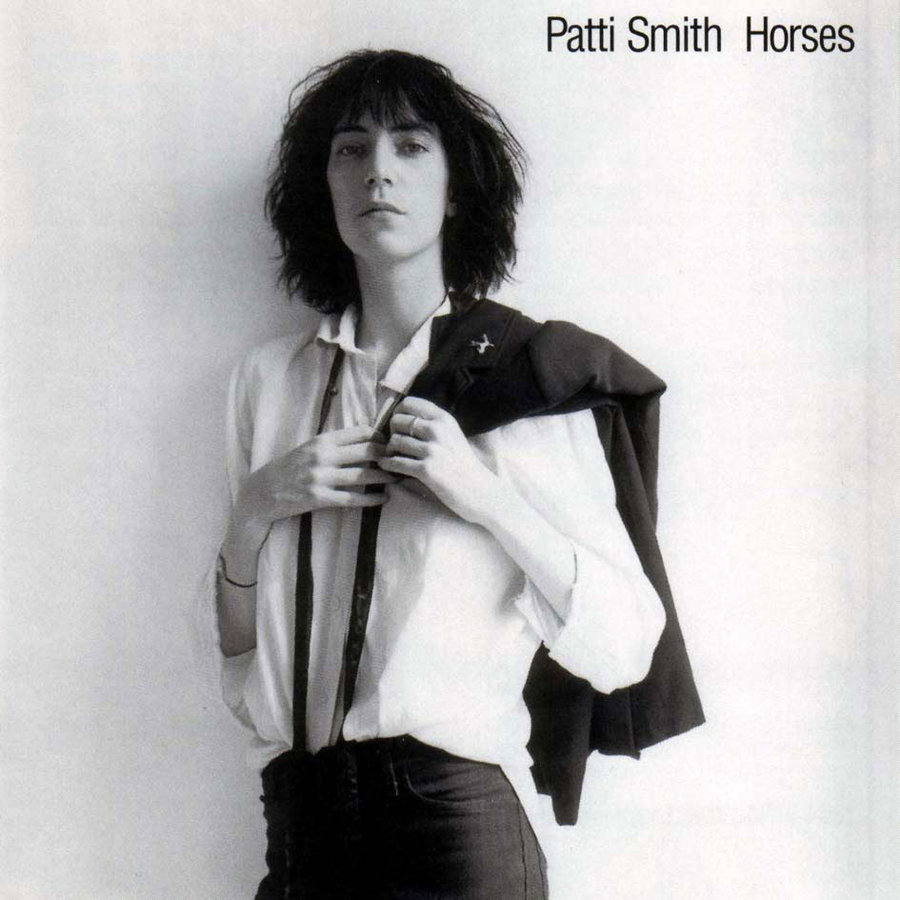
As for Patti Smith, there are few who can argue her first album, Horses (1975), was transformative to the music we heard afterwards. Same can be true about her poetry, many of which have been turned into her songs, but her scope goes beyond that.

Honestly, I can’t remember the first time I saw her play, but I do know I was there at her infamous Bottom Line show (1975), when she played the short-lived CBGBs Theater (1977, with Richard Hell and the Void Oids opening), and her last show in New York at the Wollman Rink in Central Park (1979). There were a few in-between, as well. Infamously, she was the final performer when CBGBs closed its doors in 2006.

The closest I came to having a conversation with her was a time in 1977 when I was toddling down St. Mark’s Place passing in front of Natasha’s Clothing, near Third Ave, and I saw her walking in the opposite direction, wearing a neck brace. She had recently fallen off a stage and broken her neck. As I passed her, I said something like, “Patti! Thank you for all the great music” She replied, “Hey, thanks, man!” and that was that.

When she kind of disappeared when she married Fred “Sonic” Smith [d. 1994] and moved to Detroit, there was a definite void. Since her re-emergence, Patti was inducted into the Rock and Roll Hall of Fame in 2007. The only way I know how to say this is that Patti is a force. Like a hurricane, her Detroit phase is the dormant eye, and she has certainly come back with strength. I welcome it. – RBF, 2016
                             
The words, “I’m an American artist, and I have no guilt,” were once said with true passion and much conviction. A poet-turned-rocker, Patti Smith has won acclaim for being the ‘70s female cult phenomenon.

Perhaps to really understand the full influential impact that such classic albums as Horses and Easter initiated to the rock world, you must know where its inventor’s inspirations were originally devised.

Before acquiring her movement as metaphor, Patti Smith was all too captivated by 19th Century poet Arthur Rimbaud. His influence was not widespread at first, but expanded to easily defined areas of symbolism and surrealism. As a young girl, Patti first became immersed in Rimbaud’s words and visions after seeing his picture on a book cover; looking at his face had reminded Patti of her father. The effect: profound; its result: the beginning of a celebration of Rimbaud in her poetry and music.

Patricia Lee Smith was born December 30, 1946, in Chicago, the eldest of four children: two sisters, Kimberly and Linda, and a brother Todd [d. 1994]. Her father worked in a factory and her mother was a waitress. The Smiths lived for a short while on a sheep farm in Tennessee before relocating to South New Jersey. When asked about her childhood hears, Patti replied in a ‘70s interview: “I’m just a Jersey girl. I really loved that I was from South Jersey because it was a real spade area… When I was a little girl, I was a very sick little girl and skinny. They didn’t even know that I would live. We had no money. We were very poor, but I never stopped believing.”

Patti’s father was an “intellectual” type, who preferred that his eldest daughter wouldn’t talk in a New Jersey street slang. “I wanted to be like the kids I went to school with,” Patti said, “so I never intentionally learned to speak good. I thought I couldn’t use it on the dance floor, so what good was it?”

At age six, the riveting sounds of ‘60s rock’n’roll music began to invade her vulnerable consciousness. Little Richard’s “The Girl Can’t Help It” was the first record Patti ever owned. Escaping into music helped to ease the pain of a traumatic childhood due to her health. Frail, she was struck with tuberculosis and scarlet fever, which more than often left her to suffer hallucinations.

Perhaps due to illness, combined with a large bout of shyness, Patti retreated into her own special world of fantasy. Even as a very small child, she had the ability to write and would often record her hallucinations and dreams into notebooks. Sensitive, introverted, and consistently creative in her efforts, childhood may have left emotional scars – but it also eventually helped make Patti a renowned poet/rock luminary. “Those who have suffered understand suffering. Thereby, extend their hand,” she would write in “Rock ‘n’ Roll Nigger nearly a decade later.

A growing devotion to rock music and its heroes had solidified itself by her mid-teens. After Patti witnessed the Rolling Stones for the first time on The Ed Sullivan Show, there was no turning back. She also enjoyed dancing, especially doing the Monkey, which was popular at the time.

Though focusing her talents on writing poetry and dancing to the latest sounds, Patti eventually conquered her shyness and, in the process, developed a cutting sense of humor. She also learned how to channel her helter-skelter thoughts intro captivating poetry and art. The search for complete freedom in self-expression became Patti’s personal vision. School didn’t mesh with her artistic rhythm either, so she left both ungratified and unqualified for work skills in the real world.

Smith attended Glassboro State College in New Jersey, but left when she was 19-years-old [1967]. Though it was a very unsettling period in her life, she also admitted to coming to terms with her own sexuality. Patti also maintained her poetry writing, portraying herself as both victim and aggressor. In a 1973 interview, she explained, “I was always a tomboy. I hated being a girl. I never identified with any female at all. When I had a baby, I was forced to look at myself as a female, although only physically, not intellectually.”

She found work in a New Jersey toy factory, but it didn’t last long. Standing in an assembly line for seven hours a day is unaspiring work. Exit factory. This ambitious, artistic girl had other dreams, like the burning lines in her song “Piss Factory”: “I’m gonna get on that train / And go to New York City / And I’m gonna be somebody / I’m gonna be a big star / And I’m gonna be so big / I will never return / Never return to this piss factory…” Patti, with a vengeance, pursued her dream.

In 1967, she headed for New York City, keeping the poetry flowing, and rock’n’roll close to her heart. She indulged in the greats, such as Dylan, Hendrix, and the Stones for references, and especially her mentor, Rimbaud. Using some of the factory savings, Patti decided to take a trip overseas to see the haunts of her poetic heroes. She made a pilgrimage to Paris, visiting the gravesites of Rimbaud and Jim Morrison. Captivated by the culture and the art, the aspiring poet/artist stayed for six months, working in cafes by day and reciting poetry at night. Patti said of her experiences:

“In Paris, everyone’s a poseur. The French are the best actors in the world. They’re not deceitful, but everyone is conscious of his image. When I left the States, I was still very much into image. I wore my black suit and dark glasses. Paris to me is completely a city of images. I found it impossible to work there.”

Returning to New York and ready to face another new adventure, she met up with avant-garde artist/photographer Robert Mapplethorpe. The two moved in together, living in a tiny apartment near Pratt Institute in Brooklyn. Motivated by student energy, Patti studied new art forms and was learning how to trade her hallucinations for some serious poetry. She also dabbled in the arts to keep her creative process fresh. From line drawings, cartoons, and using calligraphy to write poems, she remained consistent, while working as a cashier at a Greenwich Village bookstore.

A struggling guitarist named Lenny Kaye worked down the street from Patti at another bookstore. The two met and would soon team up to combine poetry and rock guitar.

From the late ‘60s to the early ‘70s, Patti was an influential part of the Warhol scene, holed up in the now infamous Chelsea Hotel. Patti and Mapplethorpe moved there, soaking up the inspirational remains of Dylan Thomas, Janis Joplin, Allan Ginsberg and the Velvet Underground. It was Mapplethorpe who initially encouraged Patti to transfer her visions and images into art. Some of that constructive energy resulted in a co-authored book with rising playwright Sam Shephard, titled Mad Dog Blues and Other Plays [published 1972 – RBF, 2016].

Through the urging of a close friend, Patti became more involved in the music industry as a means to channel her writings. By her 24th birthday, the poet/artist proved to be an undeniable force to celebrate at a Chelsea Hotel party. Breakthrough – forge ahead. During 1971, she exercised her insatiable writing abilities by co-authoring a play, Cowboy Mouth, with Shepard, appeared on BBC television, and made a documentary film for the Metropolitan Museum of Art (MOMA). Patti’s prime inspiration for the MOMA movie was an Italian female beatnik/artist named Valli [Patti and Valli, 1973 – RBF, 2016].

“I used to have pictures of her all over my walls. She was a big hero of mine when I was 14,” recalled Patti in 1973. “She lived on the Left Bank. I never considered her a real person. I was confronted with a real girl, and I thought, ‘Oh, man, what am I going to do?’ ‘cause I had dealt with the image for so long.”

She also admired the works of Edie Sedgwick; heroes were always essential to Patti in her younger years. When she became an artist in her own right, however, she learned to put images into their proper perspectives. “I never considered myself to be my own best hero. There’s almost no poet I’d read (other) than myself,” she continued. “I no longer need people to cloak me. Heroes die, images fade. Art for me in the beginning was never a vehicle for self-expression. It was a way to ally myself with heroes, ‘cause I couldn’t make contact with God.”

By late ’71, her next form of self-expression arrived as a collection of poems. Her debut solo book, entitled Seventh Heaven, aroused some interest from Rolling Stone and Creem, who then started to publish her poems regularly.

Though the early ‘70s may have been a lot harder than expected, it still didn’t diminish her energy level any. With Lenny backing her on guitar, Patti gave poetry readings at St. Mark’s Church, located in New York’s Bowery. Her words, supported by Kaye’s electric guitar and a tiny amp, had soon garnered a loyal cult following.

By the time her second book, Kodak, was released a year later, Patti and Lenny were joined by pianist Richard Sohl [d. 1990]. Thus was the beginning of the Patti Smith Group (PSG).

Due to her new-found recognition as a rock poet, Patti recorded her single, “Piss Factory,” backed with “Hey Joe (Version)” on MER Records, an independent label. The sound, raw and energetic, recalled those desperate days of working in a factory, and “Hey Joe,” the ‘60s rock classic [originally recorded by The Leaves, and Jimi Hendrix Experience, among many others – RBF, 2016], gave new meaning to the violent love theme.

“At first it was just me and Lenny Kaye on electric guitar during poetry readings,” Patti told a music journalist in regard to the formation of the PSG. “Then it started to gather force. We advertised for a piano player… And then we started looking for another guitarist. We had days and days of guitar players. We’d make them do 40 minutes of “Gloria”… Then we picked up a drummer.

Toward the end of ’74, an expatriate Czechoslovakian guitarist named Ivan Kral, and former Mumps drummer Jay Dee Daugherty, rounded out the PSG. Rock’n’roll dreams and visions grew stronger and closer to the musical goals of the five-piece band. Alan Lanier of Blue Oyster Cult provided Patti with further reinforcement in her lyrical writing and signing. The group called Manhattan home, and performed on the small club circuit.

In 1973, with the release of her third book, WÄ«tt (pronounced “White”), Patti was fast becoming something of a local legend in the New York poetry circles. On her way to something much more than a career, Patti saw it as a crusade for rock’n’roll.

On stage, even the very smallest, she knew how to connect with an audience, whether it was poetry readings or music. Patti could reach in deep enough to hit a nerve with the public. It wasn’t until a year later that her true fate would await.

Already an established name in New York, PSG was signed on the strength of their sound to the newly formed Arista Records. Their debut album, Horses, was produced by John Cale and recorded at Electric Lady Studio in New York City. The PSG were one of the first acts to be termed “New Wave” or “Proto-punk” by the music press. Producer Cale, a former member and co-founder of the Velvet Underground, employed Lanier and friend of Patti’s, Tom Verlaine (of the band Television), to contribute additional guitar work to the album.

For a new band’s debut offering, it made a boisterous statement, not soon to be ignored. Patti Smith, a new breed of rock star, would eventually become an unforgettable figure in popular music for years to come. All across the country, FM radio stations spread the word and played cuts from the offering that was rapidly becoming a landmark album.

The prestigious The New York Times proclaimed that “Horses will shake you and move you as little else can.” Across the Atlantic, the New Musical Express (NME) was saying: “Albums this good are pretty few and far between. It’s better than the first Roxy album, good as the Doors, and Who and the Velvet Underground.” Generous praise coming from the notorious British press.

Back in the States, Horses rose up the music charts and into the hearts of record buyers. “Jesus died for somebody’s sins but not mine / Melting in a pot of thieves / A wild card up my sleeve / Tick, heart of stone / My sins are my own / They belong to me,” opened the album. Startling lines for a 29-year-old Patti Smith to declare. In 1976, she told Rolling Stone, “It’s time to figure out what happened in the ‘60s. I’m working on a link to keep it all going.”

Her debut single of a remake of Them’s “Gloria” was backed with a live version of The Who classic, “My Generation.” Using nothing less than the unexpected, original Smith approach to Townsend’s lines, “People try to put us down / Just because we get around,” Patti added, “I don’t need that fuckin’ shit / Hope I die because of it.” In England, the offensive words had been censored from the record pressings. Of course, the artist was not amused. Patti rebelled: “When I find out who’s responsible, I’ll break his balls…” Beware, danger lurks!

 A notable progressive artist on an American radio station in New York City spells trouble. Just prior to an interview on the famed rock station WNEW-FM, Patti was asked politely to curb her speech. Not one to dispense of profanity lightly, Patti took the request as a personal insult to her artistry. On the air, she broke into a litany:

“How alternative is this radio?... The first thing that happens when I walk in is that you tell me you don’t have a bleep machine and to watch what I say. That’s not alternative, that’s the same old stuff. Notice I said ‘stuff,’ being completely professional at this moment… All over the world there’s, like, these bursts of power and bursts of pleasure. Rock’n’roll is being taken over by the people again, by young kids again, who don’t want to hear about your digital display. They don’t want to hear about any of this stuff.”

Due to being banned from any further interviews on the noted station, Patti took her grievance out in the form of a poem called, “You Can’t Say ‘Fuck’ on Radio Free America.” The manifesto was published in an underground New York newspaper. A portion of it read:

“We believe in the total freedom of communication, and will not be compromised. The censorship of the words is as meaningless as the censorship of musical notes; we cannot tolerate either. Freedom means exactly that: no limits, no boundaries… Rock and roll is not a colonial power to be exploited, told what to say and how to say it.”

Her second album, Radio Ethiopia, proved to be nothing less than another explosion of raw energy and primal rock inspirations. With ace producer Jack Douglas at the helm, the assaulting, innovative rhythms and sounds gratified devoted followers, and at the same time captured new ones. Though some music critics felt her second offering didn’t quite measure up to the brilliant debut album, it still garnered an enthusiastic reception. One record reviewer noted the LP as “just another well-produced, competently played mid-‘70s rock and roll record.” Album sales were a bit disappointing, too, but the music? Never.

On January 23, 1977, in midst of a concert tour, Patti had an accident. She twirled off a stage in Florida, singing, “Ain’t It Strange,” falling 14 feet. While completely immersed in the number, the stage ended – and space began. Patti broke her neck and went into traction for a while. Commenting on the accident, she said, “I know the finger of God pushed me off the stage.” While recuperating from her injury, she began writing a new volume of poetry.

A year later, the PSG got back into action and made a triumphant return to the rock world. Their third album, Easter, was nearly as exhilarating as Horses. With some songwriting assistance from fellow Jerseyite Bruce Springsteen, Easter sprang a huge hit single, “Because the Night.” Patti penned the lyrics, and Springsteen the music. Unadulterated praise from rock critic purists poured in from both sides of the Atlantic. Dave Marsh, from Rolling Stone, proclaimed, “The Magic of Easter is undeniable. It is transcendent and fulfilled. Patti Smith is one of the greatest figures of ‘70s rock and roll.”

In England, Sounds stated, “Here you get unbridled perfection merged with raw fury, and it is stunning. NME followed suit with: “Patti Smith’s energy is irrepressible and contagious. She pours enough of it into Easter to keep an average artist going for years.” Having received such a grandiose reception by both critics and fans alike, how could the PSG’s third album be any less than a commercial success?

Some of the purest forms of the PSG’s assassinating rhythms are best displayed on tracks like “Till Victory,” “Space Monkey,” and “25th Floor.” Producer Jimmy Iovine channelled Patti’s original lyrical sense and the band’s commanding music appeals, and cleverly meshed it together in a suited rock style that would be identifiable enough to the Smith-starved legions worldwide. “Because the Night” had delivered a new means of respect for the group.

“Here we are condemned to navigate back to our beginnings,” stated the androgynous, thin female figure at the release of the album. Even some of Patti’s own religious convictions are passionately conveyed in such enlightening cuts as “Privilege (Set Me Free)” and the title song.

As Easter made chart history, the poet-turned-reluctant-rock-star released her fourth and widely read book of poems, Babel. The collection became her most indulgent work ever. Sources of inspiration varied from rock’n’roll heroes to the Bible to sexual identities and role reversals. Rimbaud, of course, lurked between the lines.

One alarming poem, perhaps her most familiar, “Rape,” caused quite a foundational shake at a New York live reading. The controversial rock poet was abruptly cut short as she recited the offensive words that excited spectators, but angered the police.

An outraged law enforcer jumped onstage in an attempt to pull the plug on Patti’s microphone. However, it was too late before he noticed his efforts were in vain. Patti, standing at the side of the stage, was grinning like a Cheshire cat. After all, she had been using a wireless microphone!

“Yum yum the stars are out. I’ll never forget how you smelled that night. Like cheddar cheese melting under a fluorescent light. Like a day old rainbow fish. What a dish. Gotta lick my lips… I’m gonna peep in Bo’s bodice. Lay down darling. Don’t be modest. Let me slip my hand in…”

In her earlier years (pre-rock and roll heroine), Patti remembers her writings being consistently rejected by magazines. However, in the wake of success, acceptance now seemed trivial. In a 1976 interview, the emotionally wounded poet told Penthouse magazine that publishers “objected to the style and content of my work. They said I had sick attitudes for a woman. I’d get letters” ‘We find your thinking and ideas and morals very immature. Write back when you are mature.’ I was 26.” Mature or not, by the late ‘70s, Patti’s dominating presence and invincible talent was definitely felt.

By the time her fourth album, Wave, arrived in 1979, the artist had pretty much accomplished all her poetic and musical goals. The time had come to end an era and move on to explore new horizons in life. The LP, a combination of quiet reflection, romantic love, and equalled revenge, represented the band’s fame, success, and their past and future.

Compared to the previous release, Wave commanded listeners, but was subdued next to Radio Ethiopia. The PSG, still recognized for its artistic integrity and previous musical accomplishments, rose eloquently above the shallow criticism.

Rolling Stone set the pace with: “Though a long way from being a total disaster, Wave is too confused and hermetically smug to be much more than an interesting failure.” Across the seas, England’s more populist music newspapers wrote in a more positive sense: “Wave will just as effortlessly endure the passage of time. If you are on the same wavelength, Patti Smith will always reach you to awaken some primal instinct that is dormant in all.”

Todd Rundgren-produced LP received moderate FM airplay. Patti’s choice in producers dates back to the time she used to write about his music in the pages of Creem many years ago. Opening with the friendly, “Hi, hello” in “Frederick,” Patti’s own special love ballad, Wave starts off in an unexpected mellow mood. Lines like, “But tonight on the wings of a dove / Up above to the land of love,” present a soft, gently side to Patti’s femininity. A welcomed change to some, and a deadly mistake to others. The pace soon turns mysterious in the moody “Dancing Barefoot,” but finds its way back to warm sentiments in the title track and “Hymn.”

The titular “Wave” on the cover can be interpreted as either a hand signal (perhaps Patti saying goodbye to her career for a while), or water finding its way to the shore. Whatever her intentions, Wave was a challenging album not to be ignored. The fiery sentiment on “So You Want to Be a Rock and Roll Star,” the Byrds’ classic ‘60s cut, portrayed our late ‘70s female cult hero to perfection.

Another strong point was “Citizen Ship,” an aggressive song about memories, castaways, and seeking liberty in the land of the free. Ivan Kral was the inspirational focal point behind the song. The music, explosive, combined with gravel-digging vocals, gave Smith purists exactly what they wanted to hear.

If anything, the music on Wave presented the events and emotional bond the PSG had experienced by 1979. The statements of her faith alone range clear on the title cut and “Hymn.” While most music critics continued to complain that Patti had softened around the edges, Patti started making plans for a new future. At the height of all her rock dreams, she walked happily away to a life of marital bliss with Fred “Sonic” Smith, of the MC5 [m. 1980], in Detroit, and the subsequent birth of their son, Jackson [b. 1982], and daughter, Jesse [b. 1986]. Patti didn’t even have to change her last name, she had joked to the press a short time after. It’s been said that the lead guitarist of the legendary Detroit-based outfit was one of Patti’s long-time music heroes. [In fact, on the back of Radio Ethiopia, read the words: “Free Wayne Kramer,” who was Fred’s co-guitarist in the MC5 – Ed., 1988.]

In the midst of the PSG’s last American concert tour, their Burbank California show was forced to cancel due to the town’s mayor. Smith, as well as other scheduled concerts by Todd Rundgren and Blue Oyster Cult, were disapproved. Patti, as one artist who never takes issues lightly, voiced her opinion in the City Council’s office:

“I am very sorrowful about the behavior of the City Council of Burbank in refusing to allow the Patti Smith Group to perform a concert because they object to the personal and political convictions of our audience. As I do not judge the children of the Councilmen and the citizens of Burbank, let them not judge mine.

“It is very hard to believe that in America the use of the public facility for a performance can be denied on the groups of personal prejudices of a few City Councilmen. Who will be the next one to be banned? Does it start with this audience and then move on to racial and ethnic groups? Who will determine? This is a dangerous precedent and contrary to the very essence of this country.

“I do not wish to be labelled as anything except as an American artist and allowed to present my work to whomever wishes to come and experience it. I am saddened that because of the bigotry and prejudices of a few, I will not be able to perform for the people of Burbank.

“When I pledge allegiance to the flag of the United States of America, and state the rods, ‘One nation under God, indivisible, with liberty and justice for all,’ I mean these words will all my heart. I feel that the people who have prohibited me and other performers from performing do not truly understand the meaning of these words.”

Whatever she executes, Patti Smith does it with not just her heart, but with her entire being. How can a rock and roll enigma such as this dark haired, strange woman-child settle for being pressed neatly between the pages of music history? Her lyrical, poetic and other writings today are still left unchallenged by other lesser artists. In the rock star category, she once reigned supreme on the same level as male contemporaries David Bowie [d. 2016], Mick Jagger or Bruce Springsteen. Her sexual ambiguity allowed Patti to appeal on a mass level to both men and women. An originator combining modern poetry and rock, she had chosen not to be another pretty Suzi Quatro decked in black leather or an alluring Debbie Harry laced in glamour.

Not once did the ever faithful Patti Smith purists worldwide believe her career would be over permanently. The phenomenon that brought the masses “Gloria (in Excelsis),” “Privilege (Set Me Free,” “Ask the Angels” and other landmark contributions, wouldn’t just fade into oblivion. Too much talent and energy is at stake. For the past seven years, anticipation has been settling in, waiting for the arrival of the new Patti Smith Group album. Due for release by winter [Dream of Life, released 1988; as of this writing, there have been six albums released after that one – RBF, 2016], it will be their fifth album together. Inside sources reveal the new music will certainly bring back fond memories for old fans, and at the same time, recruit other fresh young adherents.

Only time will tell.