Showing posts with label Gulcher. Show all posts

Wednesday, January 20, 2010

KENNE HIGHLAND: Rock’n’Roll Superstar?

Original text by Tom Bingham, 1980
New introduction by Robert Barry Francos, 2010
© 2010 FFanzeen
Live photos © Robert Barry Francos (to come); album Images from the Internet


The word “cult artist” was created for people like “Krazee” Kenne Highland. He’s been in – or created – more groups than I can remember, such as the seminal Gizmos, the Kenne Highland Klan, the Afrika Korps (and its follow-up, the Korps), the Hopelessly Obscure, Kenne Highland and His Vatican Sex Kittens, Johnny and the Jumper Cables, the Exploding Pidgins, and Thee Psych-O-Daisies. I had the opportunity to hang out with Kenne a number of times during the early ‘80s up in Boston, and had a blast. He helped me understand what it means to thrive on I-IV-V.

These days, he’s sobered up, found religion of some sorts, and goes by Kenneth. But he has not lost his coolness, for sure, and he is back to performing and hopefully recording. And now here is the Tom Bingham interview, which appeared in the Number 4, May-June issue of
FFanzeen. Obviously, Web sites were added later on.

Ken Highland is a unique figure in rock’n’roll fandom.

His dedication to the music and to his concept of fan-as-contributor to the music has remained unswerving since the first golden era of fanzines in the early ‘70s. In an era when fanzines were devoted on one hand to documenting rock’n’roll from the ‘50s and ‘60s, on the other to serious analysis of then-contemporary rock, Ken’s Rock On was one of the first fanzines totally committed to the idea of rock’n’roll as fun.

But it was as co-founder, writer, singer, guitarist, and guiding spirit of the original Gizmos that Ken Highland made his most enduring mark on fandom. The Gizmos first EP on the Gulcher label (gulcher.gemm.com) both foreshadowed and transcended the then-developing New Wave.

Yet at the height of the Gizmo’s fame, Ken Highland was both physically and musically removed from the band – for the most part, tending to his duties as one of Uncle Sam’s “few good men,” yet leaving time to perform and record as a key member of the Afrika Korps, and more recently a duo (with Ken Kaiser) called the Korps.

While a lot of people know Krazee Kenne as a writer, as a Gizmo, as a Marine, as a Korpsman, as an image, little has been written about the real L/Cpl. Kenneth E. Highland; who he is, what he’s trying to do, how he got “that way,” whatever “that way” may be. The interview which follows, are his responses to my typed questionnaire.

We begin, logically enough, at the beginning:

Kenne Highland: I was born on a Monday, a day like any other day, April 2, 1956; same day Chuck Berry released “Roll Over Beethoven.” In December ’64, my parents got a D-I-V-O-R-C-E. My family atmosphere then was pretty WASP-y.

FFanzeen: As you look back, did moving about affect your eventual musical/lyrical outlook? For instance, did it expose you to different kinds of music, different sorts of people and experiences, etc.? I guess what I’m looking for is an “explanation” of how Ken Highland developed into Krazee Ken / Kenne “Gizmo” Highland.

Kenne: Yeah, moving about had one major influence on me and did kinda cause a chapter in my life. See, down south, I was exposed to what my parents listened to, which was typical Republican MOR like Ray Conniff, my homie Mitch Miller (from Rochester!), et al., plus my father liked Ray Charles and they also got into the early ‘60s clean-cut folk revival (heavy on the Peter, Paul and Mary, and Brothers Four LPs). Plus, my mother likes pre-Beatles ‘60s schlock a lot, which is why she grooves to all Kenny Kaiser’s tunes in that genre.

When I moved up north [to Brockport, NY, which is near Rochester], all I knew of the Beatles was that my mother and brother had heard “She Loves You” on the car radio one morning after they’d dropped me to school; plus Halloween, my neighbor gave me a Beatles bubblegum-with-card. So here it is, December ’64, and all my girl cousins are Beatlemaniacs; and even though I was a bookish Elvis Costello clone who hated music, it did affect me. In other words, this was my first real exposure to rock’n’roll.

FF: Were you a “punk” from the start, musically speaking, or did you try a little bit of this and that before you settled on your particular vision of crazy teenage rock’n’roll?

Kenne: Nah, I wouldn’t have labeled myself a punk in the ’60s. All the true punks hung out at Ida’s Soda Shop in downtown Brockport and went to the Panther’s Den. They were the school bullies, and I was too afraid of them to even walk on the same side of the street! I didn’t really get into music till 5th grade (’66-’67 school year) when this kid Carl Tagliabue transferred to our school from New Jersey. Since we were both outcasts, we became friends (ditto John Speary and Alan Baase, who played in primeval Highland bands in high school). Carl was a true record fanatic / Beatles freak.

Come ’68 and 6th grade, I sorta became a hippy, or at least had a more liberal outlook on life and music than did the jocks and greasers in my town.

I got a paper route summer ’68, and from then on became a full-fledged record fanatic, spending all my dough on vinyl, even belonging to three record clubs at one time. The ’69 “Back to Roots” fad started, so I became an archaeologist of sorts, discovering who did the originals to all those oldies the Beatles covered, then buying ‘em. ‘Seventy was my most eclectic year – I was into the “underground” sound: oldies, jazz (care of [Jack Kerouac’s] On the Road), folkies, Blues, even classical (Stravinsky, coz Zappa named him as an influence). As for becoming a “punk,” that came about due to 1) reading Nik Cohn’s Rock From the Beginning, which at first pissed me off, but later became my bible. I quoted from it when my sophomore English teacher praised all them folkies, who I dug as a hippie, but now scorned, coz I was wanting rock’n’roll; 2) buying Stooges’ Funhouse October ’71 (along with Go Bo Diddley) – at first I thought, “Are these guys serious?”, but I later loved it to death; and 3) reading the fanzine Flash #2, which again preached rock’n’roll, and to hell with heavy-metal, folkies, and all other hyphenated rock.

FF: Who would you name as the important influences in your music?

Kenne: Well, the Beatles for one; especially John Lennon – reading Hunter Davis’ biography on them [The Beatles] and how Lennon didn’t give a fuck and was just plain raunchy motivated me; that plus the Stones’ biography by, I think, David Dalton [Rolling Stones: An Unauthorized Biography in Words and Pictures - RBF], coz Jagger and the rest hated gym class as much as me and didn’t give a fuck. I’d also cite Bob Dylan in his speedfreak stage, coz of his bizarro lyrics, and Chuck Berry, and later on, MC5 / Stooges / Velvets / Dolls.

FF: Have your influences been drastically changed by the recent New Wave explosion?

Kenne: My influences weren’t drastically changed by the New Wave really. In fact, I resented the fuckers coz they were doing exactly what I was doing; only I was in boot camp and unaware.

FF: Do you feel the Gizmos in some way influenced the New Wave, since they were in it practically before anyone else?

Kenne: Naaah. Half the fuckers were heavy-metal dope-smoking hippies and coulda cared less! We were really too isolated to copy anyone, except maybe the Dictators and Patti Smith, coz they said anyone could be a rock star and make an album, so fuck it, we made a record.

FF: The world’s first exposure to Ken Highland was as a fanzine writer / publisher. How did you come to make the transition from rock’n’roll writer to rock’n’roll performer? Was this something you’d planned to do all the while, or did your move to Bloomington, Indiana, and your linking with Bob “Bear” Richert and Eddie Flowers somehow set things into motion?

Kenne: First things first, here. First off, I was a fucking musician before I was a writer! In ’69, I played guitar twice – my cousin had a Japasonic which I attempted to play the Sgt. Pepper’s theme on; goddam thing was so outta tune, it worked with open strings! That summer, my neighbor from India had an acoustic, and since I’d picked up The Freewheelin’ Bob Dylan for $1.88 in a Grant’s bargain-bin in Brockport, I was attempting to do a Guthrie-ish talkin’ Blues that was on the LP (and failed!). Instead, fall of ’69, I wrote a dozen tunes in 8th grade, all Dylan / Pepper’s obscuro stuff. Memorial Day ’70, I went to John Speary’s house and his sister had a Japasonic with amp and made my first recordings; a Bo Diddley-calypso version of “Old MacDonald” (I was on piano and maracas), plus John and I co-wrote one called “Sign Collector” (covered in ’74 by O. Rex; it sounds like “Sister Ray”). I was guitar-mad now; kept bugging my mother for a guitar and she finally relented by Xmas (I’d already bought a harp summer of ’70, which I blew Dylanesquely, till the next year I learned the Blues off a Canned Heat record).

Xmas ’70, I brought my brand-new acoustic to John’s place and we made some Godz-like tapes and officially had a band we were gonna form called The Squeeze, on Orange Records (coz Les Beatles had Apple). That cellar / bedroom band lasted most of ’71, till John became a jock and we drifted apart. Instead. In 10th grade (’71-’72), Alan Baase and I played around a lot. I’d bought my first electric August ’71, and got lessons from a punk-cum-hippie (after he discovered drugs). Big Al and I had a pseudo-band, Big Dick and the Penis Erections, sorta inspired by John Mendelsohn’s Christopher Milk essay in Rolling Stone. I envisioned this band as rockandroll, doing Stones / Kinks / Bo Diddley / Chuck Berry tunes and just going mental; sort of an Iggy / Jagger lead singer, a Chuck Berry / Keith Richards lead, the all important rhythm guitar, and a Stones-ish rhythm section. All this and more led Alan and I into fanzines, inspired by Bomp and the New Haven Rock Press. I got my style of writing from R. Meltzer and co.’s “fuck-it” style and the serious critique of the hippie papers. I didn’t even wanna do a fucking fanzine, but Alan, who was pretty tall, pretty much told me I was, so we mimeo’d off Rock On on a mimeo at work, using stolen supplies. Our junior year, Alan talked me into taking lithography and we put out two offset issues of Rock On in ’73, which lead to many fanzine connections, among them Flowers and Bear [Gulcher fanzine - RBF].

I’d been pen-pals with Solomon Gruberger since fall ’71; we met and jammed June ’73 (that’s me, him and his brother Jay, who already were O. Rex). I told everyone that when I graduated, I was gonna move to NYC and become famous (never did), and instead wound up moving to Bloomington to become a rock writer, coz, as usual, I’d quit playing guitar that summer, saying “Ill never get anywhere,” etc.

FF: After the first [self-titled] EP, your participation in Gizmos’ recording sessions was severely hampered by your enlistment in the Marines. Still, your songs appeared on the next two Gizmos EPs [Amerika First, Gizmos World Tour – RBF] and your personality seems to dominate them. What’s your opinion of those two EPs? Do you feel the rest of the band did a capable job translating your intentions to vinyl?

Kenne: I think it’s pretty obvious I didn’t give a fuck about them really, coz I was officially a member of the Afrika Korps, though I'd use the Gizmo fame to further my name. It was a weird trip going through my head – I’m supposed to be in an East Coast band with old high school friends, yet the Midwest band is doing good in print (not one bad review in ’76). Anyway, I met my wife-to-be [Linda a/k/a Miss Lyn of Boston Groupie News fame: bostongroupienews.com], so I wanted to spend time with her, instead of going into the studio. I said, “Fuck it. Rich Coffee’s a better guitarist than me, [Ted] Niemiec and Flowers sang better on that first EP than me; they don’t need me.” I finally showed up though, and sang two songs, one appearing on one EP, the other on the other. I’m not too proud of the singing.

As for the other Gizmos’ performance of my tunes, at the time I thought it was better, but my fans / friends / girlfriend didn’t. I dunno, I’m still a bit insecure about myself as a performer in the musical sense. I know I can perform, but technically I can’t sing on-key, despite what Martha Hull says, and I can’t tune a guitar worth a fuck. But again, Dylan and Lou Reed are idols to some clowns (myself included), so if they get over, so can I.

With the second [formation of] the Gizmos, Bear gave me the option of being a silent partner and I didn’t give a fuck; this is essentially his trip and he kept me informed of what was happening. But again, since all I knew was Ted Niemiec, it was hard for me to relate to faceless names. Besides, my closest friends in the Gizmos were Flowers and Coffee, so wit them out, I knew what we’d envisioned as a band (to be the Stooges / MC5 / Velvets / Dolls) wasn’t gonna happen that way, coz, well, Bear ain’t that way. [It is important to note at this point that Bob “Bear” Richert has been releasing much of the early works of Kenne on CD – both Gizmos and Afrika Korps/Korps – with his Gulcher imprint, so he must appreciate what Kenne was doing back then – RBF, 2010].

Let me define Gizmo here: I met a punk-cum-hippie kid who taught me guitar, while harassing me at other times. Digger said there was this spastic kid in school, had cerebral palsy or something – legs and hands all bent – and Digger and some other punk-cum-hippies were in study hall and we usta trip [him] all the time and the other [guy] said to Digger or visa-versa, “Hey…” and he pointed to said spaz – “Gizmo.” So this individual was the original Gizmos and, mostly to harass me, I got labeled with it, coz, well…I’m left handed and have 20/200 vision and can’t play sports worth a fuck, so I am pretty spastic, but then again, I concentrated on music so’s to make these nerds eat crow! I mean, man, they’re all working factory jobs, deserted guitar playing almost altogether, still carrying that San Francisco look and being 23-24, and still living in Brockport!

FF: How did you link up with Ken Kaiser, the Grubergers, and Kim Kane to form the Afrika Korps? How did the Ken Highland songs on the Music to Kill By album come to be recorded by the Afrika Korps, instead of the Gizmos?

Kenne: I linked up with Kenny Kaiser February ’77, via a Ft. Lee, NJ, Marine named Don Buckley, who was stationed at Ft. Meade, MN, with me. Buckley’d told me about Kaiser and visa-versa, and Kaiser had read about the Gizmos in Creem. I met the Grubergers through a pen-pal correspondence in Circus mag beginning fall ’71, and, like I said, we first jammed June ’73, again doing real rock’n’roll. Covering “Louie, Louie,” Alice Cooper, Yardbirds, Who, and a Grand Funk-ish “Gimme Shelter.” We thought we were good then (I should say Solomon did – I knew we sucked), but it went along with the punk aesthetic of “so bad it’s good”), and Solomon kept saying, “We’re gonna cut a record.” So Flowers and I were in Brooklyn the month after the Gizmos, and Solomon wanted to do a record, mostly coz he was jealous, but the tape fucked up, so instead, me, him, and Jay did the O. Rex maxi-45, which is an embarrassment to me, but the Kinks second record sold 127 copies and so did this, so we were happy with our failure.

After the O. Rex fiasco (I never did like the name), we hit upon Afrika Korps in an insomniac night of KISS Alive and neo-fascism. Solomon this time said, “We’re recording an LP”: I hoped to hell it didn’t sound like O. Rex. I met Kim Kane of the Slickee Boys one night at a Ramones concert in Georgetown. Kim and I talked all night, after being introduced as mutual fans. I told Kim / Marty of our plans to record an LP and we both agreed it’ll be neat to have a “supersession” of DC peeps on the LP, and the rest is history.

We recorded the session on my off-duty weekends at Ft. Meade. See, that duty station was the greatest and it was midway ‘tween Baltimore and DC, and only four hours from NYC, so I was closer to the Grubergers than when I lived in Brockport! Solomon and I originally envisioned the LP as one side his tunes, recorded in NY and one side my tunes, recorded in DC with assorted Slickee Boys. Didn’t quite work out that way, but we did record the LP in some very violent sessions from January-May ’77.

We originally recorded in NY in January, then February-May in DC, though there was an April ’77 session in NJ, which I didn’t attend coz I was either Gizmo-ing, dating Linda, on duty, or didn’t give a fuck; and it was there we got the best sound. The other engineers were clowns who didn’t even like what we were doing; unsympathetic.

I wrote quite a few three-chord numbers as a teen (recorded both by O. Rex and Gizmos), but once I went in the Marines, I started getting more complex, more melodic, and stole quite a few heavy-metal licks, too. I went on a spree of writing fall of ’76, while stationed at Quantico, VA – I was on guard duty late at night walking in circles, so my ever-active mind just made up songs, which I’d put to music at the Kane house my next off-day.

FF: How did the Afrika Korps become a duo called The Korps? Does the Korps exist outside the studio? Will it exist past the Hello World LP?

Kenne: The Afrika Korps officially became the Korps in December ’77, when the Grubergers split from us, or us from them. I don’t like to air dirty laundry, but suffice it to say the Afrika Korps had too many egos, and like Cream and the Beatles, were too good to last. Solomon and Jay are still together and they’re planning on doing other records. I stuck with Kaiser for some unknown reason – a great loyalty battle here, coz here’s my friends not getting along, as usual, and I had to rob Peter to pay Paul, but I stuck with Kenny, much to various ex-members’ chagrin. Sure, he’s a dictator, but when you’re as irresponsible as I am…

So after the Grubergers left, we auditioned nerds from NJ for bass and rhythm guitar, and that sucked, so I had Kenny move up to guitar and share vocals, coz as Afrika Korps’ drummer, he was the best guitarist in the band. Through ads in the Aquarian, we got a drunk Puerto Rican / Italian bassist from Jersey City and an 18-year-old pothead on drums, and played one gig Easter ’78 in Kenny’s basement and that Korps went kaput that night, for other fucked-up reasons. Kenny and I toyed with various names, like the Rabbis, Eddie and the Enemas, but stuck with the Korps for commercial reasons.

The way I see it, when I get out of the Marines, he and I will reunite in Boston, get a rhythm section and do what we can. He wants to record an EP as a follow-up to Hello World, and has talked of Album #3; and Album #4 has to be Korps Alive, so…

Hello World was recorded with just the two of us (stole the idea from White Boy) doing rhythm guitar and drums, then Kenny, technical genius that he is, overdubbed most all the instruments, and me singing a lot, plus gotta add those Slickee Boys (Kim Kane pays for a third of our records, so it’s pretty obvious…)! Since I had only two off-duty weekends a month, it’s like Kenny and I would do sessions every couple of Saturdays and I’d leave all the other bullshit to him to do while I was guarding our country’s defense. I’m still not all that keen on recording; the stage is my forte.

FF: Do you feel Hello World, or at least the Highland-sung tunes, accurately reflects Ken Highland as he is today, what you’re thinking, what you want to do musically, what you’re capable of doing? And how does Martha Hull always get to sing the best cut on any Highland-Kaiser album?

Kenne: Oh, hell, yeah! Even though all the Highland tunes on World, except “Lark” (which is ’72 circa “[Pumpin’ to] Playboy,” “[We’re Gonna] Rumble,” et al.), were 1977 composed, it’s still where I’m at more than the old Giz-Korps stuff. I’m especially proud of the “Do the Touch” / “Designs on You” / “Mad at the World” / “Gotta Be Pretty” sequence, coz I wrote all of them inspired by a week straight of watching the Slickee Boys, when they had Howard Wuelfing. I’d say it’s how I am today – I write a lot of Mersey-Beaters now, inspired by “Heart On,” Graham Gouldman [10cc], and Lennon-McCartney; only I’ll always have that Iggy / Dolls rasp to my voice. What I’m thinking… Well, these Mersey-Beaters are love songs full of pronouns, like the early Beatles, so peeps can’t accuse me of too many inside jokes. My main theme is love now, mostly coz I’ve been six months separated from my wife, and it motivates her to hear love songs inspired by her, though she’s not mentioned by name. What I want to do musically? Well, I’d like to improve the sound, clean it up, but keep the balls. Kaiser and I are like Lennon-McCartney – I have the rough diamond, he polishes it, and we keep the other in check, so as not to out-wimp the other.

As for what I’m capable of doing – well, you can hear the difference (Michael Miller, who co-authored “Amerika First” says Hello World sounds like Sgt. Pepper’s compared to the last LP [Music to Kill By]), but it can still get better, though a lot of it’s Kaiser’s doing. And the reasons Martha Hull always gets to sing the best songs on any Highland-Kaiser LP is because she makes it the best song on the LP; that chick can sing! [youtube.com/watch?v=mRy9BPn3au8]

FF: What’s your next musical step? Do you have any plans to do any more recordings during the rest of your Marine hitch? Do you think you’ll be making a career out of rock’n’roll when you get out, or will it remain an all-consuming hobby?

Kenne: I plan to get the fuck out of the Marines, and again, don’t look back; get with Kaiser, get with a band, and get famous! Linda is behind me 100 percent for a musical career.

FF: Now that you’re a married man, do you think that after you’re out of the Marines you’ll settle down to a nice cozy, middle-class existence like a “normal person?” If so, will Krazee Ken still be krazee; will you still be doing songs like “Gimme Back My Foreskin” and “Nobody’s Girl,” or will you vegetate into a prematurely middle-aged mellow FMer?

Kenne: Now, goddammit, too many think that coz you’re married, you gotta get a job, have a million baby Kennes with big smiles and big heads…bullshit! Muthafucka, I’ll be rockin’ like Chuck Berry and Jerry Lee and Link Wray when I’m fifty. Course, I won’t be doing “[Gimme Back My] Foreskin” / “Girl” type tunes – that was ’76; this is ’80! Naw, I see myself being like the AM stars of now, who were FM stars when I started. Like Bob Seeger – he commercialized just enough to get famous, but still screams and goes wild. Ditto KISS. When Bill Rowe and I saw Black Sheep our senior year, he said, “Ken, I like what Black Sheep is doing – that’s what we should do.” I said, “You’re fuckin’ crazy! We gotta be like Iggy and Alice and the Dolls and go wild and shit.” Guess I was wrong, huh?

Wednesday, November 18, 2009

CD Reviews: A Jersey Beat Special

Text © Robert Barry Francos
Images from the Internet

These reviews originally appeared in my column in
Jersey Beat webzine (www.jerseybeat.com/quietcorner.html), which is well worth checking out.

ANDY BILINSKI started out as a punker here in the New York area, and then became a successful singer-songwriter down in Wilmington, NC. His sophomore release is The Meaning Behind Nothing is Everything (myspace.com/andybilinski). For me, Andy’s strong point (and I’m not the first to say this by a long shot) is his introspective lyrics. In strong songs like “Paper Airplane,” “Silver Gull Motel,” “Strange World,” and “Brooklyn,” Andy looks at his emo side by being poetic rather than melodramatic (From “Silver Gull Motel”: “I reach my hands out across the sand/I part the tide with a fine toothcomb”). Andy either uses a full band or does the self-played-multi-instruments to give a plush sound, and this usually works (the rare exception is the overly electronic “Breathe”). While Andy’s voice is kind of “woody” and earthy, it fits the tone of the song, so it definitely achieves what he apparently sought.

Americana comes in many forms, as does rock’n’roll, such as the ‘20s Appalachian styles of Allison Krauss and Rachel Harrington, through the more bluegrass and country.. Then there is the raw C&W genre, like Emmylou Harris and PATTY BLEE. Her 6-songer, From the Inside (EP) (pattyblee.com), shows a solid feel for various forms of old school country. Right from the start, Patty comes out twangin’ with the what-are-we-waitin’-for? rave-up, “From the Inside.” After a power boogie “Can’t Explain It,” she goes into the love ballad “If I Knew”… Well, I could go song by song, but it really is pointless because this is such a strong release that it has me itchin’ for a full release. This is one of my fave of this batch of reviews.

Possibly the best way to describe KATH BUCKELL & THE FOLKS (c/o kat_uckell@hotmail.com) on their eponymous release is classic Celtic. With an Irish-based lilt, Kath gently jigs her way around topics such as lore, love, and loss. Her voice is soft and it swells and meanders around the song, which, in typical fashion for the genre, rises and falls in scale often (though not as much as, say, modern R&B). Much more pure than the Corrs, also present are all the necessary instrumentation for this style, like flutes and strings. If one is a fan of bands like Renaissance and the Rankin Family, as am I, this will most likely be an exciting find.

No matter what, one has to truly respect DOMENICK CARINO. His six-song, 23-minute The Only Thing That Comes to Mind are Songs About Us (fakechapter.com) contains two disks, which are identical. One is notched as “Yours to keep,” the other “Yours to share.” Brooklyn-born, this ex-singer of Red Engine Nine and Sunday All-Stars once again strikes out in a singer-songwriter genre. With a sweet-sounding voice, Domenick presents life moments, highlighting emotions with people (“Lovers, Neighbor or Friends,” “Streets of Dublin”), places (“Alabama”) and love, of course (“Delicate,” and just about all the others). Luckily, Carino has a nice turn of a music phrase, including lyrically, so the interest stays, especially with his guy-next-door voice.

THE CATERPILLAR BOOK is a collection of a few good friends, who include some cult musicians, such as a member of Hoboken’s Cucumbers (an underrated band) and The Remains from Boston. On their first CD, Maybe This Summer… (myspace.com/thecaterpillar book), they all show their love for pop music, along the lines of, say, Cheap Trick. There is lots of melody, harmonies, and some wicked good vocalizing by Ryan O’Dell. Musicianship and production are in top gear, like a smooth coat of paint that assures they can play at any place from Maxwells to the Sidewalk CafĂ©. There are a lot of good songs here, including “Maybe This Summer,” “Time to Go,” “Spring,” “A Girl Like That,” and the catchy coda (which could have been the first song, as well), “Already Wasted.” When some friends who have known each other for a long time assemble and decide to put something together, it can either be self-indulgent or harmonious. Luckily, this is the former.

Haven’t Slept All Year (Scat, c/o cobraverde.com) is a solid release from COBRA VERDE. They do it old school style, reminiscent of the blues-rock of bands like pre-“Shake Some Action” Flamin’ Groovies. Frontman John Petkovic has a bit of a wandering key voice, evocative of Ray Davies, and together with the band form a tight and totally enjoyable release. From beginning to end, there’s one good cut following another, with tales of drink, drugs and women. Even the song titles are clever, like “Riot in the Foodcourt,” “Something About the Bedroom,” “I Could Go to Hell For You,” and “Haunted Heavens.” But don’t be fooled that they are just a turn-of-a-phrase kind of band, coz no, they are a lot of fun. Hell, at one point, it even sounds like there’s a theramin in there (though it’s most likely a keyboard). This was above a pleasant listen.

Hailing from Virginia, SHANE COOLEY opens up Whirlpool (shanecooleymusic.com) with describing his home town as “My Asbury Park,” which of course is going to get the attention of a magazine named Jersey Beat (even though this reviewer is currently in/from Brooklyn). It also helps that the song is so, well, for a simple superlative, great. In the Kevin Devine style, Shane successfully walks two grounds: his catalog, sung with full band as it is mostly here, consists of good rockers; when in just a boy-and-guitar mode, such as with “Breath Sped,” are strong singer-songwriter material. I am on my third time through the CD, and find much to keep my interest, like “Whirlpool,” “Kamikaze,” and “Double-Edged Sword.” Shane’s voice is strong with an occasional warble at the end of the lyric line. Certainly, I can see him catching on, especially as a start with college radio.

THE CROWD SCENE is a trio, based upon couple Grahame Davies (on most instruments and vocals) and Anne Rogers (bass and mostly harmonies), with Evan Pollack adding drums. There are also some other players who contribute on *With Complete Glossary for Squares (wampus.com), such as pop cult icon (and rightfully so), Chris Stamey, who also produced some of the cuts here. This trio+ calls itself “Chamber Pop,” which basically means ballads with high production values and based strongly on melody. Okay, that’s an oversimplification for this collective, since they do not hit the listener over the head with studio work, but still keep in the smooth pop genre. I’ve heard some cathedral pop that makes me feel diabetic, but fortunately, this isn’t one of those. Well, anyone who is familiar with Chris Stamey’s solo work (“Summer Sun” is still a fave) probably has an idea of what kind of tone is set. The lyrics are somewhat bittersweet, jumping from “Walk Up to the Heath” through “Great Jones Street.” Grahame has a sweet voice that is hardly bland, and on her one solo outing, “Which Way,” Anne proves to hold her own. While the songs sometimes seem to blend together in its tone, the Crowd Scene does not lose its direction. It’s been a while since I heard something from Wampus, and it is good to see they have kept going.

JAMES DALTON has a strong, classic singer-songwriter voice, in the way he sings, the way in writes, and the posture he projects on Butterflies and Passerbys (aeriarcords.com). His structure, while being “classic” is hardly formulaic, thankfully, which makes this an easy listen. Sometimes he treads on Greg Brown territory (meant positively), but mostly he covers his material with freshness, right from the start, with “Kiss of the Dark Haired Girl,” straight through to the end. There is even a blues thrown in, with “Alafaya Mama” (named after a road in Orlando, FL, James noted to me). One of my fave cuts is “Wednesday Night Mass,” soaring through people’s lives. A one-man band (writes, plays), Dalton keeps it simple, exposing as much as is needed, rather than everything he has, which makes for a cleaner, clearer recording.

The latest by KEVIN DEVINE AND THE GODDAMN BAND is Brother’s Blood (Favorite Gentlemen; myspace.com/kevindevine), and I may be tipping my hand here, but I think it may my favorite of his releases so far. Kevin has a wide range between rocker and pop balladeer, and here he leans more toward the introspection of the softer side, but never giving in to the easy formulaic tune (like Springsteen did with “Dancing in the Dark,” for example). Quiet and delicate (yet never wanking) pieces like “Fever Moon” and “Yr Husband” share space comfortably with more forceful pieces like “Brother’s Blood” (which he goes full on power mode). There are some cuts that have been noted for possible “single” release, like “I Could Be Anyone,” but there is so much to choose from, like the opener “All of Everything,” “Hand of God,” or the CD’s coda, “Tomorrow’s Just Too Late.” Kevin Devine, if there were any musical justice, would be on the A-list of musicians, and perhaps his release will chip away towards that.

For those who don’t know, RAMBLIN’ JACK ELLIOT is a contemporary of the likes of Woody and Pete. On his umpteenth release, A Stranger Here (anti.com), Jack takes on the blues with both feet in the Delta. Produced by Joe Henry, and accompanied by the likes of David Hidalgo (Los Lobos) and the legendary Van Dyke Parks, Elliot leaves his Americana comfort zone, and here covers a number of pre-‘40s blues that influenced the sound he helped promote (the equivalent may be the Ramones covering the Ronnettes). Sometimes white artists covering the blues sounds disingenuous, but after living a road weary musicians’ life through the ‘50s and ‘60s, and now in his late 70s, his voice fits the emotional form. Some of the stronger cuts include “Rambler’s Blues,” “Richman Women Blues,” “The New Strangers Blues,” and the extremely personal feel of “Please Remember Me” (which emotionally reminds me of Phil Ochs’ “When I’m Gone”). RJE does not disappoint here, even as he stretches at this point in his life.

From the banjo and violin that open Let’s Do Something… (nativeandfinerecords.com), BILL EVANS & MEGAN LYNCH clearly posit their interests’ foundation, in an Americana sound. Megan carries most of the vocals here, with her sweet, high voice, though Bill also handles a few; and on rare occasions, they blend together beautifully. One of the interesting aspects of this particular release is that along with two of Bill’s textured originals, the rest of this is filled with reimagining of others’ songs, such as Van Morrison’s “Into the Mystic” and their beautiful interpretation of John Gorka’s “Morningside.” Bill and Megan aren’t a flashing duo, so they get a chance to play some intertwining complex eclectic folk and bluegrass rather than trying to out blaze anyone, which I so respect.

Battle is the first solo release by the lead singer of the Willowz, RICHIE JAMES FOLLIN (richiejamesfollin.com). Okay, I’m willing to admit that I don’t know the Willowz, so I’m just going to take this for itself. All 72+ minutes of it. There are 12 songs, each with a single-word title. The music here is competent, though pretty generic, classic rock, including those C&W-influenced numbers. Little bit of guitar flash here, stretched out echoed vocals there. The press says, “RJF takes it a step into the future with a nod to the past.” Nod seems an accurate term. The process in which it was recorded is wicked cool, basically done in a single day during a barbeque in CA at the home of Dan Horne (Beachwood Sparks, Mezzanine Owls), who also plays on the collection. I totally respect that, but there just does not seem to be a spark to ignite the music, especially on the vocals. Maybe if they recorded less and focused on fewer songs there would be, well, more. The recording is a functional vanity project, but one would think that some of the excitement of the day would have passed along into what was recorded. This sounds more like a demo. Perhaps it will come across better on the DVD?

In his liner notes for Passing Train (tuition-music.com), JOEL HARRISON posits a treatise for this release, saying that he usually does improvisational jazz, but in this case tried going more “pop.” Actually, what he does is spiritually infused singer-songwriter in most cases. He also claims this was hard for him, though the only time I caught that was on “Midnight.” Okay, now that I’m done whining, nearly all the rest of the CD is actually pretty good. His mildly gravely voice fits well with singer-songwriter style, especially so on numbers like the powerful anti-war “Glory Days Are Gone,” the lyrically moving opener “The Wishing Well,” the Ritchie Havens-esque “Travel On” (with the help of the voice of the ever amazing Toshi Reagon), the twang-infused traveling “Just For the Ride,” and the spiritual finale of “Wash Away,” buoyed by the piano of Henry Hey. On two of the songs, Joel gives away his lead to vocalist Jen Chapin, backing her up on the anti-drug “No One Knows How to Die,” and sharing with her on the down-and-outer “God Loves a Loser.” While I am not familiar with Joel’s seven CDs previous to this, it seems “Regret” may be the closest mix of his jazz style with his singer-songwriter. The only song I was not fond of was the discoy-to-R&B-to-acid rock (and way too long at over 5 minutes) “Northwest Jewel” (a tribute to counterculture cult king Ken Kesey), though it is obvious this song meant a lot to him.

STEVE JAMES takes the title of his latest CD, Short Blue Stories (Hobemian, c/o stevejames.com) to heart. Most songs clock in at just over three minutes, quite short for some blues that have riffs that last longer. Using Delta-style steel strings (though he HQs in Austin), James swamps his way through traditional I-IV-V to breathe some life into 16 originals (in 54 minutes). With aplomb, James (and occasionally collaborator Del Rey, who also adds some interesting vocal counterpoint) wails through great numbers like the finger waggin’ “Sparky’s Tune,” “Factory Girl,” and my fave cut closer, “Why the Blues Don’t Worry Me (part two)”. While “Reckon I Did” sounds like new lyrics to the tune of “Froggy When A-Courtin’,” he mostly takes the classic sound and respects it, even with the humorous “Folk Radio” (which would be ironic considering he’s been on numerous shows, such as NPR’s Prairie Home Companion).

On Slow Dance (krecs.com), JEREMY JAY presents his synth pop style, in which his soft, child-like tenor is either highly echoed or he is overdubbing his own voice (honestly, I can’t tell which). There is, naturally, a strong synthesizer presence that sounds like it came right out of the ‘80s, but without the strong bottom which synth needs so badly. There is a definite in-motion thread running through all the songs, but most of them don’t seem to go anywhere. There are a couple of good songs here, I must say, such as “In This Lonely Town” and “Where Could We Go Tonight,” but that’s about it. Best way I can sum it up is by presenting the lyrics to you. Here are the opening stanzas for four songs in a row. First, there is “Gallop”: “Sometimes we gallop through the forest / Sometimes we gallop through the rain / Sometimes we gallop over moonbeams / Giddy-up horsey giddy-up / Giddy-up horsey giddy-up.” Second, “Canter Canter”: “Canter canter canter / Over moonbeams / Canter canter canter / Over starstreams / Canter Canter Canter / In the night air / Canter canter canter / Going somewhere.” Third is “Slow Dance”: “We are / slow slow slow slow slow / Slow slow slow slow slow / Dancing / We are / Slow slow slow slow slow / Slow slow slow slow slow / Dancing.” Finally, “Winter Wonder”: “Winter wonder winter wonder / Tear / Drop drop drop drop drop drop / Tear / drop drop drop drop drop drop.” Yes, the songs are about motion, but it feels like the “needle” is stuck. I’m not sure if he is trying to be something between early Jonathan Richman or possibly Suicide, but this is, well, let’s just say this is not a CD that will be on any kind of rotation at my casa.

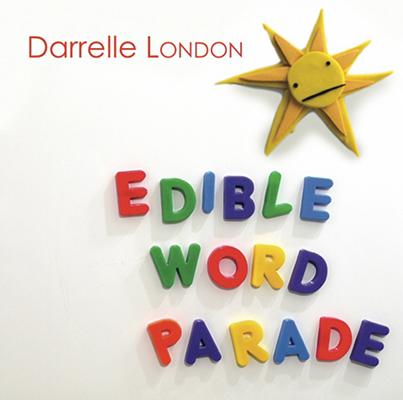
Edible Word Parade (darrellelondon.com) is DARRELLE LONDON’s sophomore release, and even within this short time, I am impressed by her growth, which is saying a lot considering how much I enjoyed her first one. She starts off running with the very catchy “Understand,” and just keeps on going. Her looks at life and love are filtered through her sweet, childlike lilt, but do not hold back on different aspects of relationships. Darrelle not only has a way with a lyric phrase, but also has a strong pop melody sensibility that makes her songs memorable and hummable. Just check out cuts like “These Days” and “Bad” to see what I mean. I can see some critics may lump her into a category with the likes of Kimya Dawson, but that would not be fair, because as good as Kimya is, I find Darrelle’s songs to be more mature and enjoyable. I will definitely be listening to this beyond the reviewing process. Though she hails from Toronto, I so look forward to getting the chance to see Darrelle play at some point. Why is Joe’s Pub waiting to call her?

Yeah, ELLIOTT MURPHY has been around forever…well, since 1973 anyway. Now comes his 30th release, Notes From the Underground (elliottmurphy.com). I had the opportunity to see him play a couple of times in the late ‘70s and early ‘80s. He tours a large chunk of the year, and that is reflected in the strength of his material and playing. Elliott has mellowed a bit through the years, but just because some of his songs are a bit melodious, they still have a strong punch with both melody and deep (yet accessible) lyrics. There are lots of good songs here, including the opener “And General Robert E. Lee” (which is rightfully somewhat of a hit overseas), “Ophelia,” and “Frankenstein’s Daughter” (perhaps a sequel to the Doll’s tune?). He was an under the radar figure back then, let’s hope that people like college radio programmers take notice and start a grass roots swell.

Usually, I don’t review CD-Rs, but I’m happy to make an exception with CHRISTOPHER MORSE and his Here’s to Better Days (myspace.com/christophermorse). Christopher’s style is solid singer-songwriter, and I must say he has a very clear voice that is very listenable, even though his topic on this is not relationship-friendly. From “Super Me” through “Caught in the Headlights” and “Friend Line,” this 5-songer is touching without being treacle, with sharp lyrics and melodies, in a Richard Shindell kind of way.

Like jazz, country is a purely American musical extension. For over 10 years, NASHVILLE PUSSY has been taking the Country genre and wringing it through a metal perspective. Their latest is the hard-hitting From Hell to Texas (SPVUSA.com; nashvillepussy.com), proving that time has not softened them a bit. There are still the expected songs of substance abuse (“Drunk Driving Man,” “I’m So High,” “Dead Men Can’t Get Drunk,” “Give Me a Hit Before I Go”), local pride (“From Hell to Texas”), a look at the larger picture (“Late Great USA”), and the controversial (“Lazy Jesus,” “Pray for the Devil”). This mixed gender band never lets go to take the easy road, with Ruyter Suys laying down the metal crunch twang taking the place of the lap guitar (I was particularly taken with her riff on “Stone Cold Down”), while husband Blaine Cartwright growls and spits his vocals with the best of ‘em. For a crossover release recorded in country stalwart Willie Nelson’s studio, this is sledgehammer subtle. A head-pounding successful release.

It’s not often I get to review something from Israel. HADAR NOIBERG and VLADIMIR KATZ are part of a jazz quartet, who have produced Lunch Special (hadarnoiberg.com.com). As the CD begins, it sounds like it’s going the way of avant-garde, but as the music continues (about 1 minute in), what is presented is more freeform (though probably scripted). Excellent material and musicianship throughout the hour-plus presented here. With a pleasant and heavy use of Hadar’s flute followed secondly by Vladimir’s piano, Gon Amir (drums) and Avri Borochov (standup bass) ably keep the rhythm flowing. The one piece with vocals is the haunting “One for Yulia,” which is sung (in Hebrew) by Hadar (it is translated in the liner notes), and one of the few that is heavily klezmer-influenced. This is not a garden party kind of ensemble, but rather a roll up the sleeve and groove, but mostly it is a beautiful collection of material.

J. SHOGREN has a voice that’s a bit gravely and rough-hewn. Americana can absorb that if the songs hold up, and on American Holly (Jaha!, c/o jshogren.com), they do just that. The opener, the album’s title cut, is obviously meant to be the “single,” but it was the third cut, “Everyman,” that caught my “ear.” As the CD glides along, it really started to reach me. The songs are catchy in a folky singer-songwriter pop kind of way, with melody lines that stay with the listener. There is really nice horn work here, like where they counterpoint with the banjo in “Holes.” Another piece that caught my attention was a sort of revisioning of “Praise the Lord and Pass the Ammunition” with the biting “Hand Grenade” (“I’ll be a hand grenade for Jesus / And spread His word like shrapnel”). It is also amusing (or can be seen as such) that a “women is bad” song like “Relativity” is followed by the romantic “She’s With Me.” While many of his songs are poignant, it is his closing number that touched me the most in my life right now, “Come All This Way.”

I approached the British quartet SITUATIONISTS (why hasn’t anyone used that name before? It seems like such a “duh”) new release, Onward & Upward EP (toughloverecords.com), with a bit of trepidation. Two four-song EPs and a full collection only released in Japan. Seems a bit too designed marketing for a new band. Plus, there are supposed to be only 500 hand-numbered copies, but mine is not. That was all washed away, though, when I actually played the thing. I don’t know if there is such a thing as a “paux de quad,” but it would seem appropriate for this group. Musically – both melodically and vocally – they don’t harmonize as much as move around each other, maneuvering in smooth pop rhythms, reminiscent of a four-way helix. It really is quite well handled, without being overdone. The production is slick, with an occasional slip towards a boy-band sound, but nevertheless, they keep their integrity. Sort of flings right to the edge, and then pulls back in an explosion. Crafty. All four songs are good, with well-done catches, and it never lets the listener down. If they make it, all these EPs and foreign releases are bound to be issued as a “bonus” at some point, but for now, enjoy.

I was fortunate to meet Mo Goldner, the guitarist for SPANKING CHARLENE at a Brian Cogan book signing. Shortly, his band’s release, *Dismissed with a Kiss (spankingcharlene.com) arrived. Fronted (mostly) by Charlene McPherson (does she really enjoy spanking?), the band has a bit of a mainstream rock sound, but without pandering to the lowest common denominator. There is no overproduction; rather the songs are really tight with good hooks. If I may, they have sort of a Cheap Trick feel to them, with perhaps the slightest hint of some country. Charlene’s voice is a solid, straightforward (i.e., non-growl), and enjoyable. Better than nearly anything one can hear on the radio these days, this should be played instead. “I Hate Girls” is a perfect antidote to the lame Katy wazzername’s “I Kissed a Girl,” though SC’s “Pussy is Pussy” probably won’t get much airplay. Some of the other strong cuts include “When I’m Skinny” and “Red Rolling Papers.” Worth seeking out.

MARY GATCHELL once stated in a song that “brutal honesty will set you free.” Well, regarding her new CD, Syretha (marygatchell.com), composed of standards, this was wise choice of material – especially for her. Well versed in jazz pop piano, Syretha (listed as both artist and title, after Mary’s middle name) slides into pieces by the likes of Gershwin (“Summertime”), Kerns (“Yesterdays”), and Ellington (“It Don’t Mean a Thing”), bringing fresh life into some songs that will never get tired. For example, her takes on “Bye Bye Blackbird” and “It Don’t Mean a Thing” is to present these uptempo numbers and slowing them down to smoldering ballads bedded with a jazz-heavily piano accompaniment (surprisingly not played by her), and made them into something that she can keep as her own. In a day when Etta James complains that Beyonce is merely copying her, no one can say that about anything on this release. Songs like “Summertime” and “Bye Bye Blackbird” have been done countless times, so bringing some new breath into them is no small feat. Piano, bass and drums ably accompany Syretha. The only jarring aspect of the CD is the suddenly upbeat “It Don’t Mean a Thing” in the middle of the rest of the collection of relative mellowness; definitely a sudden mood change. That said, even that number is solid. I always look forward to hearing Mary’s work, and will be enjoying this one for a long time.

Let me start off with a digression by saying that Brian Smith did a great job with the artwork on this one, with the cover representing a board game and each space sequentially connected to a song, and the disk looking like a spinner. That being said, TAPE AND WIRE is an interesting melodic New Jersey punk band who present their newest release, Sleep! (formula7records.com/tapeandwire). This power trio (with sometimes help from others) range from acoustic guitar ballads to blast in your face power. It makes for a nice mix. Amusingly, there are a few songs about alcohol, but either in the past tense or in the use by others. Is this a straight-edge band? The lyrics vary from the obtuse (“As the grain goes by, you’re alone again / All you outbound ideas / Caught in the same old inbound delays,” from “We’re Not in Secaucus Anymore”), to the in-your-face introspective (“”In the town that I grew up in, we’re so cool / In the permanent reunion of high school,” from “Church of Beer”), but mostly the songs are looking inward without being navel gazing to the point of wanting to ask them to stop whining. One song, in particular, I could identify with is “Teenage Pricks,” about aging and remembrances hopefully without regrets. It’s a good release ripe with thoughtfulness and retrospection, rather than just a sophomoric “Let’s get drunk and fuck!” Now all they need to do is add their e-address to the CD.

Bob Richert has run the Gulcher label (gulcher.gemm.com) since the ‘70s, and while it is most known for the Gizmos and early releases of John Cougar (Mellencamp), Bob should also be commended for championing and releasing some of the more interesting non-commercial independent music over the years. I haven’t always liked everything the label puts out, but I cannot begin to express my admiration for his devotion. The last release I received from Gulcher is Constant Hitmaker, by KURT VILE. Vile’s music is dripping with electronica, which I usually despise, but on some cuts, he doesn’t hit the listener over the head with it, using it more to promote the music rather than take it over. Sure some are solid variations of noise, like “Trumpets in Summer,” “Intro in Z,” and “American Folded,” but others not as much. Vile’s vocals are usually filtered through heavy echo, but the dissonant pop tunes still shine through, with catchy phrases and offbeat melodies. For me, the best cuts are the ones that are more pure, like “Classic Rock in the Spring” and “Don’t Get Cute.” However, my fave is easily “Slow Talkers,” which is straightforward Vile and an exceptionally played guitar, sans meddling. A lyric sheet would be appreciated to help through the vocal fog, but if one listens to it on an ambient level, it makes it listenable.

British singer-songwriter RUPERT WATES now lives in Brooklyn, but he recorded Dear Life (rupertwates.com) in Washington state. It was recorded live in the studio, usually with one take, which works here because it sounds like he’s playing in the same room. Well done on that. Wates’s voice sounds like a clearer and more theatrical Gordon Lightfoot, and his songs are foisted by his light-fingered guitar work and backing musicians. Each song is a single piece, without any blending into each other, a mark of a true tunesmith. Most of the songs though, are pregnant with death, war, daddy-issues (“The Sound of Applause”), mommy-issues (“Fairy Tales”), and true visions of horror like Katrina (“Please God”) and that man who was murdered by the police in Queens the night of his bachelor party (“Fifty Shots”). Definitely a look at the dark side, though well written, Wates could make Phil Ochs look cheery. There are some potentially hopeful numbers, like “Blackness of the Nights” and “You’ll See Me Again” (and perhaps “I Dream”), but there are more tunes leaning toward the “Elegy for the Coming Man” mode. I especially liked “Please God,” which uses the “Where Have All the Flowers Gone” kind of repetition and is strongly in a traditional folk mode, and his use of lyrics makes it all the more powerful. Wates definitely has a way with words, thought structures, melody lines, and musicianship, so this actually is a positive review, and I truly believe this is worth a listen, just don’t expect the feel good CD of the year.

* * *
The following are released by RESONANT MUSIC, a label run by DEE POP and ANDY HAAS (myspace.com/deepopnyc)

ANDY HAAS and DON FIORINODeath Don’t Have No Mercy (fiorinohaas@hotmail.com): It is probably safe to say that this is abstractly as far above Miles Davis as he was to, say, Louis Armstrong. Using Sax, piri, fife, electronica, guitar, lotar, banjo and dobro, this duo mixes both originals and standards, such as the U.S. national “Anthem,” “Comes Marching Home,” “Que Sera Sera” (whose horn feels closest to Davis), and the title cut. Recorded in a day, there is a definite feel to the songs, almost like this anti-war collection is at war with our sensibilities of sound, especially mixing the feel and sound of the “Civil” War and a Middle Eastern pastiche. Some standouts are “Ashes in the Sand,” “Memorywound” (which reminds me of some of Wendy Carlos’s works), and especially “Sinawi Spirits.”

RADIO I-CHINGLast Kind Words (radioi-ching@earthlink.net): For this recording, Don Fiorino and Andy Haas (who used to play with Martha and the Muffins, by the way), are joined by genre pushing drummer Dee Pop (Bush Tetras, the Good, and so much more). Less “competitive” oriented (both topic and stylistic) than the last release, this one is more focused on the traditional side, even though the music is just as esoteric (get used to that word, because I am sure it will be used a lot in this section). The number of covers has also increased, including a earthy “Brother Can You Spare a Dime,” Duke Ellington’s “Walk on Gilded Splinters” and “The Mooch,” Charlie Haden’s “Song for Che,” and a couple of versions of the spiritual “Let My People Go.” There is still a “gun section,” it may be called, with the original “Fife and Drum” and “Machine Gun Blues,” and a different version of “Battle Hymn of the Republic” than the first disk. Standouts include Geeshie Wiley’s “Last Kind Words,” the before mentioned “Caravan,” and the 8:13-long original “Morsing Code.”

ANDY HAASHumanitarian War: This is Haas’s solo project is definitely closer to the first above than the second, filled with originals. There are two interesting aspects of this collection. First is the instrumentation: shofar, raita, fife, electronics, and taal tarang. Second, this was all improvised live, with no overdubs. Haas continues a sort of Middle Eastern over-theme in an non-melodic, non-sequential, non-formulaic method. I respect the work, but a lot of this honestly goes over my head. The shofar and the taal tarang add some interesting touches, but much of the sound is lost on me. However, if the listener is into no wave electronica, well, have I got a CD for you!

RADIO I-CHINGThe Fire Keep Burning (myspace.com/ radioichingnewyork): The trio of Haas, Fiorino and Pop return with more middle eastern influenced jazz electronica. Again, covers out number the originals, including by the likes of Mohamed Ardel Wahab, Hamza el Din, Thelonious Monk, Jimme Driftwood, and “Abba Zabba” by the ever lovable Captain Beefheart. I also liked their cover of Count Ossie’s “Let Freedom Reign.” This release is by far the most overall modern jazz in some kind of “coherent” form (i.e., there are some definite melodies in there). This is one of my favorite overall recordings from this collection.

ANDY HAASThe Ruins of America: While this solo material by Haas is still more electronica than the others where he performs with others, it has an overarching theme of sort of a dance macabre, as is indicated by the title and cover art (taken from Rowlandson’s 1815 The English Dance of Death). Haas has taken his usual instruments (sax, piri, fife) and fed them through a synthesizer to create the sounds here. Cleaner and clearer than his first solo CD, this release feel more haunting. Much of the music here is based on traditional music from the nineteenth century, or feels like it, even those from Tin Pan Alley (e.g., Irving Berlin makes more than one appearance).