Wednesday, October 5, 2022

HELEN WHEELS: The Interview (1983)

 © Robert Barry Francos / FFanzeen, 1983/2022
Images from the Internet unless indicated

I have told this story before: before I even knew who punk/metal vocalist and songwriter Helen Wheels was, she made a deep impression on me. Though unidentified, she turns up at the CBGB bar in the 1978 film, Punking Out, where she mentions that she is never bored, as she fidgets around; the full 25-minute film is linked HERE; Helen’s comment is at about 22 minutes. Her strong personality and sharpness shook me up for some reason, and made me look at my own life.

Born Helen Robbins, it was the Dictators’ Handsome Dick Manitoba who gave her the “Wheels” to her name. But her larger claim to fame was as a songwriter who penned some songs for Blue Oyster Cult, including the B-side of “Don’t Fear the Reaper," “Tattoo Vampire.”

The petite and muscular Helen formed the Helen Wheels Band, and I knew I had to interview her. But, I’m getting ahead of myself.

Helen Wheels being not bored in Punking Out

Helen Wheels: The Interview (1983)

Helen Wheels’ stage persona may appear to be a frightening one. She licks knives and sticks them into the stage reasonably close to the audience, and shoots a pistol – point blank – into the crowd. With blanks, of course.

Her prior two bands, made up of biker types, added to this mounting paranoia. In these two previous forms, Helen’s music was not overly appealing to me. True, she wrote some cuts for Blue Oyster Cult’s infamous Agents of Fortune album (the only one I like, actually), the music she performed was heavy metalish, which was not the kind I wanted to hear.

So, with some reluctance, I went to see a Helen Wheels Band show (honestly, she was playing with a band I wanted to see) and I liked what I saw. Then her six-song EP, Post Modern Living (on Real American Records) came out and I was a bit more impressed, but the funk strumming was a bit tough for me to take at times. Despite all this, I found myself going to more of her shows at varied locations, from CBGB to the School of Visual Arts (SVA). Before I realized it, I was entrapped by the powerhouse. Her music is more down-to-earth rock’n’roll than previous incarnations, and I’ve come to love the record. What’s more, but don’t tell anyone, Helen Wheels is a pussycat. Her values are vastly different than my own liberal ones, and there are beliefs she holds true that never entered my ken. She’s open and has an infectious personality that’ll knock you on your ass.

There are a lot of things I could have asked Helen about, from her connection to BOC to her stance on UFO culture and her own abductions, to her tattoos, but I decided against that for being too obvious. So, when I interviewed her at the Brooklyn Zoo (March 26, opening for Iggy Pop), I walked in with only one question on my mind.

FFanzeen: In the movie Punking Out, there’s a shot of you at the bar of CBGB, saying that you’ve never been bored in your whole life.

Helen Wheels: Yep, it’s true. I’m still never bored. I’m so busy all the time doing stuff, and if I don’t have something else to do. I just go over and pump some iron.

FFanzeen: How long have you been doing that?
Helen: Kinda in a less serious way, for a couple of years, but quite seriously for three months. At least four days a week. I find it’s something that’s making me extremely happy, as well as strong. I mean, I can bench press 130 pounds now, which is quite a bit more than I weigh. I guess it stimulates the blood, but just being strong, you have a new kind of confidence. I mean, I was always strong and I always carry a big knife, but now, sometimes I don’t even carry my knife. It makes you feel pretty cocky and good. It’s my latest favorite thing to do – when I get sick of making phone calls and booking the band, and making posters and all that other stuff, and I still work on the wardrobe, making new costumes. Plus, the way I keep from being bored is that I haven’t had a television in 12 years, so that really helps. I think television is a negative kind of thing – video games – kind of programming things. And I think it gets people kind of depressed and down, so I read a lot, and pumping iron is the best thing for me lately. It makes me feel really cheerful. It must stimulate certain hormones or something, because I get really high off it. The same kind you get off singing, from the oxygen. I really enjoy it.

FFanzeen: Before you were doing it seriously, you were always in good shape; muscular.
Helen: Yeah, for years I’ve always had a set of dumbbells around and I would lift, here and there. I always enjoyed doing any kinds of test of strength: arm wrestling (for example). But I find it’s also amazing because it’s the only way I’ve ever heard of to actually get a perfect body.

FFanzeen: So you do more exercise than just lifting weights.
Helen: I do chinning, I have a trapeze. I hang upside down, do sit-ups hanging upside down, and I have a bench. I also have, like, leg presses, and extensions.

FFanzeen: You have all this where you live?
Helen: Yeah, I’ve got a home gym. I even got a little trampoline to run on.

FFanzeen: Isn’t it better to work out with a coach present?
Helen: Yeah, my boyfriend’s my coach. He’s great. He did a lot of weight lifting when he was younger, and now we work out together. The main thing is to keep good form, whatever you do, because you can hurt yourself pretty badly.

FFanzeen: Are you going to start competing?
Helen: I was fantasizing about competing in this contest in Queens, but I might wait until there’s one in Manhattan, ‘cause I really don’t want to take the subway out in my little posing suit. Actually, I have to get a posing suit. I don’t have anything quite small enough.

(ffoto by Robert Barry Francos)

FFanzeen: You could always use your leather bikini (that she uses on stage).
Helen:
[laughs] Some of those girls really don’t have too much on. I’ve recently become friends with the middleweight Miss America, Leslie Barber, who is absolutely incredible. She’s my height and she has, like, fourteen-inch biceps. She’s great.

FFanzeen: Have you ever been interviewed by any bodybuilding magazines?
Helen: Yes. As a matter of fact, a magazine called
Lady Athlete photographed me at the Ritz on Monday. They’re doing a big piece on me. They did “before” pictures, where I’d only been working out for a couple of weeks. They may be here tonight also, with the editor of Body and Power, which is the biggest bodybuilding magazine. The writers have taken a lot of interest in me, because they feel I might be good for the sport, in a sense. Women’s bodybuilding is a very young, fledgling sport, and people have a lot of misconceptions about it. Like at the competitions, there might be 300 men and eight women.

FFanzeen: What kind of misconceptions?
Helen: Oh, you know, that the women are gonna end up being, like 230-pound bull-dykes after six weeks. It doesn’t happen, because women don’t have testosterone. They have different hormones, so the main thing that most women will get first is that they’ll lose their body fat, which will make them happy. And then they’ll get definition. And they’ll get strength.. If you have a bad back, it helps your posture a lot, as long as you watch your form.

FFanzeen: Maybe I should try it.
Helen: A lot of people I know are, just because they see what it’s doing for me. I think it’s real positive in the same way that I feel, like, with our rock’n’roll: we’re really trying to show a strong, healthy, American image. Strong is the right word, rather than the kind of degenerate, debilitated Communist-junkie thing that is really what the media is putting out. You know, I won’t name names, but they really love the bands where there’s drug addicts, and stuff, because those people are so easy to manipulate. Put them in the big-time, tell them what to do, how to act, what to wear; you can’t put this song on the record, you put this one on. I firmly believe there’s a
major conspiracy going on in this country, and the way it affects rock’n’roll is that they choose the patsies, rather than strong artist who want to control their own image and their own music. They can’t control us. To me, the bodybuilding fits in perfectly with what I’m trying to say with my music, which is, “look to yourself. Be strong yourself, because we’re the only ones who can turn this country around.” I firmly believe we’re the only country – unless there are some other free countries that have a Constitution (and) a Bill of Rights – that encourages creativity and invention, instead of squashing it. I mean, there is no rock’n’roll in Russia, there’s no rock’n’roll in Poland. They only give you disco, because disco is for mechanized minds that don’t think. I mean, those beats-per-minute puts part of your brain to sleep. It’s a serious thing. People don’t realize the seriousness of media control. And, of course, punks, and all the people, they get their images from the media, so the media even twists around the strong and good ones. I really try to speak in no uncertain terms about what I want and what I feel; what I want to bring to people from my music, aside that it’s fun, kick-ass energy. That’s the top thing. That’s what rock’n’roll is, is freedom. I want it back the way it was – 1776.

FFanzeen: Do you feel Reagan is trying to ruin that with his cutting the budget in the arts areas?
Helen: I think Reagan is a pawn. He’s not in the Council of Foreign Relations, which is unusual for a president, but everyone who advises him, is. He’s not that evil, but he’s not in control, either.

FFanzeen: What is the fascination you have for motorcycles?
Helen: Speed; throbbing energy – I only like American motorcycles.

FFanzeen: Harleys, of course.
Helen: Harleys. I like Indians. They’re hard to come by. I’ve been riding motorcycles since I was fifteen, and that’s more than half my life. Motorcycles (are) the same thing as rock’n’roll. They’re about freedom. The people that are riding – some of them are outlaws and some of them wanna just get there and ride, ride, ride. They just wanna be out and be free. It’s just “headin’ down the highway / Looking for adventure.” It is ultimate. I mean, I like the real hardcore, outlaw bikers. I think those people are kinda like, you know, the last cowboys. And by outlaw, that doesn’t mean killing people, that means making your own laws. Living your own life, having your own values. I don’t give a shit what the world thinks of me anymore. I’ve been suppressed. I’ve been put down, and I’ve been really maligned in some press. I’ve been censored off of national TV and radio for speaking out against drugs, and of being basically clean-cut, and a kick-ass, biker-rock’n’roller. And I fuckin’ resent it, because look who they put up there. Anybody who shoots dope gets first crack at it, and so many fans have died since I started rock’n’rolling, and so many of them are like the people who come here in the audience. You have a responsibility, as a person on stage, to put out a positive message, to say something uplifting, something that’s good for people. Not just that it’s all immaterial, that you have no future. That’s something that the Brits did when they said that punk started in England. We all know that they copied the Ramones. Punk started in 1976 on the Bowery at CBGB’s, which is where the punks adopted the motorcycle jackets as their symbol of freedom, ‘cause it was a biker bar.

FFanzeen: Actually, it was ’75.
Helen: ’75 was the beginning, ‘cause ’76, it was kind of like the christening. And you had the real American bands, like the Dictators.

FFanzeen: Great band!
Helen: Fantastic band. And they got shut down. I resent it, ‘cause they were one of the greatest bands. The Ramones, bands like that, that were very patriotic. I mean, if you look at a Ramones logo, it’s a presidential seal: Johnny, Joey, Dee Dee and whoever they have now
.

FFanzeen: Ritchie.
Helen: Then they bring over the British disco shit and all that, and mixing it up with the rock’n’roll. And then they’re calling
that New Wave.

FFanzeen: Don’t you feel that it is also from American groups, like Devo?
Helen: Yeah, but to me, that was more like “thin-tie, wimp rock.” Yeah, that was the same kind of thing that the press did. They picked up those bands, and called those bands the New Wave, and they left out the Dictators; the Ramones, who should have had a No. 1 hit a
long time ago. They’re doing all right, but they’re not having the success they should have. Look at some of the big Brit bands. They aren’t very talented, and any kids who were hanging out in the early days, I mean, those were not the bands they went to see. They were the thin-tie ones with the least energy and the most, like, disco mixing, which is what they went to for big money; and to me, that was a real sick perversion of the whole thing … it has no place in what I want to say. It goes back to what I was saying about having responsibility. I see junkies up on stage, and the audience thinks they’re the greatest fuckin’ thing they’ve come across since the Sex Pistols, or whatever shit they got last from the media, and then they think, “Oh, man, it’s so hip. Let’s try shooting dope. Let’s check it out. That’s what our rock’n’roll heroes are doing.” Right from Keith Richards on down. And the media loves it. Then I go to the shows and the kids that were alive and wonderful – full of energy – they’re, like, nodded out on the tables. And then, one by one, like Jessie Blue [not to be confused with the bland “Oranje Guice” singer, Jessi Blue – RBF, 2022], they die. By accident, you know? “We didn’t shoot junk all the time, just now and then.” Jessie Blue was a friend of mine and she was a real talented girl. She had a lot of heart and soul. She was in the Slander Band. She was just “foolin’ around,” you know. She was in Punking Out with me. And she died from it. So many of them died from it. If they don’t die, they’re like the living dead. And that’s worse, ‘cause then they’re just a patsy of the powers-that-be, that don’t want people like me around to say, “Take your vitamins, lift weights, and be strong, and you can control your own life, and bring the country back to health with you.”

FFanzeen: Was there ever a time when you were into drugs?
Helen: I’ve taken drugs, sure, but I really cleaned up my act. The older I got, the smarter I got. I found out that I wanted to live. I still go 100 miles an hour on a motorcycle once in a while; 110.

FFanzeen: [Faking shock:] But isn’t that illegal?
Helen: Well, the laws – you know, you do it late at night when there’s no one else on the road so it’s not a danger to them. I think everybody has the potential to be their own person. Everyone has the potential for the kind of health and happiness and freedom that I’m talking about, in this country, anyway. It’s only because of the twisted media image that so many people are down on themselves; sad, can’t find a place in life. That’s what [the media] want. They’re trying to beat down the strongest ones. I always come back. I always come back stronger, too. And that’s what I hope to encourage other people to do, to fight for whatever the fuck you wanna do. If you want to be an accountant, man, fight to be that accountant. Be the best one that there is. But if you want to be something that’s impossible to get at, like the president, or a total outlaw, or a rock’n’roll star, just follow your heart. That’s what “Break the Chains” is about, it’s about personal freedom. Following your intuition and your heart. To be whatever you want to be. I was just a kid who dreamed. There’s not too many people up there giving you a positive word. There’s all this negativity coming down. They have to fantasize because the reality is made so miserable for them. I see a lot of people now; they just want to escape. But I figure the real thing to do is just make it better so you can be in reality and feel good.

FFanzeen: How do you propose to do that?
Helen: I think I’m already doing it through the best methods I can. If people will get our record and check out some of the political inserts and some of the information there, pass the information along, and just become more well-informed about the fact that there is a media conspiracy in this country. Bankers own Marshall Amps, own ABC’s studios, own Hollywood, own all the newspaper chains, own just about everything except fanzines. Which are pure. Just the way, like, a lot of the new bands are real and pure, and that’s why I love them. I’ve had interviews for big papers where they said, “This part is too hot. Take it out. Leave in this nice part here. Leave in this stupid part here, this joke here.” Then fuck the whole thing, ‘cause if I can’t say something that means something to me, then why say anything at all? … Along with the real punk bands, and the real New Wave bands in the late ‘70s, was this immense network of fanzines crossing the country. There’s still quite a few of them. We got a list of 3000 of them with our record. Maybe 50 went out of business within that time, but a couple of new ones started. And to me, that’s where I find out about the censored bands, the local bands, the real stuff going on. They don’t wanna give me big money for stuff yet, but they’re gonna have to pretty soon, ‘cause I won’t shut up and I won’t disappear. Not unless they actually try to assassinate me or something, which they won’t do because I’m too strong. I won’t stand for it.
[Laughs] It’s not just me. There are a lot of people coming up now that just aren’t going to disappear, that are positive. And I think it’s really going to start turning the tide, because people, even if their minds say, “Yeah, let’s shoot junk because so-and-so there is so cool, and this-and-that. Let’s snort speed and do all this stuff,” their inside animal, their intuition does not want that, even if their minds want to do it. If someone starts speaking to their inside animal – this is like, magic stuff, and it’s saying, “Be strong, be healthy. Be who you want to be. Really realize your fuckin’ dreams.” The animal says, “Do that, do that. Try it.” ‘Cause I find the more I follow my intuition, the happier I feel. Our record is being played in 40 states now, just by our independent efforts. Features all across the country. It’s being played in Buenos Aries, London – I think it’s tremendously exciting that this can be done independently. Independent records are really the healthiest thing in the whole industry. It’s the same as the fanzines; it’s made of the people.

FFanzeen: So, you would say your record was a success.
Helen: Absolutely. I think it was an artistic success because we put out the image, and the music, and the songs that we chose. We did it at an ultra-budget price with real good technology. We had wonderful people working on it. It’s getting played on some 150,000-watt stations, which compares with the Pat Benatar sound, or whatever shlock they get paid to play. I think the fact that it’s getting played in 40 states, is a tremendous success for us. And now, a year after its release, it’s still being picked up as a new add by maybe 5-10 stations a week that we know of. We haven’t made a fortune out of it, but we sold out the first pressing, and we’re pretty well into the second pressing now. I hope I’m not naive and that it hasn’t peaked yet. The way I look at it, it’s going to bring us a lot of success. As an independent, it’s gotten good out there. We got fantastic reviews cross-country. In fact, we’ve got response from radio stations that said they weren’t even going to listen to the record because they thought the reviews were all hype, ‘cause nobody had an EP with six great songs on it. Then they write us these letters: “Fuckin’-A. I didn’t believe the reviews ‘cause they seemed like a hype, but the record is great and we’re playing all six cuts.” We did a taped interview by [scene photographer and writer] Mariah Aguiar (d. 2005) that has been on 30 radio stations across the country, and we have a request for that quite regularly. In fact, I’m going to do a syndication radio show that’ll be on about 15 radio stations on the East Coast in April. It’s a new show, coming out of New Brunswick, New Jersey. And the college stations, where they are not programmed to play only this and only that, we’ve had tremendous success because … they
like it. And that’s the young people. That’s fine with me. I hope we hit all the people. I think we got a real good start. I think we’re doing real well. I’m hoping to win the lottery so I can make another record. [Laughs] I’m ready. Joe Bouchard (bassist for Blue Oyster Cult) wants to produce it again. The same engineer (Corky Stasiak) wants to do it. They’re really tremendously excited that what could have been a dinky project has won them a tremendous amount of acclaim, too. It was Joe’s first outing as a producer, and he’s getting all kinds of kudos, so he’s ready for the next one.

FFanzeen: How is this band different from your previous two?
Helen: Well, I always like to think that as I progressed as a singer and a writer, my musicians have just gotten better and better. I think that this band [Jack Rigg, guitar, who currently works with Bouchard as writer and composer; Orville Davis, bass, has gone country; Paul Garisto, drums, is a session/touring musician including with the Psychedelic Furs and Iggy Pop – RBF, 1983/2022] has the most variety, musically. It’s not all, like 4/4, heavy metal or something. I think everybody feels a real freedom with their creativity. We’ll write a lot of songs and boot out most of them and just keep what seems kind of golden and special to us. Songs that we all like. I really don’t think we have any boring songs. And I certainly never get bored on stage. I think it’s the best band by far that I’ve ever had. I love the rhythms. There are so much more unusual rhythms, and it’s challenged me to write in many new ways. Like, now I’m writing a lot more as we’re writing the music, rather than writing a poem and setting it to music. It’s more of a give and take product. I think I’m doing my best writing now than I ever did in my life.

FFanzeen: Do you think that you’re playing with guns and knives on stage promotes violence?
Helen: No. Certainly no more than television does. I think a lot less. What it does is promote an image that people are little bit afraid of, which is the armed and dangerous woman. I think it’s an important cultural image to put out, and that’s one reason to do it, because of the “weaker sex” bullshit. … When people are hassling everyone else on the street, as I pass by, they say, “DT ticket,” which means, “Don’t Touch.” That means you don’t fuck around with this person because this person knows themselves, and looks a little weird. See, I don’t believe in gun control, because the way that things have gotten, all the bad guys have guns. They buy a Saturday night special for $25. Why shouldn’t I have a gun to protect my house? I don’t think it invites trouble. The same as bodybuilding. I think it gives a different image of womanhood for the ‘80s, that a woman is not passive. People don’t think of women as fighting back. If they did, they wouldn’t fuck around with them so much. Nobody fuckin’ touches me.

(ffoto by Robert Barry Francos)

FFanzeen: Are you trained in any of the martial arts?
Helen: No, but I wouldn’t mind being. It’s not something I would put out of my mind. Bodybuilding is one way of making myself strong and I might be interested in doing that. … Although the ultimate defense is a .45. It’s the same as pressing 125-plus pounds. When I can press 180 pounds, then if a 180-pound man starts to attack me, I’d be able to pick him up and throw him against the wall, and break his head. That’s what I see is a great use for that. When you can do pushups on your fingertips, you can put your finger right through somebody’s throat, or you pump out their eyeball, they won’t bother you. If you’re strong enough to rip their nose off their face, that’s great. To me, it’s holy. It’s kind of an art, to make yourself strong and whole. I am very spiritual. To me, I’m one with nature. That’s
my goddess. And nature demands me to be the strongest, most intelligent, most creative being that I could possibly be. To do the most with my life. To me, that’s living an entirely spiritual life. Just to be the fullest human being that I could be. If I’m not writing songs, I’m managing the band, or working and doing something for bucks, or sewing my costume. I believe in doing everything related to my life. I’m a great cook, you know? I enjoy every aspect of living. I really try to. Even if you feel shitty, there’s something good you can get out of it. Read a book or something. It’s just a matter of keeping your mind alive. And not being discouraged by all the shit that’s in the world. I can’t stress the media conspiracy enough, because they want to put us down. They really want powerless people. The same thing with gun control. That’s the second amendment. There must be an armed militia of the people to keep the Constitution in line for when all these scumbags in Washington are changing the immigration laws and doing all this stuff that is destroying our country. We must have an armed populace that has the brains – and they don’t get the brains from eating Wonder Bread – that can take care of themselves. What they’re doing with all this shitty food to these kids now is terrifying, because we’re getting a new generation of nutrition. That’s something people should be immensely aware of, just taking care of their bodies and their minds. Plus, it’s like a suicide country, if you just let it tumble down the way it’s going.

FFanzeen: How do you think we can change that?
Helen: By becoming more well-informed, by watching our own personal health and strength, by finding out what we are guaranteed in our freedoms and making sure we get those guarantees. That’s what this country is built on, is the Constitution/Bill of Rights. And that’s what gives us the right to rock’n’roll. The right to express ourselves and to speak out about what we really believe in. From the selfish standpoint of an artist, I would do anything to protect the freedoms of this country, because they would have killed me in Russia. They would have put me in jail 15 years ago, just for being an outlaw, let alone singing rock’n’roll. Because I won’t be told what to do. I really believe in that for everyone: self-determination. And I think that people are hungry for a positive, American message. I’m fuckin’ sick of the British Invasion, which never ended since the Beatles, and then try to pummulgate it into everyone’s minds here that the Brit bands are the good bands, because they’re the ones in the media. They’re the ones getting $3,000 when we get $300 or something. People say, “Why don’t you go over to England and make it big over there, and then come back?” That’s the last resort, because I’m American and I’d really like to make it in my own country first. I wouldn’t mind doing well over there, too, because fans are fans. They have to clear the songs with the BBC, you know. I mean, it’s not a Communist country, but there’s a lot of political repression there. And to me, most of them are neo-disco (and) it’s all this synthesizer hype bands – and it’s all phony. And I really resent it that our media and our people are slobbering over all the English stuff. There’s thousands of great American bands here that are not getting a chance.

FFanzeen: You can hardly get a gig at a major club in New York on a weekend unless you open for a British band.
Helen: I’ve got everything going against me: I’m a chick, I’m white, I’m real American. I’m not a commie, I’m not gay, I play rock’n’roll – they don’t want me, but I’m not going away. … But I try to keep a positive thing going. Most of the people that are rockin’, they just wanna rock, and bless them. May nature bless them and let them rock. It’s the healthiest thing they can do.

When it came time to publish the article in its original form, I told Helen I was going to make it into the two-page center. She hand-created a beautiful piece of illustration as a border, after I gave her the dimensions, which I used, of course. It was not boring.

Looking back in hindsight from 2022, I wonder what Helen would make of the modern, Internet-informed, COVID-infested, anti-vaccination, White Nationalist groups, “fake news,” post-Trump, and post-1/6 insurrection America. Unfortunately, we will never know.

In 1996, Helen moved to Ithaca, New York, and after a stint as a trainer and opening up her own small press imprint, she became a member of the band Skeleton Crew and was recording a new album (Helen Wheels and the Skeleton Crew).

Helen went into Ithaca Hospital for some corrective back surgery, having hurt it over a decade before, caught an infection, and passed away on January 27, 2000, at the age of 50. Maybe her goddess was lovingly trying to protect her from learning about 9/11, nearly two years later..


Sunday, September 25, 2022

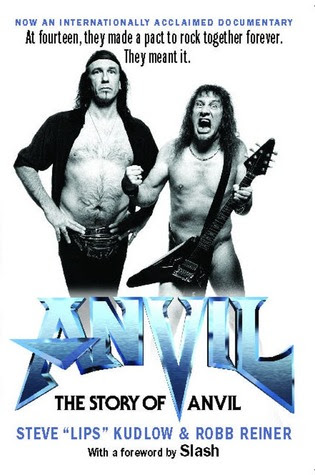
Documentary Review: Anvil! The Story of Anvil! Restored and Returning Again!

Text © Robert Barry Francos / FFanzeen, 2022
Images from the Internet

Anvil! The Story of Anvil! Restored and Returning Again
Directed by Sacha Gervasi

Utopia; Portobello Electric; Abramorama
80 minutes, 2008 / 2022
www.anvilthestoryofanvil.com/
www.anvilmetal.com (to purchase recordings and merch)

I will be honest with you: when the film was first released in 2008 or 2009, I didn’t see it. I was in the process of moving to Canada by sheer coincidence, as the band is from Ontario, so my time was otherwise occupied dealing with packing and governmental hoo-haa. It is worth noting, even with me not seeing it then, the film is tied for 6th place as one of the highest rated documentaries of all time on Rotten Tomatoes.

Anyway, 13 years after its initial release to great fanfare and attendance, the film is now being rereleased (as Anvil), and I have the good fortune to get the chance to review it. To be further honest, I’m not a dyed-in-the-wool metal fan. There are metal bands I like (The Dictators, for example), and certainly a lot of Canadian Bands of the late ‘70s (Teenage Head, The Diodes, Forgotten Rebels, etc.), but it is interesting how this is kind of a mix-up of both those styles.

For a while in the late ‘70s to early ‘80s, Anvil was at the top of their game, being highly influential on a number of bands at the time due to their 1982 album Metal on Metal (which I have never heard to-date), such as Lemmy (d. 2015) of Motörhead, Slash of Guns N’ Roses, Slayer, Anthrax, and even Metallica, all of whom are represented in the documentary. And how did a band that went up to almost famous be so influential? Think of the Beach Boys’ original Smile album, and how it had an effect on the likes of the Beatles Sgt. Pepper’s or, to some extent, Simon & Garfunkel’s Bookends.

While there are other members of the band who are represented here, the main focus is on vocalist/guitarist Steve "Lips" Kudlow and drummer/painter Robb Reiner, who have been friends since childhood. They struck it to the “almost” dial of fame, ending up being a cult band (you know the expression: “A musician’s musician”).

The film is broken up in to a number of unofficial chapters. For example, there are many short interviews with some of the (2008 and still, now) top in their field metal musicians, many of whom I have mentioned above.

Despite all the mishigas, here is a certain level of joy that permeates the film, thanks to the director, Sacha Gervasi, who is not only friends with the principals, but was also the band’s roadie during their heyday. We see Lips and Robb in their relatively lower middle class day jobs that they seem to be happy with, and their spouses who put up with them. For me, one of my favorite things is that while Gervasi present Top-Level musicians that are fans of Anvil, they also show the joy of Lips and Robb as they meet other musicians, such as Carmine Appise, Tommy Aldridge, and a very somber Michael Schenker (who comes across as confused as to who Lips is), sometimes chasing after them to say hello at stadium-level gigs. It’s quite touching.

The documentary really picks up with Lips and Reiner (along with another version of a cobbled together band…let’s face it, no matter who backs them up, Anvil is Lips and Reiner) when the film starts in the second act, as Anvil begins a month-long tour of Europe, set up by their tour manager, Tiziana Arrigoni, that does not quiiiiite go as expected. Right from the start, they are unable to board the train to take them to their second gig, and they have to find other means. This is just the start of an almost This is Spinal Tap-esque (1984) level of a state of confusion and roadblocks. The big festivals go somewhat smoothly, but when they play smaller clubs and travel from one to another, that where the issues arise, as they do with any touring band at the club level (I recommend Henry Rollins’ 1994 book, Get in the Van for a view of touring life).

In the next larger section of the film, while in their 50s, Lips and Robb decided to record their 13th album, appropriately titled This is Thirteen (2007; currently, they have 19). Hoping for lightening to strike twice, they hire the same well-known producer of the Metal on Metal album from decades before, British Chris Tsangarides (d. 2018), a Grammy winner who has worked with the likes of Thin Lizzy, Judas Priest, and Yngwie Malmsteen). The issue is raising the thousands of dollars it would cost, and the flights.

As much as this is a story of a band on the roller coaster ride of fame, it is also about different types of family: for example, it focuses in on relations and spouses and how they deal with being married to someone who has a laser vision dream outside the family; the other is the brotherhood of Robb and Lips, two nice Jewish boys who have known each other since they were mid-teens, and yet get along better than those other two nice Jewish boys from Queens, Simon & Garfunkel. Sometime they fight like, well, other families, but they both know that their entire dreams and lives are dependent on each other, and it runs deeper than an argument (even when it comes to fisticuffs, as Robb explains about a necklace his father gave him).

I can understand why this film is so beloved. It is both moving and jaw dropping when it comes to the level of angst they go through just in the day-to-day to try and see the fruition of their dreams. This makes it very heartening to the spirit of the viewer.

The film has been rereleased to 200 theaters in North America, included limited extended runs. If you manage to catch it, there will be an added 18-minue filmed interview with Lips, Robb and the director, Gervasi. Also, it is available for digital pre-order on iTunes and Vudu.

IMBD Listing HERE 


Thursday, September 15, 2022

RBF’s Eclectic Excitement Playlist: Other Music Edition – September 2022

RBF’s Eclectic Excitement Playlist: Other Music Edition – September 2022

Text © Robert Barry Francos / FFanzeen, 2022
Images from the Internet

This edition of the playlist are songs that tend to be considered Other Music, as they don’t necessarily fit comfortably in a category. Most of these artists have the delusion that what they are doing is mainstream and palpable to the general public, but it’s more a cult following that is interested. This is different from just odd stuff like Barnes and Barnes “Fish Heads,’ the Residents’ “Satisfaction,” or Christopher Milk’s “Locomotion” in that these three, for example, were purposefully made to be odd, whereas Other Music is more organic to the artist’s style. What I find surprising is how many of the tunes below are actually on major labels, perhaps as loss leaders? Despite my brief comments, I am interested in listening to the obscure music arena than prattling on about it

The songs are listed alphabetically by first letter of the artist or group and not in a “ratings” order. Art is subjective, so I hope you like these as much as I enjoy them.

Note: There is no advertising on this page, so I will not be making anything off the work of others.


Edith Massey
“Big Girls Don’t Cry” / “Punks Get Off the Grass”
Egg Records
The “Egg Lady” from John Waters’ Pink Flamingos was as bad a singer as she was an actor, but man, she had personality. She was celebrated and integrated into the punk scene down at Max’s, so this single, both sides of which are on this video, makes so much sense. The cover of the Four Seasons’ classic is straight out of the Heartbreakers’ playbook, and the flip reminds me of Cherry Vanilla’s “The Punk,” but from an older perspective. Both songs are ridiculous and fun.


Gloria Balsam
“Fluffy”
Richmond Records
Gloria worked for Richmond Records back in the 1980s, and had the chance to record this. She is a comedian, but did this straight. I loved it from the first time I heard it, and it has a strong cult following, but it can also clear a room as she reaches for those high notes. I never tire of this.


John Trubee
“A Blind Man’s Penis”
The Only Label in the World
In the back of a country magazine in the ‘80s, Trubee had an advert that stated he would put anyone’s original poems or lyrics to music. Someone sent in a ditty called “Stevie Wonder’s Penis.” Wisely, the name was the only thing Trubee changed, and was born a psychedelic punk country song that was pure gold.


The Legendary Stardust Cowboy
“Paralyzed”
Mercury Records
I still remember hearing this 45 for the first time at a friend’s house when we were in high school in the early 1970s. I couldn’t quite grasp what I liked about it, having been mostly a folkie before then, but its energy and off-beat drumming/trumpet just kept it getting weirder and weirder. Now I find the song kind of relaxing, in an odd way, as I came to appreciate its punk sensibilities.


Mrs. Miller
“Green Tambourine”
Capitol Records
Mrs. Miller’s high, vibrato voice first came to notice in the film The Cool Ones (1967), where she sang the standard, “It’s Magic.” This is the number she is most known for, but her cover of the Lemon Pipers is mind-boggling. She seems to be playing over the actual tracks for the original song, and she definitely gives it her all.


Sam Chalpin
“Leader of the Pack”
Atco Records
This elder cantor is the father of Ed, who first recorded Jimi Hendrix. I worked for Ed for a brief time at his studio.  Sam believed he was a better singer than anyone on the Top 10 at the time, so Ed had him sing along to some background tracks and created pure magic. Sam’s version of “Satisfaction” is better known, but I’ve always like this one better.


The Shaggs
“My Pal Foot Foot”
Light in the Attic
This quad of sisters are, without question, the queens of Other Music. No sense of rhythm, melody or lyric form, they coalesce into something new and different, that is both disturbing and enjoyable at the same time. Their album, Philosophy of the World, is packed solid with attitude and being off-key.


Tiny Tim, Gary Lawrence and His Sizzling Syncopators
“Do Ya Think I’m Sexy”
Vo-Do-De-O-Do
Sure, Tiny Tim is widely known for his falsetto renderings of standards like “Tip Toe Through the Tulip,” which made him famous, but his later, modernization as it were, was equally bizarre in another direction, such as this Rod Stewart cover. It was for an MTV promo and is an attempt at “straight” radio.


Wild Man Fischer
“Merry Go Round”
Bizarre Records/Reprise Records
Larry Fischer was a street guy who found his way into Frank Zappa’s prevue, and Frank took him under his wing to record him. Whether Zappa was serious or messing around with the guy, Larry took it very sincerely, leading to a rift between Fischer and the Zappa empire to this day. But the music is bubbly if crackling, and the songs total nonsense. But that is what is the charm.


Monday, September 5, 2022

King of Skeptics: An Interview with JONATHAN KING (1981)

© Robert Barry Francos / FFanzeen, 1981/2022
Images from the Internet unless indicated

One afternoon while sitting and chatting in her Times Square office with former National Publicity Director for Sire Records Janis Schacht, about life and the Ramones, she suggested I might be interested in interviewing a local-based, London-bred acerbic talk radio host, Jonathan King. This is the same, Jonathan King, it turns out, who had the hit in the 1960s with “Everyone’s Gone to the Moon,” a treacly yet enjoyable pop number. Sure, why not?

It seems his career had actually been much more expansive than I had imagined. When I told her I was impressed, she looked at me hard and explained that King did not like people who just liked him solely based on the criteria that they like his music. I decided to take a more offensive tone rather than defensive or placating one when we talked.

I grabbed video editor Alan Abramowitz. As it turns out, having Alan along worked out well, because it seemed Alan, being young and blond, was just Jonathan’s type. Alan, being the straight blade innocent that he was, had no idea of Jonathan’s flirtation, especially before and after the interview proper. It was quite amusing to watch the dynamics of the situation. It also put Jonathan in a playful enough mood to have fun during the interview.

Yes, I am totally aware of what Jonathan King has been accused and do not condone it, though he insists on his innocence. However, this interview took place decades before his arrest, and concerns interesting aspects of the music industry, so I believe it has merit in publication

This interview was published in FFanzeen, No 7, dated 1981.

King of Skeptics: An Interview with Jonathan King

I wanna catch phrase
I wanna start a craze
I wanna gimmick
I wanna hit
I’m just a poor boy
With a song and a smile
And not just another
Shallow entertainer
– Neil Innes (d. 2019)

 There is no doubt that Jonathan King knows what he wants and, more importantly, knows how to get it. His past is a perfect example of that. While at Cambridge, he had his first hit record, “Everyone’s Gone to the Moon,” in 1965. Since then, under a variety of names, he has had hit after hit on the charts in England – if not as an artist, then as a producer, having introduced such groups as 10cc, Genesis, the Bay City Rollers, and the original theater production of The Rocky Horror Show.

Despite all his success in England, King has never “made it” here in America, but he is determined to break this market. Since coming over last year, he was offered the temporary job as DJ on WMCA-AM, a talk-oriented show featuring guests and call-ins. And from this stepping stone, he hopes to take over the musical direction of a FM station and create a monster success. And if anyone can do it, as past experience has shown, Jonathan King can.

But the question is, is King part of the solution or the problem? His idea of a New Wave station utilizes a commercial format, playing the same records over and over, much as Top-40 stations do now. Whether this is good or bad is a debatable point – but most likely it is commercially viable.

The following interview took place at the old UK Records headquarters in midtown Manhattan in December 1980. Though the interview spanned a mere half-hour, more was said than during an average hour-long discussion. King knows his mind and speaks it very quickly, often embroidering his points considerably.

Jonathan King [glancing at the cover of an issue of FFanzeen] “Rock and roll with integrity?” But I have no integrity whatsoever. What am I doing in this place? I would be in the “no integrity section”
FFanzeen: Okay, I’ll be in the back.
King: I’d prefer the front cover, please. I’m prettier than all these people

FFanzeen: Not Ronnie Spector.
King: Ronnie Spector. Oh, well. Anyway, yes, right.
[FF stammers over question, King turns to Alan] He can’t ask the questions cos he’s gazing at me with such love and admiration, never having met anyone so intellectually and physically beautiful in his life before; his eyes are gazing at me.

FFanzeen: I still prefer Ronnie Spector.
King: Don’t worry. Phil Spector felt the same way.

FFanzeen: “Una Paloma Blanca” is really a miserable song.
King: Awful

FFanzeen: But it was a big hit for you in England. Did you record it simply because you knew you’d make a lot of money from it?
King: No, it’s really hard to explain – or it should be hard to explain. There are creative buzzes of various kinds, and I get a great buzz creating something which is commercial and appeals to a lot of people, and which people like. Therefore, I got a great creative buzz out of making a record which had come up and flopped in England, improved it commercially, and producing a final product which was a large hit. One of the biggest hits of the year in Britain. I do get great enjoyment. You don’t have to only get enjoyment in the music business by creating something marvelous. You can get it from promoting something, from marketing something, from selling something, in various different ways, and it gave me a great creative buzz to make a hit record out of “Una Paloma Blanca,” although I never liked it myself as a piece of product.

FFanzeen: What’s the story on Blue Swede and your “Hooked on a Feeling.” 
King: Well, “Hooked on a Feeling” was a record I did like. I had a hit with it in England and around Europe and, as you know, Blue Swede did steal it, made an almost identical copy [you remember: “Oogha-chaga, oogha-chaga in 1974 – RBF, 1981], and had a Number One here in America, simply because my record was not promoted and marketed here. [My version] came out on London Records which, then, was virtually the equivalent of a morgue, as far as records were concerned, went on to remain the same, unfortunately, and therefore killed a number of my acts and bands. But I think it got lost for that one reason. The Blue Swede record came out on Capitol, which was run by Al Coury (d. 2013), who now runs RSO Records and got that complete marketing and promotion treatment. In a way, it was flashing to me, because it showed me that I did make the right record in the first place; it just got lost.

FFanzeen: A lot of your songs can be considered “novelty records.” Don’t you ever want to be taken seriously?
King: I never want to be taken seriously. I never take anyone else seriously, either. There’s no point in taking anything seriously, when we can all be wiped out by a meteor landing on the Earth three seconds after somebody has read this article. So, I don’t believe in taking things seriously at all. I believe in having a lot of fun. I’ve done certain things that one could take seriously if one wanted to, ranging from discovering Genesis, or The Rocky Horror Show, or 10cc, or any of the other more creative bands I’ve discovered, to some of my more creative recordings, like “Hooked on a Feeling” or “Satisfactionby Bubblerock, which is one of my better records. No, I don’t expect people to sit down and start essays in The New York Times about the brilliance of my musical metabolism; I don’t want that at all. I just want people to buy my records in bulk, have fun, like the bands I find, like the artists I discover – and I don’t take life seriously at any time. The moment you start doing that, you’re open for unhappiness.

FFanzeen: Why don’t you perform live?
King: I performed live sporadically, until I had my first hit [“Everyone’s Gone to the Moon – RBF, 1981], and I never really liked it. I felt uneasy on stage. I’m not a performer. My greatest talent in the music industry is probably as a producer. I know how to find, discover, nurture and create hit records, bands, and acts probably better than anyone else in the world. And, he said modestly, I really like doing that. Now, I had my first hit, and I had to make a decision: do I want to become a performer? Now, all performers are cunts. I have a little sign hung above my bed saying, “All Artists are Cunts.” In fact, I had dinner with Rod Steward and Britt Eklund, and spent the entire meal saying how all artists were cunts. It took Rod the whole meal to realize that all the analogies I was illustrating this argument with were coming from the way he was treating Mercury/Phonogram. He finally discovered that I was basically insulting him – during the sweet course. Rod, being a Scotsman, is shrewd enough to realize he’s better off if he has his meal first, before he leaves. He got up, stormed out of the restaurant and didn’t speak to me for a year. Well, Britt and I had a good giggle about his uptightness. I put in a few good insults at her as well. I said to her, “Oh, Britt, isn’t it wonderful? You’re so lucky. What a coincidence that every man in your life has had so much money.” That made Rod giggle. Anyway, all artists being cunts, I decided I wasn’t going to be an artist. I was already a cunt. I didn’t want to make myself more of one. To be a good performer, and to be an artist, you really have to have an inflated opinion of yourself. You have to project over-the-top mannerisms, style, gestures, and everything. I could have done it. I could have learned to do it. If I’d wanted to be a rock star, in the mid-‘60s, I could have slaved away at the boards. I have enough imagination to create an incredible stage show. Genesis has a lot to thank me for their stage ideas. I’m sure I could have become a rock star. How boring. Can you imagine being a rock star? Can you imagine anything more tedious and stupid? Far more nicer for me, who has had the chance to be a rock star, many times over, and every time to have rejected it. Isn’t that much cooler? Elvis Costello can’t claim that.

FFanzeen: Have you produced or recorded anything lately?
King: Not much. Towards the end of 1979, as a favor to a very dear friend of mine, Sir Edward Lewis (d. 1980), who is the chairman/founder of Decca-London Records, I have gone back to Decca as sort of the boss, to revive this dead corpse of a record company, which I did. And we got a lot of records back on the chart. I had “Nights in White Satin” by the Moody Blues on the charts for the third time in the Top 10, and a variety of other hits on Decca. And, in fact, again, by the end of the year. Decca was again one of the most successful companies in Britain. The reason for this is because Sir Edward was selling the record company to Polygram, who did in fact buy it, and he wanted to sell them something that was a positive, active, successful entity, as opposed to a flop. It worked very well. He sold the company, and the new company immediately approached me and asked if I would be interested in running Phonogram/Mercury and Decca. A lot of other record companies in Britain asked if I would be interested in running their companies in England, and even in America. Sums of money were mentioned, ranging to the top offer of $750,000 a year. And I looked at myself in the mirror – especially parts of my anatomy, the most interesting little bits I can observe – and I said, “Jonathan, do you really want to be a record executive? Here you are, just into your early thirties. I don’t want to do something that will keep me going for another ten years, wearing suits and ties. I would prefer to relax. Fortunately, I have earned enough money through the bands that I’ve been associated with over the years to be able to do whatever I want. What would I like to do?” And I decided I would like to come to America and live in my apartment/office, which I’ve had for ten years now in New York, and do two things: one, cover the presidential election, because presidential politics in America fascinates me, as do politics in England – I find them very interesting, and two, broaden my perspective out of just the music world, but also break into the American market because, as you know, in England, I am a fairly well-known personality from fifteen years of doing a variety of things. In America, apart from “Everyone’s Gone to the Moon” fifteen years ago when I was a little seventeen-year-old teenybopper, nobody knows me and remembers me, right? So, it’s a whole new virgin market and a difficult market to break. And I’ve decided I’d try and do that, so I came over here to do weekly reports on the election, called “The King of New York,” which goes out Saturday afternoons on the BBC in Britain, and has about six or seven million listeners. I still do that column. Then, while I was here, I was offered a guest slot on WMCA-AM, “New York’s finest news and conversation station,” and they got good reactions, phones went, letters poured in, so they asked if I would do the 10 to 12 morning show on a regular basis for a while, and I thought about it and decided, yes, why not? Because my other ambition has been, for a while, to try and shake the bland, boring, tedious American radio station back into shape again. And I think I’m probably the only person who can do it, cos I’m young enough to know what the (new) music’s about, yet old enough to have had the experience and success in the industry to have built up a good reputation, so people don’t look at me as a lunatic. So, bearing that in mind, I’m still trying to do that. I’ve got three FM stations on the boil at the moment. I’m trying desperately to get one of them to allow me to move in and program a New Wave radio station for young people who like to hear that new sound younger bands are making; people like the Police, B-52s, Elvis Costello (and) a variety of artists that are around. Playing that all the time, instead of what I call “Dinosaur Rock,” which WPLJ or WNEW play, or disco, which is fine if you’re into disco, but not at all fine if you’re not, or any other music formats around you which are very limited or specialist. My thinking is that the 1980s AM radio is going to become more and more talk-oriented. And FM radio is going to widen out and appeal to a broader spectrum of the community. How nobody has ever done this before I really cannot understand. It’s such a yawning gap in the marketplace, you would think anybody with any brains would cater to that area, right?

FFanzeen: WPIX did that for a little while.
King: No, they didn’t, you see. This is one of the two reasons why there is no New Wave radio in New York,: one is because New Wave radio is thought to appeal to the twelve to twenty-five-year-olds who, according to demographics, no longer have much buying power apart from pimple creams, right? I happen to think that’s wrong. I happen to think that, a) the audience has more buying power than people think, and b) New Wave radio would not only appeal to that segment of the community, but would also appeal to a lot of people in their late twenties and early thirties. And I think a lot of parents whose kids would be setting their dial to a New Wave station would like what they heard and leave it turned to that. So, that’s one point. The second, WPIX sort of tried a New Wave format, but when I say sort of, it was a disaster. I listened to it quite regularly. They would play any new record that came out, especially if it was on a little label. Now, I know the music business. If a record is on a little label, it’s got a fair chance of being a real piece of shit, because if it’s not good enough for the big labels and has to crawl out of a little label, it usually is bad. And indeed, much of the records WPIX used to play were ghastly. Now, they had the advantage that one record in twenty was great, and you wouldn’t hear it anywhere else, but the other nineteen were such rubbish, it was presented in a neo-mid’60s progressive laid-back amateur fashion. So, what happens? Nobody listens. You see a tiny little minority listenership, but the figures dropped way down, because it was presented so badly. They said it was New Wave – it wasn’t New Wave radio. It was just amateur mess radio; you cannot run a radio station like that. And so, everybody thought as you do [do I? – RBF, 1981] that WPIX was New Wave radio, it didn’t work, therefore New Wave radio doesn’t work. They’re thinking wrong. New Wave can work marvelously, but only if the very best is played. If it’s presented well, if certain things are encouraged, and if people put their money where their mouth is and back the people they really believe in. You see, it’s easy to play PIX format: play everything, and then be able to say, “We were the first to play ‘Money’ by the Flying Lizards. Admittedly, we only played it once every five days because we play so many records, but we were the first.” Well, that’s bullshit. You don’t do things like that. There’s only a handful of good records at any given time. You play that handful and they’re damned good records, you break new bands, new artists. I can program a New Wave station with about forty or fifty record companies didn’t know ought to be singles, great New Wave singles, marvelous oldies by people like the Sex Pistols and the Boomtown Rats [oldies? – RBF, 1981] that never saw the light of day, and it would be a hell of a good radio station, and it wouldn’t be a mess. WPIX was a mess.

FFanzeen: By doing that, wouldn’t you be guilty of doing the same thing that WPLJ is doing, just programming the same things over and over?
King: Well, PLJ programs that same thing over and over, but they program Dinosaur Rock over and over again. They would put in a Police track or B-52s or something – Talking Heads – to keep people happy. But ninety percent of their format is Zeppelin, Sabbath, and all the various Pink Floyds, all people who are considerably older than I am, and the same old music churns out – and when you hear “Stairway to Heaven” every three minutes, you think, “God, here it goes again, I can’t believe it.” PLJ, ABC and the NBCs are Top 40 formatted. Okay, what I would be doing, in a way, is Top 40 New Wave format. But that’s different because Top 40 doesn’t exist anymore. Top 40 used to be marvelous in the mid-‘60s. Now we’re split into specialist groups so, as a result, there are records that will be major big hit records that we may not want to hear. I think a tight-formatted New Wave station playing new records, bands that are not heard anywhere else in the city, and repeating them a lot so you can hear them enough to really get into them, would do enormously well. But you need that control. There’s no point in saying that people who want the sort of PIX format back are basically the failed rock musicians who, with their second-rate band, knew they had a vague chance of having their record played somewhere at some time cos PIX had such an open format with nobody listening as a result. But they would play anyone, so Fred Nerle and the Scroggs from down in Greenwich Village would be sure that their second-rate piece of rubbish will b played on WPIX, so they could champion PIX. The listeners didn’t champion it. The listeners thought it was a pain in the ass. The protest that was made when it came off was like somebody making a slight fart in Staten Island. I mean, it really had no impact when it left the scene because, although it was doing some good things, it was a mess But to run a good New Wave station you’ve got to find somebody who actually knows what he’s talking about from a New Wave level, cos you can’t go by any of the sales. Any little individual group can hike the sales in one shop by getting their mother, father, and friends to go in and buy it. There is no way they can find out. The phone would be ringing by friends of a band calling in. The only way you can virtually guarantee success if the guy picking the music has hellishly good ears. Now, according to the latest ratings, my ears are worth $750,000 a year. That’s what the record companies are prepared to pay me for the use of my ears in running their companies. With these kinds of ears, you know you’ve got something that is pretty invaluable, and with a little bit of luck, somebody in the radio world is going to pick up on that idea and say, “Hey!” Plus, when the ratings come up on my WMCA show and they see that I’ve slaughtered all the opposition on AM, they will be very keen to get me on FM.

FFanzeen: Your born name is Kenneth, but you record as Jonathan and use many other pseudonyms. Why?
King: Well, there was a very good reason for that. I decided that if I put out three records by Jonathan King, people would listen to all three, decide with was the best, play it, and I would have one hit, even if all three were potential hits. If I put out three records under different names and nobody knew they were me, and people thought the records were better than any other around, they’d play all three and I’d have three simultaneous hits, make much more money, and be all over the charts. So, that was the reason I did it, and it works. Three times in 1971, I had three simultaneous Top 30 records under various different names, so it was a great way of doing things. I reached the point where, in 1972, any new artist at all who came out, people thought it was Jonathan King. You couldn’t be an artist without people saying, “Are you really Jonathan King? When I launched 10cc, one of the great problems we had to overcome was getting people to realize that 10cc were actually a real bunch of four individual musicians, and not me under another name. Especially since I thought up the name, and it was a very “Jonathan King” sort of name.

FFanzeen: Do you have any new artists, like New Wave artists, that you are getting ready to produce, or that you want to produce?
King: No, I don’t really want to get into the production end of the music thing just yet at all. I mean, the basic situation is I want to make myself known in America, and I’m going about it on a certain route. And the route I’m using at the moment is talk radio, with TV appearances, which are being booked up because of the talk radio success, and so on. Now, it may well be that the next stage, hopefully, is that I will succeed in getting an FM radio station, and if I do, then I will turn it into a success. I’ve told everyone that I guarantee that within six months, it’ll be the Number One station in the country. And I have no doubt that I would be. People were saying the same thing about the disco format when WKTU started up, and it did, indeed, go on to do exactly that, because the time was right, or “The Tide is High,” as Blondie would say.

FFanzeen: Would you like to go into a bit of detail about the format of your AM radio show?
King: The talk show is very simple, basically. It runs the gamut between serious things like heroin addiction, abortion, capital punishment, and so on, and the lighter subjects like heroin addiction, abortion, and capital punishment. I interviewed Dusty Springfield (d. 1999), and I was hoping Bowie (d. 2016) was going to come on, but he never did. John Lennon was due on the week after his death (1980). Unfortunately, he had to cancel. It ranges from one end of the scale to another. The only common denominator is if it bores me, I stop the discussion. And if it bores me, it will probably bore the listeners. I’m finding we’ve been getting the most enormous amount of young listeners now, a really large amount of college kids and teenagers. How, I don’t know, since most of them are at school or at college when the show is on. We have phone calls; we have interviews on every topic under the sun. I mention things that have happened in the world and my thoughts on them, and usually send them off a bit with a light ribbing. It’s all good fun. Like yesterday, the whole show was devoted to a discussion on the lack of New Wave radio on FM. And I must say that I’ve had letters since, cos I thought we really shouldn’t get into the topic because it was a talk show, and essentially listened to by people who don’t want to listen to music. That was yesterday, and this morning I had three letters which said, “Please don’t say that, we all love music and we love good talk, and the reason we’re listening to you on WMCA is because it’s impossible to hear good music on the radio at the moment. And rather than listen to crap, we’re listening to good talk, and we would love a good New Wave station,” which is a marvelous thing. I really do believe that that is true. I think the ‘80s will see a lot of people listening to a variety of things. Given my own choice, I would listen to some personalities on talk radio and then switch to a good music radio station to hear music. And I wouldn’t stay on one or the other all the time. I’d bounce.

FFanzeen: You’ve said that people are like sheep, and you don’t like people who immediately like you without knowing anything about you.
King: Right, That’s why I’ve never gone out of my way to get fans.

FFanzeen: Yet you produce this pabulum-type of music to suit that very group. Isn’t that contradictory?
King: No. As I’ve said, it gives me a creative buzz to be able to sell things to large quantities of people. If the people want to be stupid enough to like me as a person rather than the records, then that’s their fault. There’s nothing against people liking the record. Because they have different tastes than me does not make them inferior human beings. I consider them inferior as human beings when they’re foolish enough to like somebody they’ve never met, and never spoken to, and don’t know anything about, just on the basis of the music that they like. I mean, if you were to tell me that you think Paul McCartney is a fantastic guy, although you never met him, because he makes such nice records, I’d say you were an idiot. And likewise, anyone who would say the same about Jonathan King. And even when somebody meets me, they would realize that, as anybody with sense does, that there is no black and white. Nobody’s perfect, and that I’m part good and part bad.

FFanzeen: You’ve said that you like everything that you’ve done so far. At the same time, you refer to yourself as cynical.
King: I’ve enjoyed it. I don’t think I’ve done anything of great earth-shattering depth. I mean, even if I’d written plays to the worth of William Shakespeare, or novels to the worth of Charles Dickens, and I was satisfied with my artistic abilities, I still wouldn’t fool myself. I’m cynical. They say, “The cynic is the true lover of humanity.” Somebody else said, and I think it was Oscar Wilde, “A cynic knows the price of everything and the value of nothing.” My answer is that everything has a price and nothing has any value. Which, I think, is the true cynical answer to give. We’re here, and we won’t be here tomorrow. There’s no point in overdramatizing everything. My interpretation of a cynic is one who sees life as it is, not as they would like it to be, or as others would like it to be, but as, in reality, it is. That applies to people who believe in extremely weird things like God, or the Devil, or any kind of various lifestyles other people follow. I would use the word cynic without any of the derogatory implications it has. To me, basically, I’m cynical. A total cynic. I’m probably the most cynical person you would ever meet. And I don’t think that’s a bad thing. I don’t think there’s anything wrong with being cynical. To me, being cynical is being sensible.

FFanzeen: What you’ve said is almost word for word the opposite of what Cervantes said [in Man of La Mancha], that the maddest thing you can do is see life as it is, and not as it should be.
King: But then, there aren’t many windmills around here.

Having met and talked with Jonathan King, I liked him. Yes, he was cynical and used his opinion like a straight-razor, but he was also straightforward and direct, and firmly believed in his convictions. I also think that his convictions were (and are) what was wrong with the music industry: namely the bottom line is more important than the value of the music. His total lack of regard for independent music was shocking to me, but then again, considering his “place” in the history of the music industry, it is hardly surprising. Did there really need to be a disco version of “Una Paloma Blanca”? Did there really need to be an “oogha-chaga” version of “Hooked on a Feeling”?

Another statement he made I find questionable is that only the best New Wave music would be played. And just what is the totally subjective “best”? And who would be the person or persons who would decide that? Gatekeeping theory states that one or few choose what the majority will know, but a subtext is the question of whether the chooser would be an independent thinker or a cog in the machine. The fin de sicle has shown, I believe, that independent thought in the music industry – especially radio broadcast such as it is in the age of the Internet – is dead. Demographics numbers and polls speak louder than even program directors. The disk jockey has been reduced to mere personality and no longer has a say in the output. These days, you’d have a better chance of finding a religious station than any kind of new music on-air.