Interview by
Robert Barry Francos and Stacy Mantel
© Robert Barry
Francos / FFanzeen, 1980/2022
Images from the Internet unless indicated
Mandy Zone, Paul Zone, Miki Zone

The core of The
Fast, previous to when this interview was conducted, consisted of the three
Zone brothers from Brooklyn, Miki, Paul and Armand (aka Mandy). Miki Zone was
the leader of the group, writing the songs and playing a wild guitar. With dark,
spiked hair and pencil-thin mustache, Miki Zone drove the band, with flourishes
that would have made Pete Townshend proud; he used pencils and other-purpose
implements as picks, to achieve new and strange sounds. Paul Zone had long hair
consisting of rows and rows of tight curls and movie star good looks. Mandy
Zone, who played keyboards, usually sat in the upper left corner of the stage,
with Phantom of the Opera type dark clothes. His falsetto background vocals
helped give the band their distinctive sound.
And then, just
as Dylan had gone electric, The Fast decided to go metal-lite. Armand left to
form another band called Ozone, and Miki and Paul went all-out leather. The
biggest physical shocker was Paul cutting off his idiosyncratic locks. One had
the feeling The Fast were just tired of playing and not really getting anywhere
out of Brooklyn. They decided to overhaul their sound. You can hear it in the band’s
two versions of their song, “Kids Just Wanna Dance.”. Occasionally changing the
band name/brand to Miki Zone Zoo didn’t help.
My then-Managing Editor, Stacy Mantel, arranged for this interview, and so she came along and therefore became an integral part of it. The intro, however, I wrote. It was published in FFanzeen, Issue No. 5, dated August-September 1980). – RBF, 2022

Kids Just Wanna Hear The Fast
By RBF and Stacy Mantel; intro by RBF
There it was, almost eight
o’clock in the evening on May 19, waiting to be picked up by Miki and Paul
Zone, the lead guitarist and vocals, respectively, of The Fast, one of the
premier rock’n’roll groups that have been around since the early days
(pre-1975), when the new rock’n’roll sound was known as “underground” and punk
as we know it didn’t yet exist.
The first time I had seen The
Fast was at a free concert they gave in Prospect Park (Brooklyn, where we all
live), Summer of ’74, before Paul was in the group. Their songs included the
“Batman Theme” and early Who stuff. Years passed and they added Paul and started
playing at Max’s Kansas City and Rockbottoms. They went through a phase known
as “super-pop,” but were unsatisfied with that sound. Eventually, brother Mandy
(keyboards/falsetto) left to form his own group, Ozone, and Miki and Paul went
“hard.” It took a while to get used to – and now their first album is coming
out on Sounds Interesting Records, a label formed by Charles (Record Raves fanzine) Lamey – but that’s another story.
As we waited, there was a
tension in the air. FFanzeen’s resident record reviewer Richard Gary had semi-panned the last Fast
(Miki Zone Zoo, actually) single, “Coney Island Chaos” b/w “These Boots Are
Made For Walking,” and we did not know what would be their attitude toward us.
Eventually their van pulled up and we climbed into the back. We stopped off to buy some beer and pulled up along the service road to the Verrazano Bridge, between 86 and 92 Streets, and drank and talked. And it went like this:

FFanzeen: Tell
us a little about the album.
Miki Zone: It’s done and it’ll be out in
July. One side was produced by Ric Ocasek [The Cars; d. 2019] and the other
side is produced by Ian North (d. 2021) of Neo [also of Milk
and Cookies – Ed., 2022]. It’s going to be on Sounds Interesting Records.
FFanzeen: That’s
an independent label.
Miki: Yeah, and it’s the way we want to go at
this point. It’s the best way. I’m in total control of the sleeve, total
control of the recordings which I’ve produced, control over where I want it
sold, how much I want sold, everything – even as far as where I want it
distributed, what countries. At this point it’s cool because I can make a lot
of money on it whereas if I was at a record company, I’d just be selling
everything away.
FFanzeen: The
album’s been done for a couple of months now.
Miki: The stuff we’ve done with Rick Ocasek. That
was done in December.
Paul Zone: We did everything in December, except it’s going to have the “These
Boots Are Made For Walking” 45 on it that we made over a year ago, and all the
rest of it is “Cars Crash” and two new tracks than the old “Boots” single. So
that’s six songs.
Miki: We had a tune on Sharp Cuts (compilation) on Plant Records [Elektra Records]. One of the tracks
that’s going to be on our album is on the Planet Records compilation LP that
Ric Ocasek produced, “Kids Just Wanna Dance.” We did a version of that with Ric; this is a new version of it –
today’s Fast version. That’s out now and it’s getting a lot of airplay in a lot
of cities, even New York.
Paul: WNEW’s playing it.

Miki: He came to see us at a club in Boston – he didn’t really come to see us, he came to see a band that was on the bill with us, and when the night was over, we had a date to play with them in a 20,000-seat auditorium and he offered to produce an album for us – and this was all in one night.
Paul: Just from seeing one show at a small club. We played with the Cars on Halloween at that 20,000-seater in Portland, Maine.
FFanzeen: How
were you received?
Paul: All of The Cars were on the stage
watching us after the first two songs, not believing it, because every band,
with or without albums – name groups – were booed off the stage, and we did a
45-minute set and went down really well. By our second or third song, they were
all in the wings watching us ‘cause they were flipping that we were able to
pull it off for our first time at such a large place. We just did a concert up
in Toronto with Mi-Sex. We do real well up there, like club dates. We sell
advance tickets ... A lot of our friends had albums out and then the record
companies sent them on tour and after their first tour they either broke up or
had nervous breakdowns ‘cause they really weren’t used to it – they didn’t know
what it was like to go out and struggle in all these little clubs.
Miki: That’s also an advantage where doing it ourselves is concerned ... where
the album sales are the best is where they’ll go and play more often and that
will be an easier thing for us to do, so we’ll have proof that there’ll be an
audience for us and we’ll just zoom out there and do a show.
Paul: Two years ago we played in Washington, DC. with the Police and there were
50 people there three nights in a row.
FFanzeen: As
long as I can remember, you’ve had this big cult following. These Long
Island/Queens girls would stare and swoon.
Miki: You see, that was like a different
stage for us. In ’75, the band was different then it is now. Then we had a
couple of weird looking people in the band.
Paul: Now we still can’t realize what we’ve got.
Miki: We had so many crossovers of images that we were attracting different
audiences, like young girls, people who came for crazy guitars, and we still
maintain that image today. The reason we benefited by changing around The Fast
today is that the music is better. I haven’t changed in two years. It took me
this long to find a band I was happy with. I realized that I didn’t want to
play with a keyboard player, that had to come out of me. Not because he was my
brother.
Paul: It just wasn’t right for the sound.
Miki: Right. The songs that I was writing, certain sounds I was hearing, were
too much for keyboards.
FFanzeen: On
stage, you have changed a lot – like Paul used to have long hair with those
amazing curls, and Miki’s hair was forked.
Miki: So many people would just look at us
and say, “What the hell is going on?” like we were the rock’n’roll Village
People because everyone was so totally different.
Paul: We didn’t plan on anything; I guess it’s just what happened, as we are
now. We didn’t go in for thinking of things, things just came natural; the way
we acted on stage and looked. We just act as we are personally and visually,
and maybe enhance it a bit. We don’t go out of our way; it’s just not
comfortable.
FFanzeen: I
realize this is not a very intellectual question, but I’m really curious: Paul,
why did you cut your hair?
Paul: I just got tired of it. I didn’t like
it any more.
FFanzeen: Miki,
your guitar style is very varied, ranging from very rock to avant-garde. Who
are your influences, if any?
Miki: Pete Townshend – not today, but up to
about 1970. He, at that period was, like, my mentor, but not like anything after
late ‘60s because what he was doing with guitar then was not really playing –
he was playing it like a machine, playing the electronics of it, getting sounds
out of it that Eric Clapton never could have gotten. That’s why when we do
extended things on stage, I’ll play every piece of the guitar and get as many
sounds out of it without even using the fret board.
Miki (ffoto by Robert Barry Francos)

FFanzeen: Pencils.
Miki: Ha, yeah, pencils or feedback – you
could do such amazing things. We have a couple of tapes of live performances
and I didn’t even hear those sounds when I was making them on stage. It sounded
like a plane or something and I said how it’s great that you don’t know where
it’s coming from but you’re making it. Coming out of your guitar and amp put
together. That’s where guitar could be as revolutionary as synthesizer, if you
just take it that far and not play it as a conventional instrument.
FFanzeen: Isn’t
“Cars Crash” done with synthesizer?
Miki: No, it’s guitar. I’m using some phasing
on it, which I have in my amp, and everyone asks us who’s playing synthesizer
and it’s totally guitar.
Paul: Queen never used synthesizer, it’s all guitar and you’d never know it if
you listen to Queen albums.
FFanzeen:
Isn’t it done with the aid of the mixing board in the studio?
Miki: No, it’s just if I layer or overdub
certain parts over each other, it doesn’t even sound like guitar after a while.
I like to do things where the voice comes in and matches with the guitar and
you don’t know what’s what, and there’s a part in “Boys Will Be Boys” that’s
like that. This new single, “Cars Crash,” I’m playing the guitar in a different
way than I do live for the first time. It’s very spacey and danceable. We just
wanna do something different.
FFanzeen: So I
guess there’ll be no more go-go dancers.
Miki: Ha-ha, no, that’s not true. I mean,
there’s so many things we got to say. I’ve got a backlog of material that The
Fast did years ago that just had to be shelved because I was writing so much
new stuff. All that will be out eventually.
FFanzeen: Who
writes most of the lyrics?
Miki: I write all the music and lyrics. The
only thing I’ve ever co-written with anyone was this last single with Charles
Lamey (“Cars Crash”). I agreed to write a couple of songs with him because I
like the lyrics that he writes, so I put music to them and it worked so well
that we said, “Let’s do a single,” and then from there the whole album stemmed.
Paul: I’m the interpreter.
Miki: After the year’s end we may probably have a 12-inch live EP. You see,
that’s the thing about independent labels. Whatever I think is a good idea they
think is good and they‘re just as into it as I am. The big money isn’t there,
but a lot can be made.
FFanzeen: Aren’t
you afraid of producing “culture shock” with people expecting to come in to see
the old Fast?
Miki: No, because they’re never disappointed.
All they find missing is the keyboard. What we lost in a keyboard and
high-pitched voice, we gained in different songs and in different live
presentations, which is a lot more forceful and gutsier – what The Fast should
have been all along. We didn’t lose any of our visual things.
FFanzeen: On
stage, you said that heavy metal will make a comeback. Did you mean that or was
it said because of the way the song was going?
Miki: Ha-ha, well, I don’t know ...
Paul: I guess it was the way it was going. Heavy metal is very big in England.
Miki: Yeah, that’s kind of why I said it ...
Paul: Listen to Blondie’s “Hardest Part” – it’s as heavy metal as you can get. Heavy
metal and pop is the result of “power pop,” which everyone’s been using for a
while. It’s just harder sounding pop songs.
Miki: There’s a lot of things we do that I would consider heavy metal that we
do live because there are some things that I would like to hear heavy. There
are just some things that I don’t want to hear harmonies and “la-la-las” with.
FFanzeen: You
were talking about your influences ...
Miki: Yeah, beside Pete Townshend and the
early Who, next has to be early Alice Cooper, even though what he’s doing today
– his new record [Flush the Fashion] is great. I think it’s smart of him to get contemporary – Love It To Death, I was totally blown away by. That and, of course, the early Stooges. I
like people in their initial years – that’s when their best stuff comes
shootin’ out. If you can follow that stuff, great.
Paul: Iggy isn’t famous now for the stuff he’s putting out now, because the
records he’s making now really aren’t that great. The only reason he’s big now
is because of the things he’s done with the Stooges.
Miki: It’s always that way. We used to listen to a lot of pop. I like to listen
to a lot of vocalists, too. I like Gene Pitney. [Miki would
later go to perform Gene Pitney solo shows; see HERE – Ed., 2022]. He’s my idea of pop. No one will ever be able to put that stuff down. At one
point, rock’n’roll was just one sound you heard on AM radio – WMCA was the Good
Guys – that’s what rock’n’roll was. And whatever you heard there would
influence everybody if you were a certain age at that time. Now you just have
to go and decide what you want to hear, from reggae to hardcore punk to
whatever, country ... I don’t put any style down, it’s just that there are so
many different categories where people are taught to be enlightened to it.
Paul: Like New Wave, anything is really New Wave and every other New Wave
artist that’s making it is just taking an old style and reworking it. The
Police and Joe Jackson are taking every old reggae riff there was and they’re
New Wave now. You’re New Wave if you have a nice sounding pop record – that’s
New Wave: Blondie, Linda Ronstadt ... It’s just really strange, like anything
that comes out now in the ‘80s is New Wave.
FFanzeen: Can
you tell us a little about the band before Paul joined?
Paul: They were just a band for about two
years and that was it. I was too young to be in the band then.
Miki: I guess the band was first conceived in 1973 where I’d be sitting in
school and failing everything because all I would think about was having my own
group, and it came about because I was influenced by all the groups I mentioned
before. I just put together friends I went to high school with in Brooklyn ...
we’d do “Batman” and we’d dress in polka dots and stripes and do things like
throw Cheerios boxes all over the place.
FFanzeen: The Speedies do that now.
Miki: Yeah, I wonder where they got it from?
Paul: I wonder where they got their name from?
Miki: We’d just throw Cheerios and use fire extinguishers, and every song would
be a “la-la-la” in it. That’s when we were set up like we are now. There was
still no keyboards – just guitar, bass, drums and vocals, and we’d have, like,
two stacks of amps behind us painted with arrows. I didn’t even take them
seriously when I look back. I don’t even remember having a real guitar until
maybe 1974, when I finally bought a real amp, real guitar, and took myself
seriously. But the two years from 1974-76, we started playing New York clubs. We
were one of the first groups to play. It was like Wayne County, us, Teenage
Lust. Blondie wasn’t even around as the Stilettos then.
Paul: It was just like, The Dolls, the [Forty-Second Street] Harlots.
Miki: Maybe Suicide ... and we’d play the Coventry, any place you could play. You’d
either play at a loft party or you’d rent your own place out. Clubs wouldn’t
book us then, any group then.
Paul: All there was, was a place called the Mercer Arts Center and Max’s.
Miki: Max’s, which didn’t have anything except label acts that would attract a
huge following.
Paul: Max’s used to have Bruce Springsteen, Sparks, Aerosmith, the Stooges.
Miki: This was late ’73.
Paul: They didn’t have, like, rock’n’roll – I guess you’d call it Glitter Rock,
except the Dolls, and of course the Dolls were number one – the biggest thing,
locally.
Miki: The thing that really started it all, of course, The New York Dolls and
their popularity, and then everything started bursting open. The Hotel Diplomat
would be able to rent you out a ballroom to have your own shows, like three or
four bands together that would spring up overnight like they do now.
Paul: It’s just like, the Dolls were just kids that didn’t know how to play
their instruments. And once everyone started going wild over it, every other
person in the world wanted to be in a band.
Miki: We formed after seeing the Dolls.
Paul: Just like thousands of bands formed after seeing the Ramones.
Miki: Exactly ... and we played Max’s for a while, and then a guy took us into
the studio to record like an album’s worth of songs in late ’75, and while we
were in there recording we decided to let Paul become the lead singer because
he was just as popular as the rest of us because he was always seen with us
so...
 |
| Paul (ffoto by Robert Barry Francos) |
FFanzeen: So
this is your first band.
Paul: Yeah, when we played at Max’s, our
first show, I was only eighteen.
FFanzeen: A
lot of people thought you were in the navy, because of “Boys Will Be Boys.”
Paul: I was in the navy, for three days; I
got a dishonorable discharge.
Miki: Ha, and then we recorded this whole album’s worth of material, which
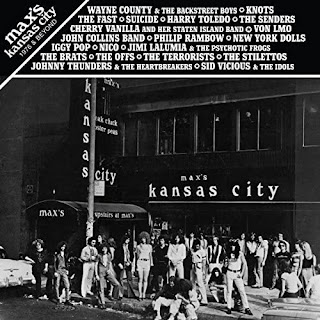
“Boys Will Be Boys” came off of, the Max’s version [Live at Max’s,
Vol. 1]. The rest of it got canned.
Paul: Except, “Wow, Pow, Bash, Crash.” Someday it will be on the “Long Lost
Fast Album”. I have demos that big New York bands did before they got their
deals, like the Ramones, Blondie.
FFanzeen: I’m
surprised; you were so popular, that a major label didn’t sign you.
Paul: We had all the offers also, and we
weren’t going in any good direction. We weren’t really happy with the band. Everybody
liked us but we knew something was wrong with the sound. We made that “It’s
Like Love” and “Kids Just Wanna Dance” single and it just didn’t spin our heads
around; we liked it but we knew we wanted to do something different.
Miki: You just can’t keep it going if there’s clashing in the band. Now, these
members of The Fast [Miki Zone, guitar;
Paul Zone, lead vocals; Louis Brian Bova, bass/vocals; Joe Poliseno, drums], we work together as one, musically and personally; we don’t have any
management problems so everything we’re doing now is coming totally from us,
even negotiating our record contract and putting out our albums; it’s just down
to what The Fast believes – we have nobody telling us what to do. We get
references and help from people, but it comes down to us in the end. If we fail
we don't have anyone to blame but ourselves, and if we succeed it will be all
ours. We’ve seen all our friends make it.
Paul: Experience in the music, too. The different versions of “Kids Just Wanna
Dance” is like day and night, really.
Miki: Sometimes I wish that [first] version didn’t exist, but I wouldn’t be
here now if it didn’t.
Paul: We’re not gonna put it down.
Miki: I’ve changed my style of writing, because being that we played so much
live in the last two and a half years all around America and played in front of
every kind of audience.
Paul: It’s not like New York.
Miki: No, not at all. Everyone dances from the beginning to end of your set. If
they’re not out on the dance floor after two songs, you know you’re not going
to get anywhere.
Paul: Just recently, all that started in New York with Heat and Hurrah and Club
57, but about two-to-three years ago at CBGB or Max’s, no one would ever think
of dancing. But we were playing Philadelphia and Boston, and they had dance
floors right in front of the stage and tables all the way in the back.
Miki: And people don’t look at you when they’re dancing.
Paul: They’ll watch for the first two or three songs and then it looks like a
movie from the ’60s where everyone grabs each other’s arms and runs to the
dance floor.
Miki: At first, I thought it was weird. I thought that they thought we must be
the ugliest band they’ve ever seen, but then you realize that they’re just
going crazy ... New Wave is everywhere now, it’s happening in every city.
Paul: You go do a discotheque in Arizona and you’re gonna hear the B-52s.
FFanzeen: Why
did Armand leave?
Miki: We made an amicable split because he
wanted to do a lot of writing.
Paul: He wanted to have his own band, to sing and write his own songs.
Miki: He’s got his own band now called Ozone. So, it’s cool, you know, spread
the family out.
FFanzeen: Any
more at home?
Paul: Ha-ha, there will be someday.
FFanzeen: What
happened with the Miki Zone Zoo name that you reverted back to The Fast?
Miki: I wanted to put out a 45 under my own
name. It just showed people who was behind The Fast, which I wanted to see
happen. If I called it The Fast featuring Miki Zone, it would have done the
same job.
FFanzeen: What
I think is strange is that you have such a big following and you have had very
little written about you.
Miki: I’m not really worried about what a
critic has to say about my music. It could destroy a lot of people and it has,
I think that if we were to put out an album when we had a lot of prospective
offers, if we didn’t fuck it up management-wise, we would have had a very
credible relationship with the press, and people taking us seriously.
Paul: You can never boil it down to people taking you seriously. The Cramps are
on the cover of Melody Maker every other week. Do people take them seriously? Yeah ... I guess they
do.
Miki: I’m just glad to put out records. We should have had a record out (every)
year from ’77 on, and we didn’t. This is the first Fast record since 1978, and
at the rate we’re progressing, we hope to have something out every three or
four months. In a lot of places we play at, we’re not The Fast from ’76, we’re
just a New York band they’re happy to see and that’s the neat thing about it. A
lot of people heard “Boys Will Be Boys” and know us because of that. A lot of
feedback came to us from Europe. We may go there in September to do a tour with
Jayne County, and the promoters all know us from “Boys Will Be Boys,” and they
said it will be great. A lot of groups got their names known from just one
song. It should be out on an album and it possibly will be. We’ll make the 1980
version of “Boys Will Be Boys.”
FFanzeen: Every
fifth record will be “Boys Will Be Boys.”
Miki: Ha, different ways.
Paul: Electronic.
Miki: Ha, that’s a good idea.
Paul: A cappella, country-western ... reggae.
FFanzeen: Did
you ever think of working with video?
Miki: We did a video for our last single,
“It’s Like Love.” Full-color, animated, it looked like something from “Wonderama.”
It looked like the ultimate cartoon-pop group.
Paul: It’s way before anyone did any sort of comical video – way before Devo or
anyone. If you would see the old Fast one, you’d flip. It never got released,
though.
Miki: We’re going to put it on cassette and have it shown at places like Max’s.
Paul: It will flip people out because it was at the peak of the wildest looking
Fast you could imagine.
Miki: It’s wild. I’m wearing yellow rain-boots up to here, big double neck
guitar, and my hair is green and there were no amplifiers.
Paul: It was done in a large TV studio and each member was on a big block
platform with no microphones, all lip-synched. And there’s acting in it,
cutaways to people riding horses. Donna Destri’s in it. We like to use our
associates. She sings on “Cars Crash,” too. [Note: Video
is at the bottom of the blog – Ed., 2022]
FFanzeen: Since
you’ve been through so many changes, how, if at all, do you think your music
will change in the future?
Miki: Whatever I do in the future I want to
do in this format – guitars, bass, drum and vocals.
Paul: When people listen to “Cars Crash,” they’ll say it’s not us. The tapes we
did with Ric Ocasek are great; he caught whatever we were live and put it down
and polished it up. We didn’t go into the studio for five months to arrange
every little piece.
Miki: He said we sound like the early Stooges if they knew how to play.
Paul: He had a lot of tricks up his sleeve in the studio, but we never got away
from guitar, bass, drums and vocals, so you’ll hear weird sounds – but mostly
done with guitar and bass. We used feedback and backwards playing, too. We did
all the vocals live. He made us set up together like a real band because he was
turned on to us live. He made us do the songs an amazing amount of times just
to get the energy up there and we got a real adrenaline going.
Miki: I think if I produced the stuff Ric produced, I would have made it sound
pop, but I’m glad to have someone look at our sound another way.
Paul: It’s good to have someone who believes in you and not getting paid to
believe in you ... it’s different when someone is coming after you and saying
they really want to do it and they really want to play with you. He was just as
excited as we were and that was really special.
Miki: Want to know our favorite colors?
FFanzeen: No.
Miki: Shoe size?
FFanzeen: Nah,
ha-ha. Where’d you get your tattoos?
Miki: Rick Martin. She did Johnny Blitz’s
skull, she did Helen Wheels. The tattooer of the stars!

The album that
came out was The Fast For Sale, whose name
and cover were reminiscent of the Who’s Sell Out. Most of the record, put out
as a joint venture by Recca Records (Miki’s label) and Sounds Interesting
Records, is just what you’d picture some leather boys to be producing, but
there were some fine moments, like the remake of “Kids Just Wanna Dance” and
“Love Me Like A Locomotive.”
The next year,
1981, they released the album Leather Boys From the
Asphalt Jungle, also put out by
Recca/Sounds Interesting. A couple of notable differences include that the
group were no longer The Fast, but just Fast. They were also down to just Miki
and Paul, with other musicians listed under the category “Special Thanks to” (including
Armand, back for one cut). With the exception of a cover of the Stones’ “Paint
It Black” and Ian North’s “Girls in Gangs,” all the songs were new and by Miki.
The cover had photos taken by Cathy Miller (who was one of FFanzeen’s
photographers). While they are wearing lots of leather and chains, they are
also looking like they stepped out a techno sci-fi experimentation. The next
stage for Miki and Paul was an electronic dance band, Man 2 Man, which had some
international hits.
The end was
the death of both Miki (d. 1986) and Mandy (d. 1993) to AIDS. Paul moved out to
California to start a new life focusing on his amazing photography, putting out
an excellent collection in the book, Playground: Growing Up in the New York Underground, and has released a compilation of their releases on
CD called The Best of the Fast 1976-1984.


.jpg)


.jpg)



 Posts
Posts

