This was originally published in Jersey Beat
fanzine at www.jerseybeat.com, for my Quiet Corner
column at www.jerseybeat.com/quietcorner.html. If you are interested in my reviewing your release, contact me at rbf55@msn.com and I will give you the address to ship off CD, DVD, etc. - RBF, 2011.fu
 WILLIE ALEXANDER AND THE BOOM BOOM BAND
 finally reunited after their seminal (though mostly overlooked) albums of the early ‘80s, and released
Dog Bar Yacht Club (Fisheye Records, c/o williealexander.com) in 2005, but this is the first I’m getting to hear it, so I’m reviewing it now because it deserves mention. Willie is one the founders of the Boston scene in the ‘70s, along with the Modern Lovers and their ilk, producing some powerful pieces along the way, from “Hit Her Wid De Axe” and “Radio Heart” to “Bass Rocks,” to his more mainstream Boom Boom Band releases. The re-gathered BBB shows why they should have been more in the spotlight. This CD rocks out like Willie can when he wants, from the first cut on. His extremely distinctive voice is an indication that one is going to hear something worth listening. There is a mix of styles here, from rock to more esoteric ballads, but it’s all Willie; even when he covers his own material, as he does with “AAWW” (from when he was with the Confessions back in ’82), he makes it his own - again. There may be white on the roof, but there’s still a fire in the vocal chords.

I have found that most times bands with great names (e.g., Phil ‘N the Blanks) are equally bad in sound. Fortunately, the hilariously-named
AMISH ELECTRIC CHAIR take their straight-ahead punk and slam with it on
Straight. No Chaser (ccrecords.com). The Athens, Ohio band sounds pretty damn good in a classic DC-style sense on this 15-minute EP, a prelude to their next full release. It is chock full of buzz saw and fury. My fave of the five cuts in the chant-worthy “Jellico, Tennessee,” but any of these could be picked for solid songs and playing. Worth checking out.

Bjork (and/or the Sugarcubes) is hardly the only chanteuse to come out of the isle of Iceland.
ÓLÖF ARNALDS, of the group Mum, who is more under the radar (so far), is also so much more content and style than the over-the-top Bjork. Ólöf’s CD,
Við Og Við (onelittleindian-us.com/new/artists/olofarnalds/), translated as “We and We,” is full of the simple backing of a guitar or ukulele, and Ólöf’s aerie voice, which is chilling and warm at the same time. Now, I have no idea what she’s singing, as I don’t
comprende her Icelandic
franca lingua, but the mixture of the familiar folkiness mixed with occasional local vocal tricks and trilling make these songs, such as on the title cut, like still water with the ripple running out; smooth and a touch mysterious, but never boring. Without knowledge or context, I found myself smiling. All the cuts are equally charming, so I suggest listening to them all.
 AUDIO-OK
 is an East German group who has been around for a while, although this is their first release. The short
Good Men (info@PussycatKillKill.de) is actually kind of bland. There are some formulaic melodies and rhythms (both standard instruments and electronic), which they more shoot lyrics at the listener, rather than speak or sing them. “Bad News,” the opener as an example, is basically about a dead woman, and how disappointed and annoyed they are that she’s dead. It is sort of reminiscent of rap in tone, though the rhythm is definitely more r’n’r than hip-hop. To me, they’re evocative of the Manchester sound of the late ‘80s, not one of my fave styles.
 MARTY BALIN
 does not get appreciated enough as a driving force for what became the San Francisco sound in the ‘60s. As an original member of Jefferson Airplane and its less progressive Starship, Balin set the ball rollin’ way back. He’s been doing his own thing along the way, and is still kicking, as is seen on this DVD,
Live at the Boston Esplanade: June 14, 2008 (DVD, 150 min; MVDvisual.com). Still in good voice with a wicked guitar, Balin struts his stuff, with the huge audience singing along. Lots of good hits here from throughout his career, such as “Miracles,” and of course the Airplane hits with Boston legend Didi Stewart slickly filling in ably for Grace. And oh, there’s so much more as extras on this. There are three clips from DVD producer Joe Viglione’s cable access show,
Visual Radio, including a 50 minute one-camera interview with Balin from 1995. While there are parts that could have been edited out, it’s still quite interesting as Balin talks about hanging out with Joplin just days before her death as she played him what would be the
Pearl album, for example. Additional shorter clips include interviews with other Airplane experts, including writer Jeff Tamarkin (his book on Jefferson A, the first about the band, is a great read), and with Airplane’s pre-Slick lead singer, Signe Anderson. There are also some other rare live performances thrown in. A keeper.
 KEVIN BARKER
 is the guitarist of the group Vetiver, and now he can add solo artist to his repertoire with
You and Me (myspace.com/kwkbarker). He grew up in the DC punk scene, but one would never know it listening to this collection of slow folkie-‘60s pop style harmonies. He certainly didn’t absorb the punk 1-2-3-4, with the songs here averaging better than 5 minutes each. The beard and long hair definitely reflect his musical buddy and cult icon, Devendra Banhart rather than, say, Henry Garfield. But Barker has a fine sound. His rhythms are similar in a da-dum dom-da-dum way, yet his voice is smooth, working well in harmony with others, like Erick Johnson and especially Lily Chapin in the opener, “Little Picture of You.” Harmony and melody are actually the two words to posit Barker’s work. Barker lives in Brooklyn now; all the better.

Though
PAUL BENOIT is based in Seattle, his light blues tones sound more Midwestern (either north and south, depending on the tune). His fifth solo,
Blue Bird (paulbenoitmusic.com), shows the experience of his 20 years in the biz. His voice has just a touch of gravel and his fingers fly over the blues notes, but this isn’t Son House or B.B. King kind of wailing blues, this is lighter, much more mellow and laid-back, leaning towards blues tinged singer-songwriters like Dave Matthews and Jason Mraz. Now that I’ve put that on the table, let me be clear that I really find Matthews and Mraz dull as dirt, but Paul has a flair that feels intimate and enjoyable, and certainly not as musically vain, pretentious, and “I’m so precious” as the other two. Benoit has a unique voice, both in musical sound and vocal intonation, with a way wide “A,” such as str
aynger, p
ahty, which is interesting. He starts off strong with the title track, which has a melody line in the chorus that is reminiscent of Ray Charles’ “Georgia” (a song which is also a good indication of Benoit’s style). Other good cuts include “Call You Out” and “Leave It As It Lies” (with which he beautifully shares the vocals with Janne Jacobsen). Recorded in El Salvador, there are tinges of the local music that nicely bleed through, like “Plow” and “Sad Melody.” Easy listening that is an easy listen.

The nearly 30-minute
I’m A Man EP (glp.caprimusic.co.uk) by Leeds, UK, group
CAPRI is longer than many full-lengthers, so you’re getting a good deal here. Capri is an amazing funkadelic collective with John McCallum as its voice. Steeped in ‘70s sounds, it’s hardly only waa-waa based (as some funk was back then, and not only to its detriment, but I digress), but solid musicianship. Capri’s cover of Spencer Davis Group’s “I’m a Man” is a good measure of the mood. There are five cuts here, three of which are live and two are remixes of earlier songs. This EP just never lets up, with horns, keyboards, and even some aforementioned guitar waa-waas. McCallum does a great job fronting, and on “Putting it All Together,” guest vocalist (also on GLP) Lara Rose puts the final touch onto a great sound. If you like funk, you’re bound to find this exciting.

Chris Donnelly and Daniel Woodward started
CAPRI in the late ‘90s as a funk instrumental group, and then wisely added John McCallum on vox. As they are a band that sounds at their most exciting in person,
Live at The Wardrobe (glp.caprimusic.co.uk) was a fine choice for a release. I wrote a bit about their style in the review directly above, so I won’t reiterate. This 10-cut, nearly hour long CD never eases up, and just stays a dance party from beginning to end. James Brown may be gone, but Capri shows his legacy is not only alive, it’s funk-
ay. The songs are long, averaging about 5 minutes each, but it passes quickly. What a fun band. Starting off with an instrumental, “Dance of the Minotaur,” the vocals kick in on “Heatstroke,” and keeps going through numbers like “Shake It,” “Afro Collision,” a cover of “You Really Got Me” (do I need to say who did the original, really?), “Barbarella,” and ending with a 9:41 medley of “Chopper Song” / “Drum Solo” / “Saved.” Put this on, play it loud, shut your eyes, and let the clear recording bring you out to the Wardrobe.
 TIM CARROLL
 has come a long way since his days as one of the later Gizmos, out in Bloomington, IN.
All Kinds of Pain (gulcher.gemm.com) is a just a, well, “wow” listen. Even though he has quite a few solo releases, honestly, this is the first one I’ve heard, and it is amazing. With just Tim playing nearly everything except drums (by Marco Giovino), he wisely let it be co-produced by Tom Spaulding… it’s usually a bad idea to do everything without someone else’s input somewhere. I almost want to stop reviewing stuff and play this again and again (and I’ve gone through three times as I write this). Tim covers a bunch of forms here, starting with a shredder, “Soybeans, Cotton and Corn,” and then settles into the contemplative “Can’t Stay Young” (as the chorus continues, “but you can stay cool”), one of the better aging songs I’ve heard since Monty Love stated “Being young is only in your head.” Lots of styles are touched on here, from talking blues of “Educated” to the country “If I Could,” to classic I-IV-V drive of “Run For Love.” Each genre he covers seems natural. The title cut is a slow burner and the heartfelt and beautifully phrased desperation of “If I Could,” the taste of the same vibe of “That’s What I’m For”… Shit, I can’t decide, this album is just so good and so full of amazing music. This has to be in my top picks of 2010.

South Jersey girl
LAURA CHEADLE is fun-
kay; well, her
music certainly is. With a sharp R&B feel, it is positive, be it ballad or uptempo, and highly sensual, with numbers like the opener of
Live On (lauracheadle.com), “Constantly,” “In the AM,” and “Whatever Moves You.” She whacks the listener on the side of the head with the mutha-funkin’ (her term) “Funk is Dead,” which has a wonderful catch that may have you humming well past listening. The prolific musician, with the help of her family of Cheadles, continually seems to produce memorable melodies, fun lyrics, and with Laura’s natural (i.e., not “studio-produced”) voice, you can dance, rock back and forth, or just smile, but you’re going to have a good time. As any reviewer knows, you listen to a CD perhaps a couple of times to get the feel of it, and then it goes on the shelf. Well this one will be joining the likes of Mary Gatchell (now THAT would be a great double bill), Tamara Hey and Angela Easterling on the regular playlist at this abode.

Whether it’s too late or too early for this review of
LAURA CHEADLE and her
A Christmas Album (Jazz Bone; c/o lauracheadle.com), but it’s certainly worth noting, and possibly ordering for the next holiday season. Laura has a really lovely R&B-influenced jazzy vibe going, and it comes across clear and warm in this mix of classics and new tunes. Along with the likes of “Let it Snow,” “Deck the Halls,” and an appropriately sexy “Santa Baby,” she also brings the new and equally vampish “Givin’ You Me for Christmas” and “Let’s Get Together for Christmas.” This collection has sort of a demo feel to it, but in this case it initially words in its favor. Rather than having a compressed sound as most released have these days, this one is so intimate it really seems like Laura and her keyboards are in your living room, singing in your ear. For someone like me who is usually sick of Christmas tunes by early December, this one continues to be listenable.
 MATTHEW CURRAN
 is one of those pain-in-the-ass guitarists who was playing complex songs at the age of 10. Do I sound jealous? Yeah, well I am. At age 19, Curran has released
Simplify (myspace.com/matthewcurran), his first solo effort, which is naturally guitar-fueled, hard-melody-driven late ‘60’s style classic rock that borrows more from Beck-Clapton-Page than, say, Van Halen-Slash. Fortunately, keeping with the title, the songs are more than guitar solo showcases (though they’re definitely there in shorter bursts). Carron’s voice is not as blaring as some of the classic rockers, but I see that as a positive, because it means that he doesn’t need to hide in a show of mere style. His vocals have a mainstream quality, as do the hooklines to these all original tunes. My prediction is that if he makes it to the larger radio audience, he may fill auditoriums and be a rock teen-idol.
 DARK SUNNY LAND
 is the name Boston-based Steve Painter has adapted for his musical exhibition, and
Kon Taan Kor (gulcher.gemm.com) is the release. At first, I had the name of the band/title backwards. Using various objects (including instruments), Painter –- er – paints a soundscape that is not ambient in the classic notation, but it is rather harmonic sounds that contain a notion of melody without being linear about it. It’s sort of like walking in a jungle of sound. Each piece is an average of over seven minutes, which gives the noise enough time to envelop the listener, and to make some semblance of sense. Interesting to put on as a mood background when doing art.
Where Were the Mothers?: An Artist Project by
Linda Duvall (lindaduvall.com) is a complex, yet incredibly impelling work by various artists. She joins together established Canadian musicians with street people and others who have had a rocky life, and each pairing perform a song the musician has co-written (the lyrics are mostly by the people in trouble, and the music is written either jointly with the musician, or by one or the other. The singing talent varies by person, including some with amazing voices, such as Chris and Mashyk (though not only them), and others who you can hear the absolute wear on their bodies through a life filled with drugs, gang affiliations, prison, prostitution, and the like. The styles range from rap to hard rock, from folk to traditional First Nations (Native Americans). The central theme is obviously geared towards the mothers of these singers, ranging from “how could you treat me like that” to “please forgive me for my disrespect.” However, they are all touching. This is a magnificent project, and if you look up Linda’s Web site you can see/hear clips from some of these cuts, but I recommend finding out how to obtain this disk, which also comes with a DVD on how the project progressed.

Hailing from Leeds, UK, the
EAST PARK REGGAE COLLECTIVE sing of love and war (either anti-, or about the social one to come) on
The Frontline (glp.caprimusic.co.uk). This group is comprised of non-Jamaicans and takes a number of different riddems, and make some really decent music. The accents are a bit questionable, but even so, Anna Stott, the lead singer of this mixed gender
minyan, actually has quite the pipes, and is a joy to hear. With her put-on accent, it’s occasionally hard to make out what she’s saying, but her voice will still keep the listener attentive. Whether singing about the “Wicked Ones” who rule, complaining about another “Woman,” or the war in “Bomber Jacket,” she keeps the flow smooth.

The press release for
JOE FIRSTMAN is wordy, but seems to struggle on a description: “The songs aren’t country, but they are songs that somehow take you to the country.” Why not just say Americana, which is a fitting genre, if one must use genre terms. On his fifth release (including two early ones on Atlantic),
El Porto (joefirstman.com), Firstman drops his first since leaving as bandmaster on the Carson Daley Show (I’ve never watched it). Right from the first cut, “Marlene and Her Sisters,” Firstman sets up his pastiche, looking at lives in a smaller (southern? He originates from North Carolina, though now a LA resident) town. Usually in first person, he points out people, like “Mr. Wilson” and “The Candle Maker,” and opens their existence to us, usually in relation to the song’s protagonist. I don’t know if these are real people or imaginary, but Firstman makes them pretty human in the short span of the song. There are some strong country influences, but the PR is right, it’s not country but rather a blend into Americana. I haven’t heard Firstman’s previous works, but this one is just dandy.
 THE FISH EYE BROTHERS
 is Willie Alexander and Jim Doherty, with able backing musicians, and their collective is represented with
When the Swan was on the Boulevard (Fisheye Records, c/o williealexander.com). If you don’t know, Willie was the replacement for Lou Reed when he left the Velvets, and he toured Europe with them. The reason I bring this up now is because this release shows Willie’s more esoteric, experimental side that made him such a good fit with the VU. The music here is out there, with jazz riffs, non-syntactic melodies, and dreamy lyrics that are sometimes just repeated over and over (as in “Rhubarb Pie”). Some of the outstanding pieces here include “Me and My Doppelganger,” “Cruisin’ Boise,” “Barbara Reid,” and the opener, “My 34.” If you like unconventional music, or just can’t get enough of Willie, I believe you found what you were looking for in this.
 FOX PASS
 are old-school Boston rock’n’roll. The band, who originate from the pre-punk period of the mid-‘70s, still releases music that is enjoyable, such as with their latest,
Intemporel (Actuality Records, c/o foxpassmusic.com). This is a full 72 minute CD, which, as they state, is “designed to be enjoyed as a 4-sided double album.” Whether vocalist/guitarist Jon Macey is writing with Michael J. Roy (back-up vocals and guitar), or with fellow bandmate Steve Gillian in their side project (Macey & Gilligan), the man can write a catchy song. And on this CD, there are 17 of them. It’s so hard to pick faves here, because they all have that Macey jinglesque pop that sticks in your head after the song plays, only to be replaced by the next song on the disk. Anyone from that period of Boston knows that Fox Pass is a band to enjoy both live and captured. And just think, a four-sided album for the price of one disk.

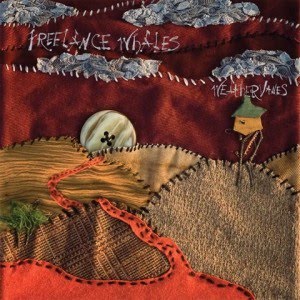
Imagine, if you may, the illegitimate offspring mind-frame of New England’s pop-folksters the Mammals and the Velvet Underground (think “Sunday Morning”). Well, if your brain hasn’t exploded, I’ll explain.
FREELANCE WHALES, a New York based quintet, takes the harmonies and slightly off-kilter quirky harmonious sounds of the former, and mixes them up with non-standard instrumentalization and dissonance of the latter. On
Weathervanes (frenchkissrecords.com), there is a harmonium, glockenspiel, synthesizers, guitars, banjo, and cello. I wouldn’t necessarily call it electronica as much as liquid synthetic. Occasionally they even borrow strongly from Dream Academy’s “Life in a Northern Town.” No matter what they’re singing about, it feels happy and peppy. And the synthesized parts are handled well, I’m grateful to say.

Montreal singer-songwriter
WILLIAM FUNK releases his first collection,
The Veronica Sessions (timelineaudio.com), after recording most of the material in Puerto Rico. There is a definite Latino “air” to this, especially the opener, “Beautiful Martes” (which strangely has an opening that sounds very close to the second song, “Won Day Ave”). Funk has a good voice, with unique peccadilloes that add to the sound. There are some strong cuts here, like “Castles & Prison Cells,” “Eyes of a Crescent Moon,” and “Mystics,” which has a decidedly East Indian and Arabic flair, adding to the feel. Funk has a good sense of song structure and melody, with catchy pop folk pastiches. “If You Can Feel Me Inside (Veronica’s Song-2)” is especially effective, with a children’s chorus that works so well with this tune. These songs are produced by fellow Montréaler and three time Juno nominee, Joe Barrucco; however, that is where my contention of this album lay. There is just too much studio muddling, with many self-vocal overdubs, reverb thrown in at the end of stanzas, and in “My Other You (All My Life”), one whole set of voices using an auto-tune in that electronic bullshit that T-Pain and Jamie Foxx use, which I absolutely detest. Then again, Barrucco is known for house music and dance beats, so is this really a surprise? I understand Funk is grateful to have someone with such a big name in the industry take him under his wing, but I would prefer to see him live, without all the gizmogology that weighs this coulda-been-amazing CD down.
 BRETT GLEASON
’s first release,
The Dissonance (brettgleason.com), states he’s a cross between Nine Inch Nails and Tori Amos, in a “unique fusion of alternative rock electronica.” Hmmm, comparing him to two highly artsy-fartsy / pretentious artists; however, Brett uses the dissonant chord noises and keyboards as much as a weapon and a symbol of what he is saying. His playing if full of striking chords in a choppy – or chopping – motion, cutting at and through his material. But I’m getting ahead of myself. The songs, at first glance, are full of ideas of “control” and suppression, but much in the way Lisa Loeb does, he uses that claustrophobia and harsh life moments to persevere (such as “I’m Not Afraid,” or as in “The Worst Part”: “All the broken attempts / to control their mess / Are proven futile / By your absence”). The lyrics are
poetic, but accessible. The perpetrator through each piece is simply referred to as “he,” but there is always a reaching for self-redemption, as in “The Escape.” Even in the closer, “Idealize the Dead,” Gleason fights “to be alive inside / It means to never hide.” Yeah, there’s manipulation of sounds and vocals, but he uses them wisely to promote the message rather than drown it. This is certainly a dark release, but with a light somewhere in view. Oh, and there’s a “hidden” sixth track, for those who follow these things.

Through a home studio,
JEN GLOECKNER takes musicians with the likes of guitar (acoustic and electric), drums, cello, violin (masterly handled by Joel Zifkin), mandolin and keyboards, and she managed to make a lot of noise on her sophomore release,
Mouth of Mars (Spinning Head, c/o myspace.com/jengloeckner). With a flinty voice and a minimalist sense of lyrics, she weaves discordance and dissonance into tunes that stand out. “Die” has a memorable chorus, while “Sleep to Dream” is a work of otherworldliness. Influenced, seemingly by the likes of Captain Beefheart, or the Velvet Underground’s mix of sweet melodies over sometimes subtle noises that are at other times cacophonous; unlike the VU, however, this is more jazz-folk than avant-garde rock. All the songs have the seeds of intrigue and are imaginative. “Let’s Get Honest” is a short piece that sounds like a spiritual put through a spin cycle (I’m not even sure what that means, but it feels right). “Peace Among the Chaos” has a sound reminiscent of the ‘60s chanteuses like Sandi Shaw and Françoise Hardy. It’s an interesting collection that is bound to be listened to more than once, to get all of the nuances.

I truly hope
ADAM GREEN made a fortune off them using his Moldy Peaches (with Kimya Dawson) song in the film
Juno. That being said, this is the second CD I’ve heard of his as a solo… C’mon, really? This guy is an indie darling? I tried to like his latest,
Minor Love (fatpossum.com), but it just comes across as insipid. I mean, Jonathan Richman and the Modern Lovers covered this kind of material 30 years ago, and so much better. Over slight lo-fi tracks which use a lot of sampling, Green sings unimaginative melodies filled with ditties that work with his voice, but this is so rinky-dink. I do believe he’s trying to be edgy, but no, he’s not achieving it. The press release says this is “a more serious side of this prolific, truly original New York artist.” First of all, this is the
serious side? I can tell he’s trying with numbers like “Boss Inside,” but it’s about as deep as a plastic children’s pool. I mean, at least two songs use the word flatulence. Second, “prolific” usually means that no one is editing out the chafe. Third, “original?” Naw, Kimya does this better as a solo than Green. I’m glad that the songs average about 2 minutes, so the 14 songs last about 30 minutes.

John Ringhofer goes by the
nom de tune HALF-HANDED CLOUD, and
Cut Me Down & Count My Rings (asthmatickitty.com) is his fifth full length release, this one being a collection of his material that was added to comps, cassettes, fanzine disks, and the like. All 78 minutes here are covered in 46 songs. Ringhofer, who plays just about everything on everything, from brass to strings including percussion and electronica, is in that style that many refer to as “twee,” such as Kimya Dawson and Adam Green. His niche, though, is spirituality, mostly in a religious/Christian bent. His high-pitched voice is pleasant in a casual pop-folk way, and he has a way with a melody, but he consistently burden’s his pieces with all this musically squiggly dissonant noises that one is apt to view as either cutesy or annoying. I’m of the latter. I may enjoy his work more solo with a guitar, but here it’s kind of grating. I can certainly understand his appeal as he is idiosyncratic in a They Might Be Giants vein, but by the end of this looooong CD of very short songs, I was grateful for its completion. Note I felt this way about Adam Green as well, though I do have a bit more tolerance for Kimya, but only somewhat.
 KEVIN HUELBIG, JR.
 is total DIY. His CD,
Snowstorm (Monotonetapes.com), comes with a hand cut-and-paste cover sheet. This lo-fi recording sounds like a living room (or basement) tape, which it is, “recorded at home sporadically between April ’07 and June ’09.” With influences including (in his own statement) Lou Barlow, the Beach Boys, Guided by Voices and My Bloody Valentine, Kevin pushes the lo-fi to the extreme, which includes rough overdubs, fine if noisy notes, and some decent harmonies actually (must be the “Beach Boys” part). There’s a bit of distortion, as if it were recorded a bit too much in the red, but that’s part of the whole lo-fi DYI credo, it seems. Be interesting to hear Kevin live. If you’re into this genre, and I know you’re out there, this is right up there. Particularly effective are “Are They Coming Home?” and the closer, “Nothing Gets Me Down,” with nice shared vocals by Emily August.

Both
JOE HURLEY and
COLUM McCAIN are credited with the EP-length
The House That Horse Built (Let the Great World Spin) (RoguesMarch.com). The text is based on/taken from a part of McCain’s novel, “Let the Great World Spin,” about the life of an older prostitute. Hurley does a sort of non-gravely (yet similar shady phrasing) Tom Waits turn is this compelling work, which mixes a jazz/blues vibe. My only complaint is its length, being at less than 13 minutes, because I wanted to hear more. Hurley’s adaptation of McCain’s words into another beautiful piece of work is quite beautiful in its own right.

From the title of
PATRICK KAVANEY AND THE LAST DRAGS’s
Darning Socks for the Apocalypse (workingstiffrecords.com), one may think we’re talking punk, but no, PK&TLD is a mix of country and Americana, with some rock’n’roll thrown in. But one thing is when they are witty, they spare no expense, with songs like “Spanish Nightmare,” “Delusion & Grandeur” (as in being on the corner of), “Looking Forward Back,” and “Ego Bandito.” Yet even with the puns, the songs are strong and tend toward the ballad, but stay pretty strong. Kavaney’s voice is well suited for this material, and what also makes this record is its basis of strings: guitars, lap guitar, slide guitar, and bass flow through, with a real good rhythm holding it up. There’s even a bit of Tex-Mex thrown in with “Waking Song.” They may be from Oregon, but they have that more southern sound down. Not as harsh as, say, southern rock, or as bland as modern country; rather they’re somewhere in-between, with a rich, full sound.

Residing currently in Berlin, Scotsman
JIM KROFT balances the sounds of his two homes within his debut,
Between The Devil and The Deep Blue Sea (myspace.com/jimkroft). There is sturm & drang mixed with British ‘80s-‘90s style wall of sound; think Pet Shop Boys without the annoying synth beat. There is definitely a Beatleseque feel to some of his material (i.e., McCartney) in tunes like “Tales of the Dark Side.” Jim likes to belt it out, which is fortunate because he needs to be heard over the production, but fortunately he is capable. Happily, Kroft also apparently knows his way around a melody. The songs are smart (for example, “One Sees the Sun” is based on meeting “The Outsider” author Colin Wilson), dealing with alienation and feeling out of place (hence the s&d). While this is heavily produced, it does not necessarily fall into the 10 Ten blandness, though it could easily cross over between pop and the charts. It would be interesting to hear him toned down, playing live with just guitar (yeah, I say that a lot).
 HOLLY MIRANDA
 has apparently left Jealous Girlfriend to go solo with
The Musician’s Private Library (hollymiranda.com). There are a lot of somnambulistic related analogies here, such as “Sweet Dreams,” “Everytime I Go to Sleep,” and “Sleep on Fire” (and I would include the opener, “Forest Green Oh Green Forest”), which is not surprising considering Miranda’s sound. Highly processed through double overdub, echo, reverb, etc., it’s a lush soundscape where the lyrics occasionally suffer (i.e., hard to make out), but her aerie and haunting vocals hover above all the luxuriant sounds and music that come through the speaker, piled high in the studio. How does she do all this live, I wonder (she recently toured with Tegan and Sara, FYI)? There is also a blunted electronica sound that usually works here, despite its rinky-dink plunking. It’s a charming collection, for sure, despite going close to the edge of where my interests stop.
 THE OGeeZ
 informed me that although their full release is
The Seven Deadly Sins (TheOGeeZ.com), “we have no religious agenda with our message. Our message is meant to be thought-provoking, but whimsical.” The OGeeZ, at their best, are a funk outfit (founded on the classic rock duo of Lew Witter/vox and Steve Gerick/music) based in SF. Except for the two or three verses here and there where they break into rap for a couple of stanzas, they’re a good listen. Obviously, there is a theme here, the better ones being lust (“Is This Lust or Is This Love?”) and the relationship discord of pride (“Pride Gets in My Way). Most of the other cuts range from R&B to further funk, and then there is the Latino-beat themed sloth (“There’s Always Manana”). As they say, “we have chosen a more contemporary approach to our music poetry in which we want our music to complement and enhance our storytelling.” I don’t know how well this will go over with the under-30 crowd, but I found it effective.

Early on, after playing with Johnny Thunders in the Harlows during the pre-Dolls, Lou Harlow transformed into guitar metal maven,
LOU RONE. He nearly became the next guitarist for the Yardbirds as they fell apart, so he came back to NYC, playing in a bunch of bands, such as Kongress (who I saw play the Eglin Theater’s opening night), Von Lmo, and the heavy Triple Cross. Still going strong,
Guitar Slinger (gulcher.gemm.com), his latest guitar instrumental opus, shows his growth. The man can play whatever he wants, Jimi-style, just wailing on the six-string. With backing tracks, Rone stretches the instrument into rapid fire metal, such as in “Mallet Face,” to ambient noise with “Come Roberta, Come,” and the bluesy “Tired Lady Blues.” Each piece is a metal world all its own, so if you’re into guitar solos, well, this will be heaven for ya. A solid hour of wail. With the exception of a cover of the Chantel’s “Maybe,” these originals prove Rone has a mastery of his guitar domain, and he’s willing to bend the instrument’s will to his own.

The first recording (though not first released) by
SPANKY AND OUR GANG was their live one. Now, 35 years after their dissolve, S&OG have dropped the also live
Back Home Americana, Vol. 1 (eclipserecording.com), recorded at both the Tradewinds in St. Augustine, Florida, and at a house concert. Thanks to legendary engineer Dinky Dawson, the sound is seemless. As with that first one, many of the songs here are blues and jazz based, like the hand-clappin’ “Make Me a Pallet on the Floor” (John Hurt), “Wild Women Don’t Get the Blues” (Ida Cox), and the traditional “Stewball.” There are a couple of gospelers, like the classic folkie cover “Sinnerman” and Eric Bibb’s “Don’t Let Nobody Get Your Spirit Down.” There is also some of the California sound that S&OG were famous for (though they’re from F-L-A), with “Everybody’s Talkin’” and, of course, the Mama’s and the Papa’s “California Dreamin’.” While many of the original members have been updated, especially notable is Jim Carrick, who does quite a few vocals here, but original member Nigel Pickering, 80 at the time of this recording, comes up to sing Willie Nelson’s “Ain’t It Funny How Time Slips Away,” his distinctive voice a bit ragged, but still in relatively fine form, humor definitely intact (his “Distance,” on one of those early LPs, remains a fave S&OG track). And what of Spanky McFarlane? She’s still fronting the group, but her voice has certainly changed; it is much deeper with a stronger vibrato, and to be honest, I don’t think I would have recognized it if I hadn’t known it was hers. For example, on their first and eponymous LP, she powered through a very moving version of the Depression classic, “Brother Can You Spare a Dime?” Redone here, it’s touching because her vocals are strained and cracks. Don’t get me wrong, I love S&OG, even through their country phase, but perhaps rather than a live recording, a studio release may have been wiser? That being said, I’m STILL glad Spanky’s back, and look forward to hearing some material that’s better suited for her voice now, like the more jazzy and blues pieces, such as “Wild Women.” I still love ya, Spanky!

The core trio (and a few high-power Memphis-based step-ins) of
STAR AND MICEY (starandmicey.com) cover a bunch of styles, from Motown-inspired (“My Beginning”) to blues (“So Much Pain”), gentle R&B pop (“Late Night”), alt pop (“She’s on Fire”), to alt rock’n’roll. Though there isn’t really a bad song here, vocalist Joshua Cosby starts off strong with my fave cut on the release, “Salvation Army Clothes,” a solid rock blueser that alone is worth seeking them out (of course, in Canada, it would have been called “Sally Ann Clothes, but I digress…). Nick Redmond and Geoff Smith’s solidify the sound into a firm yet fluid unit. I also appreciate that they adapt the genres to their own, rather than trying to “Pat Boone” them, which is noted.
 PHILIP STEVENSON
 has been in quite a few groups, most notably Carnival of Souls and Quinine. Now he has released his second solo effort,
Starless (nightworldrecords.com). The music is an interesting swirl of sounds with a rhythm and purpose, and hardly what one would call formulaic. It’s a brave effort and works well. That being said, this is also a frustrating work, which indirectly has nothing to do with Stevenson himself. His voice is soft, and often whispery, but it is so far back in the mix and distorted by echo, I usually have no idea what the fuck he’s saying. If you’re going to sing in a sotto voce, at least put it up front. For example, “Weak Boys” builds stronger and louder, but the vocals don’t follow suit, so it just becomes noise. This may as well have been an instrumental release. This seems totally unfair to both Stevenson, and especially the listener. There is a bit of the Byrds’ “Eight Miles High” kind of clatter. When he is allowed to be more present in the tune, like the ballad “Don’t Go Now,” he has a Dylanesque tone to his voice, while “Don’t Go Now” has sort of a early solo Lennon; and it is more enjoyable to be able to hear his thoughts. “Where I Don’t Belong” has a latter Beatles / George Harrison feel to the vox, even weighed down by an over-applied echo, as does “I’m a Boy,” which sounds like a prequel to Spencer Davis Band’s “I’m a Man.” A good effort, and I would like to see a bit more of Stevenson’s presence in his own recording.

First a brief history lesson:
DICK WAGNER is a songwriter and guitarist whose work has appeared on over 150 albums, including mainstreamers Aerosmith, KISS, and Lou Reed; he was the musical director and tunesmith for Alice Cooper during Coop’s glory years, and has collected 14 platinum records, 16 gold, 5 silver, and numerous songwriter awards. Never heard of him? That’s part of the problem of supporting so many others.
Full Meltdown (desertdreamsllc.com) collects some of his solo work in a single 70+ minute disc, most recorded between 1979 and 1995. Needless to say, the genre is guitar-fronted rock. Wagner really does deserve the recognition, and this collection is the proof. Sure, on some cuts he is reminiscent of styles from hair metal to Bon Jovi, and straight through the rock canon, but can anyone consider someone as “formulaic” when they are one of the architects of the mold? Wagner’s vocals are solid, and the guitarwork is unsurprisingly flaring and razor sharp. While the production occasionally has that ‘80s hollow bottom sound and gloss that was industry standard for a number of years, his songs rise well above. He has a Meat Loaf (with whom he’s also worked) melodic wall-of-sound that works to his benefit. Lots of great cuts, such as “Motor City Showdown” (he is a Detroit native), and the lengthy ballad “I Might As Well Be on Mars.” If you rocked in the ‘70s and ‘80s, this surely will not let you down.

Produced by
BEN WINSHIP and
DAVID THOMPSON,
Fishing Music II (Snake River, c/o fishingmusic.com) shows that one album of songs about life and fishin’ just ain’t enough. And I say that in the least snarky way. No, I’m not into fishing, and I didn’t even hear the first volume, but this Appalachian banjo Americana and ‘40s jazz style release recorded in Idaho can be easily taken on its own merits. Joining Winship and Thompson is a plethora of musicians and vocalists, including Tim and Mollie O’Brien. Sometimes, here, fish and fishing are used as metaphor, such as the opener “Little Miss Cutthroat,” which does for women/fish what Chuck Berry did for women/cars, or “I Caught a Keeper.” There are instrumentals that reflect the specs of water caused by “dancing” fish and others that sound like fish gliding through the water (“Lost River” and “The Winding Stream,” respectively), and there’s even some comedy in “Gone Fishin’” as a couple engage in playful banter of accusing each other of skipping chores for, well, aren’t you following this? There’s also a couple of really moving, well done pieces, like “Old Bamboo” (one of my faves), and even some traditional numbers like “Everybody’s Fishin’” (this arrangement sounds like it could have been done by the Andrews Sisters), and a moving version of the spiritual, “Wade in the Water.” I still may not want to go fishing, myself, but I’m starting to get a hankering for some salmon, just for the halibut.

In the press release, frontman of
WAKEY! WAKEY! Michael Grubbs invokes Billy Joel, Elton John and Led Zeppelin. Well, I decided to listen to their second release,
Almost Everything I Wish I Said the Last Time I Saw You… (thefamilyrecords.com), anyway. If Grubbs’ name sounds familiar, it seems he was (is?) a semi-regular on “One Tree Hill,” as the bartender named – er – Grubbs. Still, I decided to listen to this anyway. I received a promo copy of this CD that didn’t even have a song list; couldn’t even find it on the Web. So, I contacted their publicity people to request they send it. Meanwhile, I listened to it anyway. Fortunately, it was quite enjoyable. Once I got the list, I listened to it again. The alt-pop sound reminds me a bit of My Chemical Romance and the aforementioned Billy Joel, both of whom I find dreadfully tiresome, but on most of these songs, WW rises above that and usually remains interesting. Starting off really strong with “Almost Everything” and “The Oh Song,” the piano-fueled sound (where the Joel and John mention come in) is rife full of catchy melodies, usually using the higher range keys on the keyboard to keep the sound light, and with Grubbs’ vocals and mildly mannered intonation, they work well together. There are a couple of weak spots here and there, such as the too musically cutesy “Square Peg Round Hole” and “Feral Love,” but overall this is pretty solid. The bonus cut #11, “Take It Like a Man,” is also noteworthy and deserves a listen.
 Kimm Rogers
Where the Pavement Grows
Kimm Rogers
Where the Pavement Grows Laura Cheadle
Where the Blues Hangs Out
Laura Cheadle
Where the Blues Hangs Out




 Posts
Posts

