Wednesday, April 5, 2023

A Lot O’ BLOTTO (1981)

© Robert Barry Francos / FFanzeen, 1981/2023
Images from the Internet unless indicated

My pal Dennis Concepcion, who turned me onto Blotto, came with me when I went to interview the group at a club on Long Island. Backstage was a weird mix of calm stillness and pandemonium. Their comments on past members is a bit harsh, in my opinion, but the band played on, and they were pretty much self-deprecating anyway, so I took that as the band’s “personality.” After the interview was over, but before they went onstage to play, two members whipped out a chess board and were deeply into it. On the other hand, being a smart ass, I mentioned to Cheese Blotto (d. 1999) that perhaps he should shave his head as he was noticeably balding. Not only did he do it right then and there with one of those tiny travel razors, Dennis documented it with photographic evidence. The pictures are included in the original article, and as far as I know, Cheese remains curds-less.

This interview was published in FFanzeen, No. 8, dated 1981. – RBF, 2023

Rear: Bowtie, Lee Harvey, Sarge
Front: Broadway, Cheese

A Lot O’ Blotto

Rock’n’roll. Blitz. New Romanticism. Punk. Psychedelic Revival. New Wave. Cabaret’n’roll?!


There appears to be a new trend in rock’n’roll which refused to take itself seriously a-toll. Out on the West Coast, there is a group called the Toons, who sing of “Roast Chicken Faces”; in New York City, there’s Junk Rock, who explain the virtues of being a “Sanitation Man.”; and from Albany, NY, there is the more popular leader of this movement, named Blotto.


Blotto came into prominence two years ago with the hit, “I Wanna Be a Lifeguard” [which still airs on the radio and weather reports every summer to this day – RBF, 2023], which was played ad nauseam in, in seemed, every club (though the outer boroughs still cheer when it comes up). That cut was off a four-song 12” EP which sold quite well for an independent label, titled Hello! My Name is Blotto, What’s Yours? At that time, the lineup was Broadway Blotto (Bill Polchinski; vocals/guitar), Bowtie Blotto (Paul Jossman; vocals/guitar), Blanche Blotto (Helena Binder; keyboards/vocals), Sergeant Blotto (Greg Haymes, d. 2019; vocals/percussion), Cheese Blotto (Keith Stephenson; bass), and Lee Harvey Blotto (Paul Rapp; drums).


The next year (that is, the last from now), a new EP hit the stands, sans Blanche, with Chevrolet Blotto taking over the keyboards, titled Across and Down. Although none of the songs reached the cult status of “Lifeguard,” the four songs on it were consistently good in their own, bizarre ways.


Now the present, and the release of a new record, this time a 7” 45.


There have been quite a few people who have been onto me because I think these guys are okay. Well, hell, they like what they’re doing: acting a bit irreverent and making damn asses of themselves. Sure, it’s not mainstream rock’n’roll-whatever, but the point is that they are not trying to claim they are. Nothing pretentious here, just a lot of fun.


What amazed me was the fact that they use their stage names all the time, even among themselves. Very weird.


As a rule, they are nice guys, but a bitch to interview. It was nearly impossible to get a straight answer from them. In fact, what follows, is all that was coherent of a ninety-minute interview.


Broadway Blotto: Our new single will be out soon. “When the Second Feature Starts” is on the A-side, and on the B-side is a song called “The B-side.”


FFanzeen: How original!
Broadway: Somebody had to do it!
Sergeant Blotto (Sarge): We figured it was better than running the same song backwards. Like Napoleon XIV [“They’re Coming to Take Me Away Ha-Ha” – Ed, 1981].


FFanzeen: Why a single instead of the usual EP?
Broadway: Why not?! It’s cheaper.
Sarge: Now we can play them in jukeboxes at diners, by the eclairs on the counters. Also, with a song like “B-Side,” you can’t put that on the back of an EP.
Broadway: And also, after we put out our last EP, we said, “We’re not putting out any more EPs. It’s either albums or a single.”


FFanzeen: Why not an album?
Lee Harvey Blotto: We wanted to do a single.
Broadway: You can’t put an album on a jukebox either.


FFanzeen: They used to have a shorter album on the jukebox. They were called EPs. [All laugh]
Lee Harvey: One’s like Frankie Valli.
Broadway: I like Frankie Valli. He’s my favorite.
Sarge: He was okay.
Lee Harvey: Was? Isn’t he still alive?


FFanzeen: That’s debatable. [That was meant career-wise; as of this writing, FV is still alive – RBF, 2023].
Sarge: I don’t know – check the list behind you. [Written on the wall of the club where the interview is taking place is a list of dead rock’n’rollers – Ed., 1981]
Broadway: You mean, “All the people who died, died?”
Sarge: Yeah. “All my friends, they died, died.”
Lee Harvey: Or the sequel, “People who lived.”
Broadway: We were going to put out a song, “People who Dine, Dine.”
Lee Harvey: Did you hear about that band playing, the Dead Lennon?


FFanzeen: Yeah, from Boston.
Lee Harvey: Well, they used to be on Lawrence Welk, didn’t they?
Broadway: Yes, until they died. Arrrggghhh.
Sarge: Then they decomposed.


FFanzeen: Did you ever notice that the music for the chorus of “People Who Died” is identical with “Red Hot”?
Broadway: Yeah [sings “Red Hot”:]. “My gal has died, died” [laughs]. Have you seen the video tape from “I Wanna Be a Lifeguard”? It was filmed at various shoe stores and lakes in Upstate New York.


FFanzeen: The song came out two years ago. Isn’t it a bit late now?
Broadway: Hey, we’re timely guys.
Lee Harvey: It’s kind of a statement because, like, Albany is two years behind everything and we were just noting the other day that Legs Diamond, the gangster, was shot in Albany two or three years after all the gangland slayings in Chicago and New York had taken place. People had already forgotten it and went on to new things, like baseball and other pastimes. So, that’s why our video tape is two years late. Plus, the fact that some guys came up and said, “Hey, we want to do a video tape of you guys and it won’t cost you anything,” and we said, “Well, now you’re talking.”
Sarge: You see, we don’t like to spend our money on video tapes and things like that. Every once in a while, we like to spend it on foolish little things – like food.
Broadway: Luxury items like that. So, is it true that all the street signs in New York (City) are color coordinated? My cousin told me that. In Queens, its white on blue, the Bronx, is blue on yellow, Manhattan’s black on yellow, Staten Island is black and blue –


[At this point, the discussion went on a long tangent on how the band found out about Lennon being shot while on their way to tape an “Uncle Floyd Show” and had to act zany. From there, it went to the imagined shooting of Queen Elizabeth and the shooting of the Pope, and two tourists from Buffalo, NY, where we pick it up.]


Broadway: It was on the tour plan: “Would you like the $1000 tour to Rome and you get to see all the monuments, etc., or would you like the $500 tour where you just see Rome from the bus, or would you like the $25 tour, where you get to see everything, but you have to get shot.”
Lee Harvey: “Well, let’s see – if I save up enough money in Buffalo doing piecework separating weenies from chickens –“


FFanzeen: Tours in the future?
Sarge: On August 24, we’re play the Garden –
Broadway: That’s planting the garden!

FFanzeen: Whatever happened to Blanche Blotto?
Broadway: What’s become of who?
Sarge: That’s old news. Why don’t you ask us what’s become of Chevy (Blotto)?

FFanzeen: Okay, what’s become of Chevy?
Sarge: Well, it’s all pretty strange. Two weeks ago, he dropped out to join the sink-hole worship cult down in Florida, and he’s living in a tent just outside that sink-hole.
Broadway: He’s a Chevrolet that wants to be at one with the Porches. Actually, his warranty ran out. We heard from [Ralph] Nader’s people and we had to recall him from the group.

FFanzeen: Who is replacing him?
Broadway: No one could replace Chevrolet Blotto.
Sarge: Now, we’re just the Blotto Quartet.
Broadway: Actually, Sarge is filling in on keyboard stuff, Lee Harvey is picking up the slack on the vocals, and business as usual.

FFanzeen: Why “Blotto”?
Broadway: Why notto? Well, if you play crossword puzzles – which I don’t – you find the words include “spiflicated” [not in my edition of Websters – Ed., 1981], six letters, beginning with “B,” fifth letter “T,” ending with “O” – with a “LOT” in the middle!


Friday, March 10, 2023

Documentary Review: Pieces of Us

Text © Robert Barry Francos / FFanzeen, 2023
Images from the Internet

Pieces of Us
Directed by Cheryl Allison
Wow Films; EEC! Productions; Blue Door Films II; Freestyle Digital Media
92 minutes, 2021 /2023
www.piecesofusthefilm.com/

www.facebook.com/PiecesofUsDocumentary

Originally, I was going to say something about how this is a challenging time to be openly gay, what with the rise of Republican autocratic Christianity, and while that is definitely true, I cannot think of a time after, say, the Stonewall Riots of 1969, where is has been safe to be LGBTQetc. Sure, the arrests have gone down (for now) and there is more of a presence on media, but uncalled for and unnecessary violence towards the community continues, if not recently increasing due to hateful pundit right-wing talking points.

I have to admit, growing up in Bensonhurst, Brooklyn, I had my own biases for most of my early life because I did not know better, but through education and working at a Baskin-Robbins a block away from the Stonewall, I quickly became a proud ally, and have marched in a number of Pride events. That’s me; but it is time to discuss this documentary.

While LGBTQetc. violence is a social problem, it most effects those who has had direct contact with this force. It is the post-violence that is the focus of this film, telling the story of five particular people. What is important to acknowledge is that though these subjects have had horrendous things done to them, it is not these actions that are the main focus, in a woe-in-me fashion, but is rather centered on coming through on the other side, with love and support around them. Despite the pain, this is a positive project.

JP Masterson aka Jipster

The film starts in earnest when we meet Jipster (JP Masterson), a white rapper who works as a middle school psychologist in Brooklyn; he was beaten in a New York subway station - West 4th Street, of all places, the heart of the city’s gay community – for holding hands with Peter, his partner. Interestingly, we see the local television news story about the incident to launch the topic. Masterson is an engaging talker (as a rapper, one would hope). We get to meet his school’s principal, Dakota Keyes, and even some students, who fully support him.

Mykel's flag dance

Flag dance performance artist Mykel picked someone up and brought him home, where he was attacked and beaten. Back in the mid-1980s, I worked with a man named Glen who had a great sarcastic sense of humor, who was murdered by someone he brought home, so I can empathize with the event. While being afraid of reporting this incident to the NYPD, he reaches out to Beverly Tillery, who is the Executive Director of the New York Anti-Violence Project (AVP). She is also interviewed, giving a lifeline for those who may need her services. The person who counseled Mykel was transgender icon, Victoria Cruz.

Victoria Cruz, Mykel

Victoria was at the Stonewall riots in 1969 (as was musician Jayne County), becoming a crisis counselor at AVP, literally saving lives with her generosity of spirit (e.g., to paraphrase, “Don’t say ‘victim,’ say ‘survivor’”). Dressed in Native American paraphernalia, she meets with Mykel at a Brooklyn beach and they talk. I am not ashamed to say I was teary at one point.

Leia

Thus, the viewer is introduced to Leia. She is a single mother from Denver, whose 9-year-old son, Jamel, committed suicide after being bullied. In my opinion, this is being fostered by right-leaning hate speech that is flooding the media. To me, outlets like FoxNews is as much to blame as his classmates that bullied him until he could not take it anymore. This is the desired future of the Republican party, while they hypocritically scream “save the children.”

Leia was counseled by members of local and national organization PFLAG, here represented by Bianca and Brett, who explain their services. It is really smart filmmaking to not only show the problems that the people who were attacked went through, and their journeys back to their lives, but also to focus on the organizations that are there to support people in those situations. I respect that a lot. Another example, which is focused on here is the first Straight-Gay Alliance advocacy group, The Swish Ally Fund, founded by Sue Sena, who is also featured.

Prince Manvendra Singh-Gohil

The centerpiece of the film is Prince Manvendra Singh-Gohil, the “world’s first openly gay prince,” who is from India. Of course, he received numerous death threats and abandoned by his family, which led him and his husband, Duke DeAndre, to become global ambassadors to LGBTQetc. rights. We meet him in India at a compound set up as a safe place for the LGBTQetc. community in that country. As he visits New York, they touch on the importance of Stonewall, and we see the triangular Christopher Street Park (a place I have been many times), directly across from the Stonewall. Nearly everyone in the film comes together for the coda at the World Pride Parade there (if I may digress, if you have the chance to get to a New York Gay Pride Parade, do it!). It is truly a joyous moment.

The director of this documentary, Cheryl Allison, is an actor, producer, and a filmmaker focused in on sexual-based injustices (e.g., Shatter the Silence in 2019). She does a magnificent job here getting the point across. One aspect of this I particularly liked is that she takes each case study and shows them individually, rarely cross-cutting back and forth between them until further on, when you realize all of the subjects intertwine in their lives one way or another. And yet, they roll from story to story, organically growing as one introduces the other and the effects they had on their lives. This gives a better picture of “flow,” from hurt to healing for each individual, since everyone had their own pathway through PTSD into health.

This film is mostly New York-centric, a “Blue” city in a “Blue” state, where generally being LGBTQetc. is not only broadly recognized, but mostly accepted. And, yet, even in this melting pot, there is a unfounded hatred for the “Other,” be it due to various religious beliefs or just being afraid to come out of the closet (e.g., Republicans like American Conservative Union chairman Matt Schlapp, who is currently accused to sexually assaulting a male driver during Hershel Walker’s failed campaign). What I would like to see, going forward, is this film become a series, because once one gets below the Mason-Dixon, I am willing to assume that the violence level would increase exponentially, and it needs to be addressed to be able to heal as a country.

This is a powerful testament to love that arises like a phoenix from violence, giving voice to advocacy and positiveness, rather than negativity. It manages to be emotional, inspiring, and pointed, without being maudlin, sappy nor sensationalistic. It is a powerful piece of work. This should be shown in schools across the country, especially in Red states like Florida and Texas, where homophobia is rampant.

The documentary is available on Apple TV, iTunes, Amazon, Vudu, DirectTV, and Spectrum, among others.

IMDB listing HERE


Sunday, March 5, 2023

THE VIPERS Interview: The Pure Sound of Marac’n’Roll (1985)

© Robert Barry Francos / FFanzeen, 1985/2023
Images from the Internet unless indicated
https://www.facebook.com/The-Vipers-59760180529/

During the early 1980s, The Vipers were among the garage revival elite from New York, including the likes of The Mosquitoes, The Chesterfield Kings, The A-Bones, The Fuzztones, and The Tryfles. The each had their own niche, be it rockabilly, voodoobilly, or fandom. The Vipers leaned mor towards the pop spectrum of the garage sound.

This was originally published in FFanzeen No. 13, dated 1985. – RBF, 2023

The Vipers: The Pure Sound of Marac’n’Roll (1985)

Vipers. A name that sticks terror in your heart? Nah, not if you’re involved with the local revival of the ‘60s sound here in New York.

And what’s a better place to see and meet a Viper than in a cave? A CaveStomp! that is. For those uninformed, the Dive is a club where the psychedelic crowd meet, and every once in a while, Thursdays belong to the Vipers in what has become known as the CaveStomp!, where the elite get to their feet.

The Vipers are Jon Weiss (lead vox/saxophone/percussion), Paul Martin (lead guitar/vox), Graham May  (bass/vox), Pat Brown (drummer and possibly ex-governor of California), and David Mann (guitar/keyboard/harmonica/vox).

I had been trying to interview the band for a while now, but we never seemed to be at a convenient spot. Well, the first Thursday in September, before their return to the CaveStomp! at the Dive, I connected with Jon, Paul, and Graham.

(ffoto by Robert Barry Francos)

FFanzeen: The Dive gave you back your Thursday night.
Jon Weiss: They forced it back on us – by popular demand.
Paul  Martin: This time it’s only going to be four weeks. Every Thursday in August. In September, the album will be released. We produced the album, and Nadroj Wolrat helped us produce it.

FFanzeen: What’s the name of the album?
Jon: It’s called Outta the Nest!

FFanzeen: “Outta” is a popular –
Graham May: – Eastern drawl.
Jon: The Nest is the name of our studio where we rehearse and we do our four-tracks, so most things are conceived there.
Graham: That’s where we recorded our single [“Never Alone” b/w “Left Your Hold on Me,” on Midnight Records – RBF, 1985].
Paul: We also recorded “Nothing’s From Today” out on Bomp!’s Battle of the Garages, Vol. II there.

FFanzeen: Where do your recordings go from here, after Outta the Nest?
Jon: We have a  lot of new tunes we gotta do.
Paul: We want to do a second album right away. We already got the first song in the band and we will be on the road by October or November.
Jon: We’ll be on the road, playing other dives.

FFanzeen: Why doesn’t any of your recordings sound like you do live?
Paul: We use chintzy recording equipment. It doesn’t sound much like anything.

FFanzeen: It sound a lot pop-ier.
Jon: I think it’s because the conditions are a little more ideal in the studio. Also, live, we rip it up. We go a little too nutty; we get a little manic. Things get a little rougher than in the studio.
Paul: There’s more time for contemplation in the studio.
Graham: You can go over any part you don’t like in the studio.
Jon: They’ve yet to make a tape that can capture the true Vipers sound. It’ll always come out sounding a little more pop-ier until we do a live album. ‘Til then, it cannot be captured!

FFanzeen: You’ve sort of been lumped together with the psychedelic scene, but  I really don’t think you’re psychedelic at all.
Jon: I agree.
Graham: And garage, too.
Jon: I think we’re a garage band. I would like to be termed as a garage band. I think that’s truer.
Paul: More than a psych band.

FFanzeen: Think you’ll make it on a Nuggets 1995?
Jon: I think when we evolve, maybe we’ll end up a psychedelic band. [Laughs]

FFanzeen: The first time I saw you, I thought you sounded more like you were leaning towards a Dick Dale (d. 2019)  and the Del-Tones sound, than to, say, the Standells or Chocolate Watchband.
Paul: We do have a couple of Dick Dale-esque type numbers. We’re probably going to whip them out on the public after the album comes out.
Graham: We’re thinking of using a bit more saxophone-oriented instrumental-type songs, along with the hot numbers we’re doing.
Paul: Do you think we have those leanings?

FFanzeen: Not so much the surf sound, but towards that pop sound.
Jon: What kind of pop would you compare it to?

FFanzeen: I would say more toward (Paul Revere and) the Raiders, or the Monkees.
Jon: We put an emphasis on melody. That’s something that we do do. And yet, it’s very guitar-oriented.

FFanzeen: Not keyboard up front, like most psych bands.
Jon: That’s true. We’re a guitar band, professionally.
Paul: But some of our new stuff is gritty, and not just strictly pop. It’s getting a lot grittier now. Some of our older recordings – we did “Medication” and a couple of other tracks – they were more poppy sounding than what we’re doing now.
Jon: We’re all taking hormone shots. We have put up some pretty wimpy stuff, but as we’ve been around longer, we start to get more confident, and we actually start sacrificing melody for more emotion. A lot of times you can hide behind some pretty nice sounds, and they just sort of gloss over what you’re trying to say.
Paul: Or you try so hard getting it to perfection you never get to lash out.
Jon: That’s something Paul is really against. Like in rehearsal, I’ll say, “Let’s do it again and again,” and he’ll flip, ‘cause it can make it just too sterile; too nice. And now, as we get more confident, we do things on a much rougher scale.
Paul: It’s more comfortable getting hell-bend and going over the edge with it. Having a lot of fun and raunching it up. And it does have that real impact. If you know it well enough to pull it off well, but at the same time not having refined it by going over it note by note – it’s kind of neat to just get up on stage and just raunch out a few numbers.

FFanzeen: Yeah, I think you’re in that period of music that most people forget, between the Dick Dale guitar and the psychedelic Farfisa, which is still garage sounding. I call it maracas music. Most of the garage sound seems to lie in this period.
Jon: Marac’n’roll.
Graham: Like Davy Jones of the Monkees (d. 2012).
Jon: I think why that exists is that a lot of lead singers are front men and can’t play anything, and they need something up there. Like with Davy Jones, well that doesn’t need an explanation.

(ffoto by Robert Barry Francos)

FFanzeen: Well, he always had the tambourine for back-up!
Jon: You need something to play with.
Paul: It’s cute, anyway, seeing this furry little creature playing a tambourine on stage.
Jon: You see, when we stop doing these songs, they’re going to continue. It’s really good, because there are so many bands now, springing up in New York, that have no place to play. This place (the Dive) is cool; this place is real. It’s a place to work out your stuff. Look, here comes Pat Brown, or drummer! Sit down, Pat!

FFanzeen: I’m doing an interview of the band, of which you’re now part.
Jon: Pat’s different than most drummers.
Pat Brown: You might call me a team drummer.
Jon: He’s a primitive stick-and-stone man.

FFanzeen: What’s the most obscure song you guys do?
Pat: “Surprise Surprise” by the Loved Ones. 

FFanzeen: That’s with Gary Pig Gold, one of our occasional columnists.
Jon: Do you have the record?

FFanzeen: No, I don’t have that one. How about something easy now, like how did the band get started?
Paul: Pretty much out of apathy for anything else that’s going on. We wrote half a dozen songs and decided to put it together.
Jon: The fact is that all of us disliked all this music. We said, “Shit, someone’s got to do what we like.” We were all friends in the beginning anyhow; we all shared the same likings. It was the only way to go, since we all played music.

FFanzeen: Do you ever get any negative press because you do so many originals?
Paul: We get very little negative press.
Jon: Most of our press has been pretty good, the small  amount we’ve received. A lot of people seem to take our strong point as the fact that we’re songwriters. That’s the thing that sets us apart, that we do originals. That we write some pretty good ones.
Graham: We love to play old songs, though, too, so we generally give people who really want those old tunes a lot of that, too; so, it’s not that much of a negative response coming back to us.
Jon: But we’d be cheating ourselves out of a blast if we didn’t play our songs.

FFanzeen: There seems to be a contingent of people who belie that garage bands should be playing these more and more obscure songs.
Paul: If you’re not really into it that much, it’s hard to really get a hold of these things, and to research all of the material that does exist.

FFanzeen: That mentality –
Jon: I understand what you are saying. “First of all, there are very strict rules to be a garage band. Do not make innovations. Do not change the sound.  Go out of your way to get the right fuzz Vox and the right fuzz note setting. Go out of your way to get it no matter how much it costs.” The reason this gets so much bad press is because you have to have the money for the clothes, you have to have the money for the records, and for the instruments. But I think those boundaries are open enough to write just as good a song and to cover those songs, because they’re great, so there’s nothing wrong with it.
Graham: We wouldn’t be able to write them if we didn’t play them. We wouldn’t dare take an original song or an idea for a song and use it to our extremes without having been able to play so many covers exactly the way they were played.
Jon: You might say it’s almost fanatical, to really like something to that point, and a lot of the people who like the sound are  collectors. It’s the last thing that they own. This is the last sound that we own that hasn’t been screwed over by disco. It’s the last thing that has not been screwed up by the guy wearing a dress telling us to dance [Boy George – RBF, 2023]. This is something you can’t let go. We just won’t let it go. The people who like this sound, they get really pissed, and I don’t blame them, if the sound gets too blah. It’s not an exercise. It’s not difficult for us at all, what we do. Other bands seem contrived or seem to work too hard at being a ‘60s band, and that’s not true. It’s the most second-nature, natural thing to do. I do not think anyone who listens to this music resents original tunes. I think they resent tunes that are complete rip-offs, or else they just don’t compare. The only songs they know are the really good ones. And only the really, really good ones make it on the compilations, not the bad ones.

FFanzeen: It seems a lot of people play this game of” Let’s see who can play the most obscure tune.” Sort of like a competition.
Jon: That’s true. We don’t like that. But it’s not done with any malice.  It’s not done, like, “We’re in this club and you can’t join.” They just go in these, like, warehouses and search; and it’s a gas when you finally find something. Some of our best times on the road and stuff is to hit the local record shop, beat the guy silly, and go down to the basement and go through all their records.

FFanzeen: I like to go out on weekends to the suburbs and hit –
Paul: – Tag sales.
Jon: You get little old ladies with stacks that have been sitting in closets for years. Records and clothes. right, Pat? Looking for the perfect shirt?

FFanzeen: And you play music to support your habit, right?
Jon: And a few others.

FFanzeen: As far as collectors go, I’ve been, like, snubbed by a few of these people because, say, I didn’t know every Yardbirds song ever done. “You’re not worth talking to –“
Jon: Oh, man! That’s part of the whole  underlying attitude of this scene going on. People are, “What’s that?” “What’s that?” Passing cassettes around and stuff, but there’s  so much being resurfaced, there’s even less emphasis on that now. I think. Except for the hardcore people; the collectors.
Paul: With us, it’s a matter of sharing, ‘cause we can get up there and do it. DJs are like that, too. They like playing their collections for people.

FFanzeen: To me, collecting records is not paying $35 for an obscure single, it’s going to a garage sale and finding it for a dime. If  someone comes up to me and says, “I’ve got so-and-so by the Hurd,” and I ask “How much did you pay for it?” and he says “$35,” I say, who gives a  shit. Anyone can get it for that money.
Paul: Well, there’s different levels of being a collector, too. You go through that phase of practically having everything, and then you make a list of things you don’t have. Or if you have a double in your collection, you might trade it for something else. But that’s the upper echelon collector.

FFanzeen: But that’s business-like. I do it for fun.
Graham: It’s like, to be able to turn people on to a sound, of when there was a naivete in rock’n’roll, and stuff like that.
Jon: Yeah! Every once in a while, someone will send us a tape of good music. We don’t care if it’s on tape.

FFanzeen: I prefer vinyl because it melts down better to be shot straight into the arm of a true vinyl junkie!
Jon: We’re just enthusiasts.

(ffoto by Robert Barry Francos)

Jon continued to be an enthusiast. He took the CaveStomp! into the new century (I saw one at CBGBs with ? and the Mysterians, the Lyres, etc.), that brought out the newer garage bands, as well as those classic performers. Little Steven (of the E Street Band and now has a podcast) picked up the financial slack and put a large part of himself into the movement that, hopefully, will not die. And while the second Vipers album did not come out, and the band is gone into the ether, what they were striving for, hopefully survives.


Friday, February 10, 2023

Music Reviews from 2005

Text © Robert Barry Francos / FFanzeen, 2023
Updated from Jersey Beat, 2005
Images from the Internet

Music Reviews from 2005

Some of this was first published in a slightly different form in my column for Jersey Beat fanzine (digital version) in 2005, which is no longer available, and is now alphabetized by first letter/first name,. I have updated it and added new text. This is in a different format than my usual blog reviews. Titles are in italics and songs are in quotes. Please note that as some of these bands are no longer in existence, the same can be said about a number of their contact information.


Alexander HackeSanctuary (www.koolarrow.com). Hacke is also a member of noise-makers Einsturzende Neubauten, probably one of the leaders of the experimental and industrial sound genre. For me, well, this was nearly an hour wasted in my life. While I don’t think that music necessarily needs to follow a formula, I do believe that to keep my interest, it needs to be more plug and play than programmed. With rare exceptions (e.g., Suicide), programmed music has its place, but not in my library. For example, on “Sister,” there are noises over an instructional tape of how to avoid being raped. Hacke’s specialty is to take assorted snippets of recordings, and then have them “filtered, distorted, processed, and re-assembled.” At least two of these cuts are over 10 minutes. What hath Sgt. Pepper wrought?

The Analouges, out of Brooklyn, are a duo consisting of ex-Broadway child star Lydia Doran, and guitarist Jim Saxa. While their self-produced and self-titled CD (www.theanalogues.com) is short, consisting of only 4 songs, it’s a pretty nifty collection. And while their cover of Zeppelin’s “Going to California” is what may stand out for some, it’s the beauty of Doran’s voice and sound produced by Saxa’s custom 7-string and baritone guitars that attracts me. Despite the guitar, their material is the sort of stuff you would almost expect to hear with Doran splayed across a piano in a smoky bar with her chanteuseness in full blossom.

For And This Army, I wanted to make a brief comment on their 4-song eponymous EP (www.andthisarmy.com), which they were giving out at a gig. Really masterful playing: they are to punk what prog was to rock, pushing the limits of a definition into a fine form (unlike prog). Each song is solid, with “The Ghost of Johnny’s Pizza” and the very long “Space Elevator” standing out. Good live band, as well.


With just a guitar (herself) and drums (Ryan Heise) backing up her vocals, Andi Camp shines on her new release, Magnetic (Grafton Records, c/o www.yarrrpr.com). Her voice is a bit rough, but it maintains its power and its vocal equivalent of bedroom eyes. With lyrics that are biting and well written, one cannot put her into a cage of style. She is way too jagged and raved to be considered singer/songwriter, but she is also too soft to be considered rocked. Falling somewhere in-between is actually perfect for her because she is bigger than one brand. Her songs are chock full of longing, yearning, and subtlety. The last cut, “Moonshiner,” is with a full band, and vocals that are shared with Anderson Rice. Although it is different than anything else on the CD (i.e., country; so far away from her previous pop band, Ribbon Fix), it also shows that she can handle the full instrumentation. Very clever CD package (her own design), that could easily win artistic awards, hand numbered by Camp (mine is 354).


Even better than his last release is Cutting Room Rug (www.wampus.com) by The Arms of Kismet. Mark Doyon continues his quest for a great song, and his hard work is all the more enjoyable for the listener. Less congested sounding than the last time and yet still maintaining a high sense of quality, Doyon’s songs are melodic without being sappy, pointed without being bitter, and first-person without being egocentric. Again covering many styles, he still stays true to his vision. Remarkable.


When one is a reviewer, many times the way one first hears an artist is when they have the chance to review them. That is what happened with Carrie Newcomer when I wrote about her last CD, Betty’s Diner, which was her ninth release. This new one, Regulars and Refugees (www.rounder.com), picks up where the last one left off at the diner, and looks at its patrons, viewing their lives in first and second person. Carrie’s voice is full and powerful. Just a skilled piece of work, whether looking at it as individual pieces or as a collection. The songs have a leaning toward a country lilt, but are certainly not C&W (crossover?), just slice of life examinations that are fascinating. In the booklet, there are short stories about the denizens of the diner, and their life situations that serve as back stories to the songs. Carrie’s voice is deep and mature, and full of emotion. Fave cuts include “I Fly,” and “Five Years On.”


Chris Pureka has a very distinctive style, with a unique voice that is deep with a sharp vibrato. She revels in it on her Driving North (www.madmissionmusic.com). Hailing out of Massachusetts’s Valley community, she is pure fire and she strips her songs to the basic emotions. The songs are stark in their portrayal of a relationship on the road to ruin, and Chris’s voice is somber and direct. Her guitar playing is stern and unswerving, with each note echoing the high emotion the song relates. It will grab your attention.


Devendra Banhart is stylistically hard to pin down. While the obvious bin of choice is singer/songwriter or folk, that’s a bit too narrow. His voice has a glam warble (think Bolan), and the songs on this CD, Cripple Crow (www.xlrecordings.com), have very different influences. Yes, there is s/s style and folk, but there is a wide range of levels of instrumentation, from spare to full-out, and there is more than a share of pop and a smattering of blues/R&B, all without going outside his range, which is nice. There are even some Spanish songs (his background is Latin American), though he associates himself with First Nations culture (with some Asian Indian mixed in). This guy is highly prolific, with four full releases since 2002. That is of the heart of the problem, though. While he writes a lot, it does not mean all these songs need to be recorded. This collection, for example, could definitely use some editing of its 74 minutes length. A perfect case in point is “Chinese Children,” based on a basic I-IV-V progression, but does not really say anything or present anything new. In other words, it is not really a good song. While much of the CD is fine, it needs to be thinned, as it has much too much filler.


Heaven & Earth, Featuring Stuart Smith (www.blackstarrecords.com), is solid ‘80s style hair band rock with a strong blues background. Just look at some of the personnel on this 72 minute opus, which includes Richie Sambora (Bon Jovi) and Steve Priest (Sweet; d. 2020), and other members of Deep Purple, Toto, Rainbow, and Heart. For some, this is for the early ‘80s what disco was for the ‘70s, and for others, it was sheer heaven and earth. For me, it was, well, there. At the time I was listening to a lot of punk, post-garage, and roots stuff, so metal was not part of my lexicon. I mean, I fell asleep at a Led Zeppelin concert (late ‘70s). That being said, this is much better than I expected it to be, honestly, and I am sure part of that is twofold: first, the vocals are shared song-by-song by varied artists, so it never gets sound-alike. Second, the screechy vocal quotient is kept at a minimum, which is my biggest point of contention of this style. There is a lot of imagination here, as even within its genre it stretched out to embrace Bach’s Concerto, Steeleye Span type material, and just plain classic rock with silliness, like “(I Hate You So Much) It Must Be Love.” One constant through the whole CD is Stuart Smith’s blazing guitar, who fires up a storm.


The surviving half of The Kendalls, a daughter/father duo, Jeannie Kendall strikes out on her own with All The Girls I Am  (Golden, c/o CbuJ Entertainment, 3730 Vulcan Drive, Nashville, TN 37211). She uses the opportunity to break out a bit, covering country, yes, but also adult contemporary pop and some folk based tunes (the title cut, one of the best here). Jeannie’s voice has a bit of a Dolly P. lilt, but she definitely has her own voice, which fits the material. Her choice of songs covers various life stories. Not a songwriter herself, she has picked a number of pieces that accentuate her voice and style(s), including two by pop mistress supreme Harriet Shock, a superb songwriter and singer in her own right.


RealPlayer lists Jules Ellison as “general jazz.” I think her material on Love is a Very Good Thing (www.julesellison.com) would be more correctly labeled “adult contemporary.” A better way to look at it is comparing her very sweet vocals to one of the songs she covers here, John Lennon’s “Love.” That’s the type of material she covers, sort of ballady, bluesy stuff. About half the songs are hers, and half are covers, but she does each one in her own style, with a soft voice that has a tone of hidden power. This CD never drags as with some AC singers, but rather it has an aerie quality while not being flighty. Am I making sense? Well, one listen will explain it all, and it is worth it if you like this kind of stuff, and sometimes I do.


The one consistent comment on previous reviews of New Jersey native (and California resident) Ken Elkinson and his solo piano works is “emotional.” He shows that on his newest release, Opal (August Son Productions, c/o www.kenelkinson.com). One reviewer said, of an earlier work, it was New Age. I did not hear that one, but it certainly is not true of this lovely release of original instrumentals. These are almost narrative, with some jazz elements to spruce it up even further. Every one of the single word named pieces can easily touch the heart. Usually with solo instrumentation, I think this would be great to have on in the background while having company, but Ken’s music is so textured, it deserves more attention than that, which is a credit to his work. His use of switching from major and minor keys, with some strong use of dissonance to create a haunting melody (e.g., “Change”), just increases the power of his output.


Kimya Dawson’s Hidden Vagenda (www.krecs.com) is so listenable, even if in a totally conventional way. In fact, if I may be so bold as to push on an icon, Kimya sounds like what I would imagine Ani DiFranco would sound like if I were to just read her lyrics. Well, maybe the bastard child of DiFranco and Mary Lou Lords with both Dylan and Jonathan Richman. Yes, it is that bizarre. Definitely in the anti-folk milieu, her voice is child-like and unassuming; well, let’s just say she may never get past the first round in “American Idol,” but that is more the fault of “Idol” than Kimya, who I admire for every aspect of what she is doing. With vocal pacing in a very Dylanesque dance, she comes across as sort of a musician’s musician, which is evidenced by the number of people who sound like they had to join in. Her wordplay is a testament of lyrical stream of consciousness. While the songs tend to sound perky, just about every song is either centered around death, or it is mentioned; and yet it is not in the least morbid. The songs have some great hooks and will stay with you if you listen to this a couple of times.


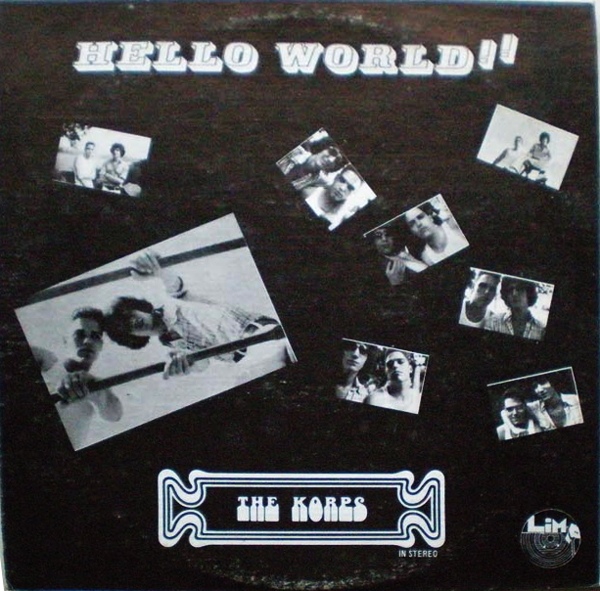
The Korps  Hello World (www.gulcher.gemm.com). Talk about idiot savants. Kenne Highland coming off the Gizmos and the Marines, and Ken Kaiser joined forces in 1977 to form the Afrika Korps. And from that, they joined forces with some of the Slickee Boys and reformed as the Korps. The music they produce is solid punk-bar-garage. Song topics on this reissue are, well, silly and juvenile, but they’ll hold your attention and odds are you will shake your head and laugh at the pure “what de…” factor. I remember when this LP came out in 1978, I enjoyed it so much. Now that I get to hear a clear version of it again, I remember why it made such an impression on me. It is definitely like two guys next door goofing around, but what they are playing is so cool that you get it. Some songs are love songs, some are love lack angst, some are just ire. There’s even a couple that are just the same words as the title over and over, like “Don’t Get Fresh With Me” and one of my favorite song titles, the bluesy “I Went Downtown, To See My Gal, She Wasn’t There—So I Left.” Actually, there are many highlights here, like “The Progression” that not only fills you in on how to play this song, but tells you how to play most of rock’n’roll: the I-IV-V progression. The highlight, though, is Martha Hull doing the vocals for “(I Wanna) Burn Out,” with lyrics like “I wanna be like Janis and Jimi/A dead and buried wasted hippie.” In the great liner notes by Kaiser, he correctly states, “She took a song that was meant as a little joke and made it into a work of genius.” Tacked on at the end are Kaiser’s 1977 45, which I have always admired, “I Love You Laurie,” some redundant outtakes of “Hello World,” and a fun cut by The Kennes, “With a Shiksa Like You,” from 1977.


Lanky Odd Hour Work Week (www.lankymusic.com). Can a musician sound too pretty? Lanky has a sweet, sweet voice, and with the superb production values and pop sensibilities, his release is beautiful. Perhaps it is the years of my lo-fi and punk sensibilities that make this, well, not pull my chain. Now, I like pretty, too, but this is just so perfect – not a crack or a seam – so mellow, so mainstream sounding, that it doesn’t really fall into any category that my mind seems to grasp anymore. I can imagine loads of Brigitte Jones’ Diary type fans out there clamoring for him, throwing keys and other assorted garments at this Adrian Brody look-alike (at least the picture I saw). Please, get this man some airwaves, as there are loads of people out there who would appreciate his sound; the same ones who listen to Josh Grogan, Bocelli, Andrea, or Justin Timberlake, I guess. He deserves it because it is all just so beautiful.


Lesley Gore (d. 2015) has taken a different road on her first new recording in decades, Ever Since (www.enginecompanyrecords.com) by recording new material. Well, that is not totally true: she does a real slow, powerful version of my favorite proto-feminist “You Don’t Own Me,” that just burns. Gore’s voice has certainly matured well, like a velvety wine, playing the chanteuse for all its worth. In other words, she succeeds in growing up with her image and style. Her selection of songs is perfect for her elegance, some by herself, some by others, but many outstanding, such as the beautiful title song, the wistful “It’s Gone,” “Better Angels,” “Words We Don’t Say” (one of my faves here), “We Went So High,” and the slightly snarky “Not the First.” Not a bad cut here. A powerful re-entry. And I would like to say a special thank you to fellow cabaret singer Ingrid Saxon for getting me in to see Lesley perform at a Joe’s Pub gig to promote this release.


Floating smoothly between singer/songwriter, soft rock and cabaret is Mary Gatchell on her Indigo Rose (www.marygatchell.com). Mary’s voice is both soulful and sweet, easily innocent and sensual at the same time. As well, she is a talented songwriter, whose tunes can go from lush, to comedic, to profound. This CD was her first studio release (she had already released a live recording), and starts with the melodic and perceptive “Stronger Backs.” Other fave cuts are “War and Peace,” “Emptiness Settles In,” “Digging for Clouds” (which is an expansion on the saying “fighting for peace is like…”), and the bittersweet yet comedic “Green Card.” The last is obviously recorded live (in studio?) with a bunch of girlfriends, and I dare anyone to listen to it and not be humming it for a while after.

Model Citizens Model Citizens (Rapid_Randy@hotmail.com). Hailing from Birmingham, this trio kicks out. With a definite low-tech, demo feel, they are bar rock in the way that the Gizmos were: not metal, just rock. With a punched-up sound, there are definite possibilities for this band. It is the recording, not the group, which lacks power. The songs are strong, the guitar playing flays, and the band is just plain fun. Coming from Alabama, there is definitely a small country influence, especially on “Green Ashes,” which works for them and does not bog them down. They are worth a listen. I hope I get the chance to see them play, ‘cause I bet they are a hoot live.


With Leave the Sad Things Behind (www.birdmanrecords.com), Paula Frazer continues her amazingly prolific output, including her days with Tarnation. With a Celtic lilt and a slight ‘60s pop and country influence (she come from Georgia), Paula treads Sarah McLaughlin territory, and Sarah better look over her shoulder, because Paula not only has a powerful and melodic vocal, but a great turn of a musical and lyrical phrase. Her songs are catchy and never pander. I listened to this CD like three times in a row before I could put it down. While the libretto can be seen as the musical equivalent of a “chick flick” (very roses and romance), she remains accessible to all.


Poisoned Aeros Turbulence (www.doublehell.com). Sheer brilliance. While the band’s name may not raise an eyebrow here in the States, in their native Hamilton, Ontario, it’s a sharp pun. But before I even start on the music itself, just know that they are joined in the studio by the likes of members of Teenage Head, the Forgotten Rebels, the Vapids, Dave Rave DeRoches, Jack Pedler, and even Sylvain Sylvain. Up front is the dual winsome vocalists and chief songwriters, Buckshot Bebee and Rosmarinus (aka Ro the Knife). Think Dictators with female leads. That kind of power and humor are rampant throughout the release. There is not a bad cut here. Having seen them play in Brooklyn (opening for their pals, the She Wolves), I can attest that it is not studio magic that makes them shine, but pure talent. To show their humor, there is a blank disk included, so one can copy the CD and give it to a friend.


Quantice Never Crashed I remember when singer Philly (Rabbit) started out in his first band, Howard Finster. They were fun, but kids. Then it’s a couple of years later, and he fronted the much-improved QNC. Solid screamo approach, his vocals – as is common to the style – has that “Ro Ro Ro-ro-ro”-ness that can be either a lot of fun or really, really grating. Well, this is just fine, I am happy to say. Live, I could not make out a word he was saying, though the music is a rat-tat-tat of slicking power. But with the lyric sheet included, I have learned that their lyrics are very well written, all in first person perspective, and the music is actually quite melodic. Live, as is on the CD, their power is quite noticeable. Hell, they are just a fun band. It is amusing that the first cut is actually an acoustic instrumental that never lets the listener be aware of what is to follow. Also like their fellow Staten Island natives, the late band Monty Love, their song titles have absolutely nothing to do with the actual lyrics, such as “William Shatner’s Powergun” and “Shaolin Casanova.” Worth seeking out.


Tommy James re-recorded his old chestnut, “Sweet Cherry Wine” (Aura Records, co www.TommyJames.com) with the help of gospel group the Kootz, (rather than the Shondells) backing him up his time, on this three-song CD. James had found The Lord a number of years ago, and he brings that “light” to this recording, giving the tune a whole different meaning. TJ definitely has his voice intact, and with the Kootz, he turns this song into a powerful testament. The second song is actually a shorter version of the first. The third is the “B” side, “Amy,” which has his distinctive voice, but a rhythm machine and synthesizer to back him, which greatly reduces the feel of the song, unfortunately.


Various: I remember when the president of the Flamin’ Groovies fan club quit because the band covered Warren Zevon’s  (d. 2003) “Werewolves of London.” I don’t have as disparaging an opinion of the guy as the ex-prez, but he always fell into the Dave Matthews column of I-don’t-get-it. Yeah, he writes pretty songs, but the whole appeal never really touched me. On the tribute CD Hurry Home Early: The Songs of Warren Zevon (www.wampus.com), one thing I do find amusing, is how well his work is adaptable to the “new” country sound, as it seems a majority of those covering his tunes here went that route. There are some nice touches, and all the songs are respectful, so if a listener is inclined towards moody and edgy kinds of lyrics and non-standard pop-based melodies, I would definitely recommend this. And there are no werewolves of London here.


Various: And then there is the meeting place of extremes – of pretty noise – with the compilation Mama Kangaroos: Philly Women Sing Captain Beefheart (www.genusrecords.com). The Capt was a forerunner in the rock/jazz fusion in a space cadet genius kind of way. Sort of to rock what later Miles Davis was to jazz. One of the beautifies of this freewheeling style is its adaptabilities. Many styles are represented here, from straight on rock to electronica, to Tom Verlaine-ish (d. 2023) guitar ramblings, even to country. The album begins slow with drum machines and programming, but as it starts with “Run Paint Run Run” (Big Mess Orchestra) and the verbal hiccupping of “Apes-ma” (Radio Eris) and “Abba Zaba” (Voices of Africa), it is straight ahead interesting for more than an hour. Some of other fave cuts include “Crazy Little Thing” (Mia Johnson with Tom Gillam), the soulful “I’m Glad” (Janet Bressler), the complete bedlam of “Ashtray Heart” (Beware the Blunted Needle), and the Appalachian “Orange Claw Hammer” (King of Siam). As experimental as could be, which is exactly what the good Captain may have imagined.


Speaking of Devendra Banhart being prolific, he is also a member of the group Vetiver, who label their style as “chamber folk music” to describe their 5-song CD EP release, Between (www.vetiver.com), which includes a cover of Fleetwood Mac’s “Save Me a Place.” I would call this more ambient than folk, with Vetiver’s soft, lush tones and anesthetizing quality. Not boring, per se, but lulling, including the vocals by Andy Cabric. Actually Cabric recorded three of the songs as a solo. One may also be surprised that members of My Bloody Valentine and Mazzy Star also make an appearance.


World War IX When A Good Time Turns to Shit (www.worldwarix.com) A two-song single from this band who are a definite throwback in sound to 1976. It is kickass, but it is also melodic. Max’s vocals need to be up front in the sound a little more, making this the feeling of it being more like a demo, but do not let that distract you from getting this. “Intervention” is about exactly what you would think. Actually, “Treasure Hunt” is not that thematically different. If these guys were around when CBGB opened, they would probably be in a few of the history books. And while you are listening to the music, enjoy the artwork drawn by guitarist Justin, and see if you can find his comics (whose topics include his obsession with GG Allin and a retelling of their early gigs), they are worth reading as much as this is enjoyable to be heard.