Showing posts with label Lenny Kaye. Show all posts

Thursday, July 5, 2018

LENNY KAYE’s Connection [1981]

Text by Carolyn Lee Boyd / FFanzeen, 1981
Introduction and live photos © Robert Barry Francos / FFanzeen, 2018
Video from the Internet
 
Lenny Kaye solo at the FIX (W)PIX benefit (pic: RBF)


This article was originally printed in FFanzeen, issue #8, dated 1981, by Carolyn Lee Boyd, a bard who often went by the nom de poem Tarantula.

Carolyn was a big fan of the Lenny Kaye Connection, as was I. This band was formed after Patti Smith famously retired at the height of her punkitude period, running off to Detroit to marry guitarist Fred Smith and to raise her brood. With a well-underappreciated LP, I’ve Got a Right, the Lenny Kaye Connection often played at CBGBs among other places, and Carolyn and I would often go to see them. At the time, she lived a block away from the infamous Binibon Restaurant,  and I’d pick her up and off we’d go.

Beyond Lenny, part of the focus of the band was an electric piano, which can be heard especially in their political song, “I’ve Got a Right,” which is as relevant today – or more so – as when it was released during the Reagan administration (see video below). The Connection was also the back-up for Jim Carroll’s [d. 2009] album, Catholic Boy, including his biggest hit, “People Who Died.” Often, Jim would jump up on stage and sing the song with the Connection. Carolyn would inevitably get mad at me, because I would boo him. I had read Carroll’s autobiographical The Basketball Diaries, and I hated how much he made taking heroin and stealing sound cool in a day when the drug was such a prevalent negative force in the music I was listening to at the time.

Whenever Lenny would play something off the Connection’s only album, however, I’d be happy, including his cover of the Left Banke’s “Walk Away Renée.” Sometimes their long reggae riffs would be a bit much for me, but in all, the band was great fun and I have Carolyn to thank for introducing me to that. – RBF, 2018.
 
Lenny Kaye Connection: Lenny and Patrick, CBGBs (pic: RBF)
The time is 10:02 PM. The place is Max’s Kansas City. The fabulous Lenny Kaye Connection is topping the bill, and the Faithful Activist Neanderthal Society (FANS) is coming to order (so to speak). For those who have not been exposed to recent national and international journals, magazines, newspapers or broadcast programs, and haven’t heard of the FANS, it is a secret society dedicated solely to the Presleyan Theory of Evolution, that all life began at the invention of the electric guitar, and all history before that is a mass hallucination. Obsessive? Bizarre? Anti-social? Know thy enemy!

Winner of the “Conceptual Art Barstool” for “Drink Until You Only Think You Have Passed Out” competition and the honorable, venerable, and redeemable at your local grocer curator of the Museum of New Jersey Rock Stars Except Bruce Springsteen and President of the Lenny Kaye Clone Association is Victor. A microphone sticking out of his lapel and a movie camera up his sleeve, he plans to record the whole show and next time save the cover charge by playing the tape and film, and just pretending he is at the show. Victor is from the Bronx.

At Victor’s sides are Reta and Shorty Cookie (the Laverne & Shirley of New York rock’n’roll), 10 days off the Lear jet from death-defying Detroit. Reta is struggling and starving out the long years until super-stardom: charging it to Mom and Dad at Bloomingdale’s, crashing elite parties (it’s all in how you dress), and wearing $1200 worth of second-hand clothing. Shorty Cookie is working on her rock star crush #4968. She’s grown out of dead stars, media stars, and is now concentrating on a member of the band. Fortunately, the band is half blond and half brunet, in case she switches types between the first and second set.

Fashionably late, Renaldo, celebrated rock’n’roll magazine entrepreneur, journaliste and Man-About-Town, fait son entrée, dressed in a purple pirate outfit with red sash and plumes, and accompanied by his cowering entourage of writers, artists, and other flunkies, who are rolling out a red carpet saying, “Mr. Big is here.” He is on the cover of this week’s National Enquirer in a story about “The Terrible Secret He Hides” – he has met Doris Day, Faye Wray and Murray the K, but never the Big Boombah from New Brunswick. He just can’t face tight, black leather pants ever since his mother made him wear them to school in the first grade and all the other children laughed. (And even if he could, he’d just use his influence to welch a copy of the “Child Bride” single.)

Who says rock’n’roll isn’t high-class entertainment? Take Lenny’s opening band – please! After paying the standard cover of $6 (“You didn’t really want open heart surgery, did you, Ma? Great! See you tomorrow!”), the most that FANS (being basically cheap) can muster for the bound and gagged Cleveland art band, banging on its pots and blowing into saxophones, is light clapping. They are polite in case the band is friends of Lenny’s. Victor unobtrusively sets up his two-storey soundboard, while club patrons pace back and forth peering – is it really Lenny or is it Memorex? Reta’s antenna bleeps away – It’s Cheetah Chrome showing metal! Keef picked with Jack Daniels! Bob Dylan blowin’ in the wind! Shorty Cookie chairs a meeting of the Yours-For-A-Song Society in the Ladies Room. Renaldo’s beeper goes off – a reminder from his secretary that it’s time to go to some trendy club that doesn’t advertise, in order to get back in time for Lenny’s opening chord.

It’s common knowledge that right before the first show is the best time to catch Lenny backstage (except now that everyone knows who’s read this, it won’t be true anymore). Victor is always at the head of the line with something to autograph (having wallpapered his apartment with Lenny autographs, he is now plugging up the holes in his walls) or a photo of the band to give Lenny (as if he doesn’t know what they look like). Abandoning their fearless leader of his fate, three-quarters of the Connection creep down to the bar, deserted now that all the customers are backstage, for five minutes of peace and privacy. Reta and the sobbing Shorty Cookie, her face pale and Hawaiian-print mini-skirt wrinkled, smash against the wall as HE passes, staring blankly, not realizing she is his fate, his destiny, or doom. So, oblivious to the obvious, he orders a beer as if nothing had happened between them at all.

Twelve midnight and each FANS scrambles to the front row that s/he always sits in. The band walks on, in order: Patrick O’Connor on bass, a Robert Redford look-alike and the band’s compass and big brother figure. He’s steeped in more affection than he knows (the FANS plan to take him out to dinner, if they can figure out which Patrick O’Connor he is in the phone book); Lenny Kaye – you all know Lenny Kaye, and his address and phone number too; drummer David Donen, Keith Moon talent and teen idol charm, he is an extreme example of Einsteinian energy, and none of the FANS spend less than half the show watching him; newest and leftist (on stage) is that gorgeous Prince of Staten Island, that classy King of the Keyboards, Jan Mulaney, sitting quietly and extraordinarily in his little corner playing his heart out, the fourth member in the winning combination.

Halfway through the first song, Shorty Cookie grabs the set list for the Connection collection and is charged by a 300 lb. roadie around the stage until she jumps back to the seat. The band begins “Giving It All Up (For Love Again),” a rocker Patti Smith would love.

Lenny (minus a set list) has just done the bathroom humor intro to “Passin’ Through” (try it backwards), a melodious and melancholy, egalitarian Lenny love song. No connection set would be complete without a nugget-if-you-duggit, and my favorite is “Party Doll” which, as usual, sounds a lot dirtier when Lenny sings it than on the original [by Buddy Knox – RBF, 2018]. Then the experimental rhythm track over the time-travelling verbal avalanche of “Beast Language.” “Child Bride” is the band’s registered trademark and rumor has it that Lenny was up to 4 AM autographing mail order copies of the single. Prehistoric or future tense, rocking or tear-jerking, first show tight or second show loose, the Lenny Kaye Connection is a fun band on the verge of going to places I don’t think even they knew they were aiming for.

One AM. Time to run after a cab, split the fare, and go home to dream each FANS’ special dream. For Victor, it is to own that one unique, cosmic, ultimate and most rare of Lenny Kaye relics in the world, to put into the museum. For Reta, it’s to appear on Tom Snyder in front of an audience of her own screaming FANS after a sell-out show at the Palladium, and have her face on Rolling Stone and People. All Shorty Cookie wants is one amused inkling of recognition from HIM. For Renaldo, it’s for Lenny Kaye to ask to interview him.

All the FANS share the same nightmare: success for the Lenny Kaye Connection. Well, not success, but success – Shea Stadium, no backstage passes, Bianca Jagger, losing the band to big-time hype success. Horror after horror – Lenny goes to Washington to be Special Advisor on Cultural Affairs and Liver and Onions; Jan Mulaney, 16 Magazine “Hunk of the Month”; a new Clairol hair color named “Patrick O’Connor Red”; David Donen guest-hosting “The Tonight Show”… where will it end?

So remember, when you go to a Lenny Kaye Connection show, you are on FANS turf; you are an intruder, outsider and contagion. Show some respect. You have been warned! 


Friday, March 18, 2016

PATTI SMITH: A Rhythm Generating [1988]

Text by Mary Anne Cassata / FFanzeen, 1988
Introduction © Robert Barry Francos / FFanzeen, 2016
Lyrics © Patti Smith
Images from the Internet; recording and book covers from personal collection of RBF

This article was originally published in FFanzeen, issue #15, dated 1988. It was written by high-end rock writer and editor Mary Anne Cassata, who has a number of books under her name, including bios of Cher, Elton John, and Jim Carrey. Since this article was published, Mary Anne has interviewed Patti a few times, including some that have been referenced in biographical books about her. I’m happy to say we’ve been good friends for over 30 years now!
                                                                    
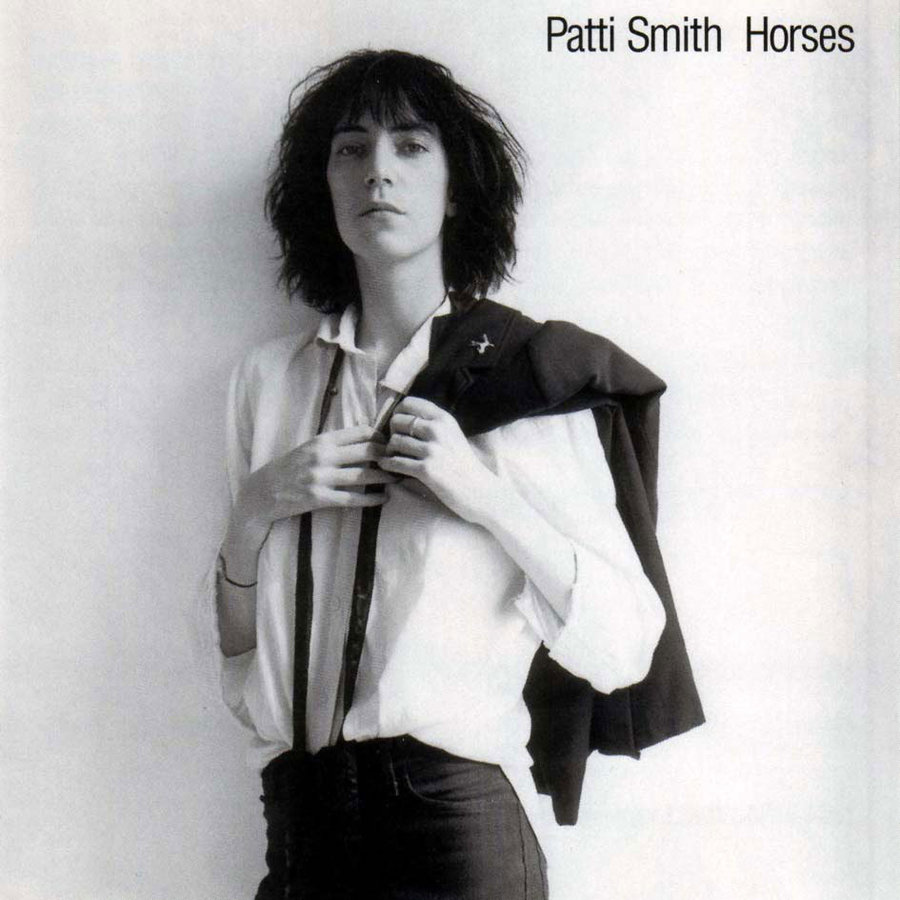
As for Patti Smith, there are few who can argue her first album, Horses (1975), was transformative to the music we heard afterwards. Same can be true about her poetry, many of which have been turned into her songs, but her scope goes beyond that.

Honestly, I can’t remember the first time I saw her play, but I do know I was there at her infamous Bottom Line show (1975), when she played the short-lived CBGBs Theater (1977, with Richard Hell and the Void Oids opening), and her last show in New York at the Wollman Rink in Central Park (1979). There were a few in-between, as well. Infamously, she was the final performer when CBGBs closed its doors in 2006.

The closest I came to having a conversation with her was a time in 1977 when I was toddling down St. Mark’s Place passing in front of Natasha’s Clothing, near Third Ave, and I saw her walking in the opposite direction, wearing a neck brace. She had recently fallen off a stage and broken her neck. As I passed her, I said something like, “Patti! Thank you for all the great music” She replied, “Hey, thanks, man!” and that was that.

When she kind of disappeared when she married Fred “Sonic” Smith [d. 1994] and moved to Detroit, there was a definite void. Since her re-emergence, Patti was inducted into the Rock and Roll Hall of Fame in 2007. The only way I know how to say this is that Patti is a force. Like a hurricane, her Detroit phase is the dormant eye, and she has certainly come back with strength. I welcome it. – RBF, 2016
                             
The words, “I’m an American artist, and I have no guilt,” were once said with true passion and much conviction. A poet-turned-rocker, Patti Smith has won acclaim for being the ‘70s female cult phenomenon.

Perhaps to really understand the full influential impact that such classic albums as Horses and Easter initiated to the rock world, you must know where its inventor’s inspirations were originally devised.

Before acquiring her movement as metaphor, Patti Smith was all too captivated by 19th Century poet Arthur Rimbaud. His influence was not widespread at first, but expanded to easily defined areas of symbolism and surrealism. As a young girl, Patti first became immersed in Rimbaud’s words and visions after seeing his picture on a book cover; looking at his face had reminded Patti of her father. The effect: profound; its result: the beginning of a celebration of Rimbaud in her poetry and music.

Patricia Lee Smith was born December 30, 1946, in Chicago, the eldest of four children: two sisters, Kimberly and Linda, and a brother Todd [d. 1994]. Her father worked in a factory and her mother was a waitress. The Smiths lived for a short while on a sheep farm in Tennessee before relocating to South New Jersey. When asked about her childhood hears, Patti replied in a ‘70s interview: “I’m just a Jersey girl. I really loved that I was from South Jersey because it was a real spade area… When I was a little girl, I was a very sick little girl and skinny. They didn’t even know that I would live. We had no money. We were very poor, but I never stopped believing.”

Patti’s father was an “intellectual” type, who preferred that his eldest daughter wouldn’t talk in a New Jersey street slang. “I wanted to be like the kids I went to school with,” Patti said, “so I never intentionally learned to speak good. I thought I couldn’t use it on the dance floor, so what good was it?”

At age six, the riveting sounds of ‘60s rock’n’roll music began to invade her vulnerable consciousness. Little Richard’s “The Girl Can’t Help It” was the first record Patti ever owned. Escaping into music helped to ease the pain of a traumatic childhood due to her health. Frail, she was struck with tuberculosis and scarlet fever, which more than often left her to suffer hallucinations.

Perhaps due to illness, combined with a large bout of shyness, Patti retreated into her own special world of fantasy. Even as a very small child, she had the ability to write and would often record her hallucinations and dreams into notebooks. Sensitive, introverted, and consistently creative in her efforts, childhood may have left emotional scars – but it also eventually helped make Patti a renowned poet/rock luminary. “Those who have suffered understand suffering. Thereby, extend their hand,” she would write in “Rock ‘n’ Roll Nigger nearly a decade later.

A growing devotion to rock music and its heroes had solidified itself by her mid-teens. After Patti witnessed the Rolling Stones for the first time on The Ed Sullivan Show, there was no turning back. She also enjoyed dancing, especially doing the Monkey, which was popular at the time.

Though focusing her talents on writing poetry and dancing to the latest sounds, Patti eventually conquered her shyness and, in the process, developed a cutting sense of humor. She also learned how to channel her helter-skelter thoughts intro captivating poetry and art. The search for complete freedom in self-expression became Patti’s personal vision. School didn’t mesh with her artistic rhythm either, so she left both ungratified and unqualified for work skills in the real world.

Smith attended Glassboro State College in New Jersey, but left when she was 19-years-old [1967]. Though it was a very unsettling period in her life, she also admitted to coming to terms with her own sexuality. Patti also maintained her poetry writing, portraying herself as both victim and aggressor. In a 1973 interview, she explained, “I was always a tomboy. I hated being a girl. I never identified with any female at all. When I had a baby, I was forced to look at myself as a female, although only physically, not intellectually.”

She found work in a New Jersey toy factory, but it didn’t last long. Standing in an assembly line for seven hours a day is unaspiring work. Exit factory. This ambitious, artistic girl had other dreams, like the burning lines in her song “Piss Factory”: “I’m gonna get on that train / And go to New York City / And I’m gonna be somebody / I’m gonna be a big star / And I’m gonna be so big / I will never return / Never return to this piss factory…” Patti, with a vengeance, pursued her dream.

In 1967, she headed for New York City, keeping the poetry flowing, and rock’n’roll close to her heart. She indulged in the greats, such as Dylan, Hendrix, and the Stones for references, and especially her mentor, Rimbaud. Using some of the factory savings, Patti decided to take a trip overseas to see the haunts of her poetic heroes. She made a pilgrimage to Paris, visiting the gravesites of Rimbaud and Jim Morrison. Captivated by the culture and the art, the aspiring poet/artist stayed for six months, working in cafes by day and reciting poetry at night. Patti said of her experiences:

“In Paris, everyone’s a poseur. The French are the best actors in the world. They’re not deceitful, but everyone is conscious of his image. When I left the States, I was still very much into image. I wore my black suit and dark glasses. Paris to me is completely a city of images. I found it impossible to work there.”

Returning to New York and ready to face another new adventure, she met up with avant-garde artist/photographer Robert Mapplethorpe. The two moved in together, living in a tiny apartment near Pratt Institute in Brooklyn. Motivated by student energy, Patti studied new art forms and was learning how to trade her hallucinations for some serious poetry. She also dabbled in the arts to keep her creative process fresh. From line drawings, cartoons, and using calligraphy to write poems, she remained consistent, while working as a cashier at a Greenwich Village bookstore.

A struggling guitarist named Lenny Kaye worked down the street from Patti at another bookstore. The two met and would soon team up to combine poetry and rock guitar.

From the late ‘60s to the early ‘70s, Patti was an influential part of the Warhol scene, holed up in the now infamous Chelsea Hotel. Patti and Mapplethorpe moved there, soaking up the inspirational remains of Dylan Thomas, Janis Joplin, Allan Ginsberg and the Velvet Underground. It was Mapplethorpe who initially encouraged Patti to transfer her visions and images into art. Some of that constructive energy resulted in a co-authored book with rising playwright Sam Shephard, titled Mad Dog Blues and Other Plays [published 1972 – RBF, 2016].

Through the urging of a close friend, Patti became more involved in the music industry as a means to channel her writings. By her 24th birthday, the poet/artist proved to be an undeniable force to celebrate at a Chelsea Hotel party. Breakthrough – forge ahead. During 1971, she exercised her insatiable writing abilities by co-authoring a play, Cowboy Mouth, with Shepard, appeared on BBC television, and made a documentary film for the Metropolitan Museum of Art (MOMA). Patti’s prime inspiration for the MOMA movie was an Italian female beatnik/artist named Valli [Patti and Valli, 1973 – RBF, 2016].

“I used to have pictures of her all over my walls. She was a big hero of mine when I was 14,” recalled Patti in 1973. “She lived on the Left Bank. I never considered her a real person. I was confronted with a real girl, and I thought, ‘Oh, man, what am I going to do?’ ‘cause I had dealt with the image for so long.”

She also admired the works of Edie Sedgwick; heroes were always essential to Patti in her younger years. When she became an artist in her own right, however, she learned to put images into their proper perspectives. “I never considered myself to be my own best hero. There’s almost no poet I’d read (other) than myself,” she continued. “I no longer need people to cloak me. Heroes die, images fade. Art for me in the beginning was never a vehicle for self-expression. It was a way to ally myself with heroes, ‘cause I couldn’t make contact with God.”

By late ’71, her next form of self-expression arrived as a collection of poems. Her debut solo book, entitled Seventh Heaven, aroused some interest from Rolling Stone and Creem, who then started to publish her poems regularly.

Though the early ‘70s may have been a lot harder than expected, it still didn’t diminish her energy level any. With Lenny backing her on guitar, Patti gave poetry readings at St. Mark’s Church, located in New York’s Bowery. Her words, supported by Kaye’s electric guitar and a tiny amp, had soon garnered a loyal cult following.

By the time her second book, Kodak, was released a year later, Patti and Lenny were joined by pianist Richard Sohl [d. 1990]. Thus was the beginning of the Patti Smith Group (PSG).

Due to her new-found recognition as a rock poet, Patti recorded her single, “Piss Factory,” backed with “Hey Joe (Version)” on MER Records, an independent label. The sound, raw and energetic, recalled those desperate days of working in a factory, and “Hey Joe,” the ‘60s rock classic [originally recorded by The Leaves, and Jimi Hendrix Experience, among many others – RBF, 2016], gave new meaning to the violent love theme.

“At first it was just me and Lenny Kaye on electric guitar during poetry readings,” Patti told a music journalist in regard to the formation of the PSG. “Then it started to gather force. We advertised for a piano player… And then we started looking for another guitarist. We had days and days of guitar players. We’d make them do 40 minutes of “Gloria”… Then we picked up a drummer.

Toward the end of ’74, an expatriate Czechoslovakian guitarist named Ivan Kral, and former Mumps drummer Jay Dee Daugherty, rounded out the PSG. Rock’n’roll dreams and visions grew stronger and closer to the musical goals of the five-piece band. Alan Lanier of Blue Oyster Cult provided Patti with further reinforcement in her lyrical writing and signing. The group called Manhattan home, and performed on the small club circuit.

In 1973, with the release of her third book, Wītt (pronounced “White”), Patti was fast becoming something of a local legend in the New York poetry circles. On her way to something much more than a career, Patti saw it as a crusade for rock’n’roll.

On stage, even the very smallest, she knew how to connect with an audience, whether it was poetry readings or music. Patti could reach in deep enough to hit a nerve with the public. It wasn’t until a year later that her true fate would await.

Already an established name in New York, PSG was signed on the strength of their sound to the newly formed Arista Records. Their debut album, Horses, was produced by John Cale and recorded at Electric Lady Studio in New York City. The PSG were one of the first acts to be termed “New Wave” or “Proto-punk” by the music press. Producer Cale, a former member and co-founder of the Velvet Underground, employed Lanier and friend of Patti’s, Tom Verlaine (of the band Television), to contribute additional guitar work to the album.

For a new band’s debut offering, it made a boisterous statement, not soon to be ignored. Patti Smith, a new breed of rock star, would eventually become an unforgettable figure in popular music for years to come. All across the country, FM radio stations spread the word and played cuts from the offering that was rapidly becoming a landmark album.

The prestigious The New York Times proclaimed that “Horses will shake you and move you as little else can.” Across the Atlantic, the New Musical Express (NME) was saying: “Albums this good are pretty few and far between. It’s better than the first Roxy album, good as the Doors, and Who and the Velvet Underground.” Generous praise coming from the notorious British press.

Back in the States, Horses rose up the music charts and into the hearts of record buyers. “Jesus died for somebody’s sins but not mine / Melting in a pot of thieves / A wild card up my sleeve / Tick, heart of stone / My sins are my own / They belong to me,” opened the album. Startling lines for a 29-year-old Patti Smith to declare. In 1976, she told Rolling Stone, “It’s time to figure out what happened in the ‘60s. I’m working on a link to keep it all going.”

Her debut single of a remake of Them’s “Gloria” was backed with a live version of The Who classic, “My Generation.” Using nothing less than the unexpected, original Smith approach to Townsend’s lines, “People try to put us down / Just because we get around,” Patti added, “I don’t need that fuckin’ shit / Hope I die because of it.” In England, the offensive words had been censored from the record pressings. Of course, the artist was not amused. Patti rebelled: “When I find out who’s responsible, I’ll break his balls…” Beware, danger lurks!

 A notable progressive artist on an American radio station in New York City spells trouble. Just prior to an interview on the famed rock station WNEW-FM, Patti was asked politely to curb her speech. Not one to dispense of profanity lightly, Patti took the request as a personal insult to her artistry. On the air, she broke into a litany:

“How alternative is this radio?... The first thing that happens when I walk in is that you tell me you don’t have a bleep machine and to watch what I say. That’s not alternative, that’s the same old stuff. Notice I said ‘stuff,’ being completely professional at this moment… All over the world there’s, like, these bursts of power and bursts of pleasure. Rock’n’roll is being taken over by the people again, by young kids again, who don’t want to hear about your digital display. They don’t want to hear about any of this stuff.”

Due to being banned from any further interviews on the noted station, Patti took her grievance out in the form of a poem called, “You Can’t Say ‘Fuck’ on Radio Free America.” The manifesto was published in an underground New York newspaper. A portion of it read:

“We believe in the total freedom of communication, and will not be compromised. The censorship of the words is as meaningless as the censorship of musical notes; we cannot tolerate either. Freedom means exactly that: no limits, no boundaries… Rock and roll is not a colonial power to be exploited, told what to say and how to say it.”

Her second album, Radio Ethiopia, proved to be nothing less than another explosion of raw energy and primal rock inspirations. With ace producer Jack Douglas at the helm, the assaulting, innovative rhythms and sounds gratified devoted followers, and at the same time captured new ones. Though some music critics felt her second offering didn’t quite measure up to the brilliant debut album, it still garnered an enthusiastic reception. One record reviewer noted the LP as “just another well-produced, competently played mid-‘70s rock and roll record.” Album sales were a bit disappointing, too, but the music? Never.

On January 23, 1977, in midst of a concert tour, Patti had an accident. She twirled off a stage in Florida, singing, “Ain’t It Strange,” falling 14 feet. While completely immersed in the number, the stage ended – and space began. Patti broke her neck and went into traction for a while. Commenting on the accident, she said, “I know the finger of God pushed me off the stage.” While recuperating from her injury, she began writing a new volume of poetry.

A year later, the PSG got back into action and made a triumphant return to the rock world. Their third album, Easter, was nearly as exhilarating as Horses. With some songwriting assistance from fellow Jerseyite Bruce Springsteen, Easter sprang a huge hit single, “Because the Night.” Patti penned the lyrics, and Springsteen the music. Unadulterated praise from rock critic purists poured in from both sides of the Atlantic. Dave Marsh, from Rolling Stone, proclaimed, “The Magic of Easter is undeniable. It is transcendent and fulfilled. Patti Smith is one of the greatest figures of ‘70s rock and roll.”

In England, Sounds stated, “Here you get unbridled perfection merged with raw fury, and it is stunning. NME followed suit with: “Patti Smith’s energy is irrepressible and contagious. She pours enough of it into Easter to keep an average artist going for years.” Having received such a grandiose reception by both critics and fans alike, how could the PSG’s third album be any less than a commercial success?

Some of the purest forms of the PSG’s assassinating rhythms are best displayed on tracks like “Till Victory,” “Space Monkey,” and “25th Floor.” Producer Jimmy Iovine channelled Patti’s original lyrical sense and the band’s commanding music appeals, and cleverly meshed it together in a suited rock style that would be identifiable enough to the Smith-starved legions worldwide. “Because the Night” had delivered a new means of respect for the group.

“Here we are condemned to navigate back to our beginnings,” stated the androgynous, thin female figure at the release of the album. Even some of Patti’s own religious convictions are passionately conveyed in such enlightening cuts as “Privilege (Set Me Free)” and the title song.

As Easter made chart history, the poet-turned-reluctant-rock-star released her fourth and widely read book of poems, Babel. The collection became her most indulgent work ever. Sources of inspiration varied from rock’n’roll heroes to the Bible to sexual identities and role reversals. Rimbaud, of course, lurked between the lines.

One alarming poem, perhaps her most familiar, “Rape,” caused quite a foundational shake at a New York live reading. The controversial rock poet was abruptly cut short as she recited the offensive words that excited spectators, but angered the police.

An outraged law enforcer jumped onstage in an attempt to pull the plug on Patti’s microphone. However, it was too late before he noticed his efforts were in vain. Patti, standing at the side of the stage, was grinning like a Cheshire cat. After all, she had been using a wireless microphone!

“Yum yum the stars are out. I’ll never forget how you smelled that night. Like cheddar cheese melting under a fluorescent light. Like a day old rainbow fish. What a dish. Gotta lick my lips… I’m gonna peep in Bo’s bodice. Lay down darling. Don’t be modest. Let me slip my hand in…”

In her earlier years (pre-rock and roll heroine), Patti remembers her writings being consistently rejected by magazines. However, in the wake of success, acceptance now seemed trivial. In a 1976 interview, the emotionally wounded poet told Penthouse magazine that publishers “objected to the style and content of my work. They said I had sick attitudes for a woman. I’d get letters” ‘We find your thinking and ideas and morals very immature. Write back when you are mature.’ I was 26.” Mature or not, by the late ‘70s, Patti’s dominating presence and invincible talent was definitely felt.

By the time her fourth album, Wave, arrived in 1979, the artist had pretty much accomplished all her poetic and musical goals. The time had come to end an era and move on to explore new horizons in life. The LP, a combination of quiet reflection, romantic love, and equalled revenge, represented the band’s fame, success, and their past and future.

Compared to the previous release, Wave commanded listeners, but was subdued next to Radio Ethiopia. The PSG, still recognized for its artistic integrity and previous musical accomplishments, rose eloquently above the shallow criticism.

Rolling Stone set the pace with: “Though a long way from being a total disaster, Wave is too confused and hermetically smug to be much more than an interesting failure.” Across the seas, England’s more populist music newspapers wrote in a more positive sense: “Wave will just as effortlessly endure the passage of time. If you are on the same wavelength, Patti Smith will always reach you to awaken some primal instinct that is dormant in all.”

Todd Rundgren-produced LP received moderate FM airplay. Patti’s choice in producers dates back to the time she used to write about his music in the pages of Creem many years ago. Opening with the friendly, “Hi, hello” in “Frederick,” Patti’s own special love ballad, Wave starts off in an unexpected mellow mood. Lines like, “But tonight on the wings of a dove / Up above to the land of love,” present a soft, gently side to Patti’s femininity. A welcomed change to some, and a deadly mistake to others. The pace soon turns mysterious in the moody “Dancing Barefoot,” but finds its way back to warm sentiments in the title track and “Hymn.”

The titular “Wave” on the cover can be interpreted as either a hand signal (perhaps Patti saying goodbye to her career for a while), or water finding its way to the shore. Whatever her intentions, Wave was a challenging album not to be ignored. The fiery sentiment on “So You Want to Be a Rock and Roll Star,” the Byrds’ classic ‘60s cut, portrayed our late ‘70s female cult hero to perfection.

Another strong point was “Citizen Ship,” an aggressive song about memories, castaways, and seeking liberty in the land of the free. Ivan Kral was the inspirational focal point behind the song. The music, explosive, combined with gravel-digging vocals, gave Smith purists exactly what they wanted to hear.

If anything, the music on Wave presented the events and emotional bond the PSG had experienced by 1979. The statements of her faith alone range clear on the title cut and “Hymn.” While most music critics continued to complain that Patti had softened around the edges, Patti started making plans for a new future. At the height of all her rock dreams, she walked happily away to a life of marital bliss with Fred “Sonic” Smith, of the MC5 [m. 1980], in Detroit, and the subsequent birth of their son, Jackson [b. 1982], and daughter, Jesse [b. 1986]. Patti didn’t even have to change her last name, she had joked to the press a short time after. It’s been said that the lead guitarist of the legendary Detroit-based outfit was one of Patti’s long-time music heroes. [In fact, on the back of Radio Ethiopia, read the words: “Free Wayne Kramer,” who was Fred’s co-guitarist in the MC5 – Ed., 1988.]

In the midst of the PSG’s last American concert tour, their Burbank California show was forced to cancel due to the town’s mayor. Smith, as well as other scheduled concerts by Todd Rundgren and Blue Oyster Cult, were disapproved. Patti, as one artist who never takes issues lightly, voiced her opinion in the City Council’s office:

“I am very sorrowful about the behavior of the City Council of Burbank in refusing to allow the Patti Smith Group to perform a concert because they object to the personal and political convictions of our audience. As I do not judge the children of the Councilmen and the citizens of Burbank, let them not judge mine.

“It is very hard to believe that in America the use of the public facility for a performance can be denied on the groups of personal prejudices of a few City Councilmen. Who will be the next one to be banned? Does it start with this audience and then move on to racial and ethnic groups? Who will determine? This is a dangerous precedent and contrary to the very essence of this country.

“I do not wish to be labelled as anything except as an American artist and allowed to present my work to whomever wishes to come and experience it. I am saddened that because of the bigotry and prejudices of a few, I will not be able to perform for the people of Burbank.

“When I pledge allegiance to the flag of the United States of America, and state the rods, ‘One nation under God, indivisible, with liberty and justice for all,’ I mean these words will all my heart. I feel that the people who have prohibited me and other performers from performing do not truly understand the meaning of these words.”

Whatever she executes, Patti Smith does it with not just her heart, but with her entire being. How can a rock and roll enigma such as this dark haired, strange woman-child settle for being pressed neatly between the pages of music history? Her lyrical, poetic and other writings today are still left unchallenged by other lesser artists. In the rock star category, she once reigned supreme on the same level as male contemporaries David Bowie [d. 2016], Mick Jagger or Bruce Springsteen. Her sexual ambiguity allowed Patti to appeal on a mass level to both men and women. An originator combining modern poetry and rock, she had chosen not to be another pretty Suzi Quatro decked in black leather or an alluring Debbie Harry laced in glamour.

Not once did the ever faithful Patti Smith purists worldwide believe her career would be over permanently. The phenomenon that brought the masses “Gloria (in Excelsis),” “Privilege (Set Me Free,” “Ask the Angels” and other landmark contributions, wouldn’t just fade into oblivion. Too much talent and energy is at stake. For the past seven years, anticipation has been settling in, waiting for the arrival of the new Patti Smith Group album. Due for release by winter [Dream of Life, released 1988; as of this writing, there have been six albums released after that one – RBF, 2016], it will be their fifth album together. Inside sources reveal the new music will certainly bring back fond memories for old fans, and at the same time, recruit other fresh young adherents.

Only time will tell.

Friday, September 17, 2010

DVD Review: “I Need That Record!”

Text and live photos © Robert Barry Francos/FFanzeen
Film images from the Internet


I Need That Record!: The Death (or Possibly Survival) of the Independent Record Store
Directed, produced and written by Brendan Toller
See of Sound, 2009
77 minutes, USD $14.95
Ineedthatrecord.com
Seeofsound.com
MVDvisual.com


We all know of an indie record store that has closed, such as Jennifer Flynn’s Home of the Hits in Buffalo, NY (nee Play It Again Sam’s) and Friday Night Dave Olka’s Record Mine, in Kenmore, NY. They were places to meet with friends, get a few lessons (be it historical or what was new on the shelves) from fellow collectors and/or lovers of music, or just to spend some time browsing and checking the racks on one’s own. The local stores are suffering and shuttering throughout the land, and this process is the focus of the documentary I Need That Record!, including places in Connecticut, Nashville, Minnesota, Dayton, and Chicago.

Let’s start with form. Using lots of interviews with store owners and workers, musicians, and various fans (mostly male, apparently), director Brendan Toller does quite well in taking the focus off of himself (unlike, say, Michael Moore) and places it squarely on the topic at hand (you only hear his voice as narrator and interviewer). He uses stock footage and animation that tends to be manipulated and animated in quite amusing fashions, as well as original art by Matt Newman; he uses these to presents a ton of facts and numbers, without any of it being preachy or distracting, and more importantly it is never boring. Also flowing throughout is a solid soundtrack, including the DVD title by The Tweeds, a few by the Black Keys (including in-store live footage), and the Kinks’ appropriate “I’m Not Like Everybody Else,” the latter clearly geared toward the mentality of the collector.

I took notes during the entire DVD and ended up with a few pages, which I won’t repeat here much, but just know that it’s mind-blowing to see just how manipulated the whole independent record store genre is by the major companies and big box corporations. As a collector states here, the big box stored fought to close the indie stores, and then were shuttered themselves by changes in technology. But I’m getting ahead of myself.

The storyline is broken up into various sections. The first shows that with the indie stores closing, what is left are mall stores such as Wal-mart, who carry only top 50 releases. W-m sells 1 out of every 5 CDs sold (they also have a clutch hold on magazines, but I’m digressing again). This process was started by major label’s putting “bean counters,” as Legs McNeil says herein, in charge of the companies, answering to the stockholder’s need for profit, rather than a central company head, or even Board, who will nurture talent. Artist and Development was the first to go, and the performer now is expected to have a hit right off, rather than a steady climb to the top. That’s what happened at Sire, with bands like the Dead Boys and DMZ, or at Warner Bros. with Willie Alexander, even back in the ‘70s. Not selling fast enough? Good-bye. Enter homogenization.

The second section of the documentary deals with the corporate end, including what the record companies are willing to do to promote (or not); for example, Good Charlotte (an overrated band in the so-called mainstream punk vein, like Blink 182 or Green Day…yes, I’m going there) got 250 spins at a station for a payout of $17,000 by Sony. Clinton did a “Reagan” by passing the Telecommunications Act in 1996 (sometimes good guys do bad things), thereby removing the restrictions on the number of outlets owned by a single company. Before the Act, less than 65 radio stations were owned by major corporations, and today, Clear Channel alone owns 99.9% of the top 250 markets. That’s why you will hear crap like Limbaugh, but Air America went under. Lady Caca – I mean Gaga – produces “music” that is banal and thumping, and yet is played on every station, or even Good Charlotte types, rather music with any kind of balls like, say, DOA or Anti-Flag (never mind Monty Love or McRackins). No, Clear Channel stations play the same songs 73% of the time*. I’ve never listened to Justin Bieber (Beiber?) or Lady Caca, and yet I know their music just from walking though malls, emanating from storefronts, passing cars, newscasts, etc. It’s a drowning glut.

The next section contends with the blow to independent music dealt by the launch of MTV in the 1980s. Mike Watt, once of the Minutemen, comments widely on this topic in this film. While he sounds a bit disorientated in his manner, what he is saying is quite smart and is worth paying attention. The selectivity of MTV had a strong effect on what was released; if it couldn’t be played on MTV, it wasn’t supported, i.e., if the band didn’t make a video or it was not accepted on the station, it was not promoted.

Wal-mart leads off the next part. They undermine the indie stores by undercutting them. Music and videos are viewed as loss leader by the chain, to get people into the stores, so if they lose money on the music, they more than make up for it by selling the music player. As Rob Miller, of the indie Bloodshot Records label says here quite well, they are more interested in moving product than defining culture. In some markets, indie stores buy their CDs from big box stores to sell in their own shops, because they can get a better deal from them than with the actual major record companies.

Marketing is another section, describing (in part), how CD prices have been rising, making sheer profit for the labels (it is incredibly less expensive to make CDs over vinyl, but the cost to purchase is so much more). Also explained here is how the computer and MP3s are having a major impact on the larger labels, who sued companies like mp3.com and Napster into freebie non-existence. Despite that, most historic music is ignored by the bigger labels, as 80% of the market sales are through CDs, and yet more than 50% of recorded music is never put on CD.

Here, the opinion of those interviewed varies. For example, Glenn Branca states he likes the value and selection online and buys most of his music that way, but Thurston Moore, of Sonic Youth, calls online buying lonely and boring in comparison to record stores. Lenny Kaye eloquently states that he likes the ease of downloading, but misses the “moment in time” connection of what he is buying. Leg McNeil, in his own “I gotta be different and difficult” manner, states he buys online because he is not interested in “community.”

It is here the “possible survival” part comes in, with major labels not being able to cope (yet) with indie releases being so viral, so presently the only place to get them is on-line or at an indie store. With modern technology, anyone can record themselves and sell it. For example, Anthony Kapfer of Brooklyn has been promoting releases by his own bands, such as Kung Fu Grip, quite well without the help of a label; you’re likely to find his CDs online or at indie stores, because big box chains are not going to deal with his sales level, but that won’t stop him or like-minded musicians like him.

Between these DIY artists and a resurgence in vinyl, which will not be found in big box stores, there will be a need for the chance of an indie store revival. Meanwhile, I have found many of the “community” of collectors meeting haphazardly over boxes of vinyl or CDs at garage sales and flea markets (implied in this film). Collectors will find a way, and hopefully, so will the indie stores. As more and more chains fold, such as Tower and Virgin, this may open a vacuum of need for a way to find those hard to locate bands.

I have only touched a tip of what is expressed in I Need That Record!, a well made release that should serve as a wake-up call to the way music is distributed, and the tributaries surrounding that output.

The extras are quite interesting, consisting of over two hours of longer interview pieces by people who comment throughout the film, such as DIY do-or-die Ian MacKaye (whose comments about listening to the radio are priceless), Mike Watt, Thurston Moore (who comes across as a sweet guy who you would be likely to meet at a record shop talking over tunes), an annoyingly abrasive Leg McNeil, Lenny Kaye (who I feel said the most heartfelt comments), and an appropriately abrasive chain-smoking Glenn Branca (who helped start the No Wave movement in the late ‘70s).

Fortunately, there are still many great indie stores out there hanging on, such as House of Guitars in Irondiquoit, NY, Rockit Scientist and Bleecker Bob’s in Greenwich Village, Turn it Up! In Northampton, MA, and Vinyl Diner, Vinyl Exchange, and Tramps in Saskatoon.

For me, this documentary made me think of some die-hard record collectors I’ve known in my life, such as (in no particular order) Bernie Kugel, Mad Louie the Vinyl Junkie, Friday Night Dave, the Doctor of Madness, Joe Viglione, Mike McDowell, Kenne Highland, Tom Bingham, Jeff Tamarkin, Greg Prevost, Cary Baker, Gary Pig Gold, Bruce Farley Mowat, Joe Bonomo, Richie Unterberger, Miriam Linna and Billy Miller, and so many others. We’re out there, and we will find each other one way or another.

* In the early ‘80s, I got into an argument with talk show host / record company exec Jonathan “Everyone’s Gone to the Moon” King about what he considered successful radio, which consisted of just this very commonality and replaying of records over and over. I’m sorry to say it looks like the was ahead of his time, and he won.

Monday, March 1, 2010

Ode to a Mixed Tape: No Messages Music +1

Text © Robert Barry Francos
Images from the Internet


This is a tape I made for someone else around 1990-91. It’s geared towards things I thought she may like. Below, I put as many of the actual recordings I used (all from albums rather than CDs), though I could not always find the studio version of the song on the ‘Net (came to the closest).
SIDE ONE

Baja Marimba Band - Ghost Riders In the Sky
Along with Herb Albert’s Whipped Cream and Other Delights (for his rendition of “A Taste of Honey”), the BMB was popular in my parent’s collective group. This particular cover has always been a favorite of mine since we got the album in ’66. Johnny Cash’s classic, which many consider the definitive one (along with the Highwaymen) was great, but the BMB’s is an insane rave-up with hoots, hollers and horns (and a xylophone!). There are a number of time changes, all leading up to a fading, happy party.

Lenny Kaye Connection - I’ve Got a Right
If anyone has read my “Ode” series before, they’ll know I champion Lenny’s only solo full release as the LKC. This song has a video somewhere – I know, I’ve seen it – and the song should rightfully have been a breakthrough for him. Aimed at the Religious Right during the Reagan years, Lenny strongly explains that he has the right to keep his “freedom of choice.” He further states, “I don’t mind sayin’ / That I don’t mind prayin’ / But I don’t like to be told how.” Backed by a strong rhythm section and organ, he masterfully builds the song with fierceness and melody. He may be crazy like a fox, but this song is hardly subtle.

Blue Angel - I Had a Love
Before Cyndi Lauper became Cyndi “Girls Just Wanna” Lauper, she fronted this excellent Long Island rock band. As she later proved with her cover of the Brains’ “Money Changes Everything,” Cyndi knows how to rock out. This song is more of a ‘60s style ballad, but it’s beautiful and she certainly shows her range. Though a lot of Cyndi’s early solo stuff has been overplayed, her Blue Angel material deserves to be heard more.
Mystic Eyes - Calm Me Down
Off the Mystic Eyes’ first full lengther on Get Hip Records, this cover of the Human Expression tune is masterfully handled by Bernie Kugel and crew. Solid garage pop out of Buffalo (though this sounds like it could have come from the Pacific NW of the ‘60s), this song is well suited for Bernie’s voice. The production is sparse, as it should be, and backed with Eric Lubstorf’s 12-sting hugging the circular melody, Craig Davison’s bass line and Scott Davison on skins, this brings this tune to a whole new level without drowning it in studio trickery.

Dream Academy - Life in a Northern Town
Speaking of studio-work, this tune is true wall-of-sound gloss. I have to admit, at the time, I liked the song, but for me, I’ve grown a bit weary of it. Its sing-along chant was charming, but now seems to just go on and on. Plus it seems both cheery and overwrought at the same time. Tastes do change. I have the album this came off of, but honestly, I can’t remember a single other piece from it. Like “C’mon Eileen,” it is a one-hit wonder in the ‘States.

Marshall Crenshaw - Someday Someway
Yes, more people know the Robert Gordon cover, and he did a bang-up job, but Crenshaw’s original is still the far superior. His jangly, Beatles-esque guitar holds up the piece, which is extremely catchy, poppy, and bouncy. Though guitar-based, the vocals are right up front, as they rightfully should be. Crenshaw’s career may be overshadowed by this tune, but this is a classic piece of songwriting, and something of which to be proud.

Divinyls - Siren Song
I realize this Australian band is better known for their salacious “I Touch Myself” and “Pleasure and Pain,” but I always thought the material off their earlier album, Desperate, was far superior, including “Boys In Town,” and especially “Elsie.” “Siren Song” is a fun co-shared vocal of love and desperation (as is much of their material), which strangely and effectively includes most of the alphabet. Lead vocalist Christina Amphlett’s transition from off-kilter schoolgirl in this period to later sex-bomb may have been technically successful, but there was something lost. Besides, her dumping a pitcher over her head when she performed this song live is pretty intoxicating: www.youtube.com/watch?v=4bCLdMY-hOA

Ray Charles - Busted
It’s hard to say this is one of Ray Charles’ best tunes, as he was amazing so often, but I will posit that this is one of my faves. While sad, this blues number also has a very dark sense of humor (“I went to my brother to ask for a loan / ‘Cause I was busted… / My brother said ‘there ain’t a thing I can do… / And I was thinking ‘bout calling on you / ‘Cause I’m busted’”). Walter Lure also does a great cover of the song, by the way, on his Waldo’s Rent Party. Note that the video below is live, not the studio version on the tape.

Harry Chapin - If My Mary Were Here
While I found this song to be a touching number about loneliness and asking for forgiveness, the person I gave this tape to found it to be an ego trip for the protagonist, who has mistreated his ex- and only wants her back because he’s afraid of being alone, not because he cares about her. I can understand both views, honestly, yet I still find this middle-of-the-night-regret moving. Chapin may be an acquired taste for some, but once you get it, you’re rarely dissatisfied. There used to be a video of this, but now I can’t find it.

Sam Chalpin - Satisfaction
Where to even begin on this one? Sam is the father of Ed, the man who first recorded Jimi Hendrix (and my ex-boss), who was a cantor in his synagogue and felt he was a better singer than most of the music on the radio in the ‘60s. Ed took some background tracks and had his father do sort of a karaoke with them, such as this one, and “Leader of the Pack.” Hearing this elder Jewish man with a thick Yiddish accent singing these songs is truly priceless. Hysterically funny, one also needs to admire and marvel at Sam’s chutzpah. Though easy to laugh at Sam, I respect the man more, and howl in his honor.

Side Two

Edie Brickell and the New Bohemians - What I Am
The New Bohemians were going nowhere until Edie joined them, and then resented that she got all the attention. She left after a couple of albums and then they all disappeared. She married Paul Simon, pushed out a bunch of kids, and put out a failed solo release. But in all of this, Edie and the NB released a few really fine songs, such as “Circle,” “Little Miss S” (for Edie Sedgwick), and this one. While a bit lyrically overwrought with cutesiness (“Throw me in the shallow water / Before I get too deep”), the jazzy melody sustains it, along with her unique sounding voice (and stage stance).

Rutles - Ouch!
They may have been formed as a spoof of the Beatles, but the Rutles produced some mighty fine music in their own right, such as this revisionist / interpretation of “Help!” Neil Innis, known to many Monty Python fans, does a superb Lennon-esque take (as he does a great Dylan take-off with “I Suffered For Your Music Now It’s Your Turn,” or his own “How Sweet to be an Idiot,” both worth seeking out). As a stand-alone, this – er – stands on its own.


Hollies - Bus Stop
Truthfully, the Hollies aren’t one of my favorite Mersey Beat-era bands. “He Ain’t Heavy” is okay, and I detest the nails-on-chalkboard “Carrie-Ann,” but that being said about the band generally, specifically, I love this song. Perhaps it’s the key changes or the harmonious melody. There is a sanctified and stunning video done to this song by a television program called Déjà View (see below) that shows the life of the couple in the song from the bus stop’s perspective (and was clearly ripped off in the Hugh Grant walking through the market scene in Notting Hill, which uses the great Bill Withers’ tune, “Ain’t No Sunshine,” which I’ve also included below as a bonus so you can see what I mean).

Theme to Grand
Grand was a two-season television show from early 1990 that had a killer theme song. I’ve included two versions of it here, first and second season, respectively. The first, season one, is more general (but the sound on the video is better), and the one included on this tape. The second shows the cast and is more championed by the fans of the show (check out the very young Sara Rue!). It had a killer cast, such as Pamela Reed and Bonnie Hunt, but like many of the Hunt sit-coms, it came and went very fast and not appreciated by many. This tune has stayed with me all these years.


Monkees - You Just May Be the One
Is there anyone else left who hasn’t’ realized that Mike Nesmith was the most musically talented of the bunch (and yes, they all deserve to be in the Rock’n’Roll Hall of Fame)? This, along with his solo efforts of “Joanne” and “The Crippled Lion,” are great country-tinged pop songs that even Mike’s own post-Elephant Parts period hasn’t topped. Boyce & Hart wrote some amazing tunes for the boys, but Mike luckily got to sing some originals. Well, considering how the network felt about the band’s original material, we were lucky to have even heard it. Sadly, the only on-line version I found was this awful live one.

Jonathan Richman and the Modern Lovers - Abominable Snowman in the Market
This reggae-infused nonsense ditty is a perfect example of why JR’s “phase 2” (as it were) was so popular. It’s a great song. Usually I rankle at white guys doing reggae (the Police, the Clash), but this is just so innocent and cute, without being saccharine. It was during this period when I first saw JR and the Modern Lovers play in 1977 on Long Island, and I knew this album before his darker, first one (which contained the breakthrough “Road Roadrunner”). “Snowman” seemed so off the wall to me back then, and charmed me instantly. I’ve had the good fortune of seeing JR a number of times now, and videotaped him getting interviewed for Videowave cable access show. Most of the populace know him from his minstrel bit in the film There’s Something About Mary, but he is so much more than that. JR has had more incarnations than Madonna, and every chapter is unique and noteworthy. The version on the tape is studio-recorded, and the video, obviously, is not.

Roger Miller - In the Summertime
I had an early version of a greatest hits collection during my formative years, which started with his biggest hit, “King of the Road,” but the collection is just chocked full of great music. My enjoyment of old tyme country is most likely rooted in that album, and rests squarely on the shoulders of the brilliant Roger Miller. I mean, “Dang Me,” “England Swings,” “Engine Engine No. 9,” and the list goes on. This particular song is a rave-up with Miller’s often-present country scat. And this is certainly not to be confused with Mongo Jerry’s piece of crap. RIP, RM. Here is a link to a later, live version: www.youtube.com/watch?v=1lEC7JsBTxA (embedding was not allowed).

Leon Redbone - Ain’t Misbehavin’
Redbone made his mark on Saturday Night Live and became a hit. Unfortunately, his tendency to sit on stage with his hat over his face sort of had a toll on his career. His distinct voice and style is instantly recognizable. This cover of the Fats Waller classic has remained one of my Redbone faves over the years. The video is a recent live clip; nice to see he still has some career left.

Kimm Rogers - Right By You
I’ve mentioned this song before on this blog. Kimm has had a couple of albums out (that I know of – and own), and her first remains one I can listen to repeatedly from beginning to end. It’s called Soundtrack of My Life, which is a totally appropriate name, as it seems she talks about the minute thoughts that pass through her brain, and it’s usually something that strikes a chord with the listener. I have never had a chance to see Kimm perform live, sadly, but it would please me enormously to thank her for many hours of listening pleasure.

Dave Edmunds - I Knew the Bride
Gee, yet another great song off the Get It album. It’s the record that just won’t end when it comes to astonishing music. I still remember my jaw dropping when I first heard it in the late ‘70s. This rave-up made me think of a friend down south that married a straight good-ole-boy. Somehow, though, I knew she would rock’n’roll again…and she did (and does) – without him. Now she’s married to a rocker, where she belongs. But I digress. This song was on my playlist when I got married, because I wanted something that would raise the roof. The live video version does not match the studio recording on the tape, but it still rocks.