Text by Julia Masi / FFanzeen, 1985 / 2021 Images from the Internet unless indicated
Miki
Zone Sings Gene Pitney
This
article was originally published in FFanzeen, issue #13, dated 1985. It was written
by Julia Masi.
The Fast essentially
went through four phases, starting in the early 1970s and ending well into the
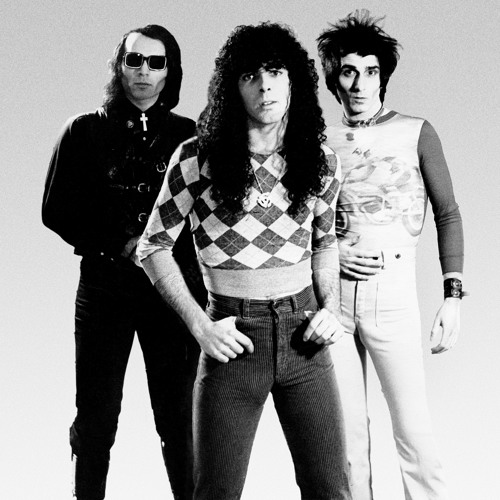
1980s. At the core of The Fast were three Brooklyn brothers: Armand “Mandy” Zone
(keyboards, vocals), Miki Zone (guitar and vocals), and Paul Zone (vocals). The
first phase was before Paul joined the band; I saw them play the bandshell in Prospect
Park around 1973 or ’74. Next was the Fast’s golden era (in my opinion), when
they were on the Live at
Max’s Kansas City album, doing songs like “Kids Just Wanna Dance,” “Boys Will
Be Boys,” and “It’s Like Love.” The third was after Mandy left to form his own
band, Ozone, when the Fast became more metal and leather based. They did the
same songs, but a lot stronger without Mandy’s pop synth. The last was when
Miki and Paul became a Eurobeat twosome with a strong gay focus called Man 2
Man (though originally called Man’s Favorite Sport for a brief moment).
Through
all this, Miki’s guitar was a fireball, as he mastered the craft and he became
one of the most underrated guitarists on the New York scene. Not surprisingly,
he became bored playing the same notes and the same songs, so he would improvise,
such as using the eraser ends of pencils to play rather than a pick.
Miki also
had some side gigs going on, with a solo project of singing the songs of the
great Gene Pitney (d. 2006). Miki died in 1986, and Mandy in 1993. – RBF, 2021
Miki Zone in The Fast (photo by Robert Barry Francos)
In any medium, the most difficult part
of performing is interpreting someone else’s material, so that it remains fresh
and intact, while still allowing individuality and talent to surface. In an era
when cover songs are the junk food of our musical menu and “incredible
simulations” infest the stage and screen, it’s rare and refreshing to find a
performer like Miki Zone, who honors his idols without imitating them.
Last Spring, Miki Zone’s Gene
Pitney Review slipped into the New York club circuit without enough
fanfare. It’s a short (approximately one hour) cabaret act that’s campy, classy
and reveals another side of Miki: his voice!
It shouldn’t surprise anyone that Miki
can sing. Nothing he does should surprise his fans after all the musical styles
he adapted and discarded over the years, with his brother Paul, in The Fast.
But throughout his career, he’s always been known as an instrumentalist and
songwriter with a distinctive style. A style that, unfortunately, has yet to be
rewarded in the mainstream markets.
Gene Pitney in his heyday, was very
heavily absorbed into the mainstream. He is most often remembered for “Town
Without Pity,” but he also wrote several dozen Top-40 tunes for himself and people
like Roy Orbison, Rick Nelson, the Crystals, and Steve Lawrence. He had a
country hit with George Jones, as well as numerous hits in foreign countries
that he sang and recorded in almost every language.
Mandy Zone, Paul Zone, Miki Zone
According to the fact sheet that Miki
graciously compiles for interviews, Pitney “played all his own instruments on
his first single, “I Wanna Love My Life Away,” and would over-dub seven of his
voices on the record.” The most interesting item on the list, however, claims
that he was “an amateur taxidermist,” a hobby that probably fostered many weepy
love songs. He dropped out of the public eye about a decade ago and, since
then, there have been only vague rumors concerning his whereabouts or career. [Ed.
Note: Pitney died after a performance in Wales, and is buried where he lived in
Connecticut. – 2021]
“I don’t want to be a messenger to the
masses,” explains Miki, “but it feels good to have people react to the things
that they like.” Part of the reason why this act is entertaining is that you
don’t have to be a die-hard Pitney fan to appreciate it. In fact, you don’t
even have to know who he is to enjoy it. The set is filled with familiar, catchy
pop ditties that have been nestled in the cobwebs of our brain for ages. And
Miki is not a Gene Pitney clone. He may be able to croon in the same key as the
eclipsed star, and dress in the elegant smoking jackets of that era, but only
the blind could confuse their faces. Miki’s eyes are riveting. They’re like
tiny, brown computer screens beaming with information until he hears a dumb
question, then they abruptly shut down to an icy darkness. Luckily, a sincere
inquiry – like why would a talented songwriter want to sing someone else’s
lyrics – flicks their light switch back on.
“I’ve got a big romantic part of me
which I’ve never brought out in the music, which I’m starting to do now. I’ve
written a lot of things like that which I’ve never performed. I’ve never used
them in any of my past groups.
“I always had an affection for… would
you call it torch singing? Or crooning? Not crooning like Alfalfa, but like, crooning
like the way Gene Pitney did it. He could sing a rock song like “I’m Gonna Love
My Life Away,” or “Hello, Mary Lou,” and he would also sing a ballad like “Town
Without Pity” or “Half Heaven, Half Heartache” and still make you wanna cry.
Those emotions used to amaze me in any singer, even female singers like Dusty
Springfield. People like that amaze me with the way they can milk all your emotions.
I always felt that I could do that. Wanted to do that. And that’s what I’m
doing. I used to try to emulate his voice. I used to be able to sing like that
for years, but I never had a chance to sing in any of my rock bands. I never
would sing. It was always up to my brothers (Paul and Armand) to sing.
“The reason I am doing Gene Pitney is
it’s a tackling thing to do. He’s got an amazing voice. I’m not saying I can
sing like him, but I hang in there with the notes, and I’m proud of that!
“There’s a lot of things in me that I
don’t want to have to be Miki Zone to keep on changing them. I’ve changed many,
many times over the years. I’ve put The Fast through heavy metal, through
glitter rock, through pop, through punk, through many different things. What I
did wrong, I’d say, is that it should have been a different group each time.
That would have saved a lot of problem and a lot of egos, and a lot of people’s
confusion. I should have called it something different every time I went in a
different direction. I have a lot of those ambitions to do different kinds of
music and I don’t want to be stuck under one name doing it. I’m not in the position
of David Bowie, where I can do what I want and still be the chameleon. I have
too many other things in my head that I want to do and be. I think I can do
them under different titles, ‘cause none of them will step on each other.
Gene Pitney
“The Gene Pitney thing is just the
beginning of the acts I’m gonna do. I think I’m gonna be doing a couple of
other acts of different people’s materials; other singers, because I like to
sing as much as I like to play an instrument. And I just want to get it out of
me. It’s just satisfaction for me. Maybe it’s ego, too, to see people enjoying
me doing things. I’ve got the best reactions, I think, ever in my career, since
I’ve been doing the Gene Pitney thing, just through the response of people.
“I’d rather have different outlets for
different things. And if one of them works out better than the others, I’ll
follow that one up. But me and my brother will always work together.” Paul and
Miki now have a band called Man’s Favorite Sport. Paul is very supportive of
his brother’s solo endeavors, and usually helps out with the lights.
Although he’s trying to keep the identities
of his other solo personas a secret, Miki has mentioned that one of them will
be Bruno Beats, an original character who sings all of Miki’s “romantic, lush pop
things. It’s going to be very pop, maybe ‘60s. All the things I wouldn’t use in
the group.”
“What Walks There Walks Alone”: A
Comparison of Shirley Jackson’s The Haunting of Hill House and Robert
Wise’s The Haunting
While going
for my advanced degree in Media Ecology at New York University, I took a class
with Professor Joy Boyum, “Fiction into Film,” and wrote this as a report. It matches
one of my favorite books with one of my best-loved films. The paper is dated
May 5, 1993. Please note for those who have neither read the book or viewed the
film, there are spoilers.
Clown:
“O mistress mine, where are you roaming?
O, stay and hear, your true-love’s coming.
That can sing both high and low
Trip no further, pretty sweeting;
Journeys end in lovers meeting.
Every wise man’s song doth know.”
– Twelfth Night, Act 2, Scene 1
Robert Wise’s direction of The Haunting (1963),
an adaptation of Shirley Jackson’s The Haunting of Hill House (1) (1959),
remains one of the more memorable psychological supernatural thrillers brought
to the screen. The film’s success has much to do with the cinematic elements
brought to the story as the tale itself.
Wise’s choice to not show the apparition(s),
with one brief exception a heartbeat long, is an effective tool for presenting
a stronger psychological narrative edge to the story that perhaps might have
been lost if he had chosen the easier “fright” route of wraith effects. The
doorknob jiggling and mysterious hand-holding is all the more convincing because
of the riddle of who or what is roaming the halls of Hill House.
Wise also emphasizes an element of
claustrophobia that is sometimes lacking in the novel. Jackson places much of
the action during the day on the grounds and hills surrounding the house;
invisible footfalls in the grass appear less horrific. Wise, however, used the darkness
of mahogany interiors, earth tones and shadows to give the viewer a sense of
entrapment and depraved evil. Once the lead protagonist, Eleanor, arrives at
Hill House, the only outdoor scenes are two on the terrace (first in daylight,
then at night) and two on the grounds, by the front door, when Mrs. Markway
arrives (day) and Eleanor’s final departure from the house (night).
One of the perplexities of Hill House is the
way the house is designed. Eighty years earlier than the story is set,
the house’s architect, the overbearing Hugh Crain, build a structure that was as
distorted and enigmatic as its contriver. Wise sets a somber tone through the
use of quick, jerky editing and especially irregular camera angles to reveal
the skewed house design and a conundrum of doors that shut themselves (by
design, not spirit).
The key theme of the film, as well as the
novel, is loneliness. Both are introduced by a prologue (narrated on film),
“Hill House, not sane, stood by itself against its hills, holding darkness
within… and whatever walked there, walked alone.” Entering into this dark
isolation are four characters, each lonely in his or her individual way.
Eleanor Lance (Vance, in the novel), played by Julie Harris, arrives after
years of isolation spent taking care of her domineering and sickly mother.
Eleanor views her stay at Hill House as a chance to flower, to belong. In the
novel, she repeatedly utters a line from Shakespeare’s Twelfth Night: “Journey’s
end in lovers meeting.” Though this is only quoted once in the film, the theme
remains the same: there is a sense of love’s absence, of a desire to find a
place in the universe where she is her own person, accepted by others for who
she is. Eleanor has no real home (she lives with her sister’s family), no one to
love, and no one to love her.
There is an almost claustrophobic feel of
dread and naivete about the world within her, as she created a dream life of an
apartment of her own with matching stone lions on the mantlepiece. Eleanor is desperate
to fit in and gain back what she believes she had lost through many years of
solitude.
The future owner of Hill House, Luke Sanderson
(Sannerson in the film, played by Russ Tamblyn), is also rejected by his
family. His lonely past has produced a “liar…also a thief.” The novel presents
Luke as an in-depth character who is a scalawag, but also has a heart, and is
merely acting out of his sadness and need to be accepted. He is presented as
the first possibly lover at “journey’s end” for Eleanor. In the film, however,
he remains undefined, reduced to comic relief.
Whereas in the novel, Dr. John Montague
(Markway in the film, Richard Johnson), who leads the supernatural “expedition”
into the house, is known by Eleanor to be married from his first introduction;
this fact is hidden from her in the film, setting up a possible liaison between
them. Is John the lover at “journey’s end”? Many of the romantic actions taken
by Luke in the book are given to John in the film, such as offering a steadying
hand to Eleanor as she looks up at the tower (nearly toppling over a balcony),
or rescuing her from the shaky ladder in the library. The novel presents John
as lonely, due to the shrewish nature of his wife, unnamed except as Mrs.
Montague. She is presented as a person who has no regard for her husband’s methods,
dismissive of Montague as a person, self-promoting, and a supernatural
“expert.” The film merely hints that John is lonely, and might end up in
the company of Eleanor.
A subplot of possible lesbian romance is then
presented by the last of the four main characters, introduced by Theodora
(Claire Bloom). This theme is interjected in the novel as Theo arrives at Hill
House after a painful fight with her “roommate,” feeling dejected and somewhat
bitter. In the film, Theo’s orientation is broached through dialogue, presented
more as the reason for her loneliness: “By the time I’m through with you
Nell, you’ll be a different person”; elsewhere asked what she is afraid of, Theo
responds, “Of knowing what I really want.” Her sarcastic manner is treated as
rooted in the sexual orientation, as well. Though Eleanor is repulsed by
Theodora’s sexuality in the film (“The world is full of inconsistencies.
Unnatural things. Nature’s mistakes, they’re called. You, for instance.”), in
both the film and the novel, Eleanor eventually wants to go off and live with
Theodora. The author posits this as another possibility of “journey’s end where
lovers meet”.
A third theme of the story is that of
parental/daughter relationships. Although Hugh Crain designed the house, he
barely resided there, and eventually died in Europe. It is his warped vision
that dominates the house, however, with a malevolent (male-violent) influence.
His evil is that of control. Even in designing the house, he materialized his
own vision rather than relying on others, with skewered angles and unmatched
lines, going against architectural conformity to express his will. It was with
this will that he ran his house while occupying it with his daughter(s). His
religious fanaticism, which evolved from his bitterness over his wife’s/wives’
demise led him to warn his daughter, “Honor thy father and thy mother,
daughter, authors of your being, upon whom a heavy charge has been laid, that
they lead their child in innocence and righteousness, along the fearful narrow
path of everlasting bliss…” Though his physical presence in the house was
minimal, his influence remains, and it is this warped domination which seems to
affect the weakest of those who enter the house, subduing them to the power of
his control.
Hugh Crain’s malevolence is directed at women.
All who die at Hill House are women: first the wife of Crain, who is killed in
an accident on the grounds before even viewing the house; second, their eldest
daughter (only daughter in the film), Abigail (Sophia in the novel), who dies of
pneumonia at an elderly age in her bedroom, the nursery (“the heart of Hill
House”), while her young servant/companion “dallied in the garden with some
village lout”; third is the companion, who inherits Hill House, who hangs
herself in the library. The last woman to die is Eleanor herself, a possible suicide
who seeks to remain at Hill House, under the influence of the evil will of Hugh
(2) Crain.
There are overlapping images in the context of
the story. An example is that both Eleanor’s mother and Hugh Crain’s daughter
die while banging on the walls for help. This “mother/daughter” parallel is
further mirrored by Eleanor’s guilt over presumed negligence in having slept
through her mother’s knocking, as did the companion, who “dallied” while her
mistress died in distress. Both Eleanor and the companion become obsessed with
the house and the staircase in the library. Both eventually commit suicide. Similarly,
Hugh Crain’s wife died without ever having entered the house, whereas Eleanor
dies driving into a tree at the same spot on the grounds so she does not have
to leave.
In Wise’s vision even more than Jackson’s,
Eleanor is treated by all as a woman-child, though she is in her early 30s,
because of her innocent and cloistered life. In a scene where she is seeking
permission to use what is essentially her half-owned car from her sister’s
family, the relatives reject her request because they view her as childlike and
consequently irresponsible. This scene is dramatized while a child’s melody is
played in the background. Also, throughout the film, again more than the novel,
Theo often calls her by the nickname “Baby,” sometimes in a patronizing tone.
This, of course, reflects back to the nursery, the heart of Hill House, which
has been collecting victims for years. The inflection is present in the novel,
but in a more subtle, sardonic way.
The characterization that is most changed from
novel to film is that of Mrs. Montague (named Grace for the film, played by
Lois Maxwell). Whereas she is a totally disagreeable character in the book
owing to her obnoxious ego and dismissal of concern for nearly all others, the
cinematic version lives up to her first name, presenting her as a strong and
decent person who is unintentionally triangled between John and Eleanor. In the
movie, Eleanor suggests Grace sleep in the “evil” nursery in a pique of jealous
spite, while in the novel, John makes this suggestion because he is acquiescing
to his wife.
Two other characterizations that are altered
from the original source are those of Dr. Montague/Markway and Luke Sannerson/Sanderson.
In the book, Montague, while the leader of the psychic exploration to Hill
House, is seen as a three-dimensional character who is sometimes flawed and
always human. In the film, perhaps because he is presented as a potential love-interest
for Eleanor, Markway becomes a near-swaggering Petruchio-type hero; one can
almost her him slap his knee in self-righteousness. Luke, on the other hand, is
treated the opposite: whereas Montague to Markway comes from human to hero,
Luke Sanderson to Sannerson goes from possible love-interest to practical
joking comic chorus.
An obvious problem in adapting the novel to
the film would be similar that of any phycological drama, the inner narrative
voice. Thought processes are the crux of psychological drama, as the
protagonist struggles with distressing events, and the consequences that are
faced become more severe. Wise takes the most direct approach, and has
Eleanor’s thoughts presented via voice-overs. Though this may be a potentially
overbearing and distracting technique, Wise uses it to optimum effect, holding
back and letting the actor’s expressions tell us of her own inner turmoil in particular
scenes, while voice-overs detail the trauma in others.
In the novel form, the horror story, be it temporal,
spiritual or psychological, has its work before it. Unless the subject matter touches
on the personal fear of the reader, such as something/someone hiding in a
closet or a phobia, like fear of heights (e.g., Vertigo, 1958), the
printed word needs to be worked harder to be shocking, especially to those who
grew up watching film. Historical horror novels such as Mary Wollstonecraft
Shelley’s Frankenstein (1818) or Nathaniel Hawthorne’s “Rappaccini’s Daughter” (1844), were
written when there were no moving images that could shock with a sudden “Boo!”,
so the imagination of the reader of the stories is needed to be able to
horrify. Present-day writers such as Clive Barker and sometimes even Stephen
King manage to frighten, but their shocks come from the gross and the gory. The
Haunting of Hill House was published during a period when the horror novel
was based more on the psychological than “visual” manifestations, therefore
crating a timeless horror that does not need to go “boo” or bleed.
Film has a great potential for
frightening the viewer. Whereas the novel can horrify by leaving the terror “unnameable”
(as H.P. Lovecraft was fond of doing) and inviting the reader to realize his or
her worst fear. A film can frighten by presenting a haunting image or a sudden
shock. For example, while the echoing, pounding on walls and jiggling of the
doorknob as “whatever walked there” searches for Eleanor and Theodora in the
Haunting of Hill House creates fear, in The Haunting, the dimension
of fear is heightened by watching the door bend under the weight of the
spirits, the wall- and door-pounding becomes deafening (especially as the
cadence gets perceptually louder, faster and more menacing), and the dissonant disembodied
voices of the mysterious forces (such as what sounds like hard fire and
brimstone preaching by Hugh Crain to his daughter) fill the senses by filling
the screen. Add to this the cinematic touches of shadow and light, juxtaposing
camera angles, eerie music (3) by Humphrey Searle, and dissonant editing
(4).
Through cinematic devices, Wise hold
back on visual information about the antagonistic spirits, to heighten the
sense of mystery and fear through the unknown. He uses the occasional lack
of music to make the terror feel more imminent and tangible, and skewed
closeups to place a fearful image immediately before the viewer in arresting
perspective. While Jackson has Eleanor see spirits in one form or another
(spying invisible foots falls in the grass or viewing ghostly picnics), Wise
chooses not to rely as much on the visual to frighten, but by way of a literary
perspective, employing the imagination, all the while using the cinematic
process to make the viewer’s imagination hold one in terror. The fear of the unknown
usually tends to be less challenging to accept on film because of the
temptation to show precisely what is there for which to be afraid. By choosing
not to display some blatantly showy special effects (other than an occasional
breathing door, for example), and relying on cinematic techniques, wise raises
the stakes from cheap thrills to high horror, without gore and without
hackneyed effects (5).
By viewing the film before reading
the novel, I was able to grasp some concepts that may not have been so obvious
from using the book as the primary source. Details in print are usually more
thorough in pointing out specifics, consequently more information is passed to
the reader. Due to the time in literary history the book was published,
however, less emphasis was placed on the homosexual aspects of the characters
of Theodora and, more subtly, Eleanor (6). The subtlety of this aspect
may have been lost on the reader, but to the viewer, these themes were clearer
and more straightforward.
Another interesting aspect of the
film that Wise added is having the final prologue spoken by Eleanor, after her
death. The closing line was changed from “Whatever walked there, walked alone,
to “We who walk there, walk alone.” By adding this change, Wise
solidifies the realization that the main character and antagonist in both the
film and the novel is Hill House itself. It is the neediest and most demanding.
It is the most appalling, and yet seductive. It is Hill House that is the lover
Eleanor meets at “journey’s end.”
Footnotes:
1. Screenplay by Nelson Gidding.
2. “Hugh” is Old German for “Will”.
3. Music by Humphrey
Searle.
4. Editing by Ernest Walter.
5. For the opposite school of thought, see the Roger Corman films of the same
period.
6. Though novels such as Radclyffe Hall’s The
Well of Loneliness (1928) and Lillian Hellman’s play, The Children’s
Hour (1934) had already been published with the themes, mainstream fiction
still apparently considered the subject a taboo.
Text by Julia Masi / FFanzeen, 1983 / 2021 Images from the Internet
A
Mixture of Music and Theater Conjures Up an Original ELIXIR
This
article was originally published in FFanzeen, issue #10, dated 1983. It was written
by Julia Masi.
I never
saw Elixir play. That being said, FFanzeen received an enormous amount of
outpouring of mail from Elixir’s fans upon this interview’s publication, arguably
more than anyone else who appeared in the ‘zine. They had a single out, which
can be found at the end of this article. Note that they are not to be confused with
the British metal band, or New Zealand Christian music group. – RBF, 2021
“We are a modern band. We’re not last week’s
act,” professes George Conrad, chief songwriter and focal point of Elixir, the
most original entry into rock’n’roll theater since F.S. Sorrow in 1968
[Ed. Note: F.S. Sorrow by the Pretty Things, is credited with being the
first rock opera – 1983]. Incorporating elements of mime, Kabuki, opera and
synthesizer-based rock’n’roll, Elixir, Donny Hathaway, Skipp, Jim Copering,
Eddie Rossario and Conrad, literally change faces as fast as other bands change
chords. Employing a succession of elaborate masks, costumes, and props, Conrad
brings to life the everyday heroes and fantasy figures of his songs.
For “Northern Industrials,” he becomes a hard
hat, for “Shanghai Sideshow,” he is disguised as a Chinese peasant. A graduate
of the New York High School of Performing Arts, Conrad came up with the concept
for Elixir when he was in junior high school. “There really is no before Elixir,”
he states as he muses about his past. “I’ve been doing this a long time. I
started a very long time ago when I used to be shipped down to Florida on
breaks (from school).
“I was 12 or 13 and the band was 18 or 20. There
was a novelty element and depending on what I was into, as I grew older, I
brought that into it.
“The thing that really got me into it mostly
was a group called Behemoth that I’d thrown together. We were high school kids
but we were gigging our asses off. Much more than we are now.
“The Elixir band is about five years old with
maybe seven or eight different line-ups. This band is new,” he says, pointing
to four musicians rehearsing on the opposite side of the plexiglass window in a
Queens studio. They’ve been rehearsing about three weeks.
“There’s a show that people like to come to
see that we do. It’s like TV. We do learn our lines and it’s how good an actor
you are to carry it off.” His acting ability is quite good, from having spent
part of his performing career working in various mime troupes. “Kids really love
mime because it’s the control of the body. I like it now to watch, not so much
to do anymore, because of what I’m doing now. But I do rip it off. We react to
illusion. People like illusion.”
Conrad likes creating illusions through music.
Despite the fact that he is Elixir’s lead singer, he enjoys writing
instrumentals for the band. “It’s magic,” he says of his song writing prowess. “You
know, one of those things you just can’t explain? Instead of saying, ‘You know,
one of those things you call magic.’ For some reason, the instrumentals are basically
coming from me, until the band starts saying, ‘We’re doing too many instrumentals.
Start singing.’
“It’s as if it’s a puppet show where the puppets
control the puppeteer. It’s pure entertainment. What annoys us most is when
people say, ‘Well, what does that mean? What did you do that for?’ We’re not
saying anything religious, or anything political. We’re saying if you paid $8
or $10, I hope you get your money’s worth because we really drain you
out and make you feel sad or make you smile or make you say, ‘How stupid.’ We’re
here to make you say all those things and do achieve it.
“I like to think of it more as entertainment.
It’s like a rock circus. Even without us doing it. We don’t’ use fire and we
don’t use smoke because it’s cliché. It’s been used. It works, too. I still see
people go” – mimes jumping back in fear – “We use little subtle things to make
it work. The appearance is a very drastic thing.”
But it’s what he describes as “subtle little trips
that are played on the audience, the dry humor and the lyrics that are very descriptive,”
that gives Elixir it’s ambiance. “It’s not just the music, it’s the
presentation, the way we start a gig. A lot of bands come out,” he shouts, “’one-two-three-four,’
and they start the show. We do it differently. It does take a bit of acting and
loosening up because that’s all acting is: loosening up.”
The concept changes from day to day. It’s such
impressionable music. This he stops to call attention to the band, “is Melted
Colors. The band’s primary example of chromesthesia, is if you close your eyes
you really can see and feel the sound blending together like a rainbow. The music
is very impressionable and traditional. It’s a modern sound. We write about tropics
before we come up with licks. People will have licks and say give me something,
how about rain. And somebody starts to play rain. It’s very easy to tell a drummer,
‘play me rain.’ He hits the cymbals and give you tinkles, but when you tell a
guitar player to play rain, he has to come up with something.
“When you say, ‘give me a violent storm, give
me rain,’ tell the drums, ‘give me a flood,’ and he starts making a pattering
sound, and it feels like the streets are starting to build with rain. We work
that way. Not like, ‘Why, what is this about?’ there is no question of what it
is about because the main concern is what we’re starting out with.
“’Northern Industrial’ is inspired by New York,
Philadelphia, and Boston, where the production lines, the pulse of the whole
country, are found in the North. ‘Northern Industrial’ just describes what a
day in the life is in a Northern industrial town.
“’Hold that Line’ is about overpopulation and
how everything relates to a line. I got poised off standing in line waiting for
a token or when I pulled up to a toll booth. I just couldn’t get away from the
line. If I drove up or walked up, I still had to stand in line. I cashed my
checks, I’d go to spend the money, even to buy goods I had to stand in line.
And I said, ‘Hey, I gotta do something,’ so I wrote ‘Hold that Line.’
“We use a lot of pre-recorded tapes in the
show, which is fun. It’s difficult, because you have to make sure you’re in
sync with the tapes. You’ve gotta do it with the machine. The machine doesn’t
have to do it with you.”
Their repertoire is limited to about 15
pieces, only six of which are played during any given 45-minute set. “The
shorter the list, the more of a blitz you can lay out,” believes Conrad. “When you
give people something they haven’t heard before, you’re gonna give it to them
in small doses, or they OD.”
Text by Julia Masi / FFanzeen, 1983 / 2021 mages from the Internet
WALTER
STEDING: Essence of an Artist [1983 Interview]
This
article was originally published in FFanzeen, issue #11, dated 1983. It was written
by Julia Masi.
Currently,
Walter Steding is a painter and actor who writes film scores and is in the
group Crazy Mary, based in New York City where he resides. This is a companion
piece to one Julia wrote in Issue #10, reprinted HERE. – RBF, 2021
His special loft on the Bowery is
littered with the canvases of his labor. Portraits of pop-culture aristocracy,
like Andy Warhol and Deborah Harry, sit on the chairs and sleep on the floor. A
painting of a bright blue chair rests against the wall. The furnishings are
sparse: a table, his synthesizer, and a clock. In the corner, he’s sectioned
off a rustic little bedroom, so neat and compact that it looks like it was
built for a movie set, furnished mostly with things he’s found in other people’s
garbage.
Simplicity is the essence of Walter Steding’s
style. His music and his art, like his loft, are uncluttered. There is a child-like
wonder in his work. Some of his paintings show cheekbones or eyes much wider
than God would mercifully bestow on anyone. And his songs and performance style
are as unpretentious as entertainment can get. Yet, there is great sophistication
in how every line, note and color is calculated to transmute his feelings.
“To be a musician and live on the Lower
East Side, there is a kind of feel about society, about the way things are. Graffiti
artists or whatever, there is always a movement that suggests how people are.
That’s always the way it is with art,” comments Walter. “The paintings come
from the same kind of thought that I live and experience what is happening. I
try to express the way things are through the music and the painting so they’re
similar in the sense that I see colors. Like green – a typical industrial
restroom color. It really doesn’t say much, but in not saying much, it says a
lot. And the same thing with my tunes. I try to keep them really simple. I work
with a really simple formula. Even though the format is simple and I only use a
few colors it’s the combination of those colors that create the music. Maybe I
just use the standard 4/4 beat, but it’s what I apply to that.
“I’m painting portraits but I’m not
painting portraits in the same way as (John Singleton) Copley (d. 1815) or any
other great portrait painter painted because they wanted to create a likeness.
I’m painting portraits in an era when photography has existed for almost 100
years. And it’s easier to take a person’s image and have that image reflected on
chemicals that separate various tones of light and create an image instantly.
Then why do a portrait? It’s much easier to take a picture. But what I am is a
portrait painter working with paints in the year 1983, and that’s what it is.
It’s me, the portrait painter. It’s not the portrait itself. The painting is insignificant
compared to the fact that I’m doing it. And by the looks of my paintings, that’s
immediately revealed.
“I try to make it look like there’s a
background. There’s no portrait there then – flash – someone is there! And they
are portraits that you can see are done after the invention of photography to
help me get a likeness, but I really work from a mental perspective or how a
person would appear.”
Actually, Walter doesn’t even need a photograph
to create a mental image of a person. He has that special kind of sensitivity that
gives you the impression that he can read a person’s face as easily as he can
read a letter. And when he reads letters, he absorbs every detail and nuance of
a person’s personality so fully that he’s able to create a convincing character
on canvas. Some of the faces in Walter’s exhibit at the Semaforte Gallery last
Spring were inspired by a box of letters that he found in the garbage. Some of
the letters date back to the early 1800s. Most of the correspondence in between
three men – Jordean, Matheson and Dent – the families who set up the Hong Kong
Shanghai Bank, the institution that, in this day, sets the standard for gold
prices in the Western world. These letters document the beginnings of our economic
system, the common market, opium/slave trade and economic crash.
It’s doubtful that anyone who has
attended Walter’s exhibit really knows exactly what Jordean, Matheson or Dent
looked like, but Walter’s images are so strong you believe that they’re
accurate.
And just in glancing around his loft
you can see what he’s learned from the letters and get a clue to his perception
of the evolution of America’s society.
“In the olden days, even though you
didn’t have any dollars, you had opportunity because you could go out West,
meet some savage Indians and give them trinkets for furs and sell them and get
cash for it. And if not cash, you could take those furs to a foreign country,
like in China, because furs became fashionable, so they could take those furs
and trade them for tea. And then they could take the tea and bring it back and
sell the tea here.
“People came to this country with
nothing, like John Jacob Astor and Steven Gerard and Vanderbilt. Individuals
who could actually go out and make a fortune.
“In today’s world, an individual can
no longer go out into the wilderness and start a trade. It’s all tied up by
those original families who have kept their money and survived the crash, ‘cause
they never had it to lose in the first, since they were the ones who were
causing the crashes. Today, for anyone to accomplish any achievement
monetarily, the only thing you can sell is a kind of software, and that’s
selling an idea that’s selling yourself. You become a famous actor. You become
a famous pop musician. You can start from nothing and make a lot of money. But
you can’t go into the world and dig up Uranium and convert it into nuclear
energy on your own. You have to have a whole team of physicists and a whole
complex of other people. The only way you can do it today, the only field, is
this kind of mental activity.”
In the not-so-distant future, Walter worries
that history will repeat itself. When he reads the daily newspapers, he often
notices how certain events are similar to situations cited in the letters. For instance,
a recent report claims that the U.S. government will be printing more money to counteract
inflation. When this situation was tried in the past, it had quickly led to an
economic crash. He feels fortunate to have found these letters and to have
learned so much from them.
“Because I have this knowledge, I see
my position as being a communicator, even through my music. My music is part of
my art. It says on my contract ‘recording artist.’ It doesn’t say ‘pop star’ or
anything like that. It says recording artist because that’s what I am. I write
all of the songs. I produced them. I carry the records on my back and take them
to the stores. And what’s in these songs is what I feel. What’s in these songs
is a kind of message. They’re not saying ‘Let’s revolt’ or anything like that.
They’re saying, ‘Let’s have compassion for one another, ‘cause we’re all in
this together.’
“That’s why I don’t want to stand up
there and create an antagonistic mood. The whole punk thing was great because
it made its statement, but now let’s definitely go on. You have to find
compassion for your audience.”
If there is any gift Walter could give
his audience, it would be “non-violence. Just getting along with each other.
There’s always a way for people to become one with their environment or nature
or whatever.
“I always try to be close with nature.
I make sure I get in the woods.” His basic philosophy of life is “not to
believe in anything except what exists. It’s not my will to believe anything.
Whenever you say, ‘I believe,’ you don’t believe. Because it’s not your will to
believe anything. It’s your position to accept what is correct. And then you leverage
your mind open for that source to come direct and without your will interfering.
“It’s when you start to think that these
ideas are your own, that’s when they stop. What I do, I don’t feel is my own
(ideas). I like to get ideas out and perpetuate. Let someone else take over.
Just set it down. I feel that there is a never-ending source. The more things
that you can express and you put out, the more ideas you will get.
“I hope I can paint now, and if I get discouraged
with the painting, I can be a writer or play music.”
While I started
this blog in 2008, the notebook in which it was handwritten was packed up when
I moved. Recently I found the first draft, finishing it in June 2021. This is
the first time it is being published.
Thanks to my being truant for my Sophomore
year at Lafayette High School, in Bensonhurst, Brooklyn, due to bullying, I was granted a year-long Grade Point Average (GPA) of 47; that was the public school
system’s “Scarlet Letter” notification that marked me as truant, as surely as if
it were branded on my forehead. Due to this, my overall GPA when I graduated was
73. That is two points lower than most four-year CUNY (City University of New
York) and SUNY (State University of New York) schools would accept. Brooklyn
College turned me down flat, due to those two points. That is how I ended up attending
Kingsborough Community College (KCC).
Campus then
Kingsborough was on the eastern peninsula tip
of the same “island” that contained Brighton Beach in the center and Coney
Island to the west, in a neighborhood called Oriental Beach (just past
Manhattan Beach Park). It was an old military base, and was built as a series
of bland barracks that were long, low, and squat buildings. Soon after I
started attending the school, they started construction of the beautiful campus
it is now. At the time, the parking lot was outside the school campus, about a
quarter mile away; now it is on-campus. We were in classes through all the noise
and, of course, the formation was completed the end of the semester after I
graduated.
While I will not say that KCC was a party
school back then, I will admit that drugs and alcohol were rampant, because in
1974, many who ended up in KCC were never expected to go any further in an
educational facility. The college was full of early vestiges of the disco “Tony
Manero” mentality, prog and what is now known as classic rockers, often wearing
tee-shirts with the likes of Yes, Kansas, and especially CSNY, and having a
contingent of heavy metal fans (in fact, the first time I heard “Stairway to
Heaven” was on a jukebox in their annex cafeteria; I was a folkie, and was not
impressed). While I was there, I was getting into Sparks’ Kimono My House,
and just started seeing The Ramones and Talking Heads at CBGB in 1975, starting
my immersion in the New York “punk” scene.
Towards the end of my freshman semester, I was
playing 500 Rummy with the first pal I made there, Hoi Wan John Louis (I called
him Louie; though I haven’t seen him since we graduated, we are still Facebook
friends). We played the same game for two years and I eventually lost by a
couple of thousand by the time the score had reached into the twenty- thousands
(somewhere in a box, I still have the scoresheet). Louie and I were talking
about how we did not want the space under our photos in the yearbook to be
blank when we graduated, as I never got the yearbook in high school; technically,
I graduated from a Junior class since I had to repeat my Sophomore year, which
also meant no prom and no graduation ceremony; I was not heartbroken, so after
some thought, I decided to join the school’s newspaper, The Scepter. It
seemed like a good thing to have listed in the book.
On the following Thursday, I walked into The
Scepter office, and explained my purpose to write for them to the first person
I met, which was to hopefully do some film reviews; again, this is pre-seeing
the Ramones, which developed my interest in music substantially. I was ushered
into the high office of the Faculty Advisor, English professor John Manbeck. He
remained there in that position until 1999, during which my Master’s school mate
and good friend Thom Harkins also worked there while he attended KCC, and would go on to write the book, Woodstock FAQ: All That's Left to Know About the Fabled Garden.
When I told Prof. Manbeck that I wanted to write
for the paper, he asked in what position was I interested. I jokingly said, “Arts
Editor,” knowing I was a novice writer. As soon as I said it, I realized that I
was probably overstating my bounds, stepping on someone’s toes. One does not
walk into a job and say, “I want my boss’s position.”
But Manbeck said, without missing a beat, “Editorial
Board elections are on Tuesday, and we currently have no Arts Editor.” I put my
name on the ballot, and after running unopposed, I started off as the head of
an entire section of the paper, arguably the most read part; there was no deep
political investigative reporting going on, and honestly, in my tenure, it was
frowned upon by the administration. I did not realize the commitment it would
take yet, nor the doors it would open for me.
This being pre-computers, the articles were
placed into cold type. This meant that every line of text was made by huge
machines that used melted lead to form it letter-by-letter (luckily, not by us).
We received huge yellow proof sheets that we have to correct, and they would
only make the revisions for misspellings. The linotypers were not going to
retype everything for text changes.
The paper came out every three weeks, and the
days before were long, getting ready for publication. We had to cut and paste
on blue graph boards to give to the printer. And I learned layout the hard way.
If I did something foolish like “tombstone” the headlines (two headlines that
were side-by-side, making it confusing to read), Manbeck would correct me, after
literally smacking me on the back of the head.
When the boards were all laid out, they were
given to the printers, who made negatives, which were used to make metal
plates, and then run off on newsprint. It was also this process that was used
for issues four through fifteen of my fanzine, FFanzeen, which ran from
1977-’88. Learning how this procedure worked helped me understand how to create
a newsprint publication. I used to create FFanzeen by using computer
typesetting, which I learned to do myself, and it became a career for me in the
late 1970s through late 1980s. Computerized layouts ended my profession, which
was fine as it gave me a leg up on learning computer software.
While I was at The Scepter, it gave me
the opportunity to see multiple films before they were released, and to see
some exciting live performances and plays (such as Yentl with Tovah
Feldshuh in the lead, and the one-man show Diversion and Delights with
Vincent Price as Oscar Wilde). It also led me to interview the likes of Tom Petty (the article was eventually published in the first issue of FFanzeen),
Marcel Marceau, Rod Steiger (promoting WC and Me), Lynyrd Skynyrd (pre-crash), the Mael Brothers (Sparks), Jim Dandy from Black Oak Arkansas, and Lady Flash, who were Barry Manilow’s
back-up singers and had a solo album out; my regret is that I was kind of ignorant,
and did not realize that the lead, Reparata, was from Reparata and the Delrons,
or I would have chose a bunch of different questions. I also met Jack Nicholson,
Jeff Bridges, Walter Matthau, George Burns, Jack Nietzsche, and Milos Foreman,
among others at various screenings.
During my tenure at the paper, I did get into
a heated argument with another English professor, whose name I will leave out
here. He put together a theater production put on at KCC called The Bite of
Irish Laughter. This was scenes from a bunch of Irish plays, such as The
Importance of Being Earnest. The problem was most of it was done with the
actors reading the scripts while stationary on the KCC stage. This took a lot
of the humor away as body language was muted, and the audience was obviously both
not prepared having never seen this style before, and seemed uncomfortable in
the process. I mentioned this reaction in the review, titled “Readers’”
Theater Strikes Out: The Bite of Irish Laughter. Apparently, I was the
first to pan a production put on by a KCC professor, and he was not having it.
He wrote an editorial (that was published) admonishing me, that I did not
understand the process, nor that the audience reaction should be considered
when discussing what is on the stage. I published my own editorial in the
following issue, answering the complaint step-by-step. I became a bit infamous
among the faculty for that. Luckily, I never had him as one of my professors,
or I definitely would have failed that class. This taught me, however, to not
be swayed by my not liking something that I am expected to enjoy, which I would
carry over to FFanzeen, and to this day.
Campus now
Sadly, while I was there, one of my
classmates, 22-year-old Kim Jarvis, was murdered on campus between classes by an
ex-boyfriend. This made headline news in New York, including a write-up in The New York Times. She was an English Major, but I knew her
best as a DJ on the campus radio station, WKCC. While I did not really know her
well, it was a shocking event for the entire campus.
Speaking of WKCC, I applied for a job as a DJ
at the station, and the record they wanted me to introduce was a Tower of Power song that
I was not familiar with (heck, I had never even heard of them before that), nor had any knowledge of the genre, and because of
that I had no spiel to describe it. I stuttered and stammered, and
naturally did not get the position. But then again, with the time I was spending
at The Scepter, it was already affecting my study time, so it was
probably best that happened the way it did.
There were two other campus organizations that
I joined. One was a Jewish-based one that was pretty well disorganized, so that
lasted less than a semester. The other was an Irish Catholic group, the Newman
Club, because I had a mild and short-lived crush on one of the members. There
was no future for a connexion as she had a rock-steady relationship with a jock
who was a football player. A senior in high school, he was her younger man. But
she was in my Sexual Health class, which we students referred to, in short
hand, as “the Sex class.” One day she did not show up, so when I arrived at the
Newman Club the next day, I said to her, “I missed having “Sex” with you
yesterday,” referring to the class with absolutely no innuendo intended, and
that’s exactly how she heard it; however, sitting next to her, unbeknownst to me,
was that boyfriend. He heard it as literal, and took a lunge at me, held back
by the other members (nearly all women). I smartly got the hell out of there.
The next class she apologized, but I knew I had to leave the club, which I did.
One of the outcomes of my being a member of
both the Newman Club and the Jewish groups is that I started to be hounded by
the Jews for Jesus on the campus, believing that because I was in these two
organizations, I must be of like mind with them. I was not.Often while walking across campus, they would
stop me and try to pressure me to join, or would leave flyers in my The
Scepter mailbox. It came to a conclusion when I was invited to an on-campus
showing of a ridiculous and cringy heavy-Christian rip-off of The Exorcist
called The Enemy(starring Judith Ivey in her very
first film!). Even if I was a believer, it was a really bad film; and I slammed
it in my review. Rightfully harshly. They stopped bothering me after that.
Don Imus
I had a Sociology professor who was young and
cool, who taught me some things that I still remember now, such as that trends
tend to start in the poorer demographics, then get copied by the rich
demographic trying to appear “cool,” and then by the Middle Class, who are
emulating the rich, with the goal to also fit in.
But her claim to fame was when she brought Don
Imus (d. 2019) to perform/talk in the auditorium. It was going to go out over
the radio (again, WKCC), so she asked him not to curse because they could lose
their licence. Since he was a radio DJ himself, he said he understood and agreed
to it. He came onto stage to great applause and a full house. There were two
microphones taped together in the center of the stage. As he strode up and said
hello, he asked, which one was for the radio. Someone told him, and he leaned
over it and said, “Fuck all of you.” He then continued on a long, profanity-filled
bit which got a positive reaction from the crowd, but you could see the panic
on the faces of the administrators, and especially on the Sociology professor,
as Imus was her responsibility. Honestly, I never forgave him for destroying
that trust. Luckily, at that time, the range of the radio station was
essentially two blocks past the front gates, so it went unheard by the FCC. The
professor received a reprimand, but was not fired. She was also subdued for the
rest of the class.
Towards the end of my tenure at the paper, I
received a service award from the College for my contributions, which included a
third of the paper. Even my dust-up with the English professor did not stand in
the way. However, my grades had started to slip; because I spent so much time
at The Scepter and going to free films and theater, I had less time to
study. In my last semester, I cut back my non-scholastic extra-curricular
activities. I buckled down, and was placed on the Dean’s List. I graduated from
KCC in February 1976.
From there, I went to Queens College; Brooklyn
College accepted me, but since they turned me down the first time, now it was
my turn to do the same. I graduated Queens in 1979. From 1991 until 1994, while
working full time, I went to New York University where I aced a Master’s degree
in Media Ecology (media theory). For a guy who was truant in high school and
graduated with a 73 GPA, I think I exonerated myself and did pretty well.
Currently living in Saskatoon (email at RBF55@msn.com for address). From 1977-88, I used to publish a print version of a music magazine in New York called FFanzeen, which dealt with the wide-ranging independent music scene. I also photographed many bands from the period (and since). Now I write this blog. And the beat goes on.



 Posts

